The Story
Plant Bio
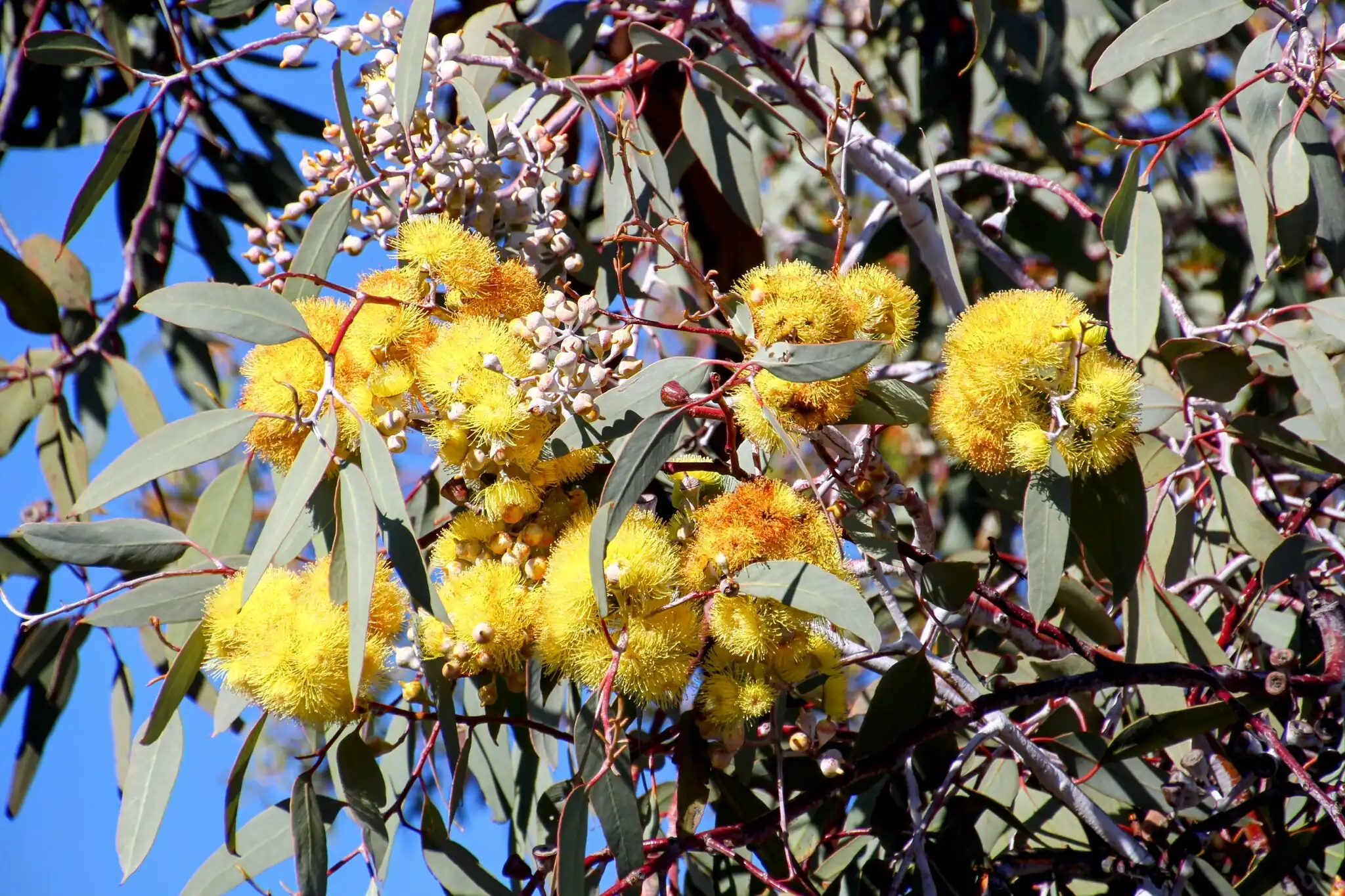
Eucalyptus woodwardii is a small evergreen tree native to the arid desert zone of southern Western Australia, growing 13 to 33 feet tall with a broad, open crown. Its weeping branchlets bear thick, dull grey-green adult leaves and square stems frosted with a powdery white-blue bloom.
It produces prominent, round bottlebrush-like clusters of bright yellow stamens that emerge from heavily glaucous, beaked buds during winter and spring. The pendulous canopy and smooth foliage provide sharp visual contrast in dryland plantings.
Uses & Benefits:
Essentials
At a Glance
Plant Type
Tree
Height
394"
Width
315"
Light
Full Sun
Zones
8, 9, 10
Water
Low
Humidity
Low
Lifespan
Perennial
Native To
Australia
Toxicity
Mildly toxic if foliage is ingested in large quantities
Bloom period
Winter – Spring
In flower about 6 months of the year
Planting
How to Grow
- Select a site in full sun with deep, well-draining sandy or gravelly soil.
- Dig a hole as deep as the container and twice as wide, taking care not to disturb the taproot when setting the plant.
- Water deeply at planting and provide light irrigation every two weeks during the first summer.
- Withhold supplemental water once the tree establishes, relying on natural rainfall.
Pro Tip
Never prune into old, bare timber because this species lacks a lignotuber and will not resprout from hard wood.
Keep It Thriving
Care Guide
Do
- Plant in fast-draining soil exposed to full sunlight.
- Lightly tip-prune young pendulous shoots after flowering to encourage dense growth.
- Allow soil to dry out completely between waterings once established.
Don't
- Do not apply fertilizers high in phosphorus.
- Never cut back hard into old wood without foliage.
- Avoid planting in humid areas or heavy soils prone to standing water.
Seasonal Care Calendar
| Task | Jan | Feb | Mar | Apr | May | Jun | Jul | Aug | Sep | Oct | Nov | Dec |
|---|---|---|---|---|---|---|---|---|---|---|---|---|
| Pest Check | ||||||||||||
| Plant | ||||||||||||
| Propagate | ||||||||||||
| Prune |
Watch Out For
Pests & Diseases
Common Pests
Common Diseases
In the Garden
Landscape Uses & Companions
Landscape Uses
Multiply
Propagation Methods
Good to Know
Common Questions
Lemon-flowered Gum questions
What zones can Lemon-flowered Gum grow in?
Lemon-flowered Gum is hardy in USDA Zones 8–10: in that range it survives winter in the ground. Colder than Zone 8, winters are too cold for it to survive outdoors.
Is Lemon-flowered Gum deer resistant?
Yes — Lemon-flowered Gum is rated deer-resistant. Deer typically pass it over, though extreme hunger can override any plant's defenses.
When does Lemon-flowered Gum bloom?
Lemon-flowered Gum typically blooms from winter to spring. Exact timing shifts a week or two with your zone — Sow's bloom calendar maps it to your garden.
Does Lemon-flowered Gum need full sun?
Lemon-flowered Gum does best in full sun (6+ hours).
Is Lemon-flowered Gum drought tolerant?
Yes — once established (usually after the first full season), Lemon-flowered Gum handles dry spells with minimal watering. Water deeply its first year to build the root system that makes that possible.
More Eucalyptus to compare
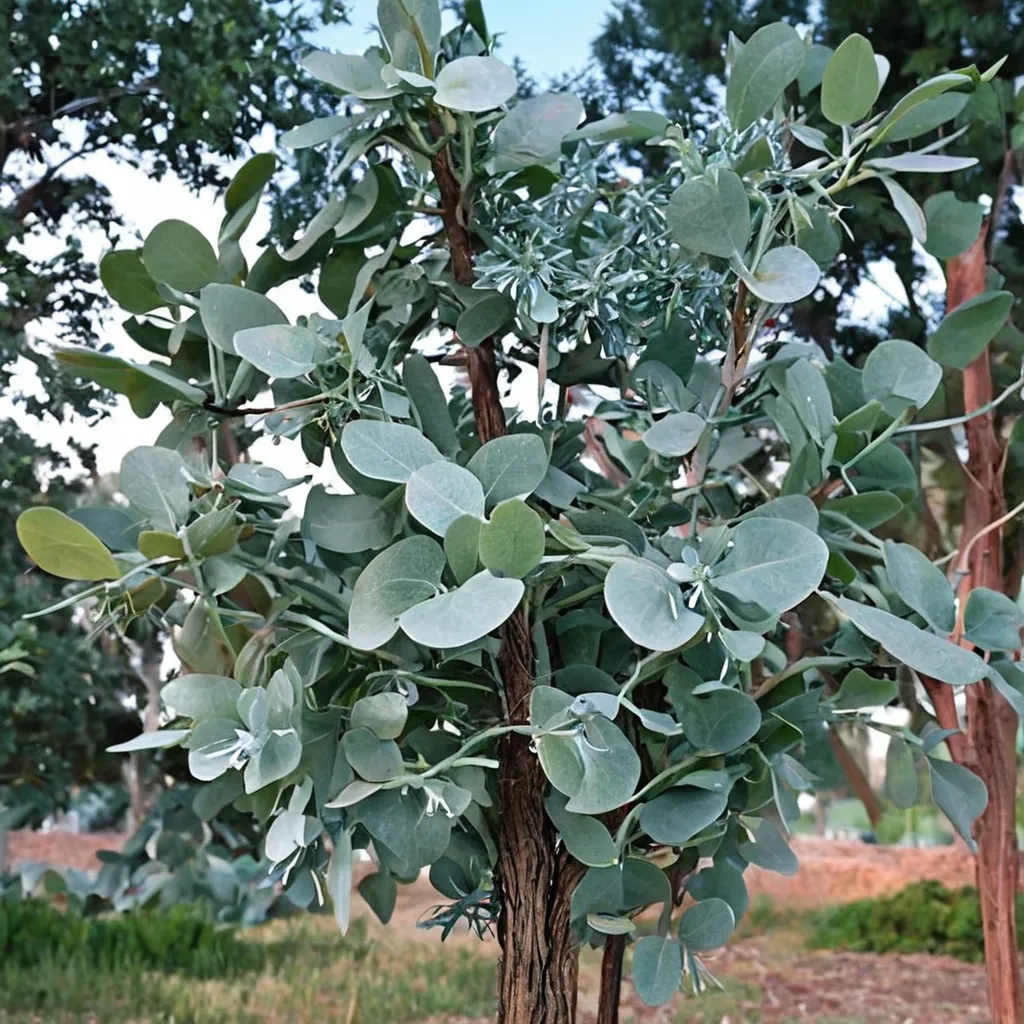
Silver Dollar Eucalyptus
Eucalyptus cinerea
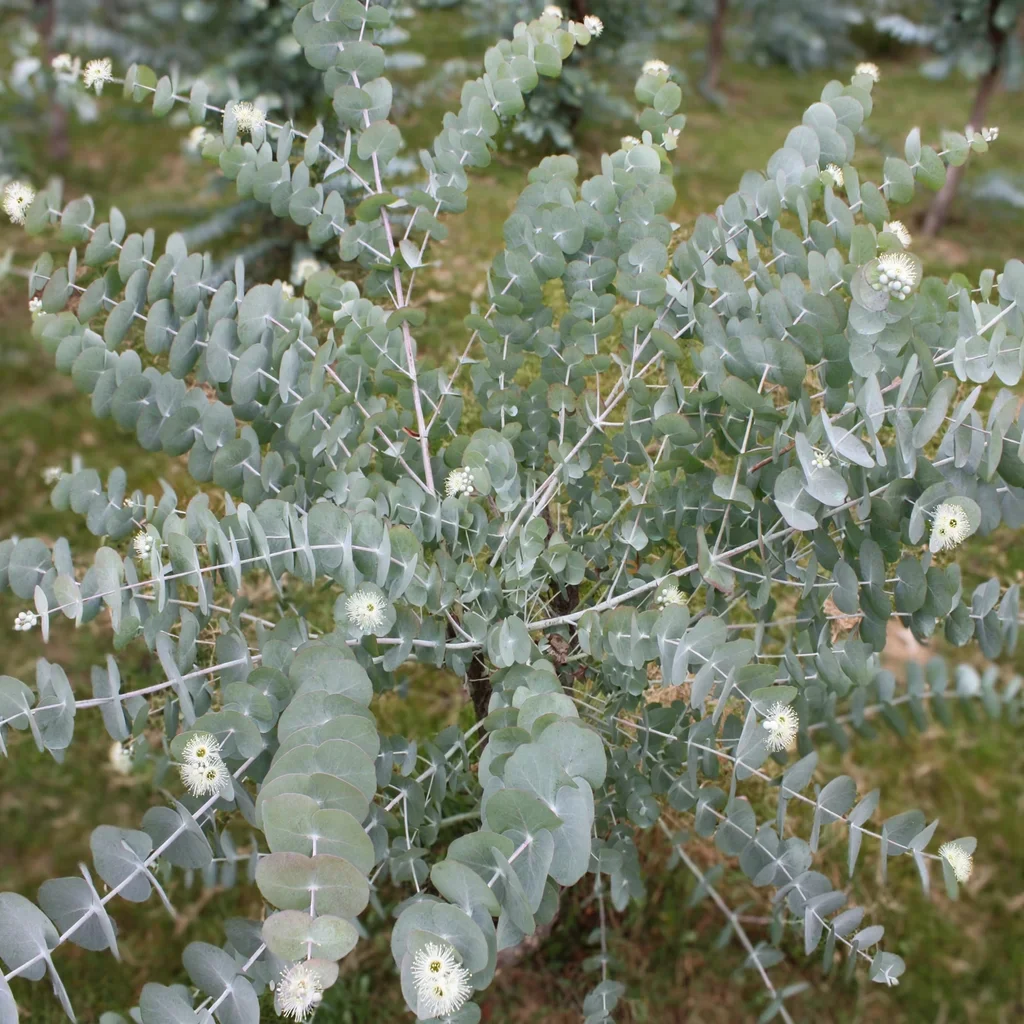
Silver Dollar Tree
Eucalyptus cinerea 'Silver Dollar Tree'
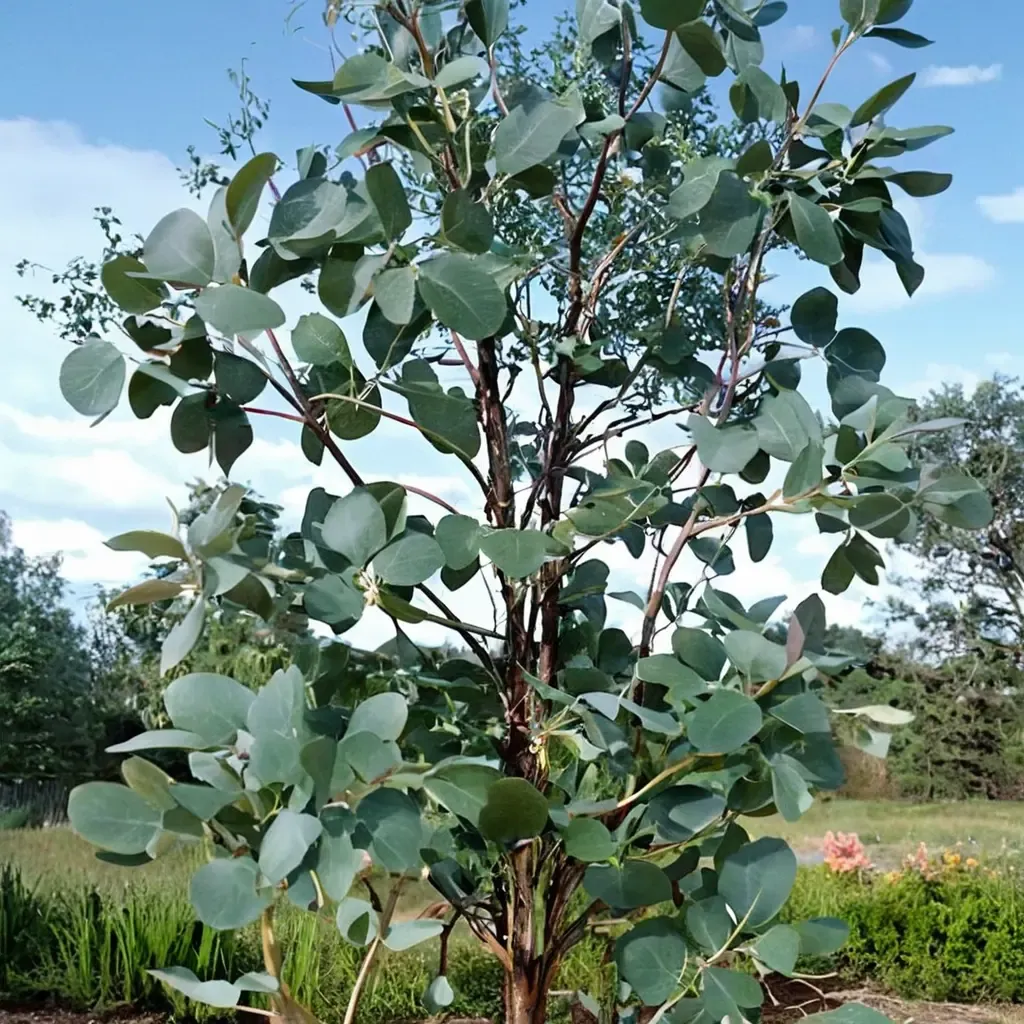
Omeo Gum
Eucalyptus neglecta
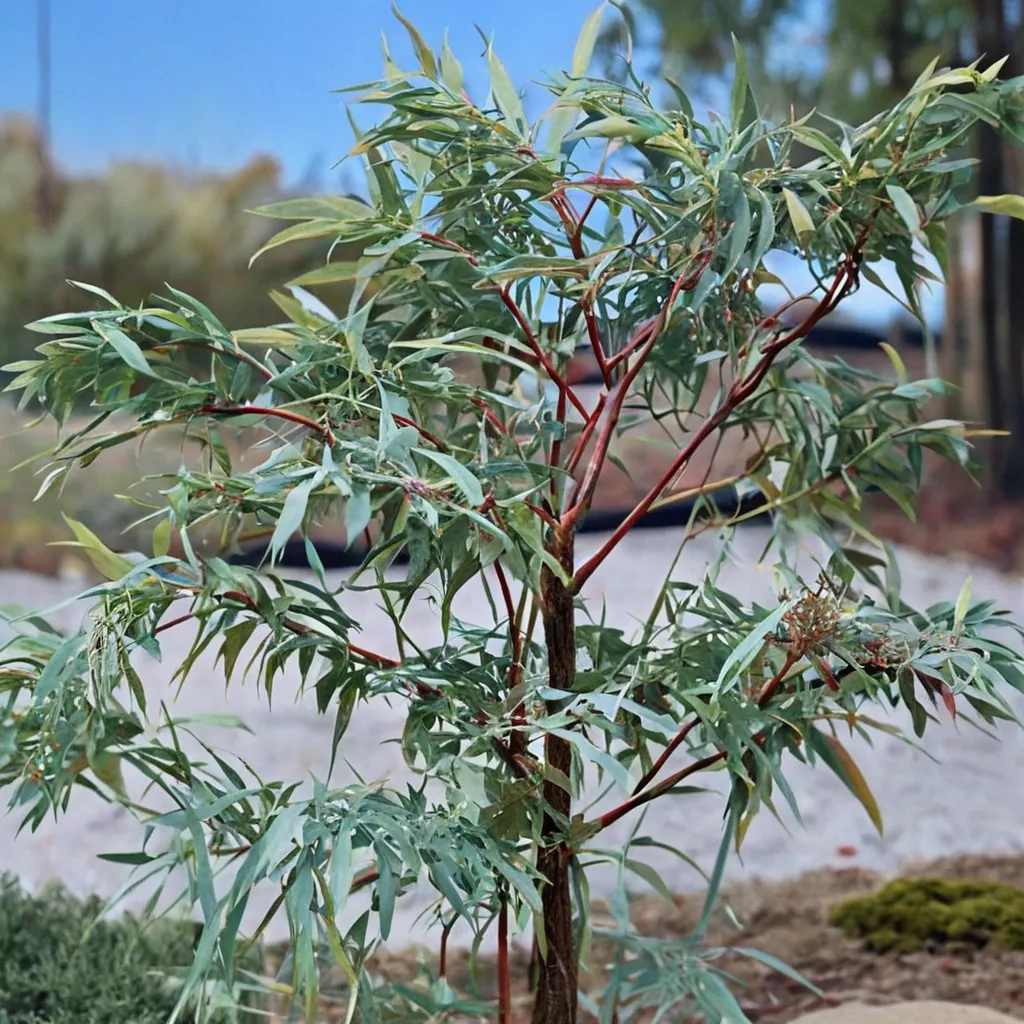
Narrow-leaved Peppermint Eucalyptus
Eucalyptus nicholii
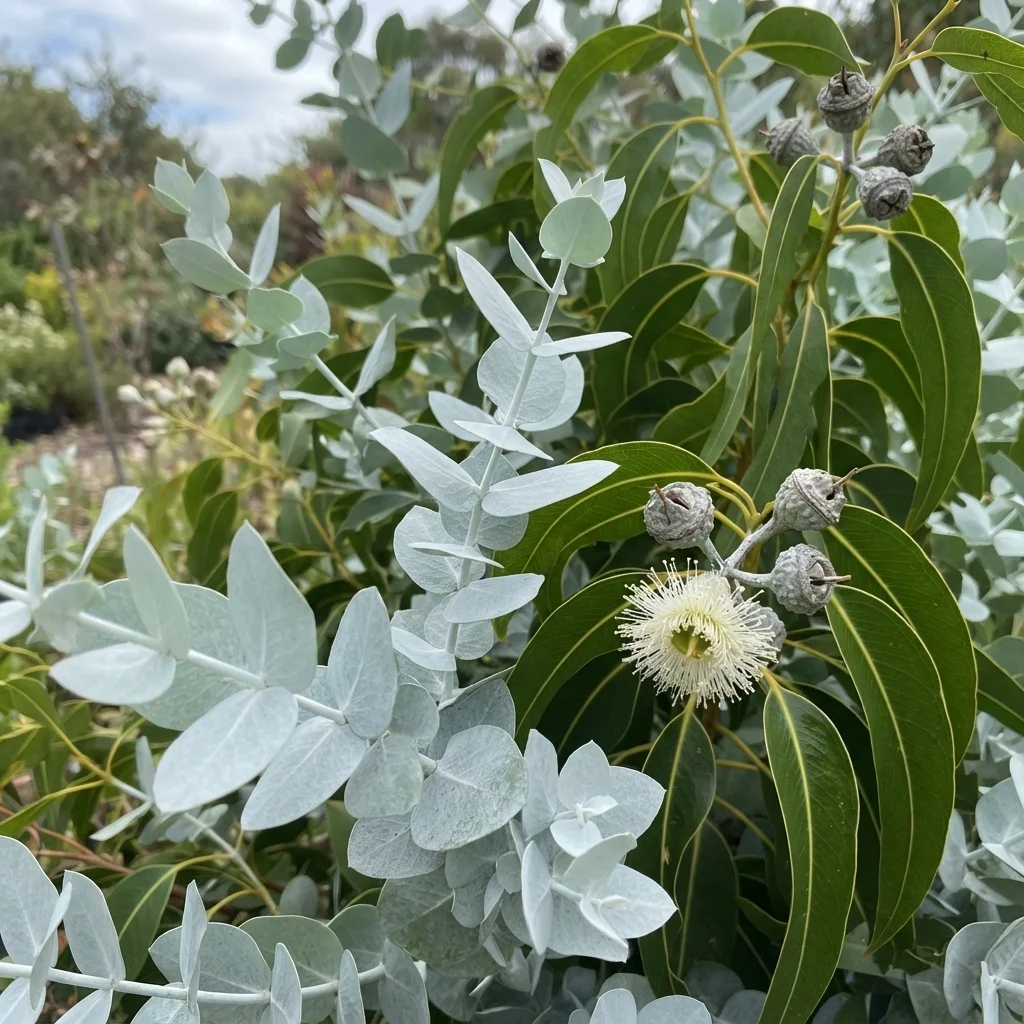
Tasmanian Blue Gum
Eucalyptus globulus
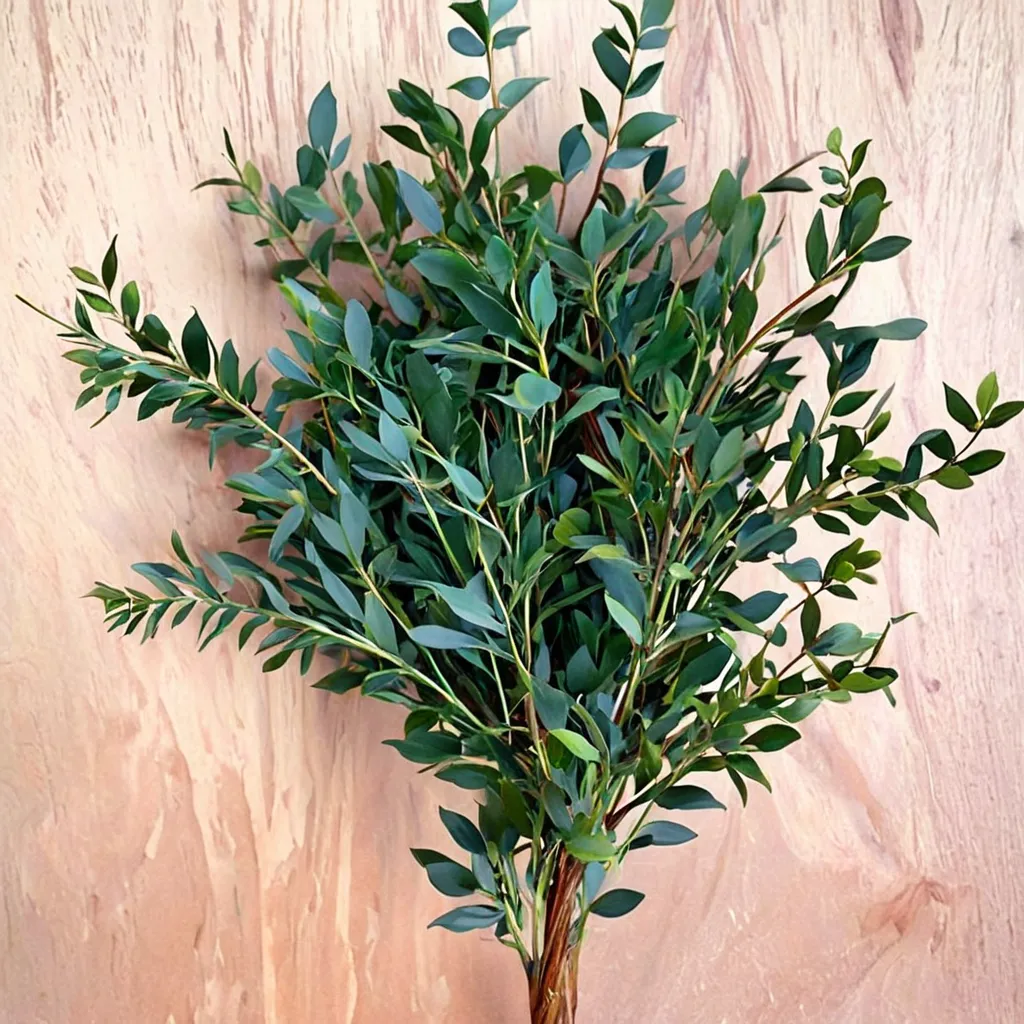
Small-leaved Gum
Eucalyptus parvula
Keep exploring
Explore the genus
Hardy in your zone?
Grow Lemon-flowered Gum with confidence
See it in a design of your actual yard, get zone-matched care reminders, and track it season by season in your garden journal.