The Story
Plant Bio
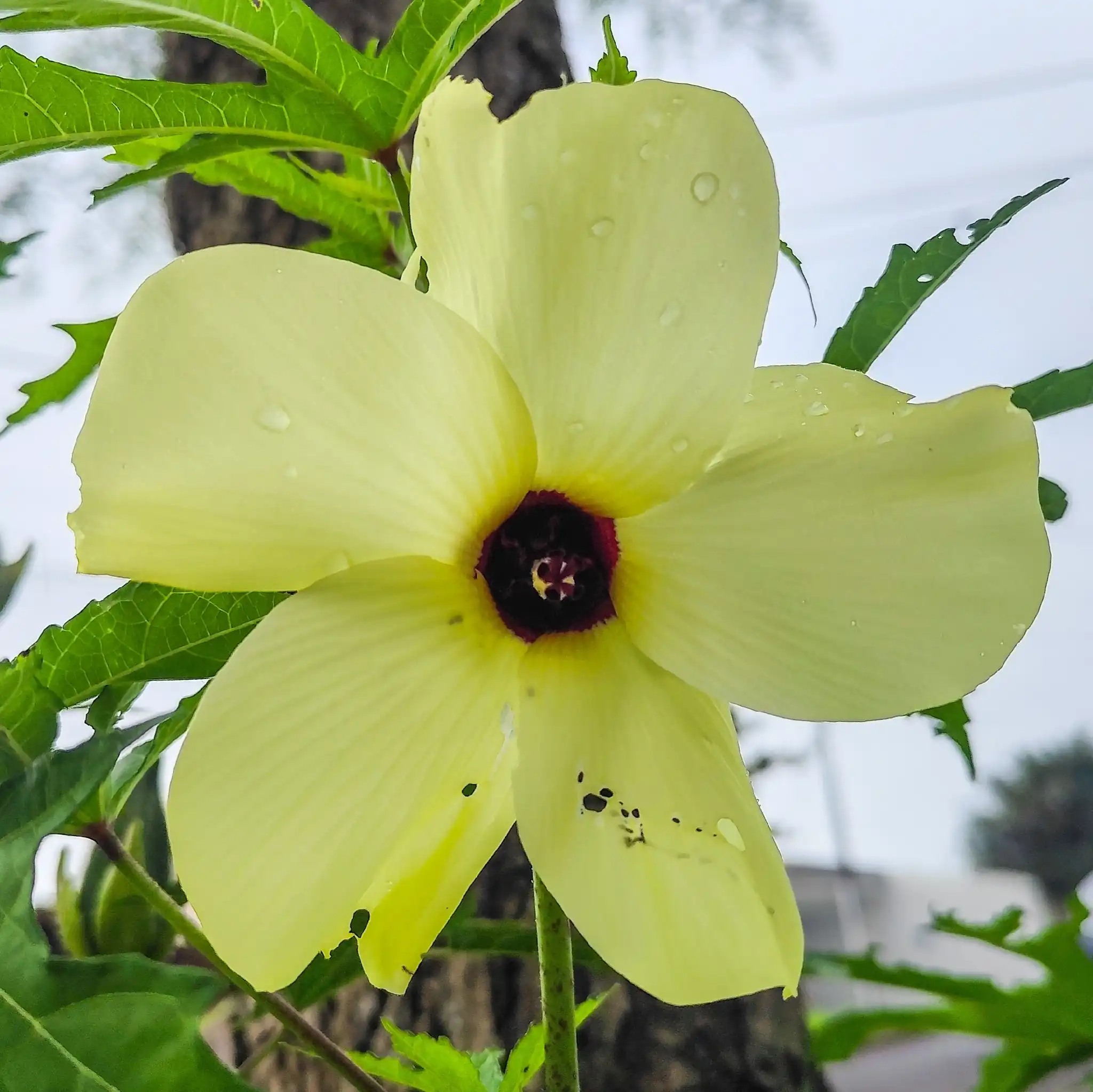
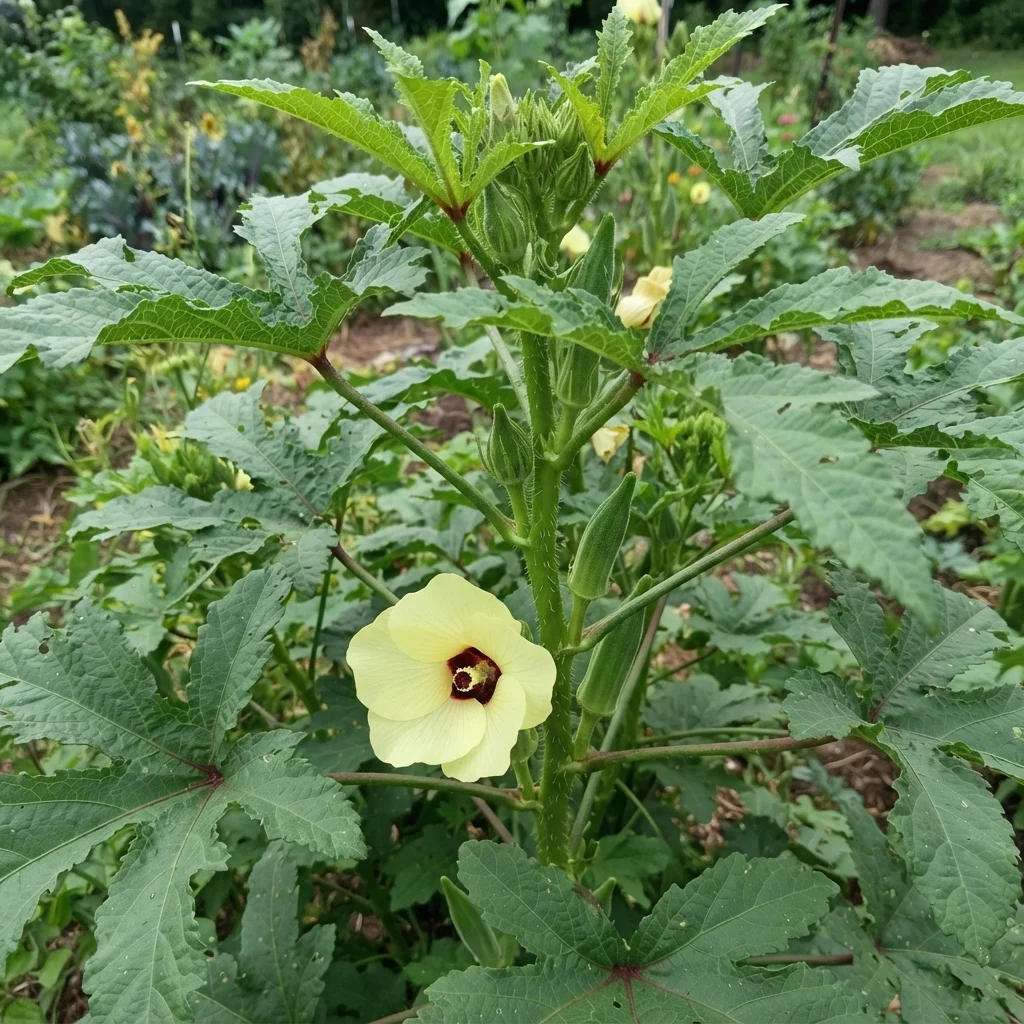
Abelmoschus manihot is a large fast-growing herbaceous perennial in the mallow family, reaching four to six feet tall and two to three feet wide in gardens, with loosely branched stems clothed in large palmate leaves six to eleven inches across with five to nine deep toothed lobes. Single hibiscus-like flowers four to five inches across open in the leaf axils along a central stalk, pale lemon-yellow with a dark maroon-purple eye.
Leaves, flowers and tubers are eaten cooked with a soft mucilaginous texture, and the rough bristly hairs on the foliage can irritate skin during harvest. Deer leave it alone but slugs, aphids and whiteflies still feed on it, and plants self-sow freely if spent flowers are left on, a habit unrelated to true cassava despite the manihot epithet.
Uses & Benefits:
Essentials
At a Glance
Plant Type
Perennial
Height
72"
Width
36"
Light
Full Sun, Partial Sun
Zones
8, 9, 10
Water
Medium
Humidity
Average
Lifespan
Short-lived perennial grown as annual
Native To
Tropical Asia to northern Australia
Toxicity
Non-toxic, edible cooked
Bloom period
Summer – Fall
In flower about 6 months of the year
Planting
How to Grow
- Set out after last frost in full sun in moist well-drained loam.
- Space two to three feet apart and water deeply at planting.
- Water regularly to keep soil evenly moist and apply fertilizer monthly.
- Deadhead spent blooms to limit volunteers and stake the central stalk if exposed.
- Cut stems to the ground after hard frost; replant as an annual where winter falls below Zone 8.
Pro Tip
Cut frost-killed stems to the ground in winter and let the crown regrow; deadhead spent flowers if you do not want seedlings next year.
Keep It Thriving
Care Guide
Do
- Water regularly to keep soil evenly moist
- Feed through the growing season for best leaf and flower production
- Deadhead to limit self-seeding
- Inspect leaf undersides for aphids and whiteflies
Don't
- Do not let soil stay soggy or dry out hard
- Do not cut back hard during summer - save rejuvenation for winter
- Do not eat leaves raw - cook to soften texture and hairs
Seasonal Care Calendar
| Task | Jan | Feb | Mar | Apr | May | Jun | Jul | Aug | Sep | Oct | Nov | Dec |
|---|---|---|---|---|---|---|---|---|---|---|---|---|
| Deadhead | ||||||||||||
| Fertilize | ||||||||||||
| Pest Check | ||||||||||||
| Plant | ||||||||||||
| Prune |
Watch Out For
Pests & Diseases
Common Pests
Common Diseases
In the Garden
Landscape Uses & Companions
Landscape Uses
Companion Plants
Multiply
Propagation Methods
Good to Know
Common Questions
Edible Hibiscus questions
What zones can Edible Hibiscus grow in?
Edible Hibiscus is hardy in USDA Zones 8–10: in that range it survives winter in the ground. Colder than Zone 8, grow it in a container you can move to shelter for the winter, or as an annual.
Is Edible Hibiscus deer resistant?
Yes — Edible Hibiscus is rated deer-resistant. Deer typically pass it over, though extreme hunger can override any plant's defenses.
When does Edible Hibiscus bloom?
Edible Hibiscus typically blooms from summer to fall. Exact timing shifts a week or two with your zone — Sow's bloom calendar maps it to your garden.
Does Edible Hibiscus need full sun?
Edible Hibiscus does best in full sun to part shade. In hot climates, afternoon shade keeps blooms fresher longer.
More Abelmoschus to compare
Keep exploring
Explore the genus
Hardy in your zone?
Grow Edible Hibiscus with confidence
See it in a design of your actual yard, get zone-matched care reminders, and track it season by season in your garden journal.