The Story
Plant Bio
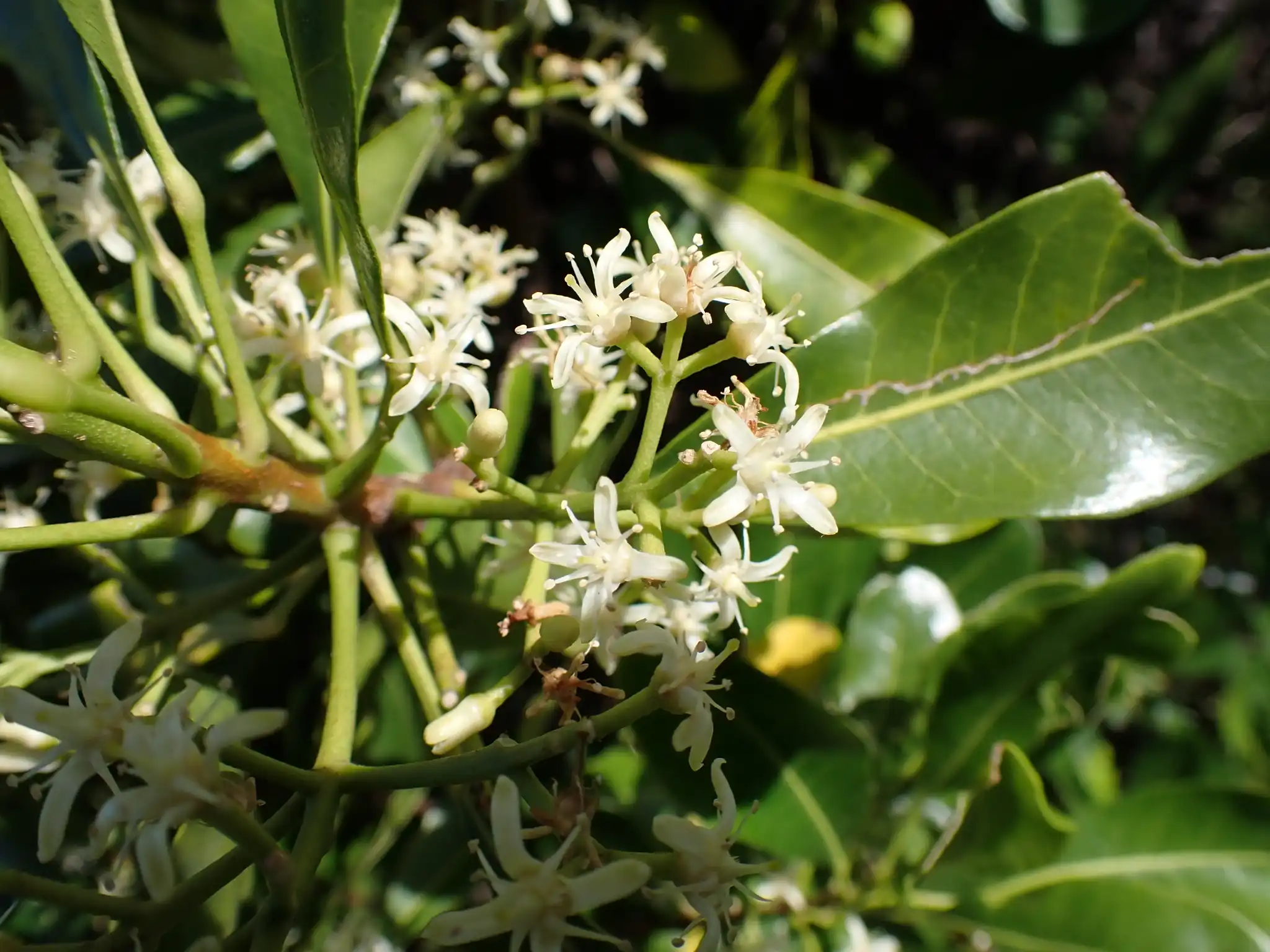
Acronychia oblongifolia is an evergreen shrub or small tree with glossy, dark green leaves that emit a distinct lemon scent when crushed. It produces small, creamy-white four-petaled flowers in axillary clusters through summer and fall, followed by fleshy edible white fruit.
The foliage features translucent oil glands that release aromatic essential oils upon handling. Its smooth dark brown bark display prominent lenticels on young stems, adding textural interest to semi-shaded garden spaces.
Uses & Benefits:
Essentials
At a Glance
Plant Type
Shrub
Height
276"
Width
197"
Light
Full Sun, Partial Sun
Zones
10
Water
Moderate
Humidity
Moderate to High
Lifespan
Perennial
Native To
Australia
Toxicity
Non-toxic (foliage oils may irritate sensitive skin)
Bloom period
Summer – Fall
In flower about 6 months of the year
Planting
How to Grow
- Select a container with wide drainage holes and fill with a rich, well-draining loamy potting mix.
- Position the plant where it receives bright morning sun and protection from intense afternoon heat.
- Water thoroughly when the top inch of soil feels dry, allowing all excess water to drain completely.
- Apply a light, balanced organic fertilizer in early spring to support new growth flushes.
Pro Tip
Avoid overwatering during the initial establishment phase; wet, stagnant soil rapidly triggers Phytophthora root rot before deep roots develop.
Keep It Thriving
Care Guide
Do
- Ensure soil drains rapidly after watering.
- Provide protection from hard freezing temperatures.
- Tip-prune lightly after flowering to maintain a bushy shape.
Don't
- Do not allow roots to sit in waterlogged soil.
- Do not cut heavily into old, leafless wood.
- Do not over-fertilize young, establishing plants.
Seasonal Care Calendar
| Task | Jan | Feb | Mar | Apr | May | Jun | Jul | Aug | Sep | Oct | Nov | Dec |
|---|---|---|---|---|---|---|---|---|---|---|---|---|
| Fertilize | ||||||||||||
| Pest Check | ||||||||||||
| Prune | ||||||||||||
| Winter Prep |
Watch Out For
Pests & Diseases
Common Pests
Common Diseases
In the Garden
Landscape Uses & Companions
Landscape Uses
Multiply
Propagation Methods
Good to Know
Common Questions
White Aspen questions
What zones can White Aspen grow in?
White Aspen is hardy in USDA Zone 10: in that range it survives winter in the ground. Colder than Zone 10, grow it in a container you can move to shelter for the winter.
Is White Aspen deer resistant?
Not reliably. Deer may browse White Aspen, especially tender spring growth — plan on repellents or fencing where pressure is high.
When does White Aspen bloom?
White Aspen typically blooms from summer to fall. Exact timing shifts a week or two with your zone — Sow's bloom calendar maps it to your garden.
Does White Aspen need full sun?
White Aspen does best in full sun to part shade. In hot climates, afternoon shade keeps blooms fresher longer.
Is White Aspen drought tolerant?
Yes — once established (usually after the first full season), White Aspen handles dry spells with minimal watering. Water deeply its first year to build the root system that makes that possible.
More Acronychia to compare
Keep exploring
Explore the genus
Hardy in your zone?
Grow White Aspen with confidence
See it in a design of your actual yard, get zone-matched care reminders, and track it season by season in your garden journal.