The Story
Plant Bio
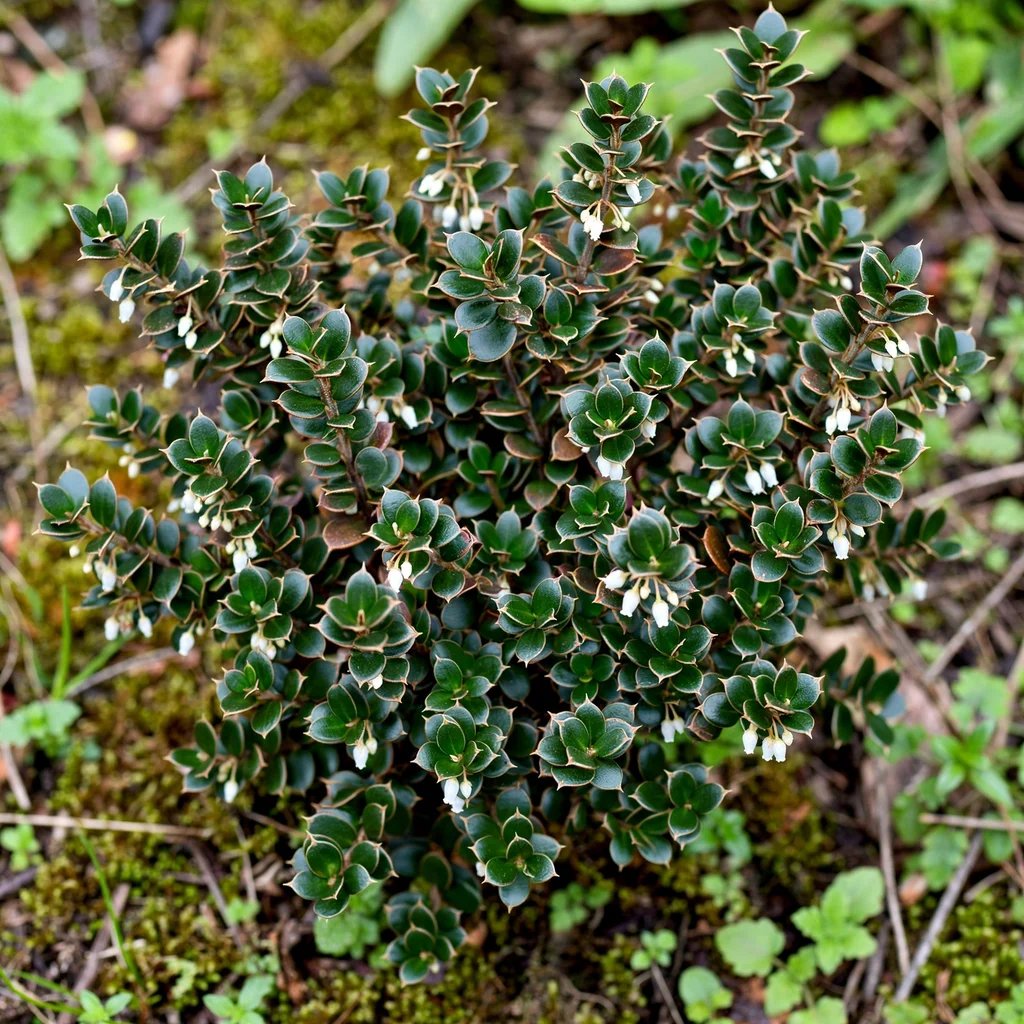
Gaultheria mucronata is a bushy evergreen shrub from southern Chile and Argentina that suckers to form dense thickets 3 to 5 feet tall and wide. The small dark green leathery leaves end in a sharp spine tip and turn bronze in winter.
It blooms in clusters of tiny nodding white bells, sometimes tinted pink, in late spring to early summer, followed by large fleshy berries in red, white, pink or purple that hold from fall into winter. Plants are usually male or female, so only female plants set berries and only when a male grows nearby for pollination.
Uses & Benefits:
Essentials
At a Glance
Plant Type
Shrub
Height
59"
Width
59"
Light
Partial Sun, Shade
Zones
7, 8, 9
Water
High
Humidity
Moderate
Lifespan
Long-lived woody shrub
Native To
Southern Chile and Argentina
Toxicity
Toxic if ingested
Bloom period
Late spring – Early summer
In flower about 2 months of the year
Planting
How to Grow
- Plant in spring in partial to full shade in acid, peaty soil that stays moist but drains freely.
- Set the root ball level with the soil surface and space plants 3 to 4 feet apart to allow suckering.
- Mulch with pine needles or bark to keep roots cool, moist and acid.
- Water deeply during dry spells, especially if grown in sun, never letting the root zone dry out.
- Pull unwanted suckers in summer to contain the patch and avoid lime or alkaline fertilizer.
Pro Tip
Plant one male for every few females or expect leaves and no berries, and pull unwanted suckers young instead of cutting back into old leafless wood, which does not resprout.
Keep It Thriving
Care Guide
Do
- Grow in acid to neutral soil with plenty of organic matter
- Keep soil consistently moist, especially in sun
- Mulch with ericaceous bark or pine needles
- Wear gloves when handling spiny-tipped foliage
Don't
- Do not plant in alkaline or limed soil
- Do not cut back into old leafless wood
- Do not let plants dry out in full sun
- Do not eat the ornamental berries
Seasonal Care Calendar
| Task | Jan | Feb | Mar | Apr | May | Jun | Jul | Aug | Sep | Oct | Nov | Dec |
|---|---|---|---|---|---|---|---|---|---|---|---|---|
| Mulch | ||||||||||||
| Plant | ||||||||||||
| Propagate | ||||||||||||
| Prune | ||||||||||||
| Winter Prep |
Watch Out For
Pests & Diseases
Common Pests
Common Diseases
In the Garden
Landscape Uses & Companions
Landscape Uses
Companion Plants
Multiply
Propagation Methods
Good to Know
Common Questions
Prickly Heath questions
What zones can Prickly Heath grow in?
Prickly Heath is hardy in USDA Zones 7–9: in that range it survives winter in the ground. Colder than Zone 7, grow it in a container you can move to shelter for the winter. Warmer than Zone 9, winter isn't the problem: it prefers colder winters, and summer heat can shorten its life.
When does Prickly Heath bloom?
Prickly Heath typically blooms from late spring to early summer. Exact timing shifts a week or two with your zone — Sow's bloom calendar maps it to your garden.
Does Prickly Heath need full sun?
Prickly Heath does best in part shade.
Keep exploring
Explore the genus
Hardy in your zone?
Grow Prickly Heath with confidence
See it in a design of your actual yard, get zone-matched care reminders, and track it season by season in your garden journal.