The Story
Plant Bio
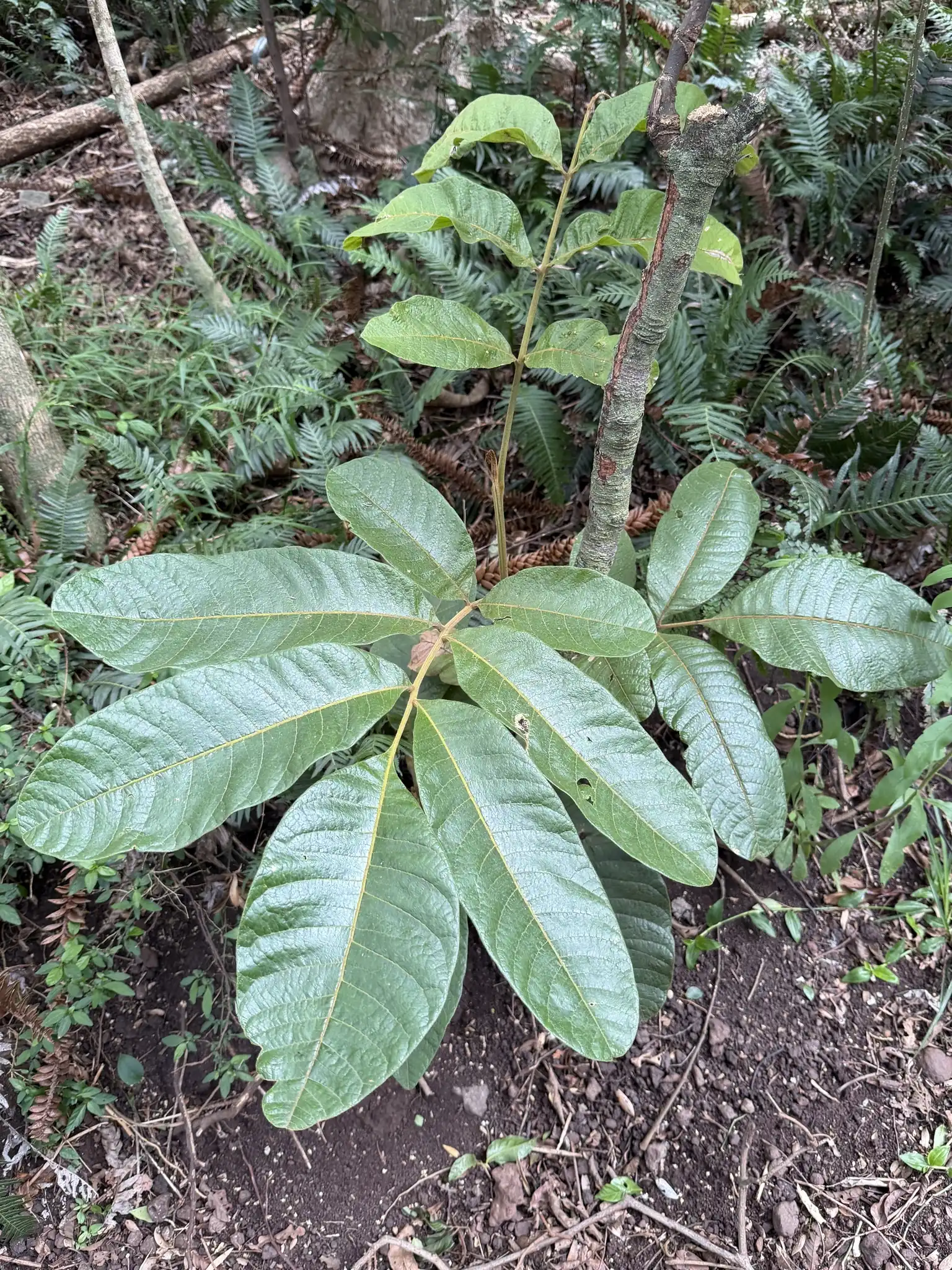
Diploglottis australis is a large evergreen rainforest tree that develops a dense canopy supported by a fluted trunk base on mature specimens. Large pinnate leaves reach up to two feet long, with young branchlets and emerging growth heavily coated in fuzzy, rusty-brown hairs.
Small yellowish-green spring flowers give way to clusters of fleshy fruit containing edible orange arils around dark seeds. The bold, ribbed foliage and brown woolly stems provide distinctive architectural texture year-round in frost-free climates.
Uses & Benefits:
Essentials
At a Glance
Plant Type
Tree
Height
1181"
Width
394"
Light
Full Sun, Partial Sun
Zones
10
Water
Medium
Humidity
High
Lifespan
Perennial
Native To
Australia
Toxicity
Non-toxic
Bloom period
Spring
In flower about 3 months of the year
Planting
How to Grow
- Select a site with rich, deep, organic loam that receives partial shade while young.
- Dig a planting hole twice the width of the root ball and set the plant level with the surrounding soil.
- Backfill with soil, firm down gently, and water thoroughly to settle the root system.
- Apply a thick layer of organic mulch around the base, keeping it clear of direct trunk contact.
Pro Tip
Establish young saplings under shade with deep mulch; exposed, unshaded planting in dry soil scorches the juvenile foliage and severely stunts development.
Keep It Thriving
Care Guide
Do
- Provide shade and shelter from harsh winds for young trees.
- Keep soil consistently moist with regular watering and organic mulch.
- Feed annually with a low-phosphorus native or organic fertilizer.
Don't
- Do not prune hard back into old, leafless wood.
- Do not plant young saplings into full, unshaded sun.
- Do not allow soil to sit saturated in stagnant water.
Seasonal Care Calendar
| Task | Jan | Feb | Mar | Apr | May | Jun | Jul | Aug | Sep | Oct | Nov | Dec |
|---|---|---|---|---|---|---|---|---|---|---|---|---|
| Fertilize | ||||||||||||
| Mulch | ||||||||||||
| Pest Check | ||||||||||||
| Prune |
Watch Out For
Pests & Diseases
Common Pests
Common Diseases
In the Garden
Landscape Uses & Companions
Landscape Uses
Multiply
Propagation Methods
Good to Know
Common Questions
Native Tamarind questions
What zones can Native Tamarind grow in?
Native Tamarind is hardy in USDA Zone 10: in that range it survives winter in the ground. Colder than Zone 10, winters are too cold for it to survive outdoors.
When does Native Tamarind bloom?
Native Tamarind typically blooms in spring. Exact timing shifts a week or two with your zone — Sow's bloom calendar maps it to your garden.
Does Native Tamarind need full sun?
Native Tamarind does best in full sun to part shade. In hot climates, afternoon shade keeps blooms fresher longer.
More Diploglottis to compare
Keep exploring
Explore the genus
Hardy in your zone?
Grow Native Tamarind with confidence
See it in a design of your actual yard, get zone-matched care reminders, and track it season by season in your garden journal.