The Story
Plant Bio
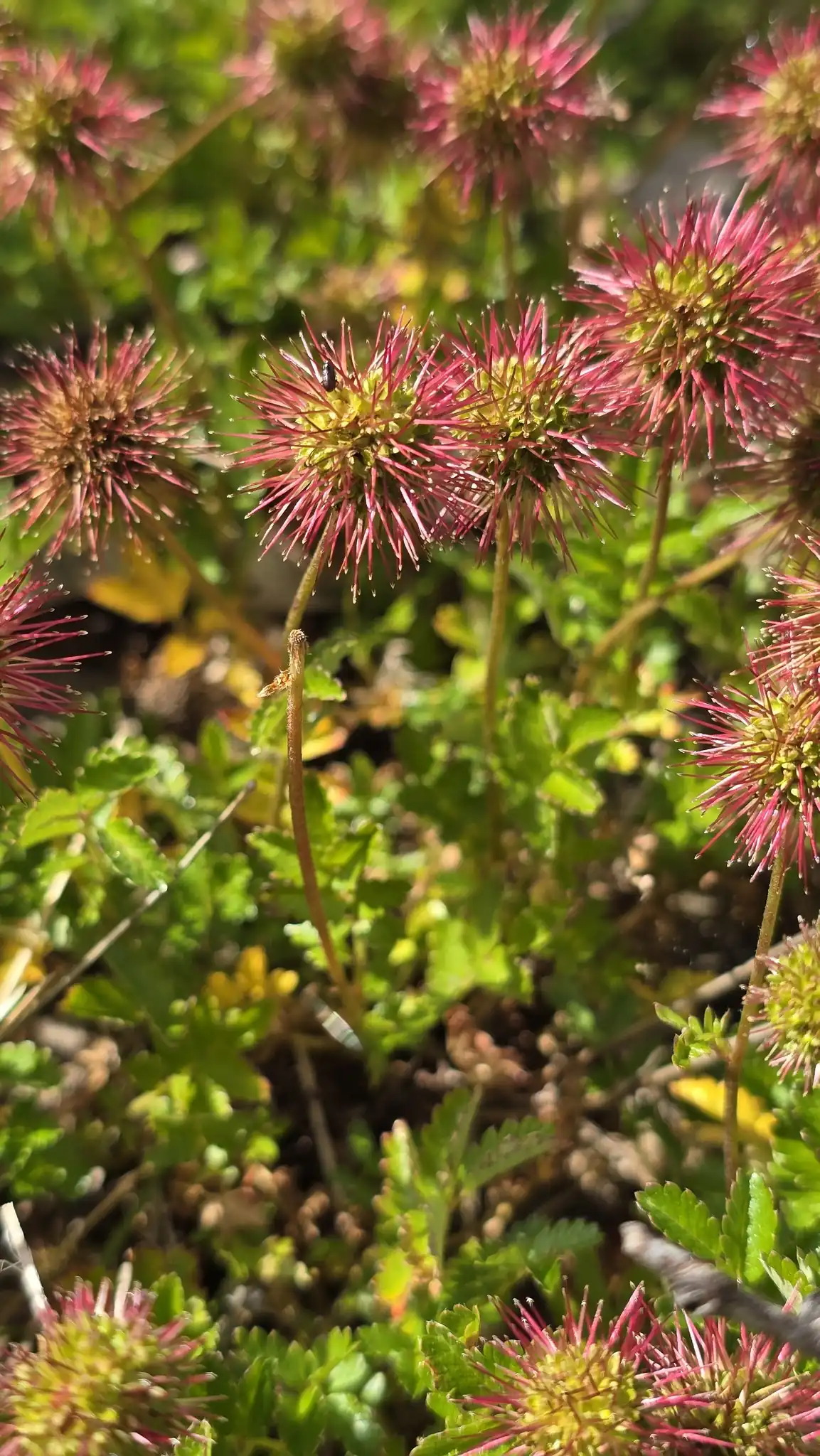
Acaena novae-zelandiae is a creeping perennial subshrub that forms dense, low mats of finely pinnate foliage emerging in shades of green to bronze-green. Tiny petal-less flowers pack into small spherical heads atop short stems in late spring, followed by mature fruiting heads bearing sharp, barbed spines.
This species spreads via rooting stolons to cover sandy or rocky ground, functioning as a tough low groundcover. The hooked burrs cling to passing clothing and animal fur, making it prone to unintended spreading if planted near high-traffic paths.
Uses & Benefits:
Essentials
At a Glance
Plant Type
Groundcover
Height
8"
Width
36"
Light
Full Sun, Partial Sun
Zones
6, 7, 8, 9
Water
Low
Humidity
Tolerates dry to moderate humidity
Lifespan
Perennial
Native To
New Zealand, Australia, Pacific islands
Toxicity
Non-toxic, but seed heads produce sharp, barbed burrs
Bloom period
Late spring – Late summer
In flower about 4 months of the year
Planting
How to Grow
- Select a site in full sun to partial shade with lean, well-drained soil.
- Space starter plugs or divisions 12 to 18 inches apart to accommodate spreading stolons.
- Water lightly after planting until roots establish into the surrounding soil.
- Avoid applying high-nitrogen fertilizer, which produces loose, leggy growth prone to stem decay.
Pro Tip
Trim trailing stolon edges with shears in early spring to prevent the mat from encroaching on adjacent plantings.
Keep It Thriving
Care Guide
Do
- Plant in sharp-draining sand or gravelly loam to keep root systems healthy.
- Prune back spreading runner edges annually to maintain clear garden borders.
- Expose to full sun for the densest foliage growth and strongest stem structure.
Don't
- Do not plant near dog runs, livestock pastures, or main walkways where burrs will catch on fur or clothing.
- Do not overwater or plant in heavy, waterlogged clay soils.
- Do not apply rich fertilizers, as excess nutrients cause leggy stems.
Seasonal Care Calendar
| Task | Jan | Feb | Mar | Apr | May | Jun | Jul | Aug | Sep | Oct | Nov | Dec |
|---|---|---|---|---|---|---|---|---|---|---|---|---|
| Pest Check | ||||||||||||
| Propagate | ||||||||||||
| Prune | ||||||||||||
| Spring Cleanup |
Watch Out For
Pests & Diseases
Common Pests
Common Diseases
In the Garden
Landscape Uses & Companions
Landscape Uses
Companion Plants
Multiply
Propagation Methods
Good to Know
Common Questions
Biddy-Biddy questions
What zones can Biddy-Biddy grow in?
Biddy-Biddy is hardy in USDA Zones 6–9: in that range it survives winter in the ground. Colder than Zone 6, grow it in a container you can move to shelter for the winter, or as an annual. Warmer than Zone 9, winter isn't the problem: it prefers colder winters, and summer heat can shorten its life.
When does Biddy-Biddy bloom?
Biddy-Biddy typically blooms from late spring to late summer. Exact timing shifts a week or two with your zone — Sow's bloom calendar maps it to your garden.
Does Biddy-Biddy need full sun?
Biddy-Biddy does best in full sun to part shade. In hot climates, afternoon shade keeps blooms fresher longer.
Is Biddy-Biddy drought tolerant?
Yes — once established (usually after the first full season), Biddy-Biddy handles dry spells with minimal watering. Water deeply its first year to build the root system that makes that possible.
More Acaena to compare
Keep exploring
Explore the genus
Hardy in your zone?
Grow Biddy-Biddy with confidence
See it in a design of your actual yard, get zone-matched care reminders, and track it season by season in your garden journal.