The Story
Plant Bio
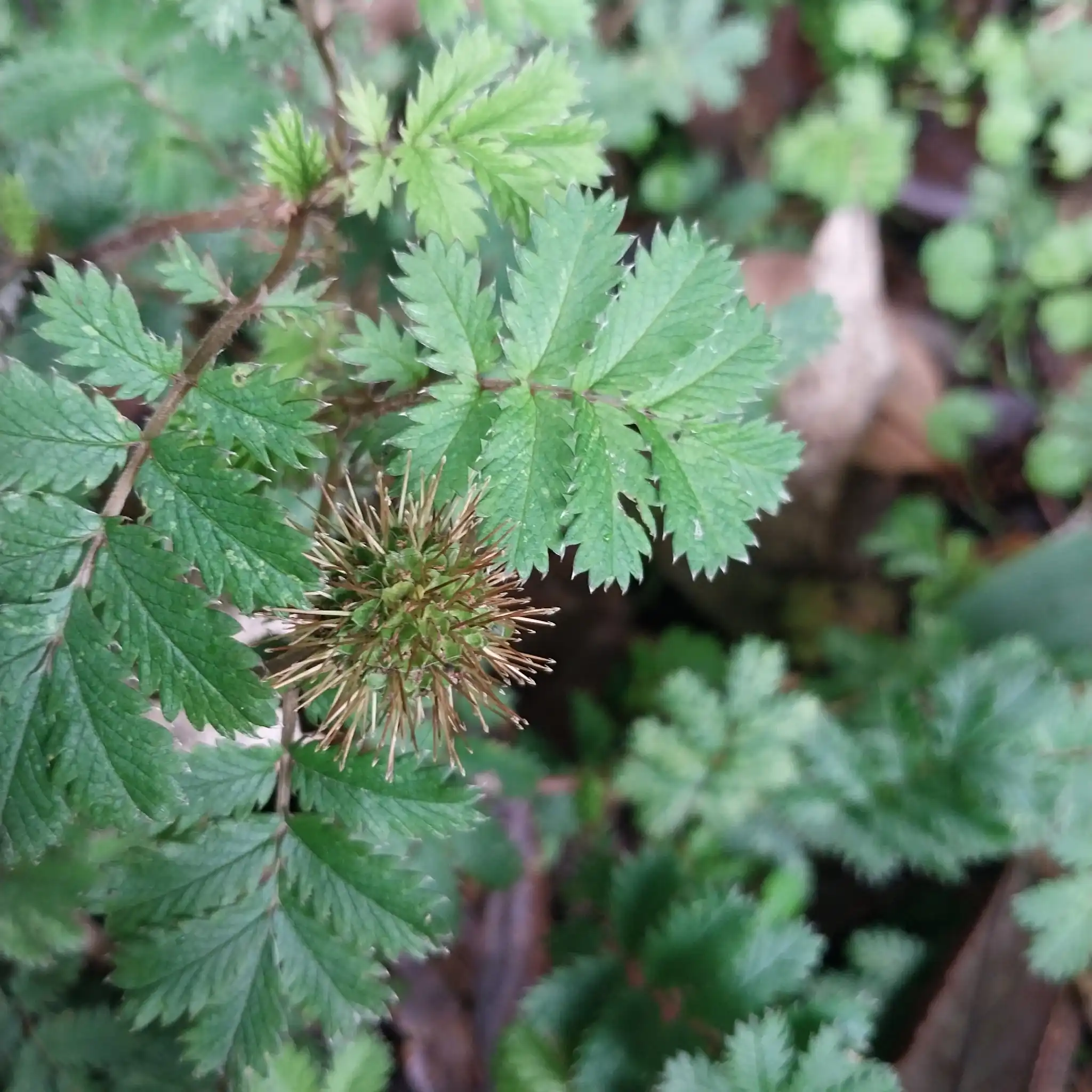
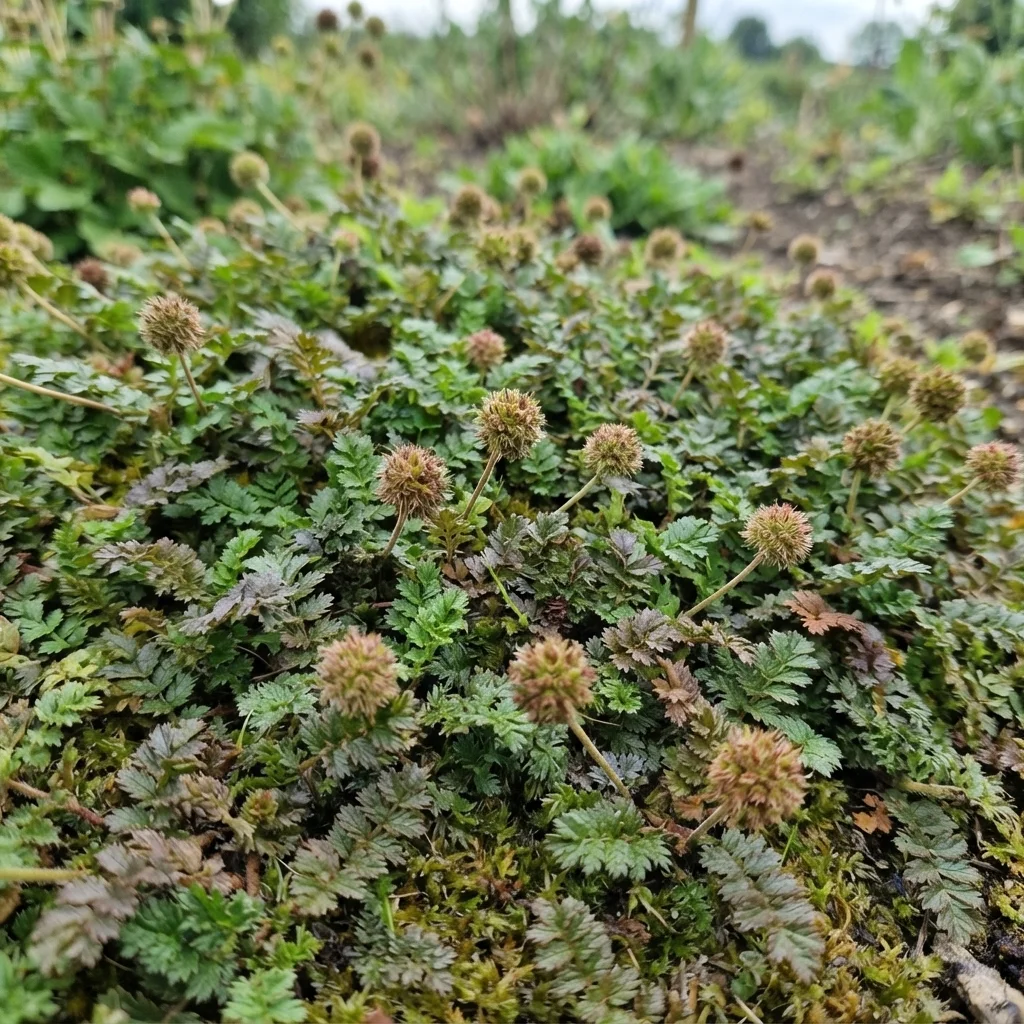
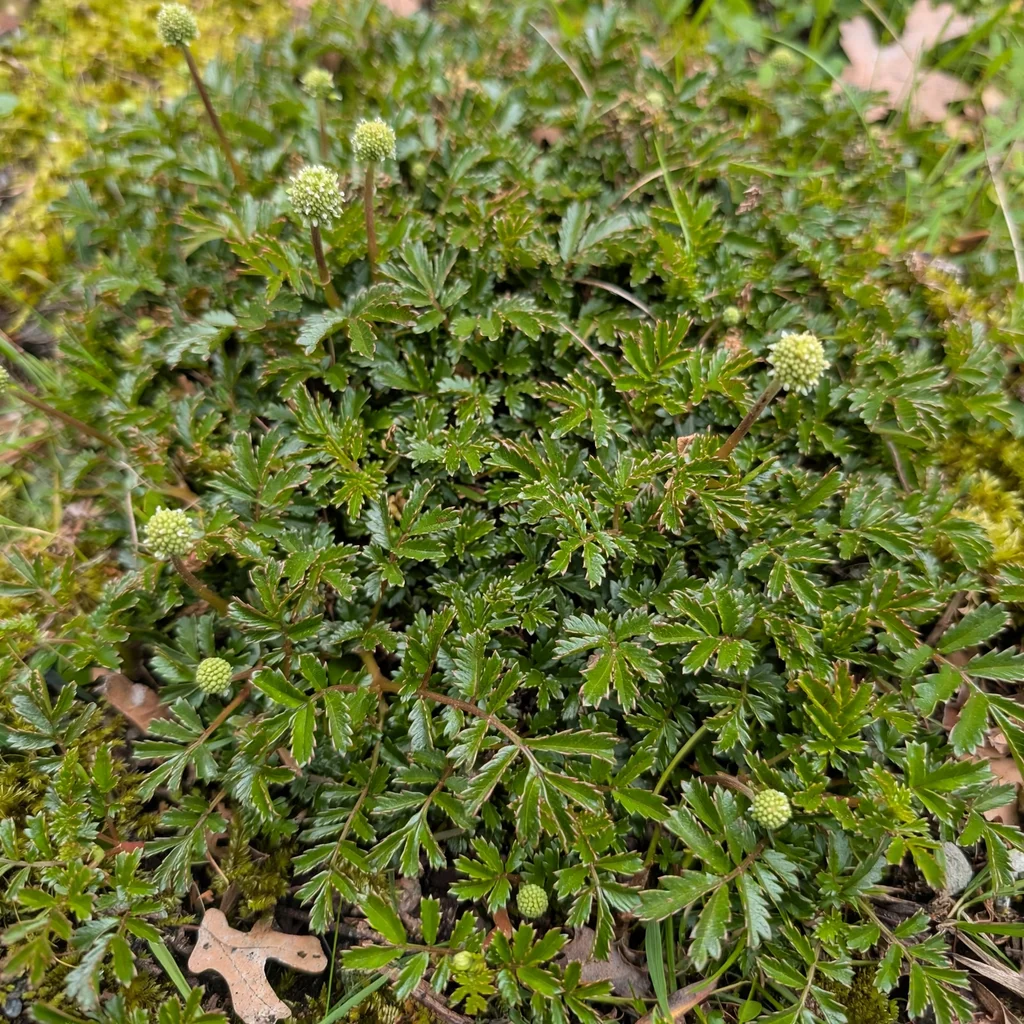
Acaena anserinifolia is a creeping, mat-forming perennial subshrub with rooting stolons that spreads to form a dense groundcover up to three feet wide. The pinnate foliage consists of small, sharply toothed, blue-green leaflets with silvery undersides and distinct hair tufts at the tips.
In late spring, tiny apetalous flower globes with white anthers appear above the foliage, ripening into spiky, barbed fruiting burs that catch easily on fur and clothing. The creeping, reddish-brown stems root continuously at the nodes as they expand, anchoring the mat across sloping or rocky terrain.
Uses & Benefits:
Essentials
At a Glance
Plant Type
Groundcover
Height
6"
Width
39"
Light
Full Sun, Partial Sun
Zones
7, 8, 9
Water
Low to Moderate
Humidity
Moderate
Lifespan
Perennial
Native To
New Zealand
Toxicity
Non-toxic
Bloom period
Late spring – Mid summer
In flower about 3 months of the year
Planting
How to Grow
- Select a site with full sun or partial shade in well-draining soil to prevent root rot.
- Space plants 18 to 24 inches apart to allow creeping stolons room to spread.
- Water moderately during the first growing season until root networks establish.
- Trim perimeter stolons in early spring if the mat begins to encroach on adjacent low-growing plants.
Pro Tip
Avoid cutting back into old, leafless woody stems at the base of the mat, as growth fails to regenerate from bare wood.
Keep It Thriving
Care Guide
Do
- Plant in sharply draining soil or coarse grit.
- Trim outer stolons to keep growth within intended garden bounds.
Don't
- Do not over-fertilize, as high soil fertility causes weak, leggy stems.
- Avoid planting in heavy clay or waterlogged soils.
Seasonal Care Calendar
| Task | Jan | Feb | Mar | Apr | May | Jun | Jul | Aug | Sep | Oct | Nov | Dec |
|---|---|---|---|---|---|---|---|---|---|---|---|---|
| Pest Check | ||||||||||||
| Propagate | ||||||||||||
| Prune | ||||||||||||
| Spring Cleanup |
Watch Out For
Pests & Diseases
Common Pests
Common Diseases
In the Garden
Landscape Uses & Companions
Landscape Uses
Companion Plants
Multiply
Propagation Methods
Good to Know
Common Questions
Bidibid questions
What zones can Bidibid grow in?
Bidibid is hardy in USDA Zones 7–9: in that range it survives winter in the ground. Colder than Zone 7, grow it in a container you can move to shelter for the winter, or as an annual. Warmer than Zone 9, winter isn't the problem: it prefers colder winters, and summer heat can shorten its life.
Is Bidibid deer resistant?
Yes — Bidibid is rated deer-resistant. Deer typically pass it over, though extreme hunger can override any plant's defenses.
When does Bidibid bloom?
Bidibid typically blooms from late spring to mid-summer. Exact timing shifts a week or two with your zone — Sow's bloom calendar maps it to your garden.
Does Bidibid need full sun?
Bidibid does best in full sun to part shade. In hot climates, afternoon shade keeps blooms fresher longer.
Is Bidibid drought tolerant?
Yes — once established (usually after the first full season), Bidibid handles dry spells with minimal watering. Water deeply its first year to build the root system that makes that possible.
More Acaena to compare
Keep exploring
Explore the genus
Hardy in your zone?
Grow Bidibid with confidence
See it in a design of your actual yard, get zone-matched care reminders, and track it season by season in your garden journal.