The Story
Plant Bio
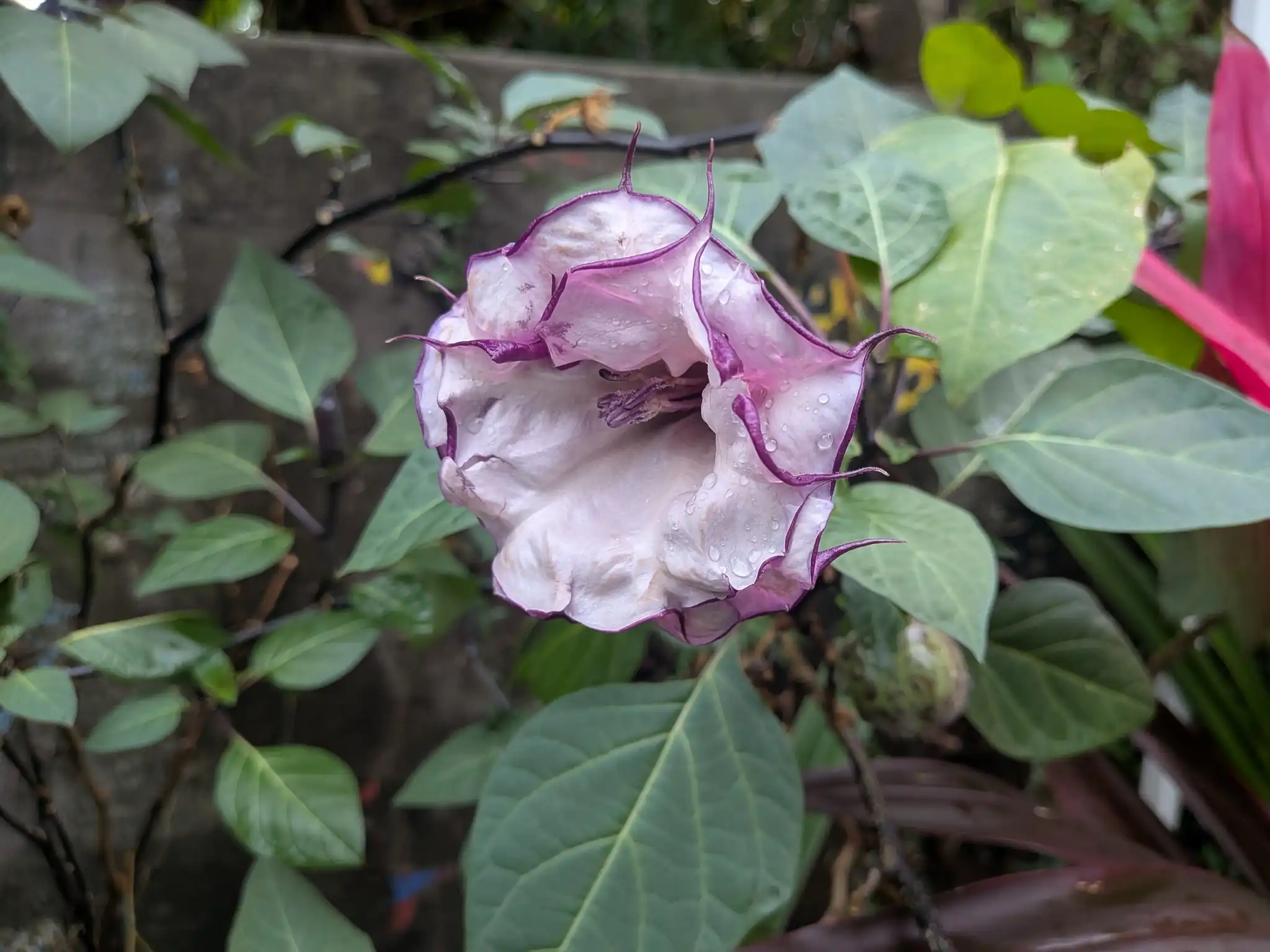
Datura metel is a shrubby, sprawling tender perennial reaching three to four feet high and wide, with ovate dark green leaves to eight inches long that release a disagreeable odor when bruised. Single upright trumpets to seven inches long open from cigar-shaped buds, each with a wide four-inch mouth.
Flowers open in white, yellow, lilac or dark purple, including double and triple forms that are deep purple outside and pale lavender-white inside, each lasting a single night into the next midday. It differs from Brugmansia in bearing upright short-lived flowers on a low plant, not pendulous long-lived flowers on a woody shrub or tree.
Uses & Benefits:
Essentials
At a Glance
Plant Type
Perennial
Height
42"
Width
42"
Light
Full Sun, Partial Sun
Zones
9, 10
Water
Medium
Humidity
Unknown
Lifespan
Tender perennial grown as annual
Native To
Garden origin; wild range disputed
Toxicity
Extremely toxic if ingested
Bloom period
Summer – Fall
In flower about 6 months of the year
Planting
How to Grow
- Plant in full sun in rich, humusy, well-drained loam after all frost danger has passed, spacing about 3 feet apart.
- Water regularly to keep soil evenly moist and stake sprawling stems at planting.
- Cut back potted plants and move containers to a sunny indoor spot before first fall frost where not hardy.
- Remove spent flowers before pods ripen if self-sowing is not wanted; seed can be collected from fully ripe pods.
Pro Tip
Stake stems at planting and remove spent flowers before pods ripen to limit self-sowing; plants bloom without deadheading.
Keep It Thriving
Care Guide
Do
- Plant in full sun in rich well-drained soil with regular moisture
- Stake sprawling stems early to hold upright trumpets clear of soil
- Bring containers indoors to a sunny spot for winter in cold zones
Don't
- Do not eat any part of the plant and keep it from children, pets and livestock
- Do not plant in full shade or waterlogged soil
- Do not let pods ripen and scatter where self-sowing is unwanted
- Do not cut back hard into old leafless stems
Seasonal Care Calendar
| Task | Jan | Feb | Mar | Apr | May | Jun | Jul | Aug | Sep | Oct | Nov | Dec |
|---|---|---|---|---|---|---|---|---|---|---|---|---|
| Deadhead | ||||||||||||
| Pest Check | ||||||||||||
| Plant | ||||||||||||
| Stake | ||||||||||||
| Winter Prep |
Watch Out For
Pests & Diseases
Common Pests
In the Garden
Landscape Uses & Companions
Landscape Uses
Companion Plants
Multiply
Propagation Methods
Good to Know
Common Questions
Devil's Trumpet questions
What zones can Devil's Trumpet grow in?
Devil's Trumpet is hardy in USDA Zones 9–10: in that range it survives winter in the ground. Colder than Zone 9, grow it in a container you can move to shelter for the winter, or as an annual.
When does Devil's Trumpet bloom?
Devil's Trumpet typically blooms from summer to fall. Exact timing shifts a week or two with your zone — Sow's bloom calendar maps it to your garden.
Does Devil's Trumpet need full sun?
Devil's Trumpet does best in full sun to part shade. In hot climates, afternoon shade keeps blooms fresher longer.
Is Devil's Trumpet drought tolerant?
Yes — once established (usually after the first full season), Devil's Trumpet handles dry spells with minimal watering. Water deeply its first year to build the root system that makes that possible.
More Datura to compare
Keep exploring
Explore the genus
Hardy in your zone?
Grow Devil's Trumpet with confidence
See it in a design of your actual yard, get zone-matched care reminders, and track it season by season in your garden journal.