The Story
Plant Bio
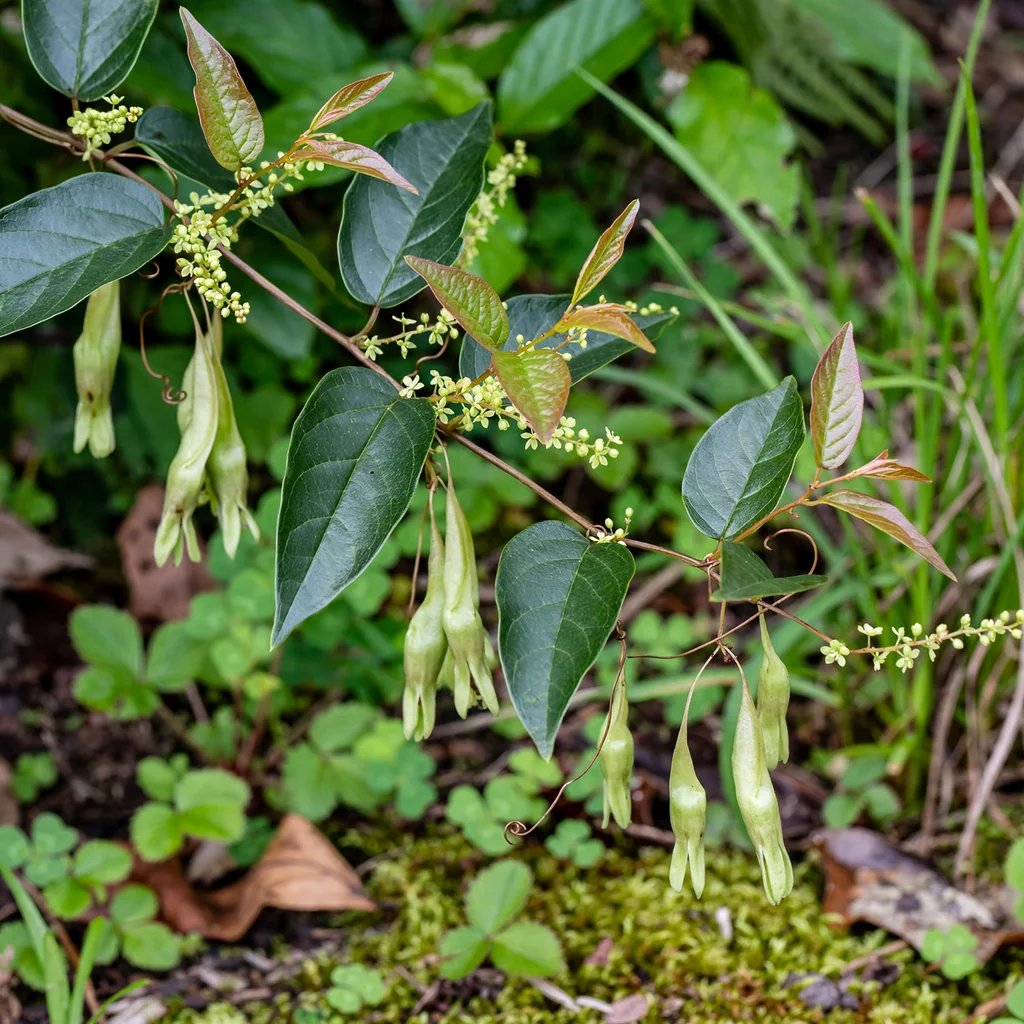
Brunnichia ovata, the American buckwheat vine, is a deciduous soft-wooded liana that climbs 15 feet or more by forked tendrils, with stems to 42 feet long that root where nodes touch damp soil. Alternate ovate leaves 1 to 6 inches long are dark glossy green with an acute tip, and small greenish-yellow flowers are borne in clusters of two to five along racemes 2 to 10 inches long.
The display is the fruit, not the flower: the calyx persists and enlarges into a thin leathery wing around each 8 to 10 mm achene, hanging like eardrops through fall and holding into spring. It is a vigorous floodplain endemic listed as weedy in southern cropland, hardy without protection for decades, and too rampant for small gardens.
Uses & Benefits:
Essentials
At a Glance
Plant Type
Vine
Height
512"
Width
144"
Light
Full Sun, Partial Sun, Shade
Zones
5, 6, 7, 8, 9
Water
High
Humidity
High
Lifespan
Woody perennial vine
Native To
Southeastern and south-central USA
Toxicity
Unknown
Bloom period
Early summer – Mid summer
In flower about 2 months of the year
Planting
How to Grow
- Choose a moist to wet spot in full sun to part shade with a large tree, fence, or heavy trellis to carry a 15-foot-plus vine.
- Dig a hole twice the pot width in bottomland loam or clay, set the crown level, backfill and water deeply.
- Guide stems to the support and water to keep soil consistently moist through the first summer.
- Cut back wandering and rooting stems each dormant season to keep it on its support.
Pro Tip
Give it a stout support in moist bottomland soil away from crops and beds, and cut wandering stems that layer at the nodes before seed matures.
Keep It Thriving
Care Guide
Do
- Plant in consistently moist bottomland soil.
- Provide a strong, tall support.
- Control layering stems to limit spread.
Don't
- Do not plant in a small bed or near vegetable ground where redvine is a crop weed.
- Do not expect showy flowers; grow it for the persistent winged fruits.
- Do not let stems root unchecked into surrounding woods.
Seasonal Care Calendar
| Task | Jan | Feb | Mar | Apr | May | Jun | Jul | Aug | Sep | Oct | Nov | Dec |
|---|---|---|---|---|---|---|---|---|---|---|---|---|
| Mulch | ||||||||||||
| Pest Check | ||||||||||||
| Plant | ||||||||||||
| Prune | ||||||||||||
| Stake |
Watch Out For
Pests & Diseases
Common Pests
Common Diseases
In the Garden
Landscape Uses & Companions
Landscape Uses
Multiply
Propagation Methods
Good to Know
Common Questions
American Buckwheat Vine questions
What zones can American Buckwheat Vine grow in?
American Buckwheat Vine is hardy in USDA Zones 5–9: in that range it survives winter in the ground. Colder than Zone 5, grow it in a container you can move to shelter for the winter, or as an annual. Warmer than Zone 9, winter isn't the problem: it prefers colder winters, and summer heat can shorten its life.
When does American Buckwheat Vine bloom?
American Buckwheat Vine typically blooms in early to mid-summer. Exact timing shifts a week or two with your zone — Sow's bloom calendar maps it to your garden.
Does American Buckwheat Vine need full sun?
American Buckwheat Vine does best in full sun to part shade. In hot climates, afternoon shade keeps blooms fresher longer.
Keep exploring
Explore the genus
Hardy in your zone?
Grow American Buckwheat Vine with confidence
See it in a design of your actual yard, get zone-matched care reminders, and track it season by season in your garden journal.