The Story
Plant Bio
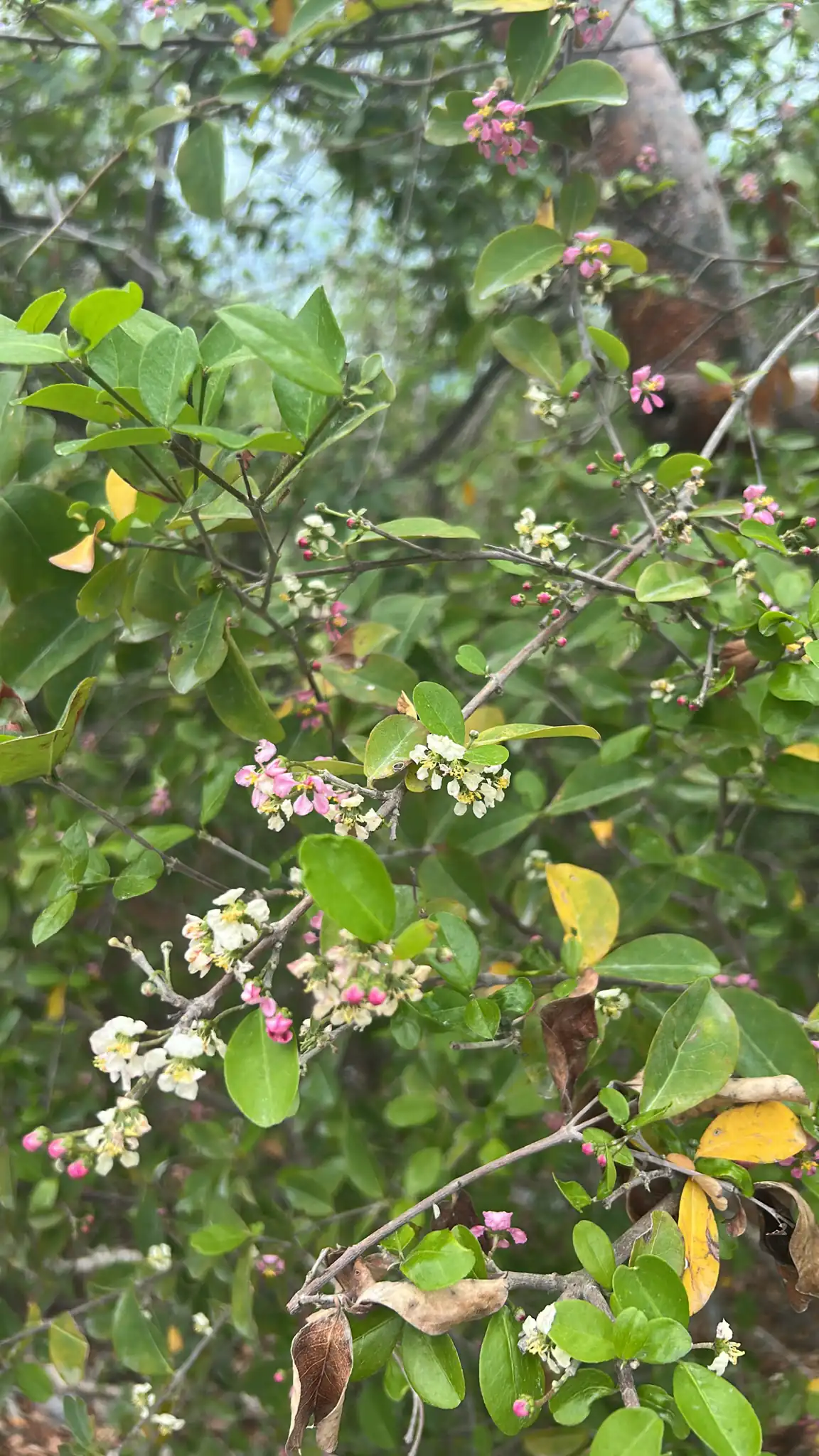
Malpighia glabra, the Barbados cherry, is an open upright evergreen shrub to small tree reaching 10 to 12 feet tall and wide, with slender branches and glossy light to deep green ovate leaves 2 to 4 inches long. The bloom is a five-petalled fringed flower about 1 cm across in pale pink to rose, borne singly or in small clusters in the leaf axils from spring into fall, followed by tart crimson fruit.
True Malpighia glabra is the wild southern Texas to tropical American species with small 0.5- to 1-inch fruit that is sharp and thin-fleshed, not the large sweet acerola selected from Malpighia emarginata. It grows slowly, holds its foliage through winter where frost-free, and sets fruit for birds over a long season while tolerating heat and drought once established.
Uses & Benefits:
Essentials
At a Glance
Plant Type
Shrub
Height
144"
Width
144"
Light
Full Sun, Partial Sun
Zones
9, 10
Water
Low once established
Humidity
Tolerant
Lifespan
Woody perennial
Native To
S. Texas to tropical America and Caribbean
Toxicity
Non-toxic; edible fruit
Bloom period
Spring – Fall
In flower about 9 months of the year
Planting
How to Grow
- Plant in spring after last frost in full sun to part shade in fertile, fast-draining sandy loam.
- Set at nursery depth, water in deeply, then mulch 3 to 4 inches over the root zone keeping mulch off the stem.
- Water regularly through the first summer, then taper to deep occasional soakings; established plants handle drought.
- Tip-prune lightly after fruiting flushes to keep an open upright form; no hard annual cut is needed.
- Protect from frost below freezing and from salt spray; grow in a pot to move inside at the northern edge of zone 9B.
Pro Tip
Mulch heavily over the root zone on sand to suppress nematodes and hold moisture, and site in fertile, fast-draining soil in full sun to part shade where winter stays above freezing.
Keep It Thriving
Care Guide
Do
- Do mulch heavily on sand to discourage nematodes and hold moisture.
- Do give full sun to part shade and sharp drainage.
- Do pick fruit fully crimson for fresh use.
Don't
- Do not plant in salty or waterlogged soil.
- Do not expose to frost without protection.
- Do not buy mislabeled sweet acerola stock if you want the true wild species.
Seasonal Care Calendar
| Task | Jan | Feb | Mar | Apr | May | Jun | Jul | Aug | Sep | Oct | Nov | Dec |
|---|---|---|---|---|---|---|---|---|---|---|---|---|
| Harvest | ||||||||||||
| Mulch | ||||||||||||
| Pest Check | ||||||||||||
| Plant | ||||||||||||
| Prune |
Watch Out For
Pests & Diseases
Common Pests
Common Diseases
In the Garden
Landscape Uses & Companions
Landscape Uses
Companion Plants
Multiply
Propagation Methods
Good to Know
Common Questions
Barbados Cherry questions
What zones can Barbados Cherry grow in?
Barbados Cherry is hardy in USDA Zones 9–10: in that range it survives winter in the ground. Colder than Zone 9, grow it in a container you can move to shelter for the winter.
When does Barbados Cherry bloom?
Barbados Cherry typically blooms from spring to fall. Exact timing shifts a week or two with your zone — Sow's bloom calendar maps it to your garden.
Does Barbados Cherry need full sun?
Barbados Cherry does best in full sun to part shade. In hot climates, afternoon shade keeps blooms fresher longer.
Is Barbados Cherry drought tolerant?
Yes — once established (usually after the first full season), Barbados Cherry handles dry spells with minimal watering. Water deeply its first year to build the root system that makes that possible.
Keep exploring
Explore the genus
Hardy in your zone?
Grow Barbados Cherry with confidence
See it in a design of your actual yard, get zone-matched care reminders, and track it season by season in your garden journal.