
The Story
Plant Bio
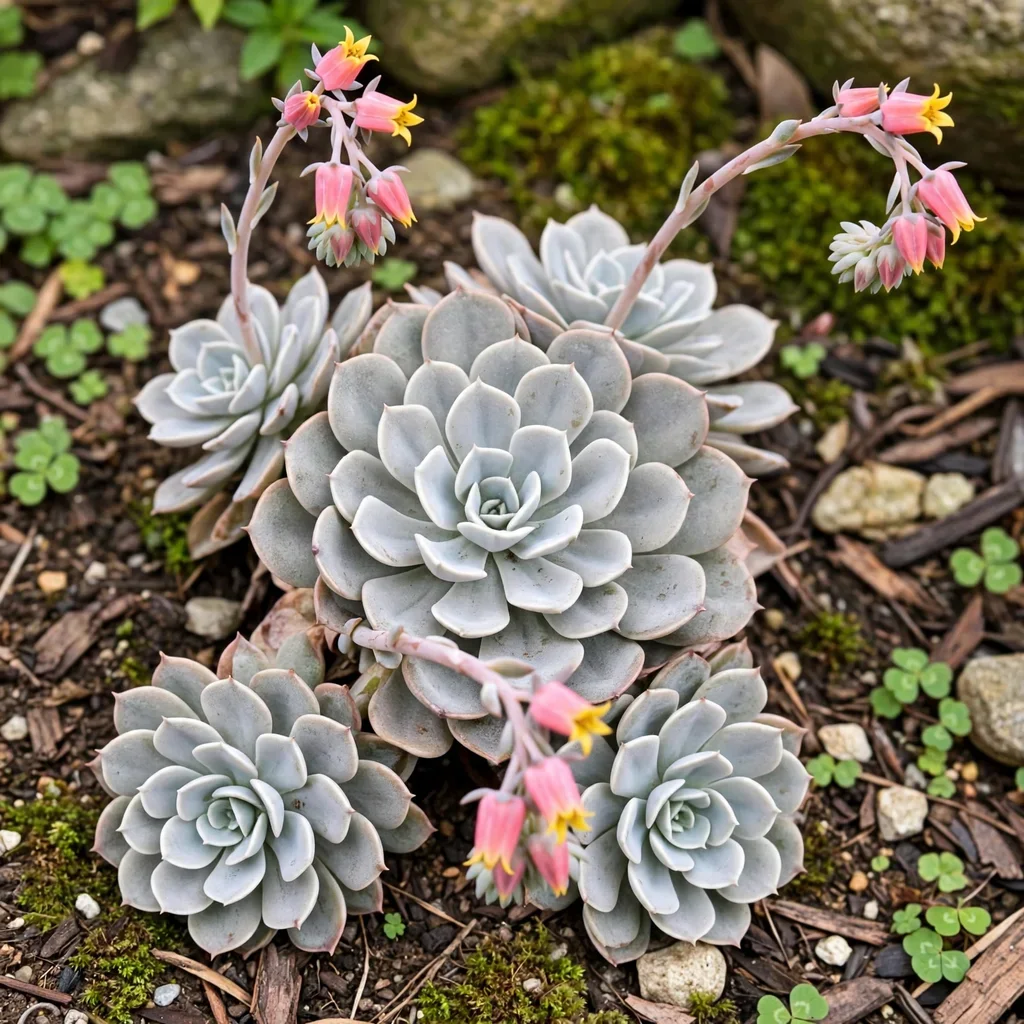
Echeveria haagai, the trade name applied to plants of Echeveria tolimanensis, is a fleshy evergreen succulent from rocky ground in Hidalgo, Queretaro and Tamaulipas, forming a tight blue-grey rosette atop short stems. Leaves store water in thick spoon-shaped tissue that blushes deep purple-pink in full sun, and tall stalks lift hanging coral-red bells clear of the foliage in summer.
'Tolimanensis' holds thick upright dove-grey leaves 2 to 3 inches long rather than a flat rosette, branching from the base to form a small shrubby clump 5 to 6 inches wide. It keeps compact form and grey-purple color only in full sun to bright light, sending up a 9 to 12 inch stalk of coral-red to orange-yellow bells in summer.
Uses & Benefits:
Essentials
At a Glance
Plant Type
Cactus Succulent
Height
3"
Width
6"
Light
Full Sun, Partial Sun
Zones
9, 10
Water
Low
Humidity
Low
Lifespan
Perennial
Native To
Mexico - Hidalgo, Queretaro, Tamaulipas
Toxicity
Non-toxic to cats and dogs
Bloom period
Summer
In flower about 3 months of the year
Planting
How to Grow
- Set in full sun to bright light, such as a south-facing window or frost-free patio after nights stay above 50F.
- Pot in a gritty fast-draining cactus and succulent mix with the stem base just above the soil line.
- Water deeply only when the mix is fully dry, then withhold water in winter when growth slows.
- Keep above 50F and protect from frost; bring containers indoors well before first frost.
- Remove spent bloom stalks and dead lower leaves to keep the center dry and airy.
Pro Tip
Give it the sunniest windowsill and the grittiest mix you have, and water only when dry because overwatering rots the stem faster than drought checks it.
Keep It Thriving
Care Guide
Do
- Give full sun to keep leaves compact and purple-grey
- Let soil dry fully between waterings
- Use a gritty succulent mix in pots with drainage holes
Don't
- Do not overwater or leave in saucers of water
- Do not cut back into bare old stems except spent bloom stalks
- Do not expose to frost or temperatures below 50F
Seasonal Care Calendar
| Task | Jan | Feb | Mar | Apr | May | Jun | Jul | Aug | Sep | Oct | Nov | Dec |
|---|---|---|---|---|---|---|---|---|---|---|---|---|
| Pest Check | ||||||||||||
| Plant | ||||||||||||
| Propagate | ||||||||||||
| Prune | ||||||||||||
| Winter Prep |
Watch Out For
Pests & Diseases
Common Pests
Common Diseases
In the Garden
Landscape Uses & Companions
Landscape Uses
Multiply
Propagation Methods
Good to Know
Common Questions
Tolimanensis questions
What zones can Tolimanensis grow in?
Tolimanensis is hardy in USDA Zones 9–10: in that range it survives winter in the ground. Colder than Zone 9, grow it in a container you can move to shelter for the winter, or as an annual.
When does Tolimanensis bloom?
Tolimanensis typically blooms in summer. Exact timing shifts a week or two with your zone — Sow's bloom calendar maps it to your garden.
Does Tolimanensis need full sun?
Tolimanensis does best in full sun to part shade. In hot climates, afternoon shade keeps blooms fresher longer.
Is Tolimanensis drought tolerant?
Yes — once established (usually after the first full season), Tolimanensis handles dry spells with minimal watering. Water deeply its first year to build the root system that makes that possible.
More Echeveria to compare
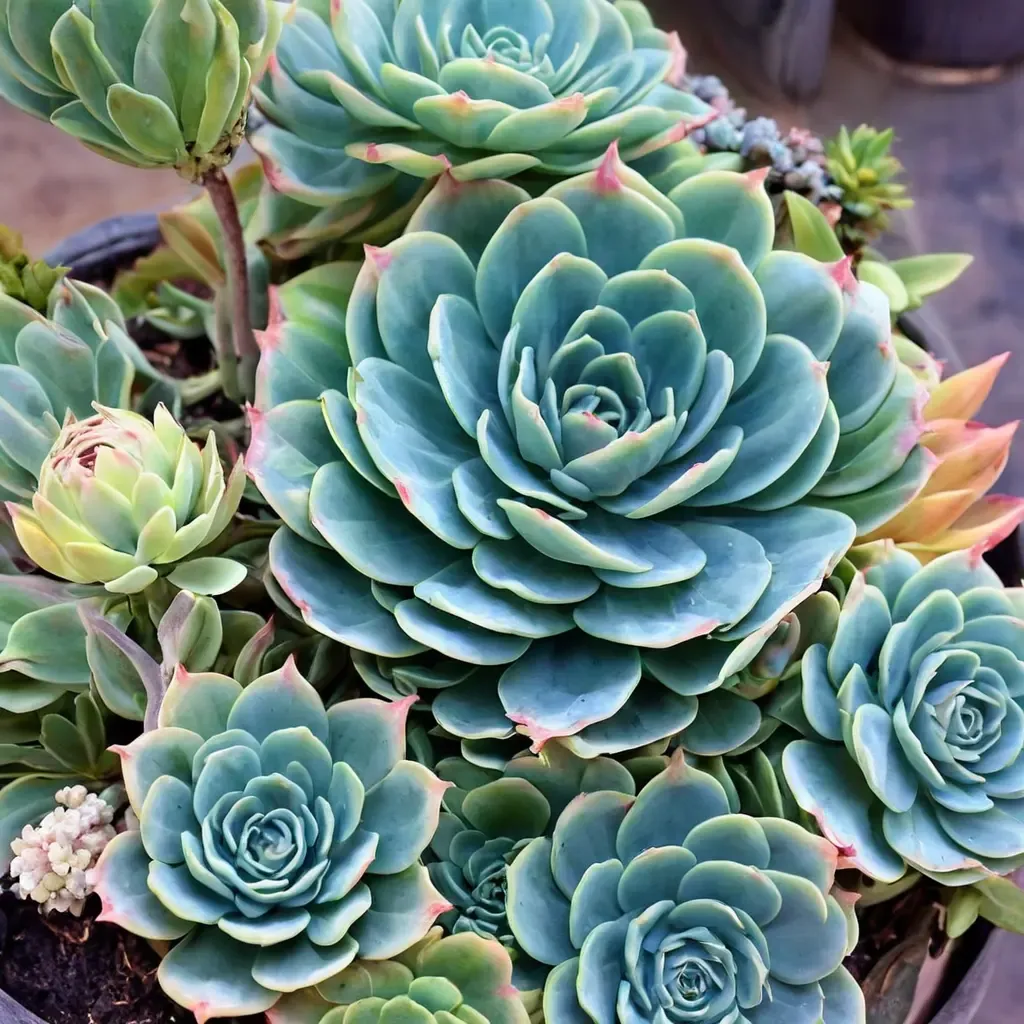
Blue Rose Echeveria
Echeveria imbricata
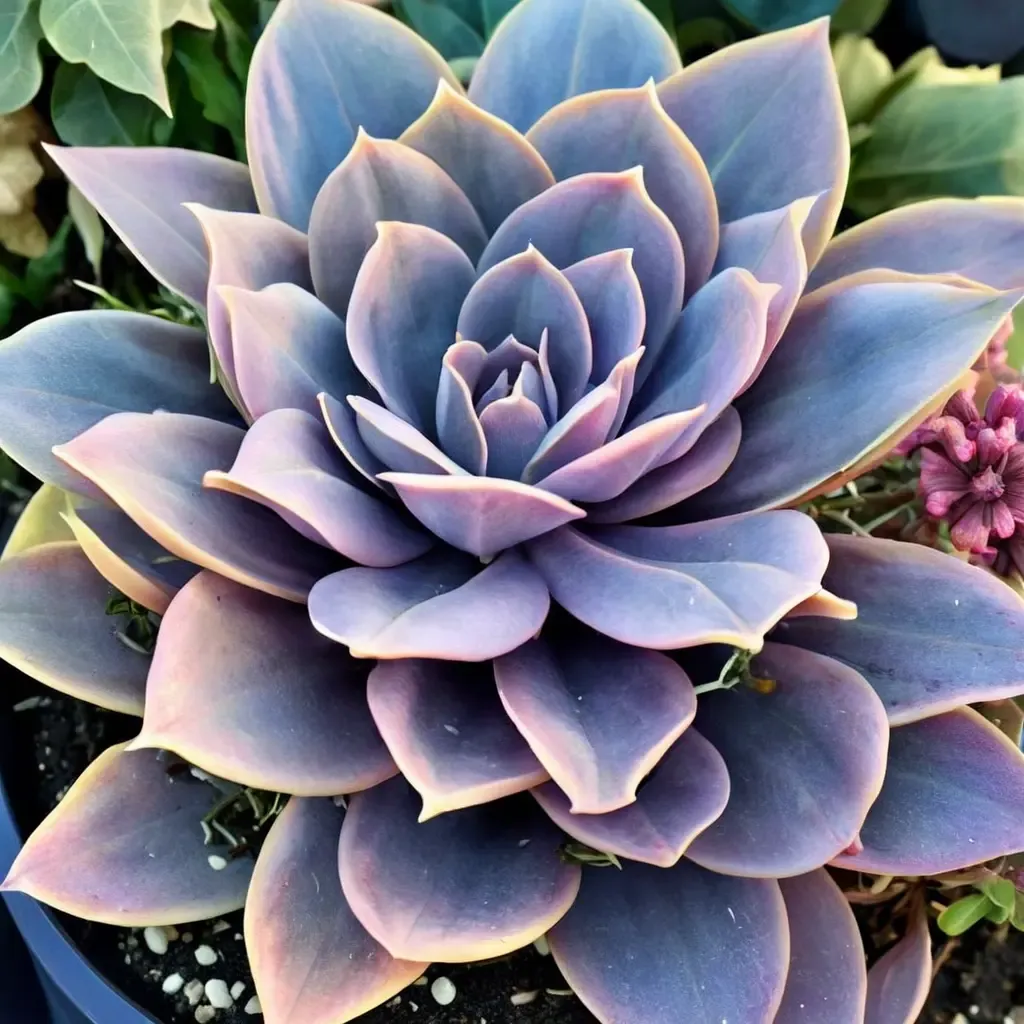
Perle Von Nurnberg
Echeveria secunda 'Perle Von Nurnberg'
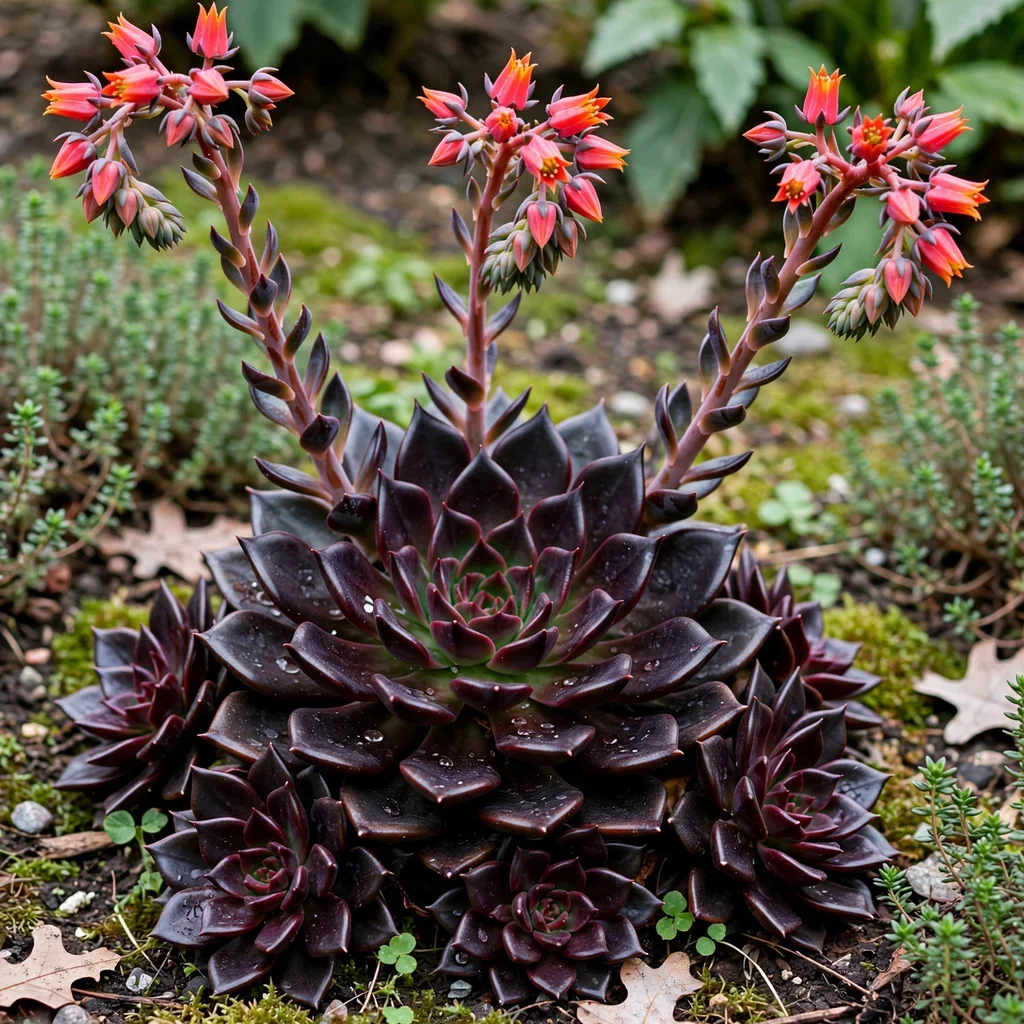
Echeveria Black Prince
Echeveria secunda 'Black Prince'
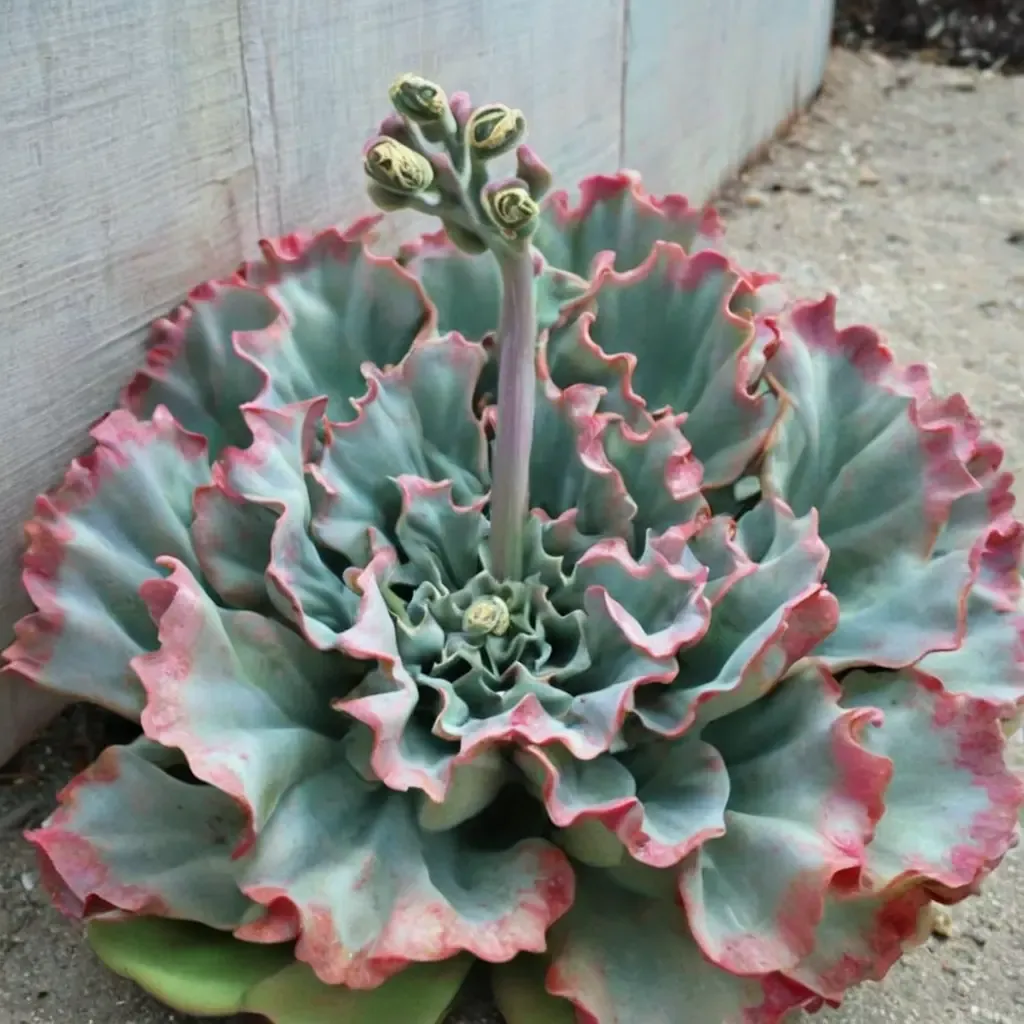
Lady Aquarius Echeveria
Echeveria gibbiflora 'Lady Aquarius'
Mexican Snowball
Echeveria elegans
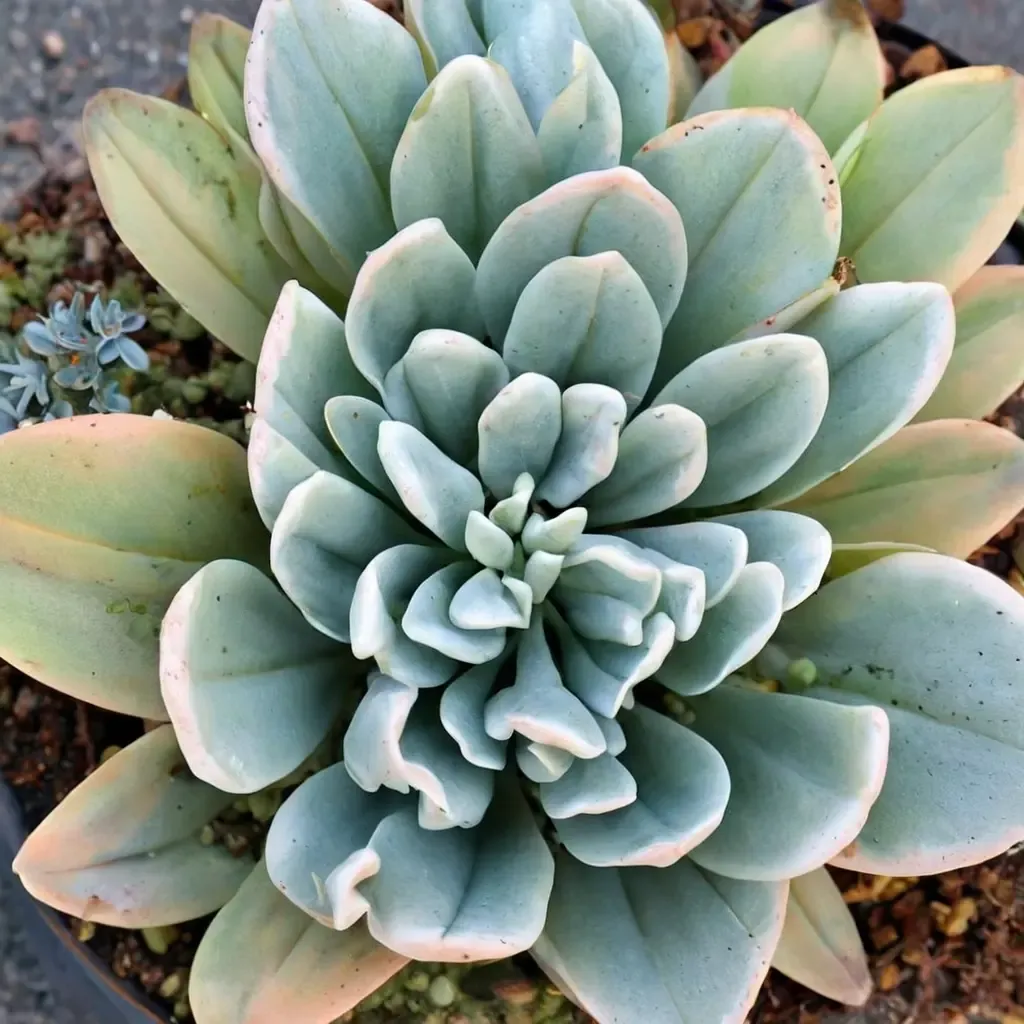
Caribbean Echeveria Echeveria Caribbean
Echeveria runyonii 'Caribbean'
Keep exploring
Explore the genus
Hardy in your zone?
Grow Tolimanensis with confidence
See it in a design of your actual yard, get zone-matched care reminders, and track it season by season in your garden journal.