The Story
Plant Bio
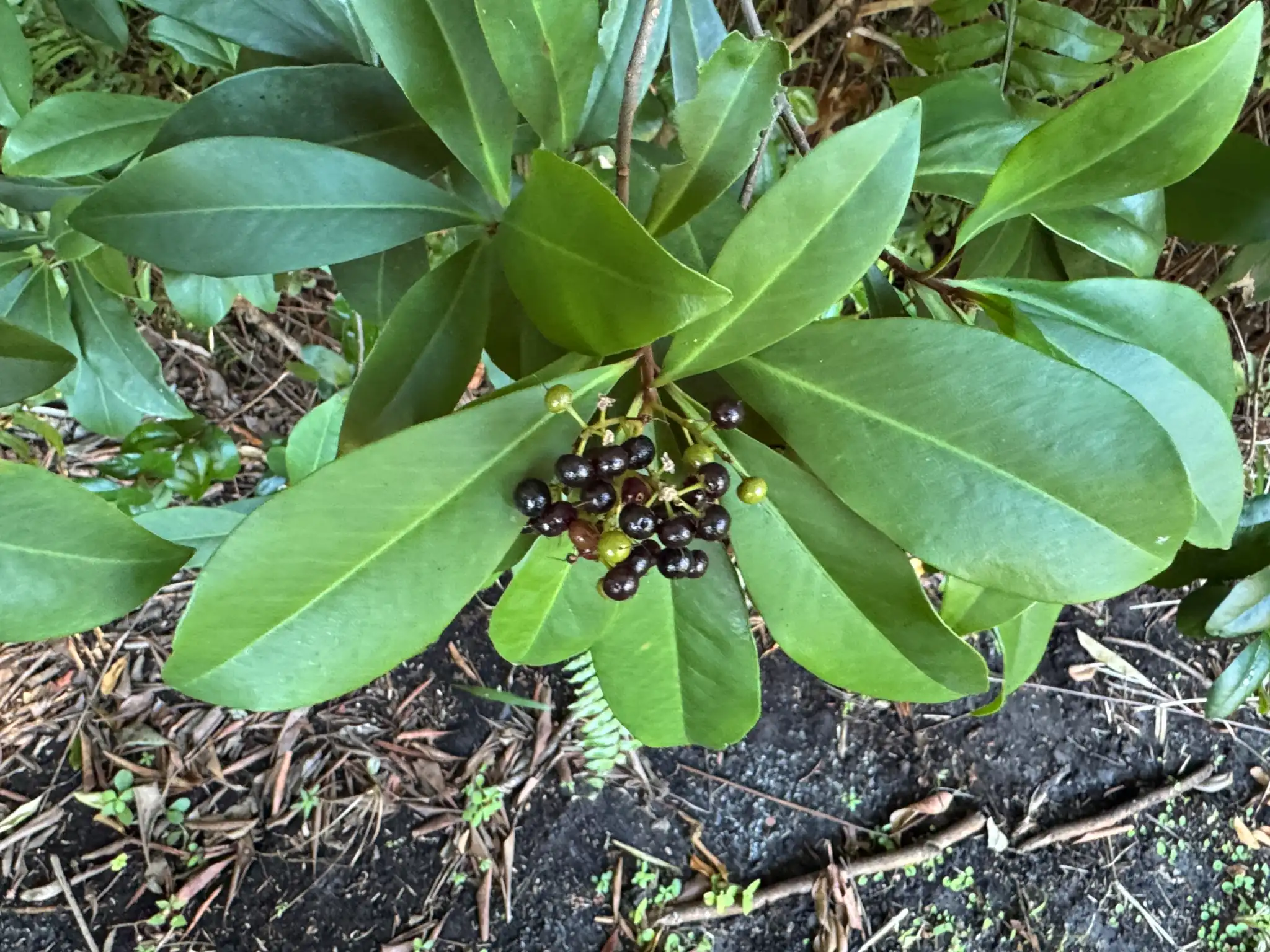
Ardisia escallonioides is an evergreen shrub or small multi-trunked tree from South Florida hammocks and shell ridges, reaching twelve to fifteen feet in gardens with a narrow rounded crown. Leaves are alternate, simple and elliptic with entire margins, dark green and semi-glossy to four inches long, held on slender upright branches.
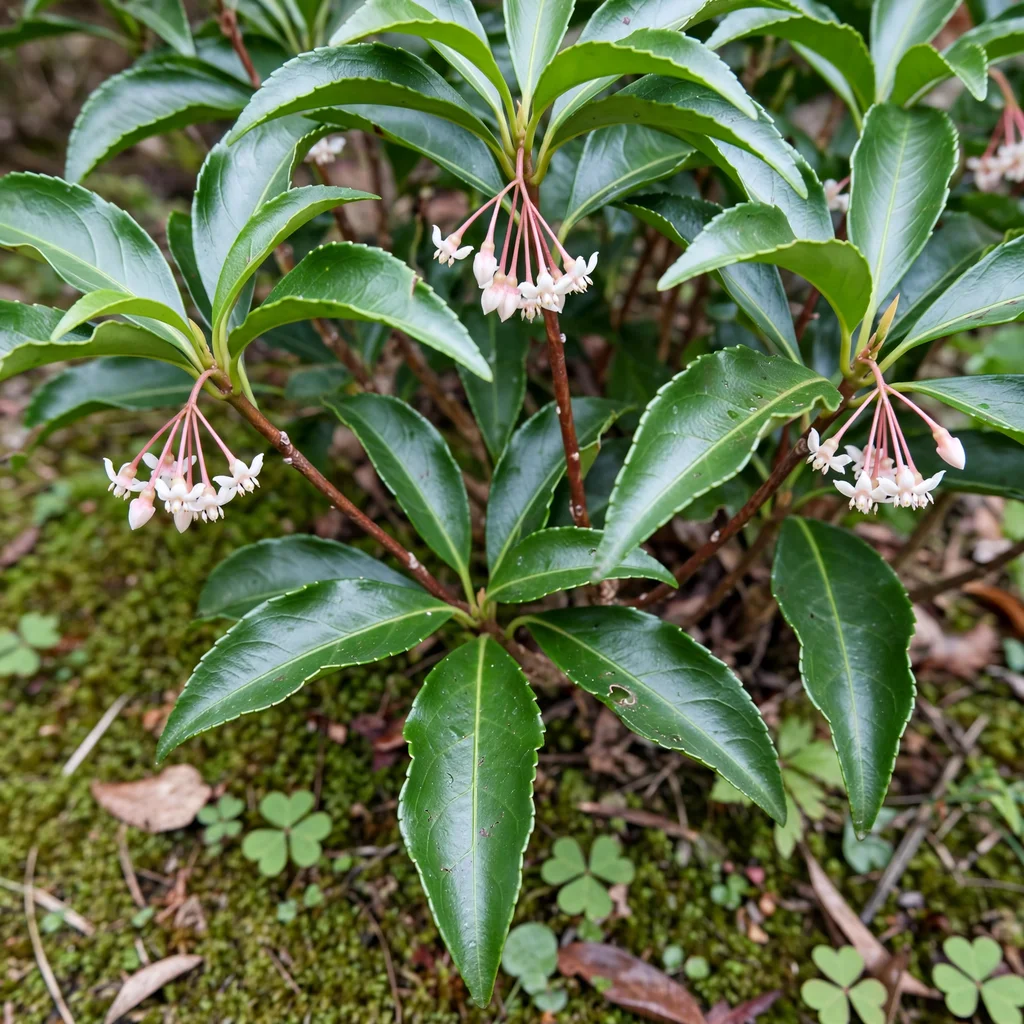
It carries dense terminal panicles to five inches long of small fragrant white to pinkish flowers intermittently through the year, heaviest in summer to fall, followed by round fleshy fruit under a half inch that ripen red to dark purple. It holds dense evergreen foliage even in shade and, unlike the exotic shoebutton ardisia, it does not spread invasively.
Uses & Benefits:
Essentials
At a Glance
Plant Type
Shrub
Height
180"
Width
108"
Light
Partial Sun, Shade
Zones
10
Water
Moderate
Humidity
Tolerant
Lifespan
Long-lived shrub
Native To
S. Florida, West Indies to Mexico
Toxicity
Unknown - verify
Bloom period
Summer – Fall
In flower about 6 months of the year
Planting
How to Grow
- Plant in part shade in well-drained sand or loam, from acidic to calcareous soils, spacing 3 to 5 feet for a screen or 15 feet for avenue use.
- Dig hole same depth as container and twice as wide; backfill, water deeply, and mulch 2 to 3 inches, keeping mulch off stems.
- Water regularly through the first growing season, then taper to supplemental water in extended drought.
- Prune rarely; remove lower limbs in late winter to train as a small tree and tip lightly to maintain shape.
Pro Tip
Train young plants to a multi-stemmed small tree by removing lower branches early; once the frame is set it needs little pruning to stay dense.
Keep It Thriving
Care Guide
Do
- Plant in part shade with good drainage
- Mulch 2 to 3 inches to conserve moisture
- Leave flowers and fruit for birds and pollinators
- Allow room for natural oval crown to develop
Don't
- Do not plant in harsh full sun with reflected heat
- Do not shear frequently or cut hard into old wood
- Do not confuse with shoebutton ardisia when buying
- Do not keep roots waterlogged
Seasonal Care Calendar
| Task | Jan | Feb | Mar | Apr | May | Jun | Jul | Aug | Sep | Oct | Nov | Dec |
|---|---|---|---|---|---|---|---|---|---|---|---|---|
| Mulch | ||||||||||||
| Pest Check | ||||||||||||
| Plant | ||||||||||||
| Propagate | ||||||||||||
| Prune |
Watch Out For
Pests & Diseases
Common Pests
Common Diseases
In the Garden
Landscape Uses & Companions
Landscape Uses
Multiply
Propagation Methods
Good to Know
Common Questions
Marlberry questions
What zones can Marlberry grow in?
Marlberry is hardy in USDA Zone 10: in that range it survives winter in the ground. Colder than Zone 10, grow it in a container you can move to shelter for the winter.
When does Marlberry bloom?
Marlberry typically blooms from summer to fall. Exact timing shifts a week or two with your zone — Sow's bloom calendar maps it to your garden.
Does Marlberry need full sun?
Marlberry does best in part shade.
Is Marlberry drought tolerant?
Yes — once established (usually after the first full season), Marlberry handles dry spells with minimal watering. Water deeply its first year to build the root system that makes that possible.
More Ardisia to compare
Keep exploring
Explore the genus
Hardy in your zone?
Grow Marlberry with confidence
See it in a design of your actual yard, get zone-matched care reminders, and track it season by season in your garden journal.