The Story
Plant Bio
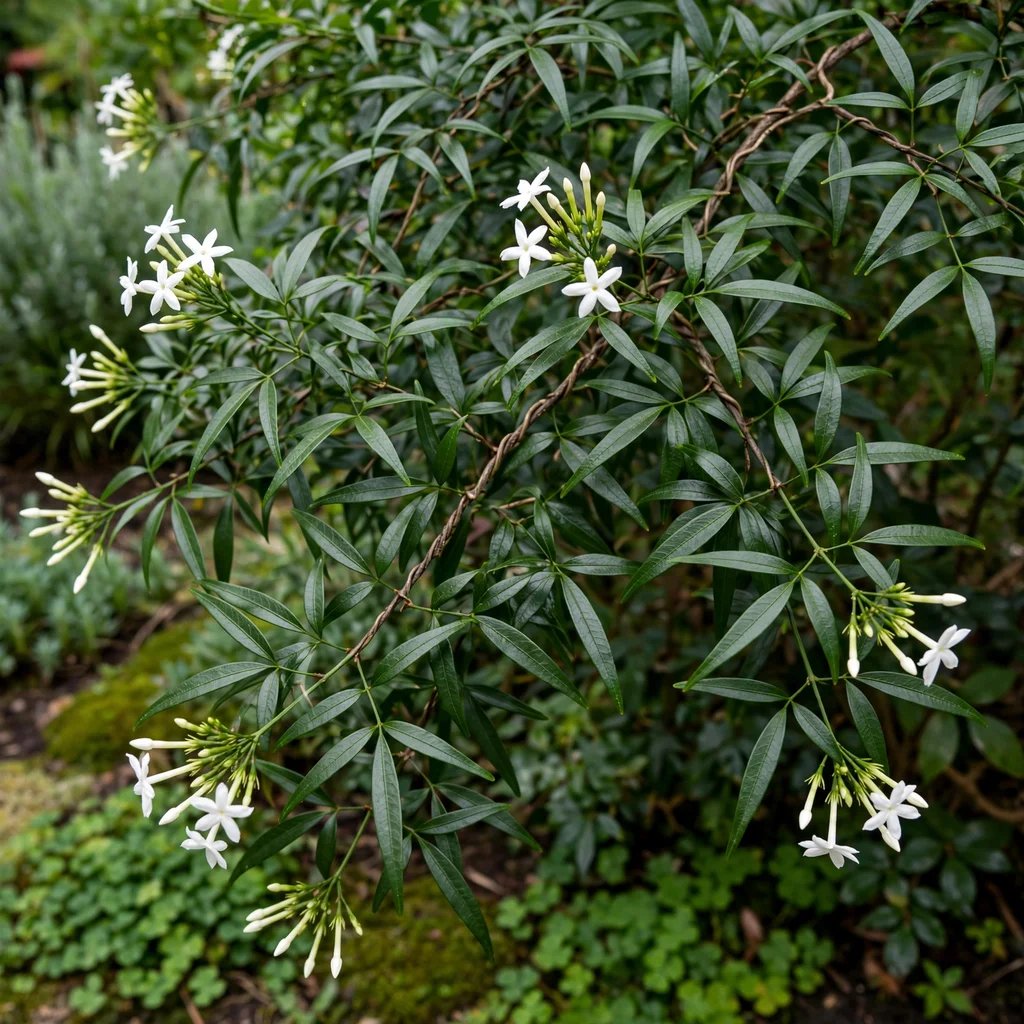
Jasminum tortuosum is an evergreen twining vine from forests of the southwestern Cape, climbing by scrambling angular stems that reach 20 to 25 feet with support. The foliage is held in threes as dark green glossy linear leaflets, and the summer bloom is borne in terminal clusters of small white stars.
Unlike common jasmines it keeps a consistent three-leaflet pattern on twisted stems and holds dense cover that can be clipped to a 3-foot shrub in a container. The flowers are about one inch across with a light citrus scent rather than heavy perfume, borne at the branch ends.
Uses & Benefits:
Essentials
At a Glance
Plant Type
Vine
Height
300"
Width
300"
Light
Full Sun, Partial Sun
Zones
9, 10
Water
Regular
Humidity
Unknown
Lifespan
Perennial vine
Native To
South Africa
Toxicity
Unknown
Bloom period
Summer
In flower about 3 months of the year
Planting
How to Grow
- Plant in full sun to light shade in fertile well-drained soil after last frost.
- Set a trellis or wires at planting and tie in the angular stems as they extend.
- Water regularly to keep soil evenly moist but never waterlogged.
- Cut back after summer flowering to control size and move containers indoors before temperatures near 25F.
Pro Tip
Train to a stout trellis from planting and cut back after summer bloom; left untied it scrambles to 25 feet.
Keep It Thriving
Care Guide
Do
- Do provide a trellis, wires or arbor for the twining stems.
- Do prune regularly to hold vine size or maintain a 3-foot container shrub.
- Do grow in fertile well-drained soil with regular watering.
Don't
- Don't expose pots or in-ground plants to prolonged temperatures below 25F.
- Don't plant in soggy or poorly drained soil.
- Don't leave stems untrained if a compact form is wanted.
Seasonal Care Calendar
| Task | Jan | Feb | Mar | Apr | May | Jun | Jul | Aug | Sep | Oct | Nov | Dec |
|---|---|---|---|---|---|---|---|---|---|---|---|---|
| Pest Check | ||||||||||||
| Plant | ||||||||||||
| Prune | ||||||||||||
| Stake | ||||||||||||
| Winter Prep |
Watch Out For
Pests & Diseases
Common Pests
Common Diseases
In the Garden
Landscape Uses & Companions
Landscape Uses
Good to Know
Common Questions
Twisted Jasmine questions
What zones can Twisted Jasmine grow in?
Twisted Jasmine is hardy in USDA Zones 9–10: in that range it survives winter in the ground. Colder than Zone 9, grow it in a container you can move to shelter for the winter, or as an annual.
Is Twisted Jasmine deer resistant?
Yes — Twisted Jasmine is rated deer-resistant. Deer typically pass it over, though extreme hunger can override any plant's defenses.
When does Twisted Jasmine bloom?
Twisted Jasmine typically blooms in summer. Exact timing shifts a week or two with your zone — Sow's bloom calendar maps it to your garden.
Does Twisted Jasmine need full sun?
Twisted Jasmine does best in full sun to part shade. In hot climates, afternoon shade keeps blooms fresher longer.
More Jasminum to compare
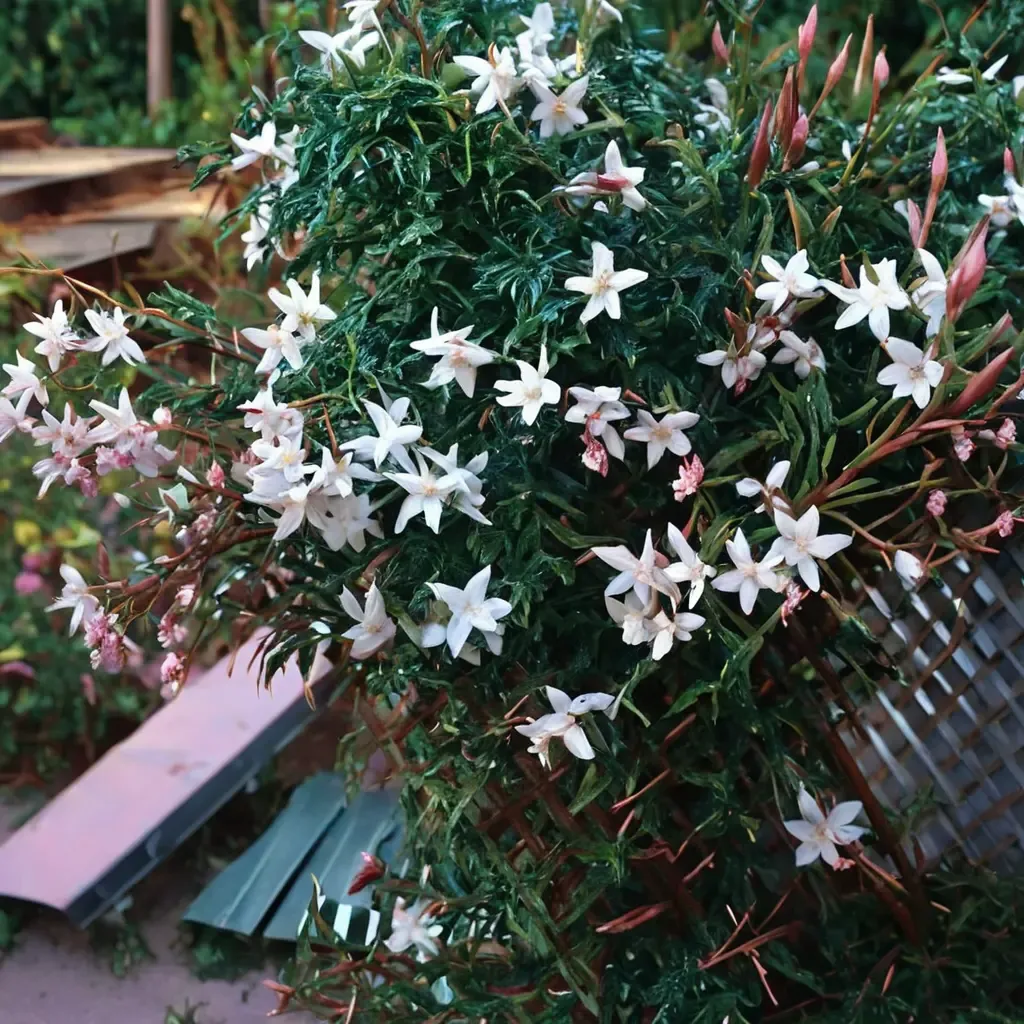
Pink Jasmine
Jasminum polyanthum
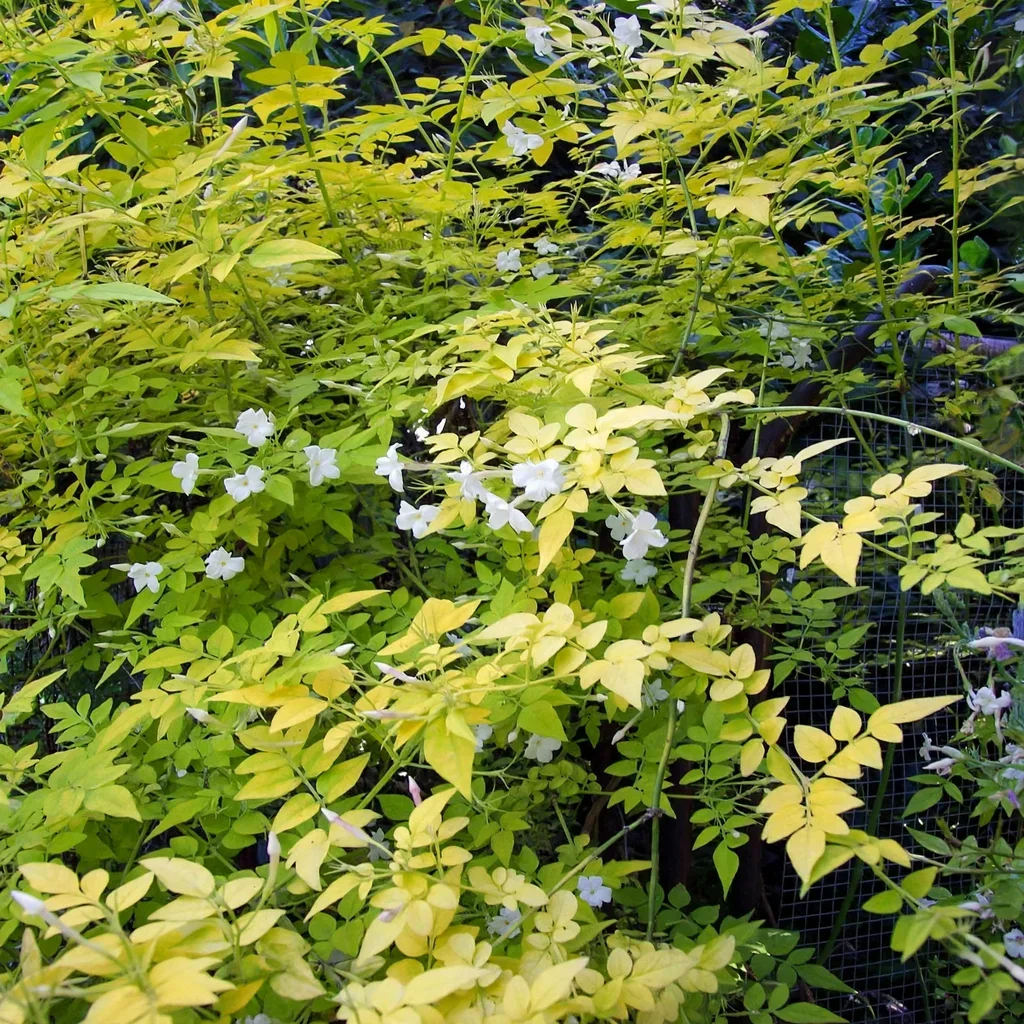
Fiona Sunrise Common Jasmine
Jasminum officinale 'Frojas'
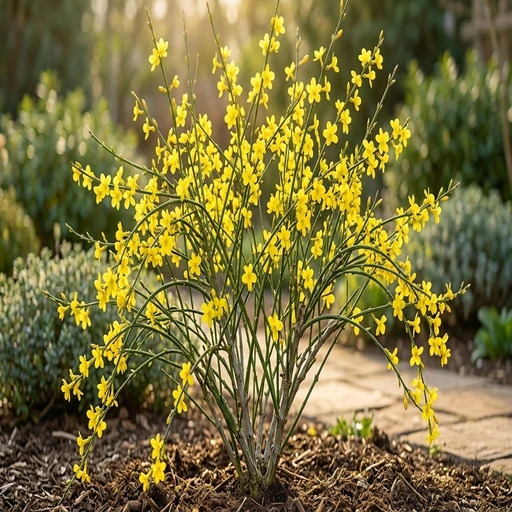
Winter Jasmine
Jasminum nudiflorum
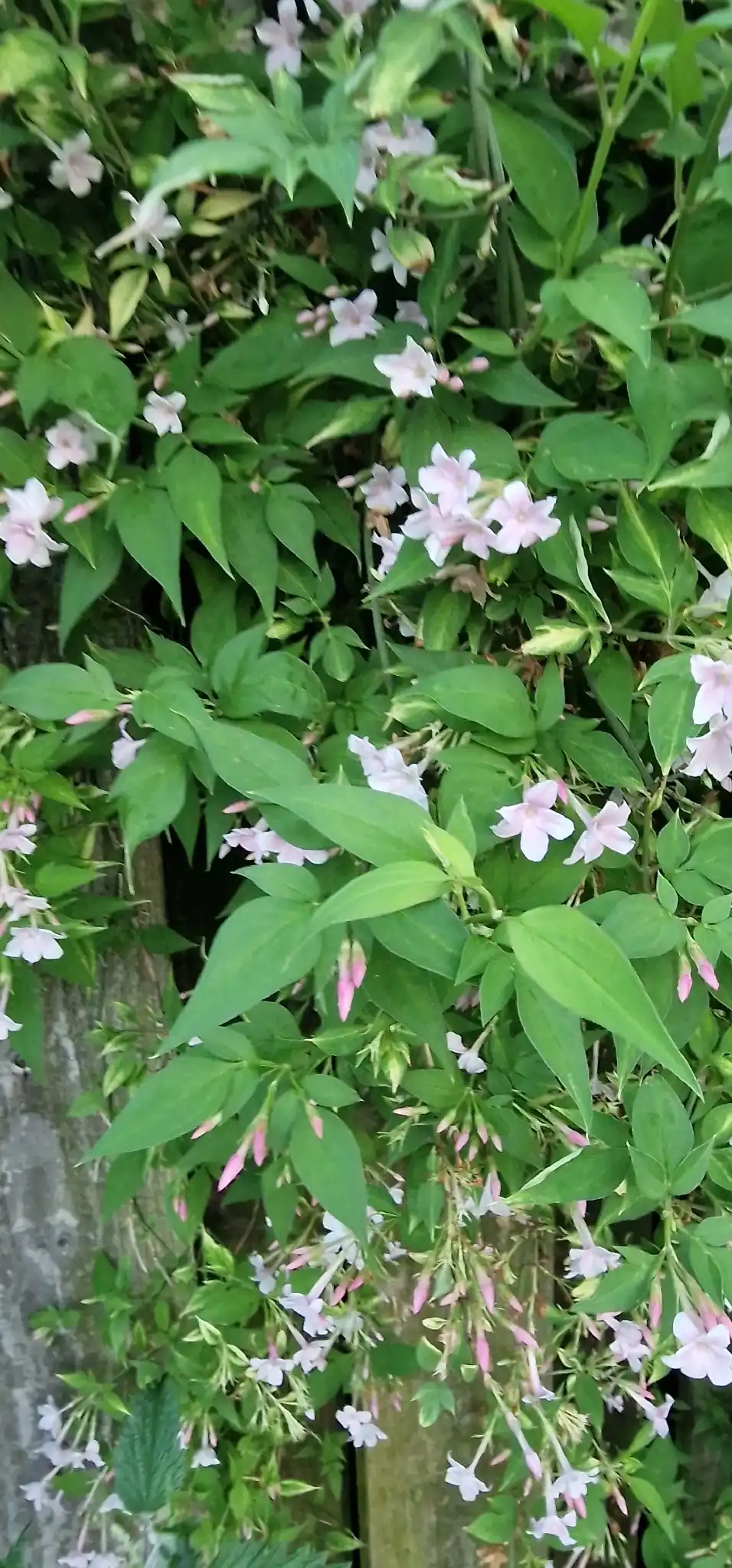
Common Jasmine
Jasminum officinale
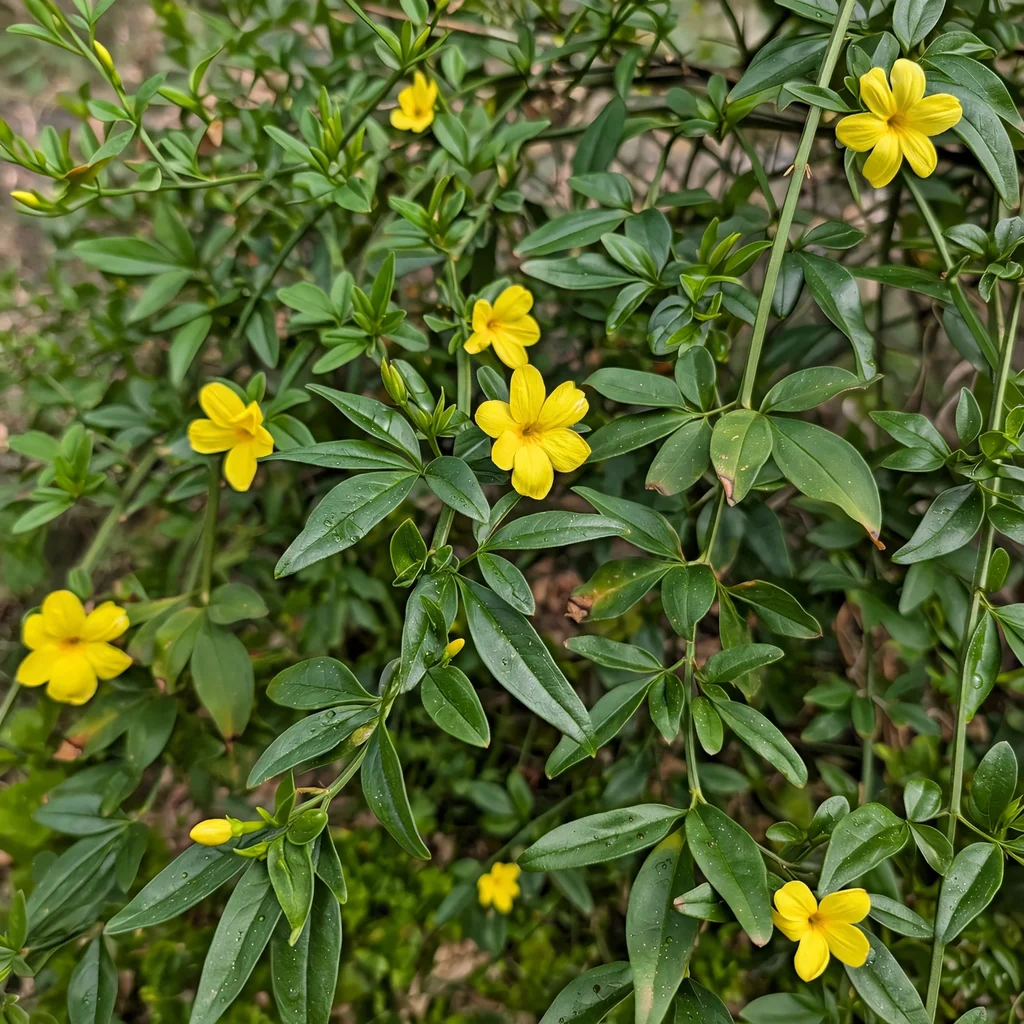
Primrose Jasmine
Jasminum mesnyi
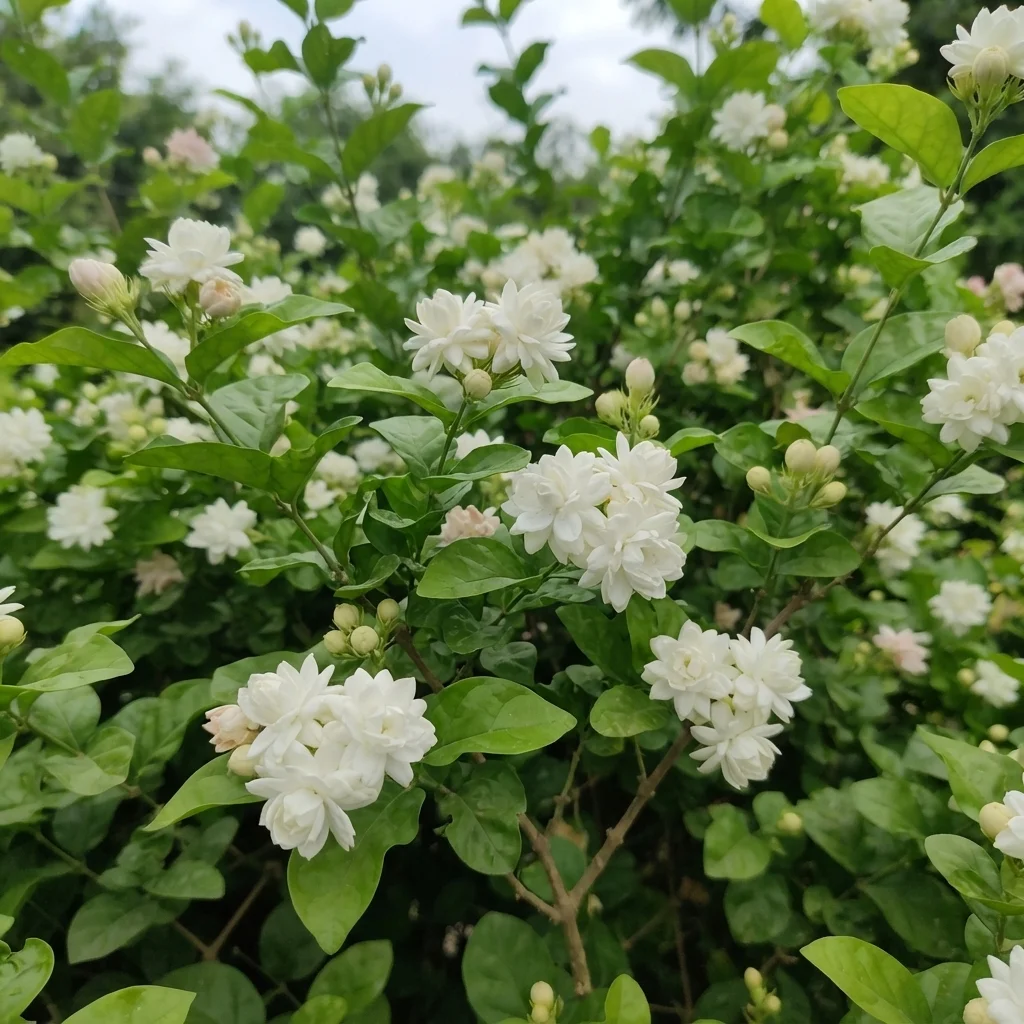
Arabian Jasmine
Jasminum sambac
Keep exploring
Explore the genus
Hardy in your zone?
Grow Twisted Jasmine with confidence
See it in a design of your actual yard, get zone-matched care reminders, and track it season by season in your garden journal.