The Story
Plant Bio
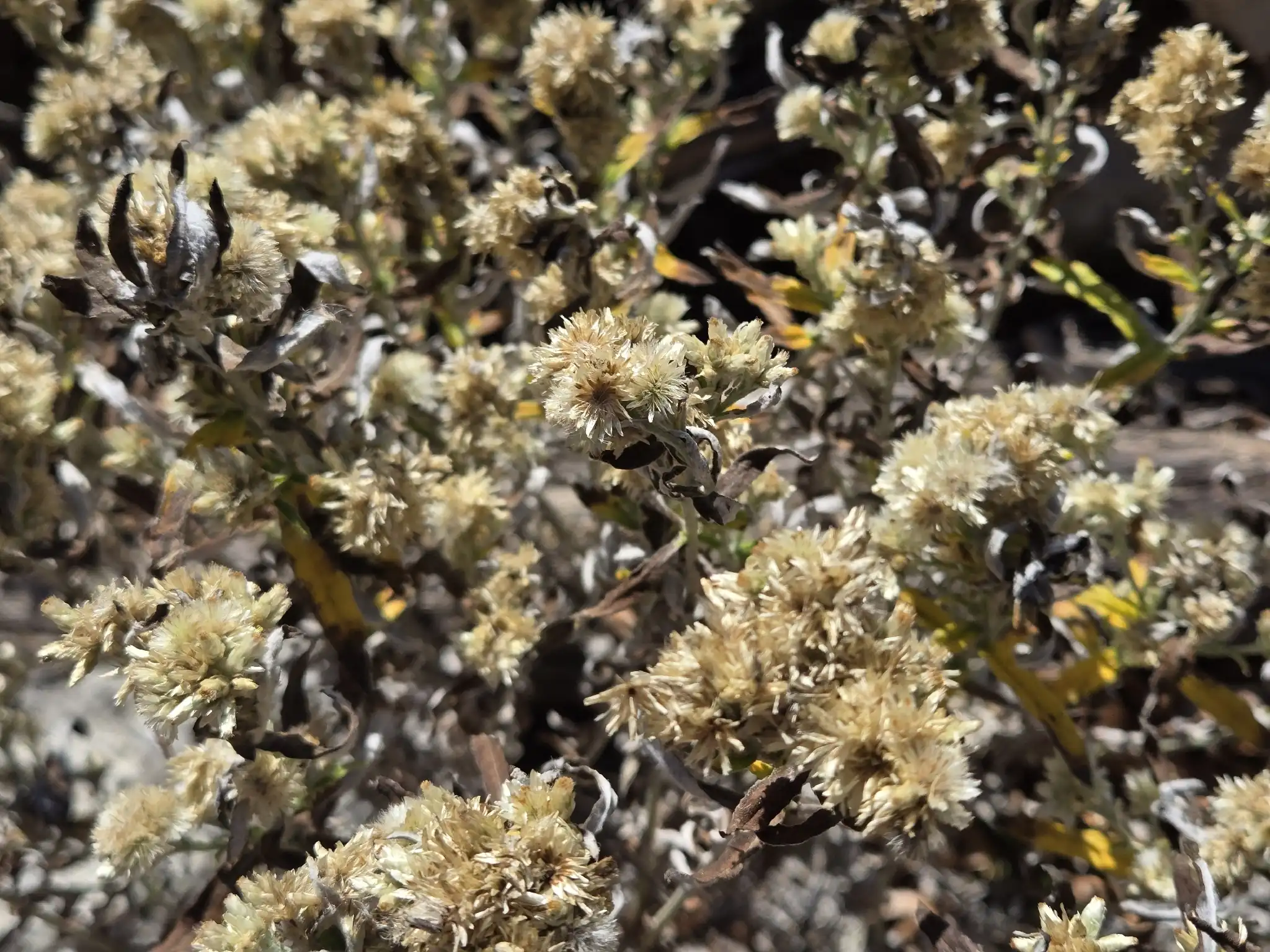
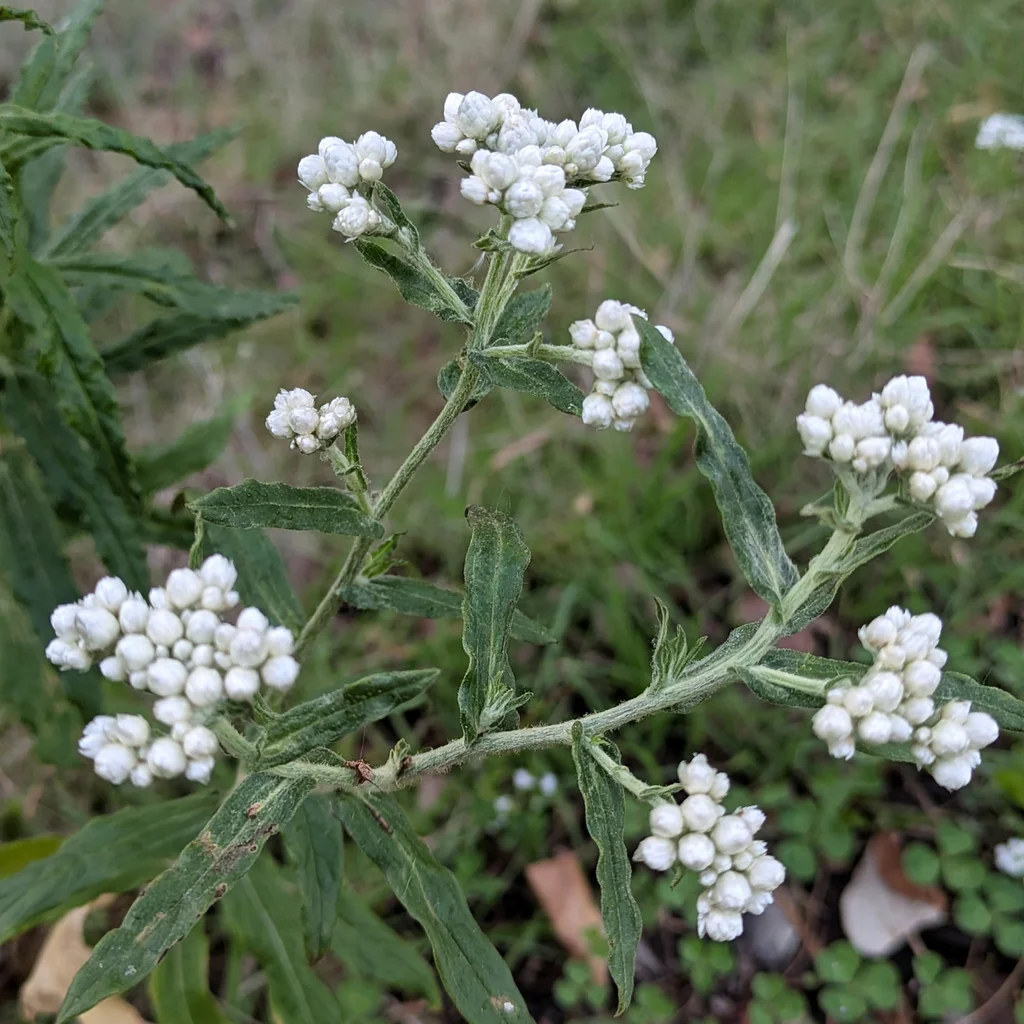
Pseudognaphalium obtusifolium is an erect annual or biennial herb from eastern North America, reaching 12 to 36 inches with cottony upright stems. The narrow lance-shaped leaves are green and nearly smooth above and densely white-woolly beneath, releasing a maple-syrup scent when crushed.
From late summer into fall it carries branched panicles of small round heads that open brownish-yellow buds to white papery bracts around yellow disk florets. It completes its life as a self-sowing annual or biennial that dies after seed, feeding American Lady caterpillars and small bees, wasps and flies.
Uses & Benefits:
Essentials
At a Glance
Plant Type
Annual
Height
36"
Width
12"
Light
Full Sun, Partial Sun
Zones
4, 5, 6, 7, 8, 9, 10
Water
Low to medium
Humidity
Unknown
Lifespan
Annual or biennial
Native To
Eastern North America
Toxicity
Unknown
Bloom period
Late summer – Fall
In flower about 4 months of the year
Planting
How to Grow
- Plant in full sun to light partial shade in open sandy soil with good drainage.
- Sow seed on the surface in place after last frost and press in without covering.
- Water to establish, then water only during extended dry spells.
- Thin to 8 to 12 inches apart to keep air moving around the cottony stems.
- Leave fall heads to self-sow where you want the next generation.
Pro Tip
Leave a few heads to ripen and shatter where you want plants next year; pulling rosettes to tidy or feeding for perennial regrowth wastes effort because plants die after seed.
Keep It Thriving
Care Guide
Do
- Grow in lean sandy soil with open sun and airflow.
- Allow some heads to mature and drop seed for next year.
- Leave basal rosettes undisturbed through winter.
Don't
- Do not plant in heavy clay or constantly wet soil.
- Do not cut all heads before seed if you want it to return.
- Do not fertilize heavily to force perennial growth.
Seasonal Care Calendar
| Task | Jan | Feb | Mar | Apr | May | Jun | Jul | Aug | Sep | Oct | Nov | Dec |
|---|---|---|---|---|---|---|---|---|---|---|---|---|
| Deadhead | ||||||||||||
| Pest Check | ||||||||||||
| Plant | ||||||||||||
| Propagate | ||||||||||||
| Spring Cleanup |
Watch Out For
Pests & Diseases
Common Pests
Common Diseases
In the Garden
Landscape Uses & Companions
Landscape Uses
Multiply
Propagation Methods
Good to Know
Common Questions
Sweet Everlasting questions
What zones can Sweet Everlasting grow in?
Sweet Everlasting is an annual: it grows, flowers and sets seed in one season, so winter cold doesn't limit where it grows. Gardeners in any zone can grow it by planting at the right time, usually after the last spring frost.
Is Sweet Everlasting deer resistant?
Not reliably. Deer may browse Sweet Everlasting, especially tender spring growth — plan on repellents or fencing where pressure is high.
When does Sweet Everlasting bloom?
Sweet Everlasting typically blooms from late summer to late fall. Exact timing shifts a week or two with your zone — Sow's bloom calendar maps it to your garden.
Does Sweet Everlasting need full sun?
Sweet Everlasting does best in full sun to part shade. In hot climates, afternoon shade keeps blooms fresher longer.
Is Sweet Everlasting drought tolerant?
Yes — once established (usually after the first full season), Sweet Everlasting handles dry spells with minimal watering. Water deeply its first year to build the root system that makes that possible.
More Pseudognaphalium to compare
Keep exploring
Explore the genus
Grow Sweet Everlasting with confidence
See it in a design of your actual yard, get zone-matched care reminders, and track it season by season in your garden journal.