The Story
Plant Bio
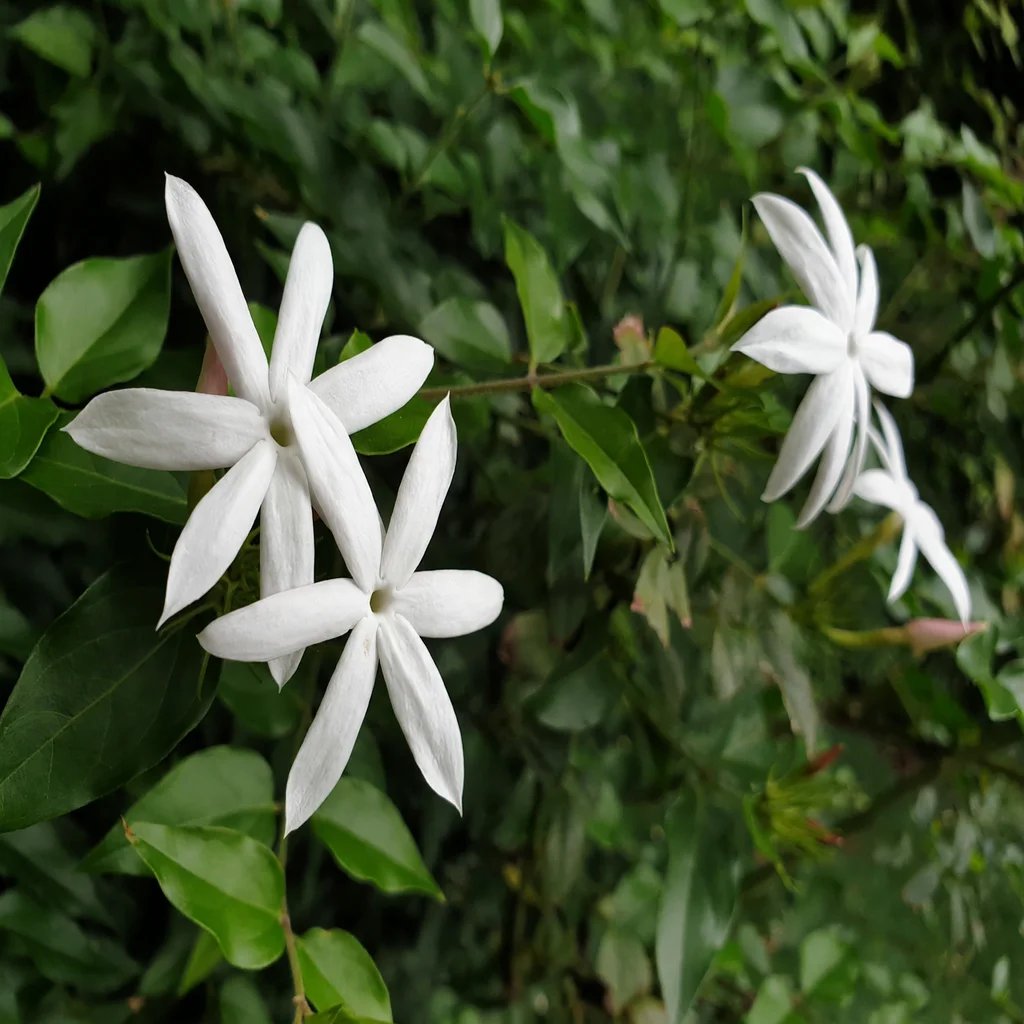
Jasminum adenophyllum is a fast-growing evergreen woody climber from wet tropical Asia, scrambling 10 to 15 feet where frost-free with opposite dark glossy elliptic leaves 2 to 3 inches long. The white flowers are 2 to 3 inches across with narrow slightly curled petals held flat like a pinwheel, intensely fragrant and followed by grape-sized blue-black berries.
Unlike star jasmine, which is in the dogbane family, this is a true jasmine in the olive family grown for scent rather than color. The distinction in the garden is the combination of large pinwheel flowers that suggest Michelia alba and the unusual blue grape-like fruit that follows bloom.
Uses & Benefits:
Essentials
At a Glance
Plant Type
Vine
Height
144"
Width
72"
Light
Full Sun, Partial Sun
Zones
9, 10
Water
Moderate
Humidity
High
Lifespan
Woody perennial
Native To
Assam to Peninsular Malaysia
Toxicity
Unknown
Bloom period
Summer
In flower about 3 months of the year
Planting
How to Grow
- Plant in spring after frost danger in fertile, well-drained loam in full sun to partial shade.
- Set a sturdy trellis, arbor, or pergola at planting and tie young stems to guide coverage.
- Water deeply at planting and regularly while establishing, then keep soil evenly moist.
- Feed lightly with balanced fertilizer during active growth and prune immediately after flowering to control size.
- Protect from freezing; move containers indoors or cover vines when frost threatens.
Pro Tip
Plant against a frost-free warm wall on a sturdy trellis and prune immediately after flowering to contain size; late pruning removes the wood that carries the next fragrant flush.
Keep It Thriving
Care Guide
Do
- Provide a strong trellis, arbor, or pergola and tie stems until they scramble on their own.
- Mulch to conserve moisture and buffer cold, keeping mulch back from the stems.
- Monitor buds and leaf undersides for sucking insects and remove affected shoots promptly.
Don't
- Do not let soil stay waterlogged or sit in a saucer; roots need drainage.
- Do not prune late in the season; you will cut off flowering wood.
- Do not expose to hard freeze; this vine is frost sensitive and needs protection.
Seasonal Care Calendar
| Task | Jan | Feb | Mar | Apr | May | Jun | Jul | Aug | Sep | Oct | Nov | Dec |
|---|---|---|---|---|---|---|---|---|---|---|---|---|
| Fertilize | ||||||||||||
| Mulch | ||||||||||||
| Pest Check | ||||||||||||
| Prune | ||||||||||||
| Winter Prep |
Watch Out For
Pests & Diseases
Common Pests
Common Diseases
In the Garden
Landscape Uses & Companions
Landscape Uses
Multiply
Propagation Methods
Good to Know
Common Questions
Princess Jasmine questions
What zones can Princess Jasmine grow in?
Princess Jasmine is hardy in USDA Zones 9–10: in that range it survives winter in the ground. Colder than Zone 9, grow it in a container you can move to shelter for the winter, or as an annual.
When does Princess Jasmine bloom?
Princess Jasmine typically blooms in summer. Exact timing shifts a week or two with your zone — Sow's bloom calendar maps it to your garden.
Does Princess Jasmine need full sun?
Princess Jasmine does best in full sun to part shade. In hot climates, afternoon shade keeps blooms fresher longer.
Is Princess Jasmine drought tolerant?
Yes — once established (usually after the first full season), Princess Jasmine handles dry spells with minimal watering. Water deeply its first year to build the root system that makes that possible.
More Jasminum to compare
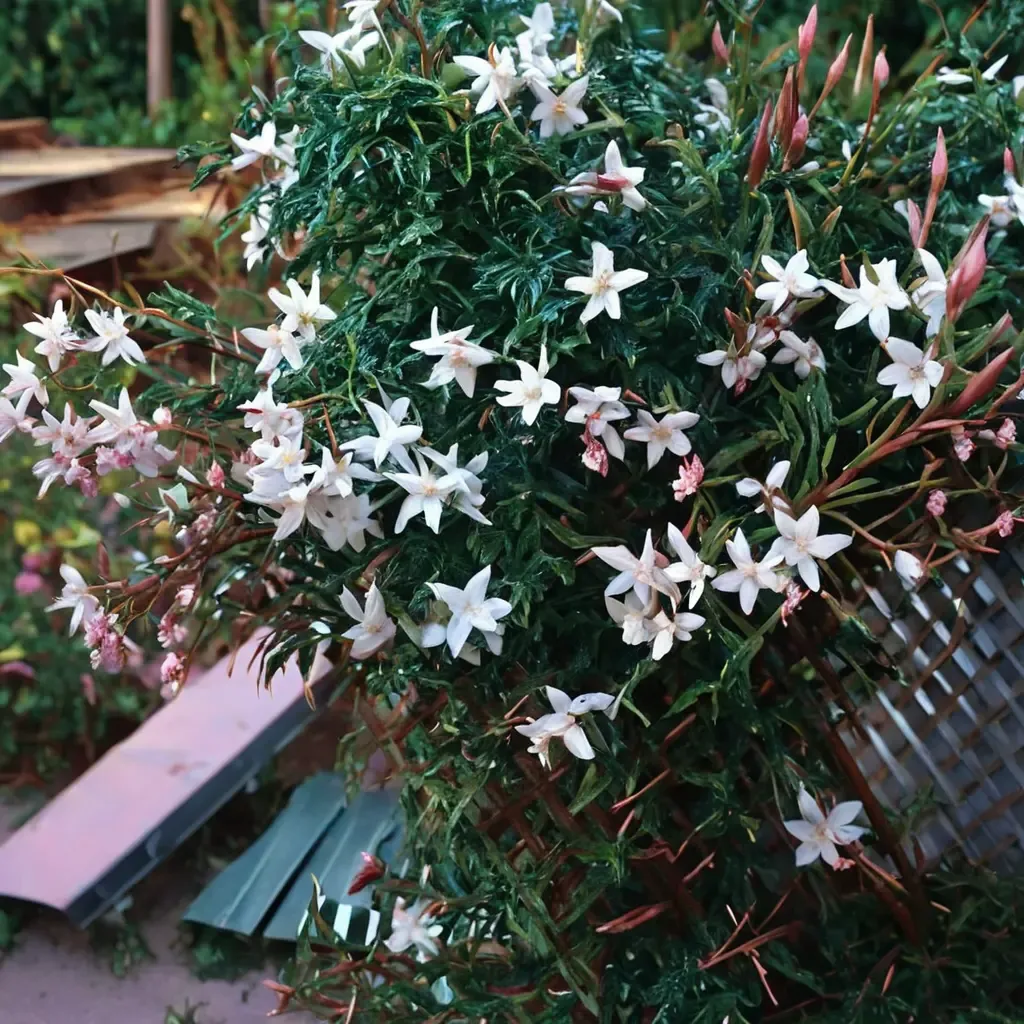
Pink Jasmine
Jasminum polyanthum
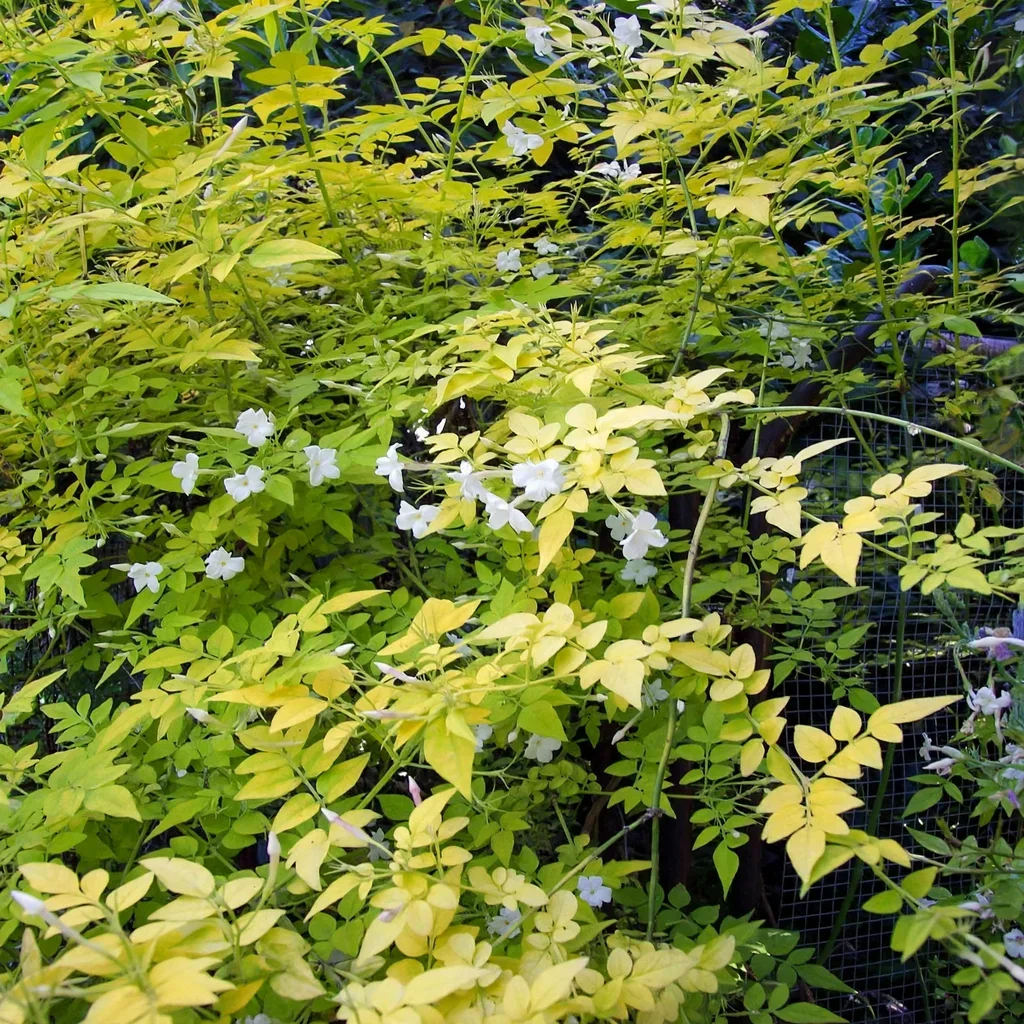
Fiona Sunrise Common Jasmine
Jasminum officinale 'Frojas'
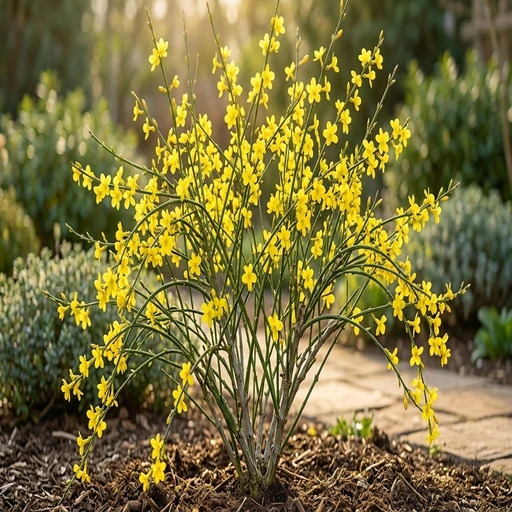
Winter Jasmine
Jasminum nudiflorum
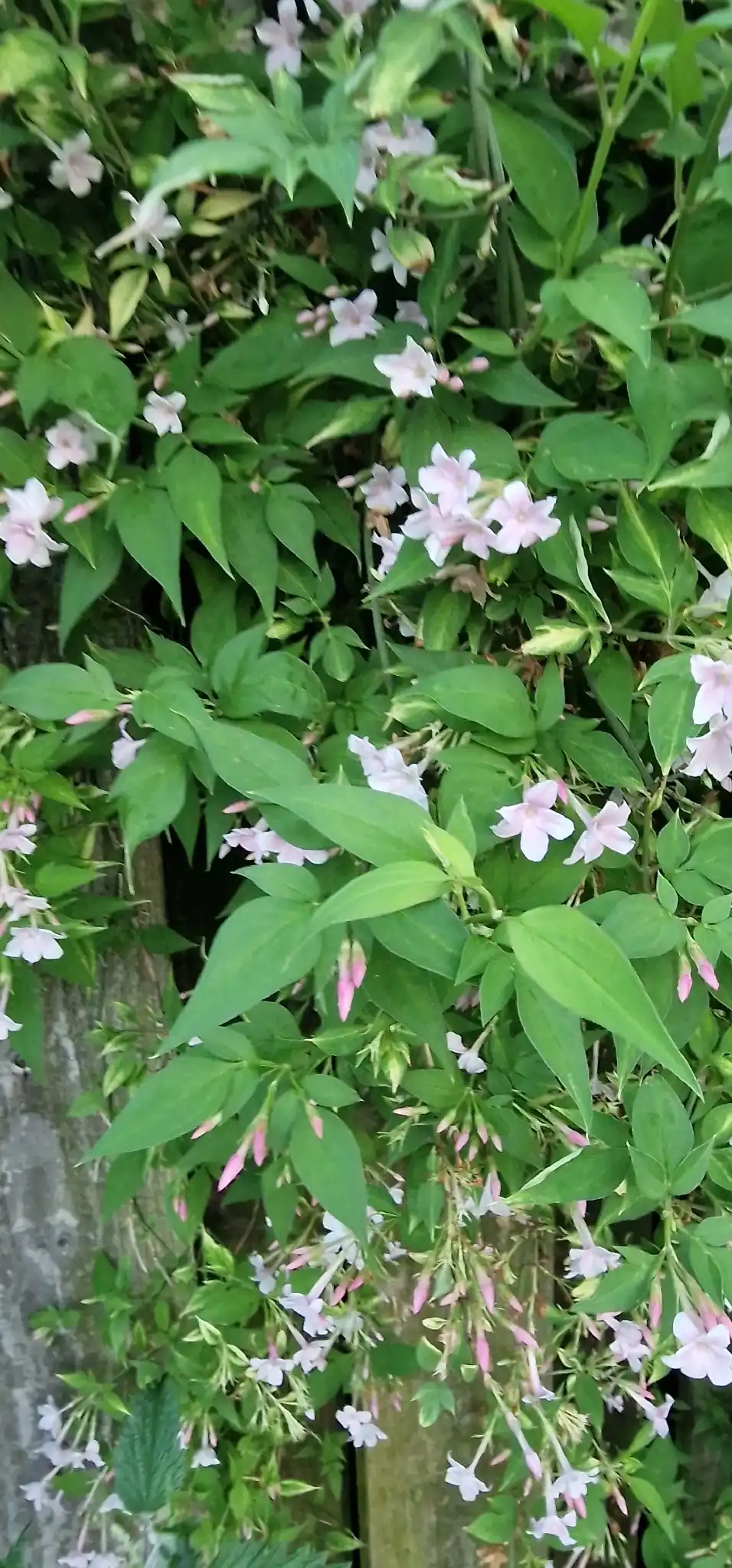
Common Jasmine
Jasminum officinale
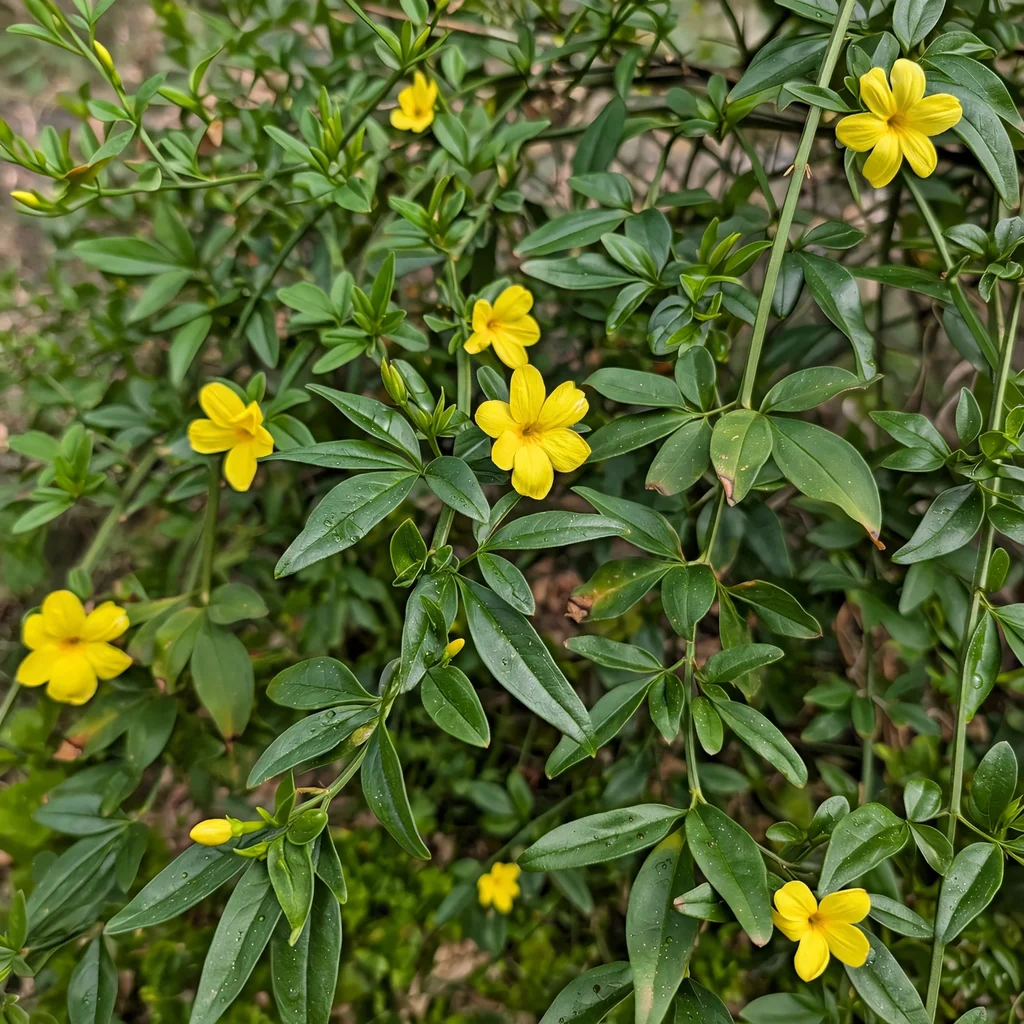
Primrose Jasmine
Jasminum mesnyi
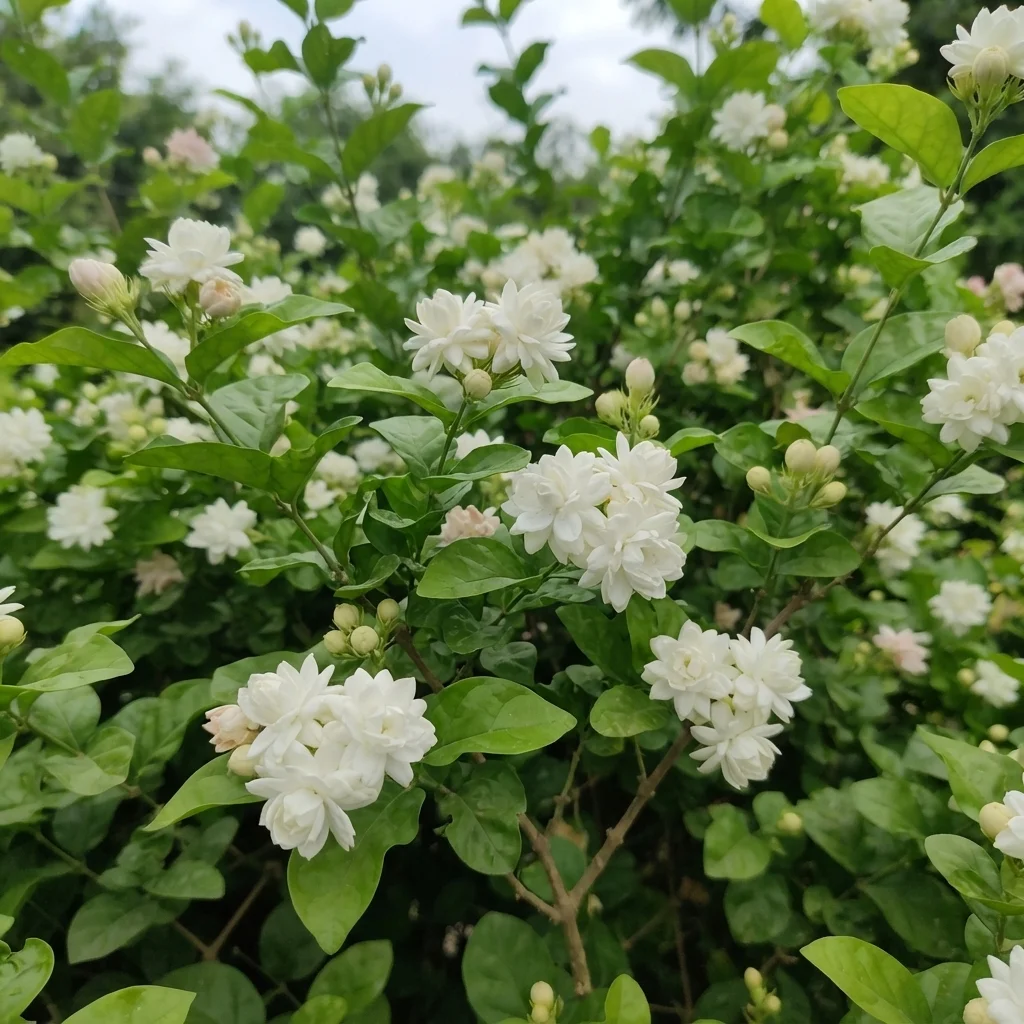
Arabian Jasmine
Jasminum sambac
Keep exploring
Explore the genus
Hardy in your zone?
Grow Princess Jasmine with confidence
See it in a design of your actual yard, get zone-matched care reminders, and track it season by season in your garden journal.