The Story
Plant Bio
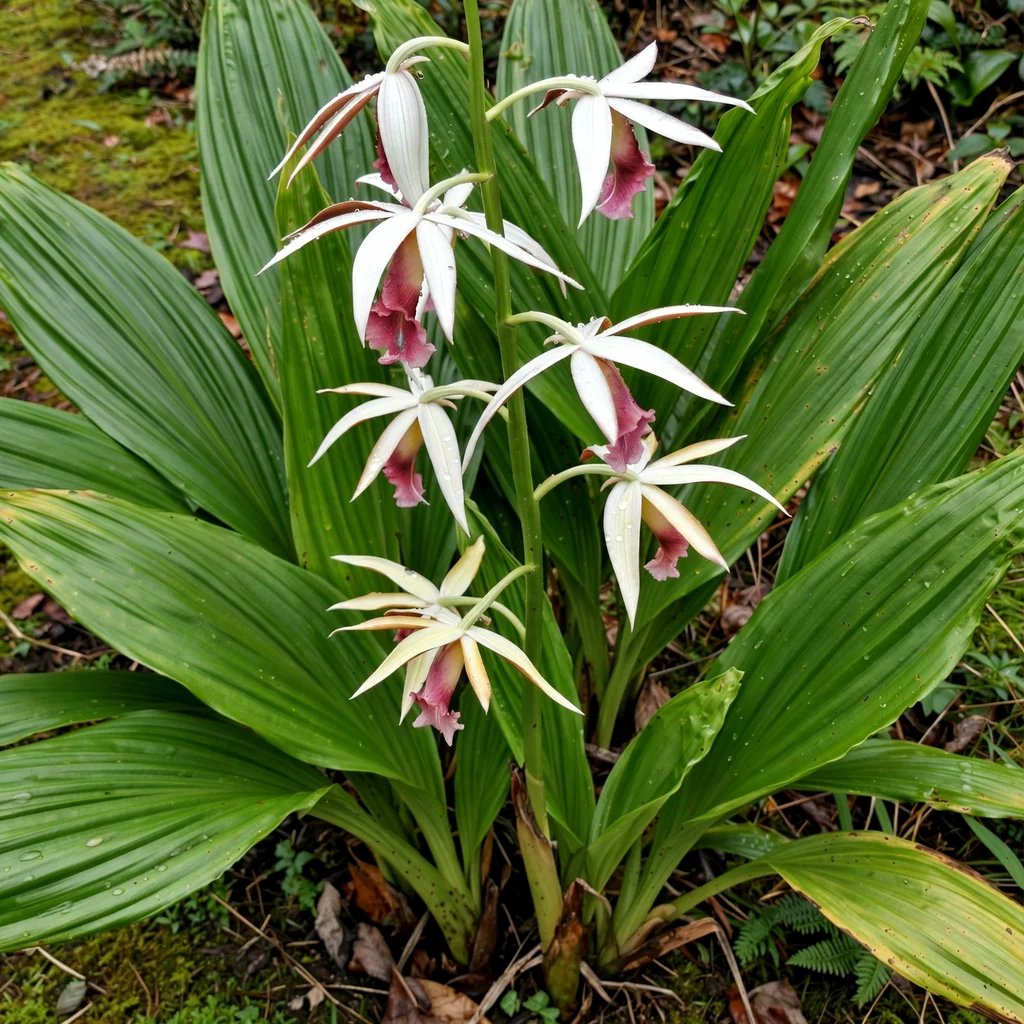
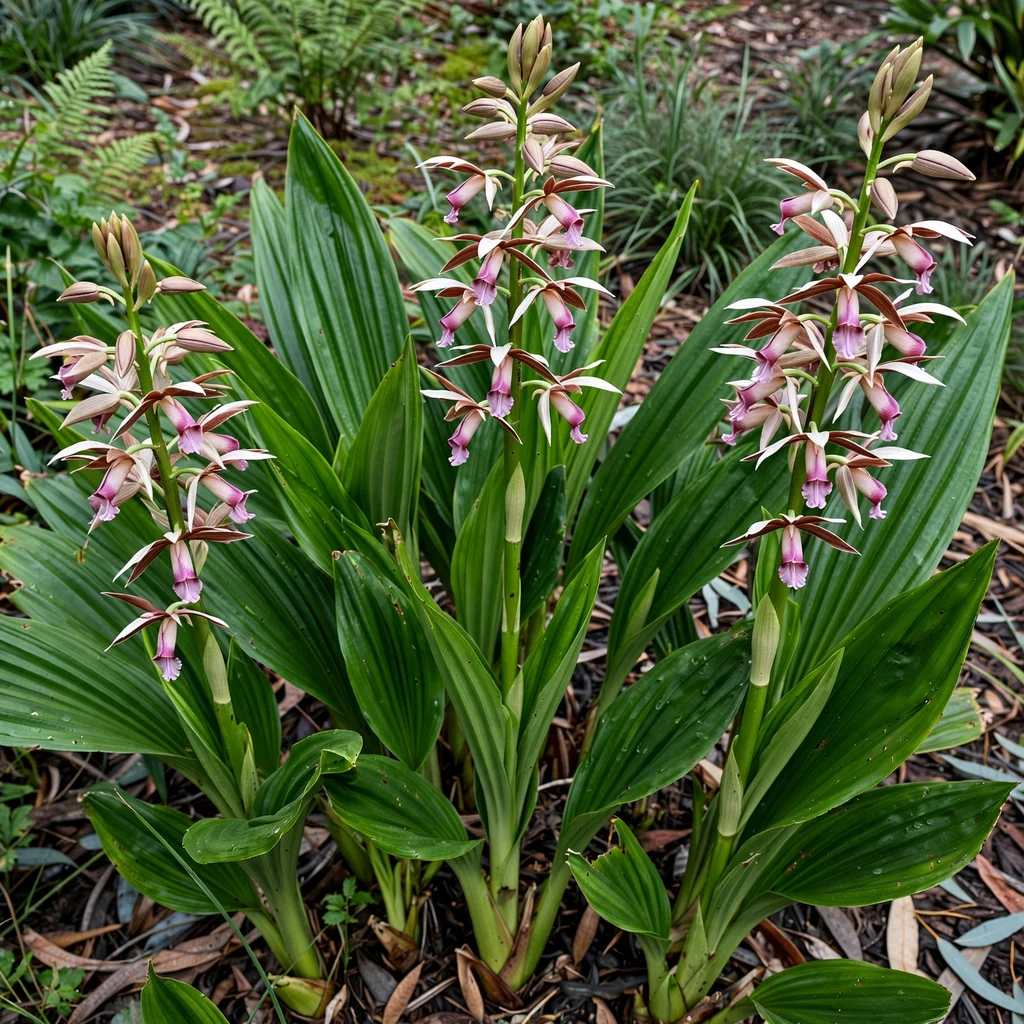
Phaius tankervilleae is a large evergreen terrestrial orchid that grows from fleshy pseudobulbs and short bulb-like runners into a clump of broad pleated sword-shaped leaves. Erect spikes rise to four feet and carry ten to twenty large fragrant flowers that open in succession from the base of the raceme.
The flowers are reddish brown with a white reverse and a deep maroon-purple lip, each to four inches across. It roots in humus rather than in trees, rests briefly after spring bloom, then makes a new growth that flowers the following year.
Uses & Benefits:
Essentials
At a Glance
Plant Type
Tropical
Height
48"
Width
36"
Light
Partial Sun, Shade
Zones
9, 10
Water
Medium
Humidity
50-70%
Lifespan
Perennial
Native To
Asia to Australia and Pacific Islands
Toxicity
Non-toxic
Bloom period
Late winter – Spring
In flower about 4 months of the year
Planting
How to Grow
- Plant with the base of the pseudobulb just above the mix surface in a loose bark, potting soil and compost blend; do not pack the mix.
- Grow in bright filtered light or part shade protected from midday sun; outdoors in zones 9-11, in a bright greenhouse or window indoors elsewhere.
- Water to keep the mix evenly moist during active growth, then reduce after flowering and allow a drier rest into late spring.
- Feed monthly at half strength with balanced 20-20-20 during growth, or apply slow-release pellets every three months.
- Repot or divide only when crowded, keeping crowns dry and giving each division roots and at least one firm pseudobulb.
Pro Tip
Keep water out of the leaf crowns and air moving around the foliage; a loose bark, soil and compost mix that drains freely prevents the crown and root rot that kills more plants than neglect.
Keep It Thriving
Care Guide
Do
- Provide 50-70% humidity with steady air circulation around leaves and flowers.
- Remove yellowed lower leaves at the base as they age.
- Keep crowns above the mix and dry when watering.
Don't
- Do not pack the mix tight or leave pots standing in saucers of water.
- Do not cut healthy pleated leaves to tidy the clump.
- Do not leave container plants out to frost; move under cover before first freeze.
Seasonal Care Calendar
| Task | Jan | Feb | Mar | Apr | May | Jun | Jul | Aug | Sep | Oct | Nov | Dec |
|---|---|---|---|---|---|---|---|---|---|---|---|---|
| Fertilize | ||||||||||||
| Pest Check | ||||||||||||
| Plant | ||||||||||||
| Spring Cleanup | ||||||||||||
| Winter Prep |
Watch Out For
Pests & Diseases
Common Pests
Common Diseases
In the Garden
Landscape Uses & Companions
Landscape Uses
Companion Plants
Multiply
Propagation Methods
Good to Know
Common Questions
Nun's Orchid questions
What zones can Nun's Orchid grow in?
Nun's Orchid is hardy in USDA Zones 9–10: in that range it survives winter in the ground. Colder than Zone 9, grow it in a container you can move to shelter for the winter, or as an annual.
When does Nun's Orchid bloom?
Nun's Orchid typically blooms from late winter to late spring. Exact timing shifts a week or two with your zone — Sow's bloom calendar maps it to your garden.
Does Nun's Orchid need full sun?
Nun's Orchid does best in part shade.
More Phaius to compare
Keep exploring
Explore the genus
Hardy in your zone?
Grow Nun's Orchid with confidence
See it in a design of your actual yard, get zone-matched care reminders, and track it season by season in your garden journal.