The Story
Plant Bio
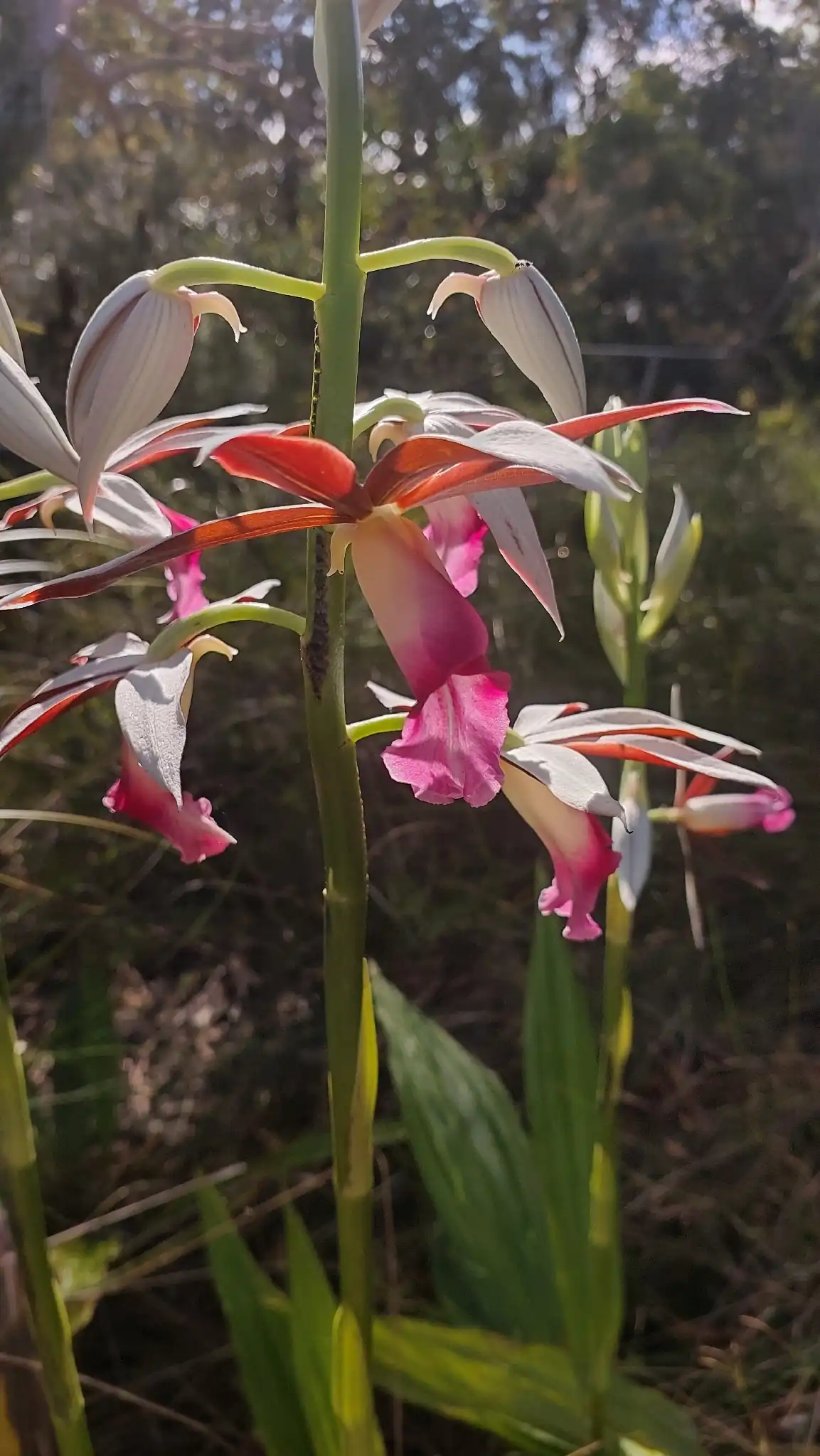
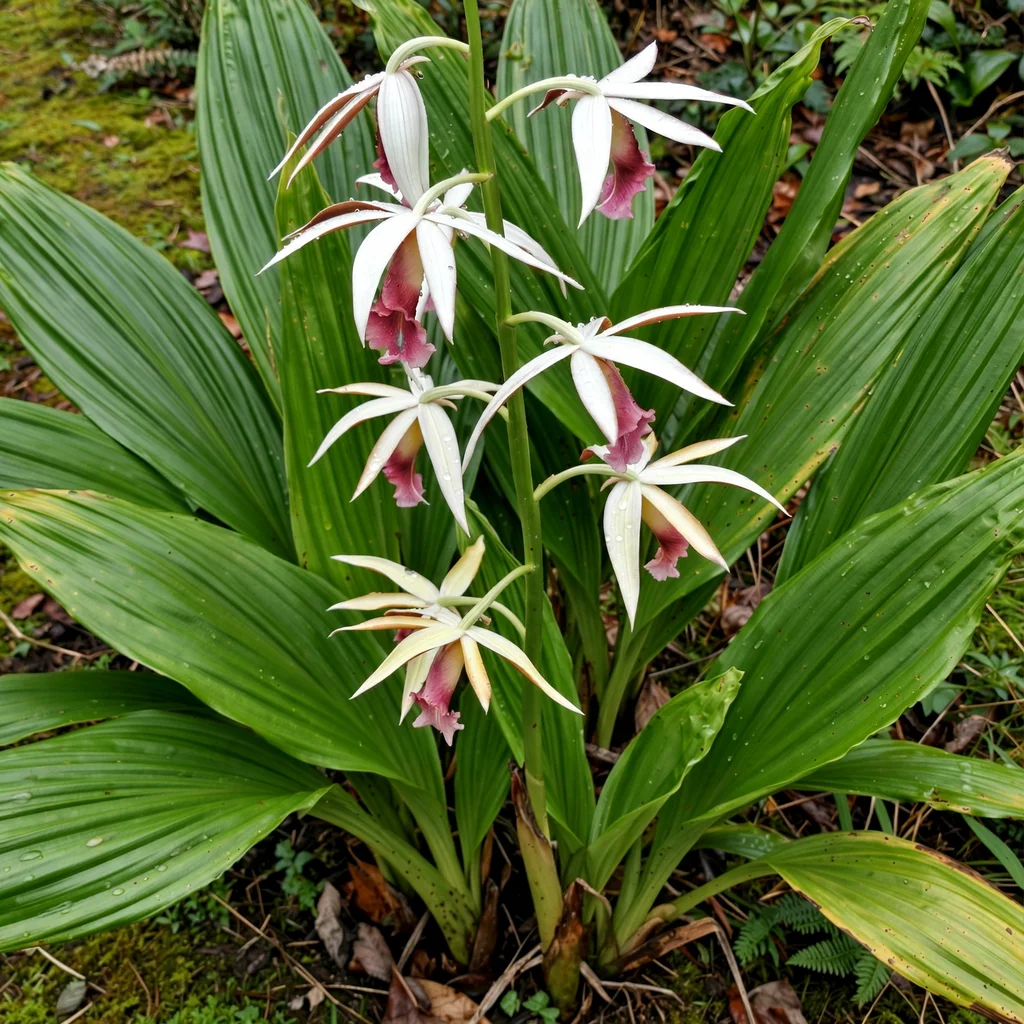
Phaius australis is a robust, evergreen terrestrial orchid native to swampy forest margins and coastal wetlands in eastern Australia. It forms dense clumps of broad, pleated, dark green leaves rising from shallow pseudobulbs, producing tall flowering spikes in spring.
The large, fragrant blooms display sepals and petals that are clean white on the outside and rich reddish-brown with yellow veins on the inside. A prominent three-lobed labellum shaded in mauve and pink accents each flower on erect racemes carrying up to sixteen blossoms.
Uses & Benefits:
Essentials
At a Glance
Plant Type
Tropical
Height
79"
Width
39"
Light
Partial Sun, Shade
Zones
10
Water
High
Humidity
60% - 80%
Lifespan
Perennial
Native To
Australia (Queensland, New South Wales)
Toxicity
Non-toxic
Bloom period
Spring – Early summer
In flower about 4 months of the year
Planting
How to Grow
- Select a container with generous drainage holes and fill it with a humus-rich, organic terrestrial orchid potting mix.
- Position the plant so the tops of the pseudobulbs rest right at or just beneath the soil surface, firming the mix gently around the roots.
- Place the potted orchid in a warm indoor location or greenhouse receiving bright filtered light or partial shade, protected from direct midday sun.
- Water consistently to maintain damp, evenly moist soil without submerging the roots in stagnant water, maintaining humidity between 60% and 80%.
- Apply a balanced liquid fertilizer diluted to half strength every two weeks during spring and summer, withholding food during winter dormancy.
Pro Tip
Avoid planting in coarse orchid bark, which dries out too quickly, or heavy garden soil that rots the pseudobulbs; use a humus-rich, moisture-retentive terrestrial mix and sit the pseudobulbs right at the soil surface.
Keep It Thriving
Care Guide
Do
- Do keep the potting medium consistently moist while ensuring water drains freely.
- Do maintain high ambient humidity around the foliage.
- Do fertilize regularly during active spring and summer growth.
Don't
- Don't bury the pseudobulbs deeply beneath heavy soil.
- Don't allow the potting mix to dry out completely.
- Don't expose the broad foliage to direct, scorching midday sunlight.
Seasonal Care Calendar
| Task | Jan | Feb | Mar | Apr | May | Jun | Jul | Aug | Sep | Oct | Nov | Dec |
|---|---|---|---|---|---|---|---|---|---|---|---|---|
| Divide | ||||||||||||
| Fertilize | ||||||||||||
| Pest Check | ||||||||||||
| Prune | ||||||||||||
| Winter Prep |
Watch Out For
Pests & Diseases
Common Pests
Common Diseases
In the Garden
Landscape Uses & Companions
Landscape Uses
Companion Plants
Multiply
Propagation Methods
Good to Know
Common Questions
Common Swamp Orchid questions
What zones can Common Swamp Orchid grow in?
Common Swamp Orchid is hardy in USDA Zone 10: in that range it survives winter in the ground. Colder than Zone 10, grow it in a container you can move to shelter for the winter, or as an annual.
Is Common Swamp Orchid deer resistant?
Not reliably. Deer may browse Common Swamp Orchid, especially tender spring growth — plan on repellents or fencing where pressure is high.
When does Common Swamp Orchid bloom?
Common Swamp Orchid typically blooms from early spring to early summer. Exact timing shifts a week or two with your zone — Sow's bloom calendar maps it to your garden.
Does Common Swamp Orchid need full sun?
Common Swamp Orchid does best in part shade.
More Phaius to compare
Keep exploring
Explore the genus
Hardy in your zone?
Grow Common Swamp Orchid with confidence
See it in a design of your actual yard, get zone-matched care reminders, and track it season by season in your garden journal.