The Story
Plant Bio
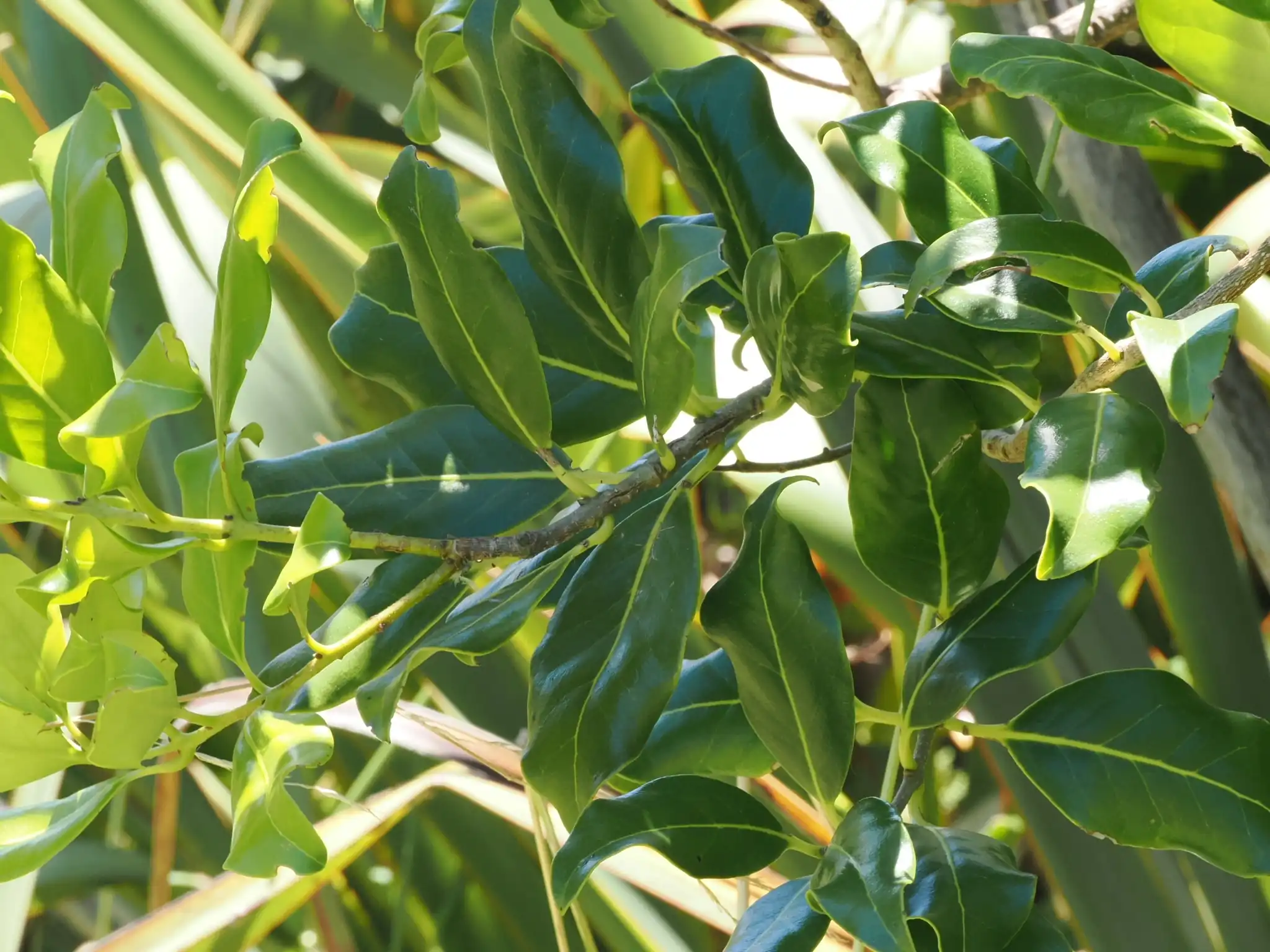
Nestegis apetala, known as coastal maire, is a stout evergreen tree native to northern New Zealand and Norfolk Island, growing 20 to 50 feet tall with smooth, glossy dark green leathery leaves. In late spring and summer, loose axillary clusters of tiny, petalless greenish flowers bloom along the branches, followed by fleshy drupes.
The species develops an irregular, winding branching structure that withstands intense salt spray and ocean gales without foliage scorch. Its juvenile leaves are notably larger than mature leaves, forming dense foliage along exposed coastal ridgelines.
Uses & Benefits:
Essentials
At a Glance
Plant Type
Tree
Height
591"
Width
236"
Light
Full Sun, Partial Sun
Zones
9, 10
Water
Low
Humidity
Moderate
Lifespan
Perennial
Native To
New Zealand, Norfolk Island
Toxicity
Non-toxic
Bloom period
Late spring – Midsummer
In flower about 3 months of the year
Planting
How to Grow
- Select a planting site in full sun or light shade with highly permeable, free-draining soil.
- Excavate a hole twice as wide as the root ball and mound the surrounding soil to prevent pooling water.
- Position the plant so the root collar sits slightly above the surrounding grade and backfill gently.
- Water deeply at planting and maintain minimal moisture until new vegetative growth indicates establishment.
Pro Tip
Plant on raised mounds to guarantee sharp drainage, as standing water around the root collar induces fatal rot, and avoid pruning back into old leafless wood.
Keep It Thriving
Care Guide
Do
- Plant in elevated beds or rocky slopes to maintain rapid water drainage.
- Apply a slow-release organic fertilizer around the drip line in early spring.
- Prune lightly after flowering to maintain natural branching shapes.
Don't
- Do not allow the root system to sit in stagnant or waterlogged soil.
- Do not hard-prune into bare, leafless wood, as stems fail to regenerate.
- Do not apply high-nitrogen synthetic fertilizers that spur weak, sappy growth.
Seasonal Care Calendar
| Task | Jan | Feb | Mar | Apr | May | Jun | Jul | Aug | Sep | Oct | Nov | Dec |
|---|---|---|---|---|---|---|---|---|---|---|---|---|
| Fertilize | ||||||||||||
| Mulch | ||||||||||||
| Pest Check | ||||||||||||
| Prune |
Watch Out For
Pests & Diseases
Common Pests
Common Diseases
In the Garden
Landscape Uses & Companions
Landscape Uses
Multiply
Propagation Methods
Good to Know
Common Questions
Coastal Maire questions
What zones can Coastal Maire grow in?
Coastal Maire is hardy in USDA Zones 9–10: in that range it survives winter in the ground. Colder than Zone 9, winters are too cold for it to survive outdoors.
When does Coastal Maire bloom?
Coastal Maire typically blooms from late spring to mid-summer. Exact timing shifts a week or two with your zone — Sow's bloom calendar maps it to your garden.
Does Coastal Maire need full sun?
Coastal Maire does best in full sun to part shade. In hot climates, afternoon shade keeps blooms fresher longer.
Is Coastal Maire drought tolerant?
Yes — once established (usually after the first full season), Coastal Maire handles dry spells with minimal watering. Water deeply its first year to build the root system that makes that possible.
More Nestegis to compare
Keep exploring
Explore the genus
Hardy in your zone?
Grow Coastal Maire with confidence
See it in a design of your actual yard, get zone-matched care reminders, and track it season by season in your garden journal.