The Story
Plant Bio
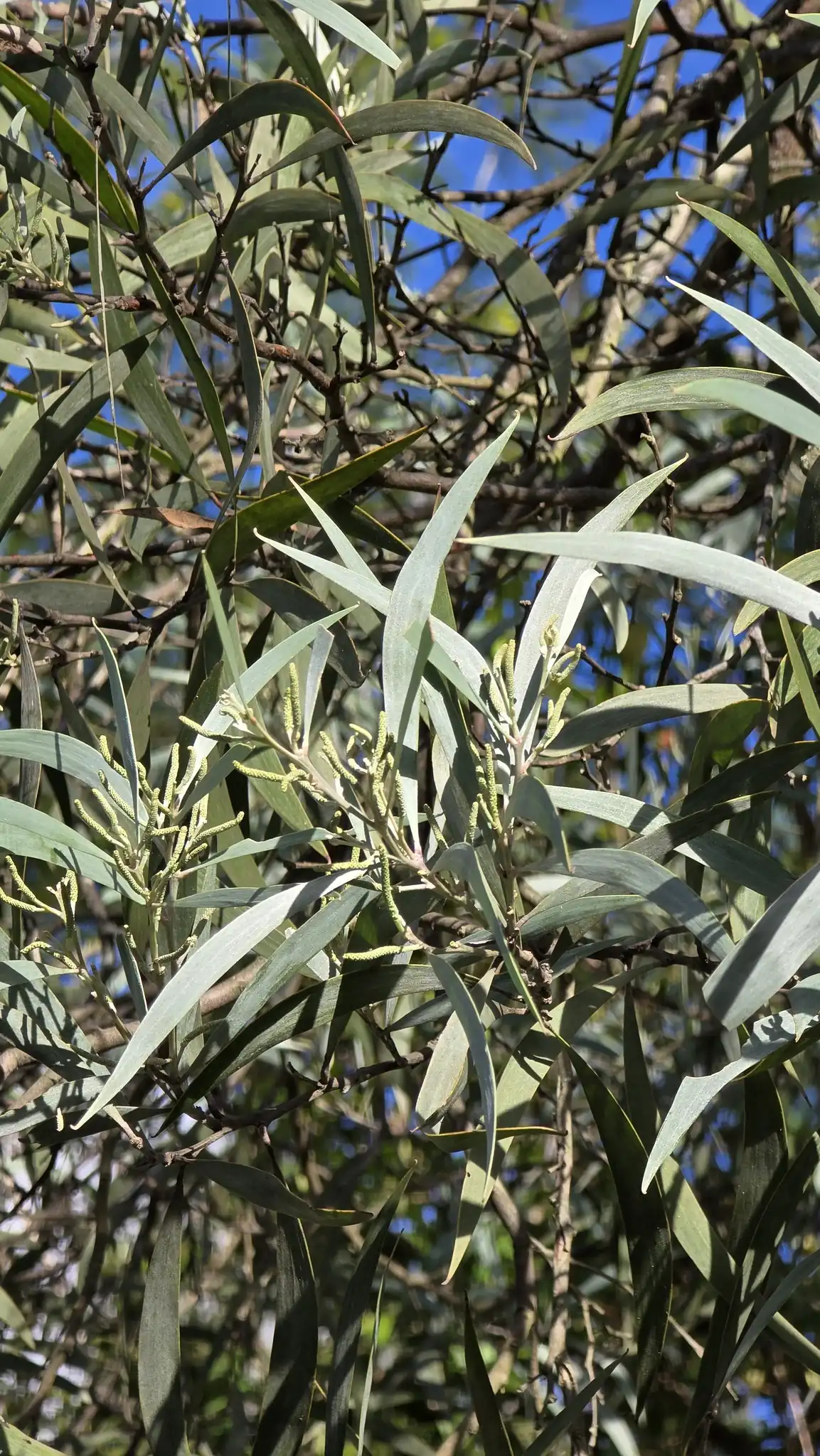
Acacia binervia is an evergreen Australian tree or large shrub reaching 20 to 50 feet in height with deeply fissured grey bark and dark grey-blue foliage. From late winter into spring, it produces cylindrical rod-like spikes of pale to bright golden yellow flowers in the leaf axils.
The curved, sickle-shaped phyllodes feature three to five prominent longitudinal veins with fine appressed grey hairs on their surface. Dense foliage and fissured bark provide shelter for nesting birds and beneficial insects while standing up to high winds and coastal salt spray.
Uses & Benefits:
Essentials
At a Glance
Plant Type
Tree
Height
630"
Width
315"
Light
Full Sun, Partial Sun
Zones
9, 10
Water
Low
Humidity
Low to moderate
Lifespan
Perennial
Native To
Australia (New South Wales, Victoria)
Toxicity
Toxic to livestock if ingested
Bloom period
Winter – Spring
In flower about 6 months of the year
Planting
How to Grow
- Select a planting location in full sun to partial shade with well-drained soil.
- Dig a hole twice as wide as the root ball and equal in depth, keeping the top level with the surrounding soil.
- Backfill with native soil, firming lightly around the base to remove air pockets without compacting.
- Water thoroughly at planting and supply supplemental water during the first summer until the root system establishes.
Pro Tip
Prune foliage lightly immediately after flowering finishes in late spring; cutting back hard into old, leafless wood prevents epicormic regrowth and damages the branch framework.
Keep It Thriving
Care Guide
Do
- Plant in fast-draining soil to protect roots from waterlogging.
- Tip-prune young branches after spring flowering to encourage a dense, well-branched canopy.
- Apply organic mulch around the root zone to suppress weeds and moderate soil temperatures.
Don't
- Do not prune into old leafless timber, as wood rarely regenerates from bare bark.
- Do not overwater once established, as excess moisture leads to root rot.
- Do not apply heavy doses of high-phosphorus fertilizers.
Seasonal Care Calendar
| Task | Jan | Feb | Mar | Apr | May | Jun | Jul | Aug | Sep | Oct | Nov | Dec |
|---|---|---|---|---|---|---|---|---|---|---|---|---|
| Fertilize | ||||||||||||
| Mulch | ||||||||||||
| Pest Check | ||||||||||||
| Prune |
Watch Out For
Pests & Diseases
Common Pests
Common Diseases
In the Garden
Landscape Uses & Companions
Landscape Uses
Companion Plants
Multiply
Propagation Methods
Good to Know
Common Questions
Coast Myall questions
What zones can Coast Myall grow in?
Coast Myall is hardy in USDA Zones 9–10: in that range it survives winter in the ground. Colder than Zone 9, winters are too cold for it to survive outdoors.
Is Coast Myall deer resistant?
Not reliably. Deer may browse Coast Myall, especially tender spring growth — plan on repellents or fencing where pressure is high.
When does Coast Myall bloom?
Coast Myall typically blooms from winter to spring. Exact timing shifts a week or two with your zone — Sow's bloom calendar maps it to your garden.
Does Coast Myall need full sun?
Coast Myall does best in full sun to part shade. In hot climates, afternoon shade keeps blooms fresher longer.
Is Coast Myall drought tolerant?
Yes — once established (usually after the first full season), Coast Myall handles dry spells with minimal watering. Water deeply its first year to build the root system that makes that possible.
More Acacia to compare
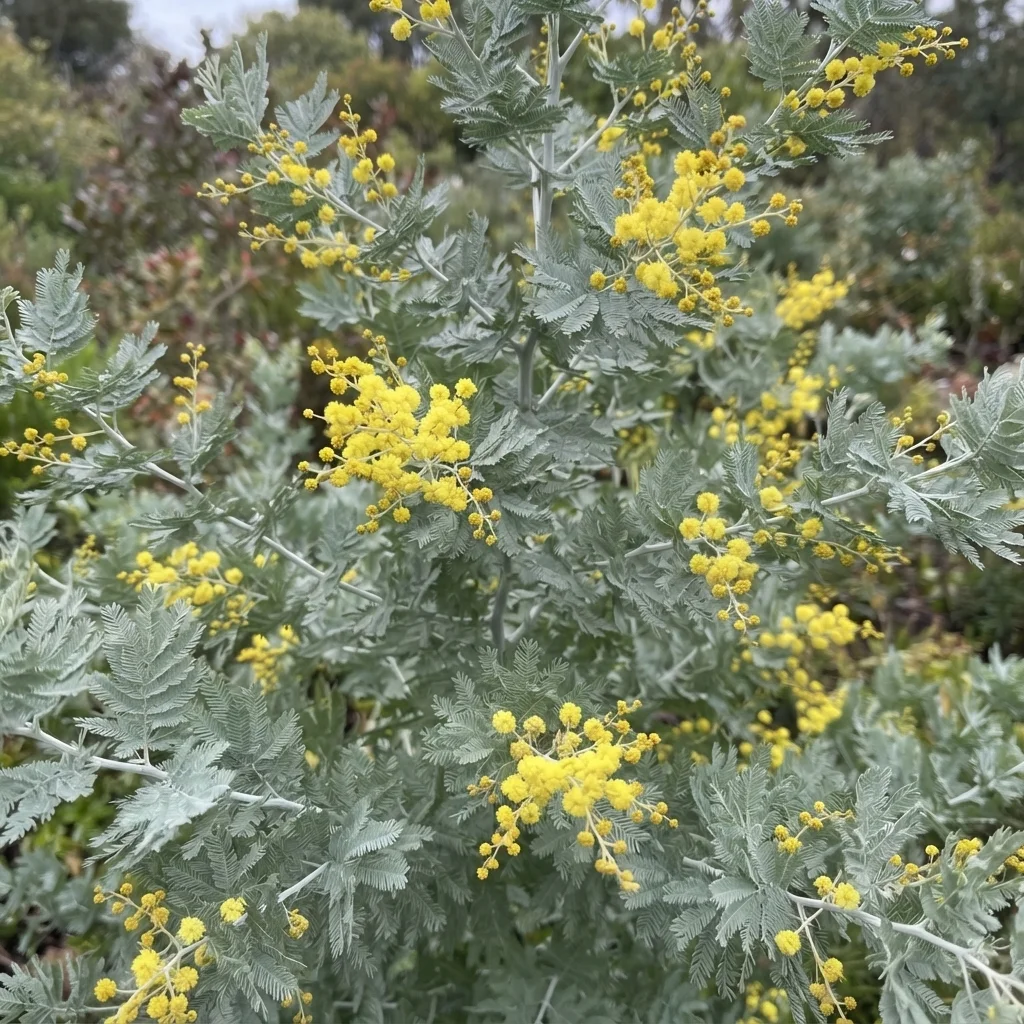
Silver wattle
Acacia dealbata
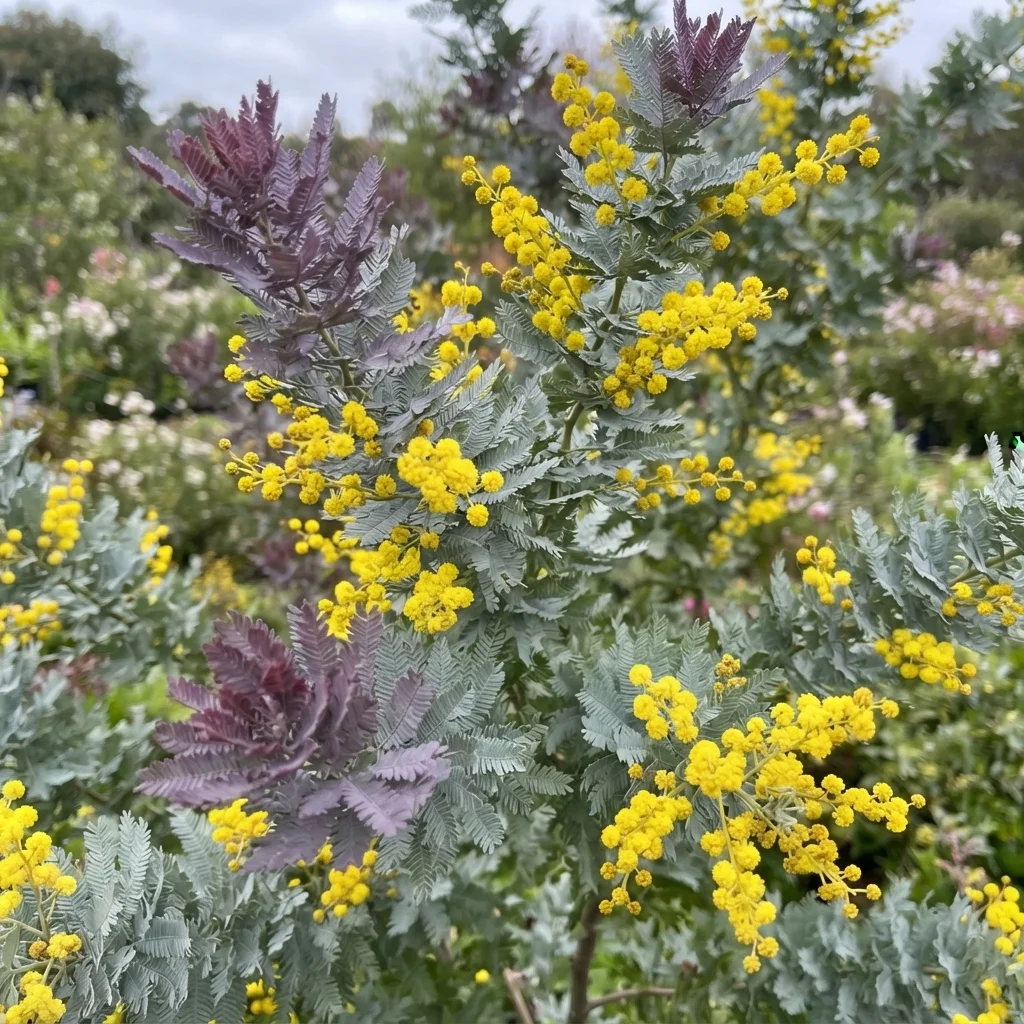
Cootamundra Wattle 'Purpurea'
Acacia baileyana 'Purpurea'
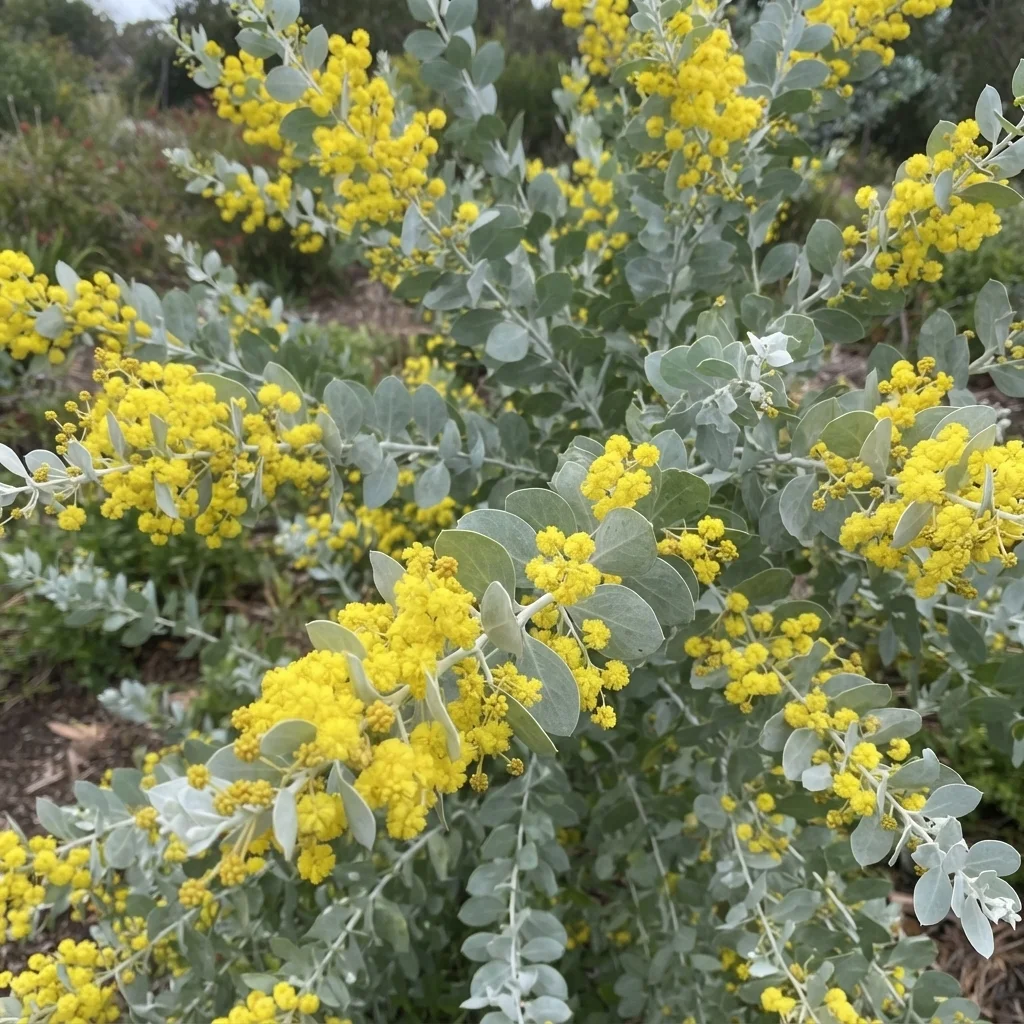
Pearl Acacia
Acacia podalyriifolia
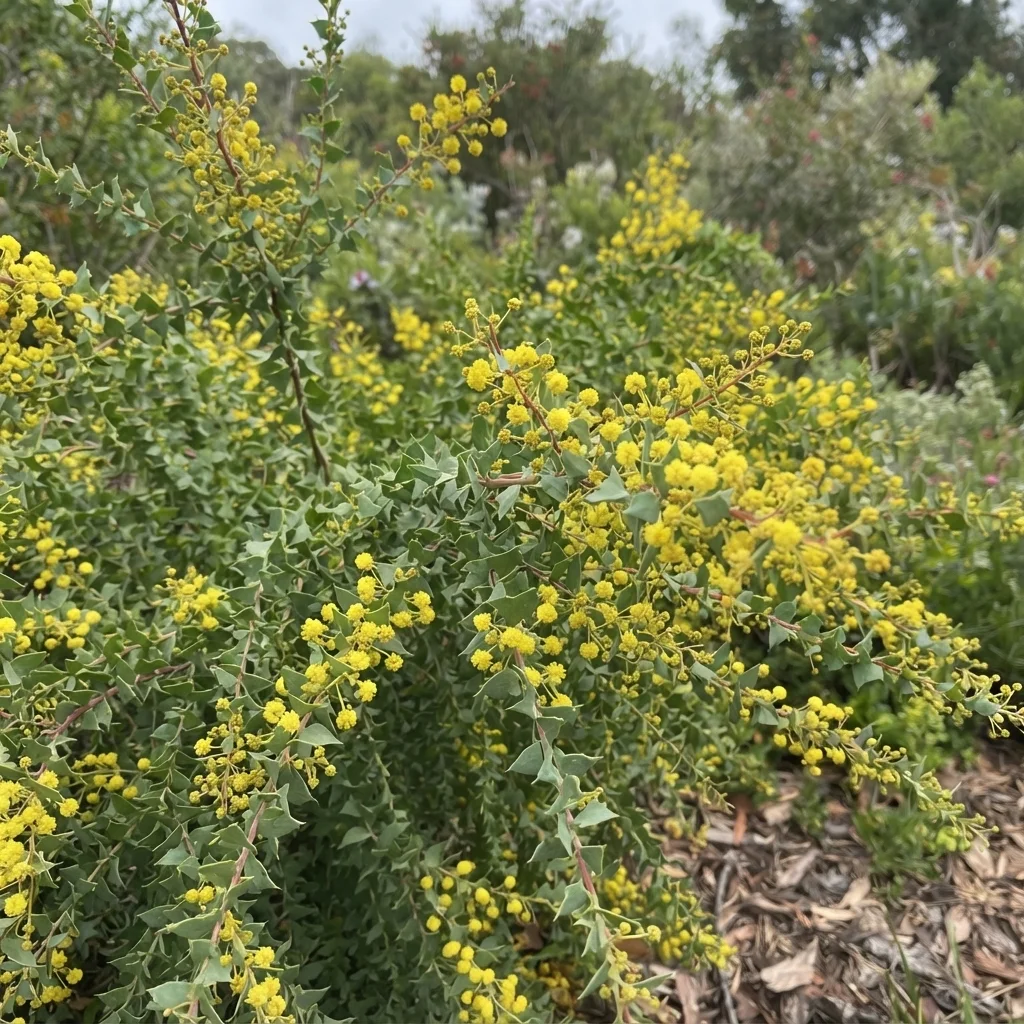
Ovens Wattle
Acacia pravissima
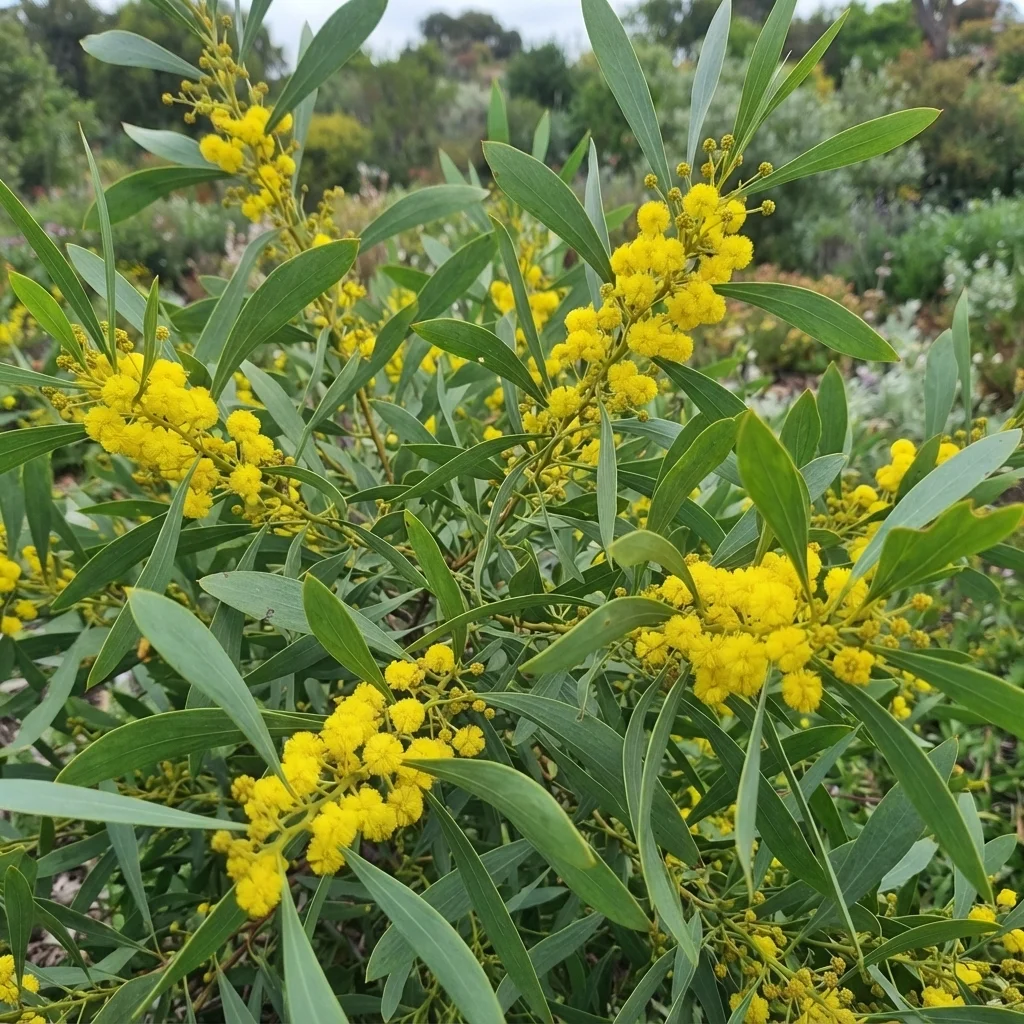
Golden Wreath Wattle
Acacia saligna
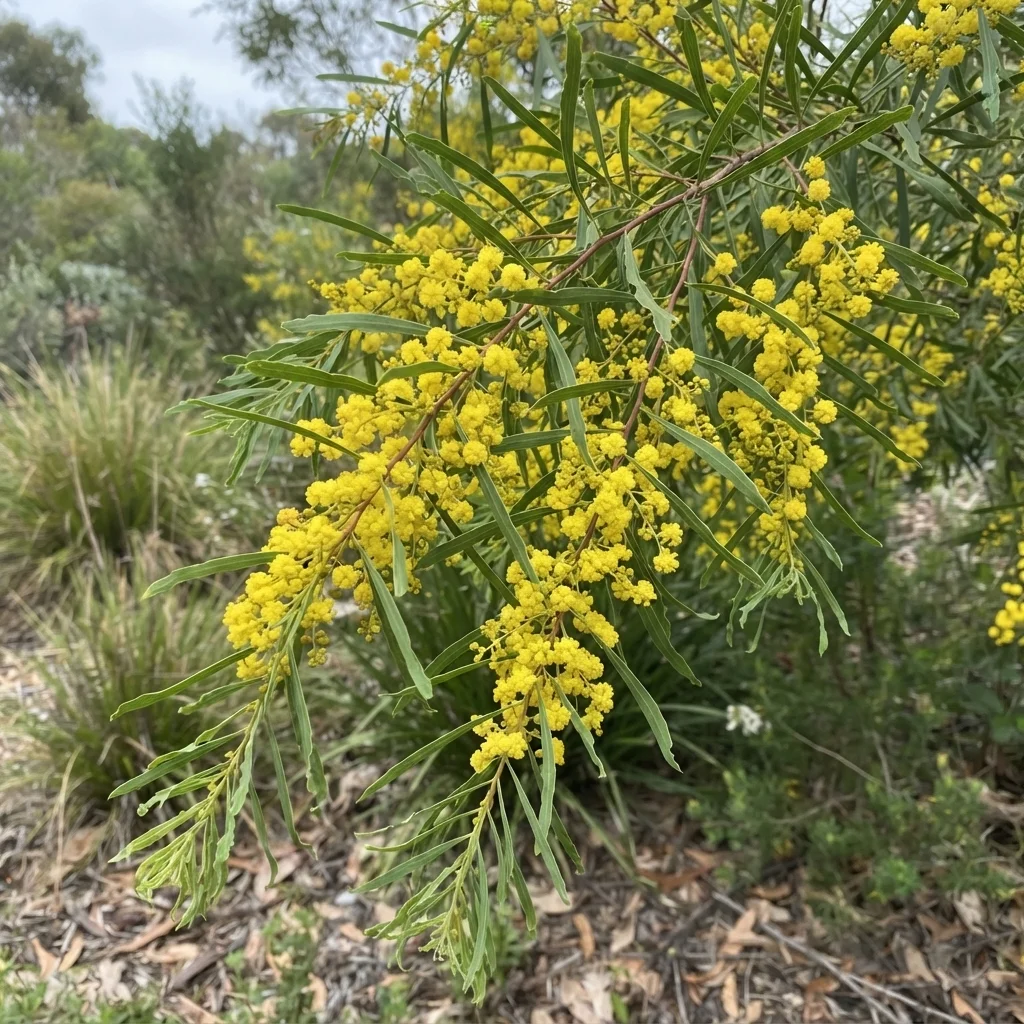
Fringed Wattle
Acacia fimbriata
Keep exploring
Explore the genus
Hardy in your zone?
Grow Coast Myall with confidence
See it in a design of your actual yard, get zone-matched care reminders, and track it season by season in your garden journal.