The Story
Plant Bio
Moringa oleifera is a fast-growing deciduous tree from dry lowland forest in sub-Himalayan India to Pakistan, forming a swollen trunk and an open feathery crown to 30 feet or more. The leaves are twice to three-times pinnate with small oval leaflets, dropping in cold or drought and flushing fast with warmth and water.
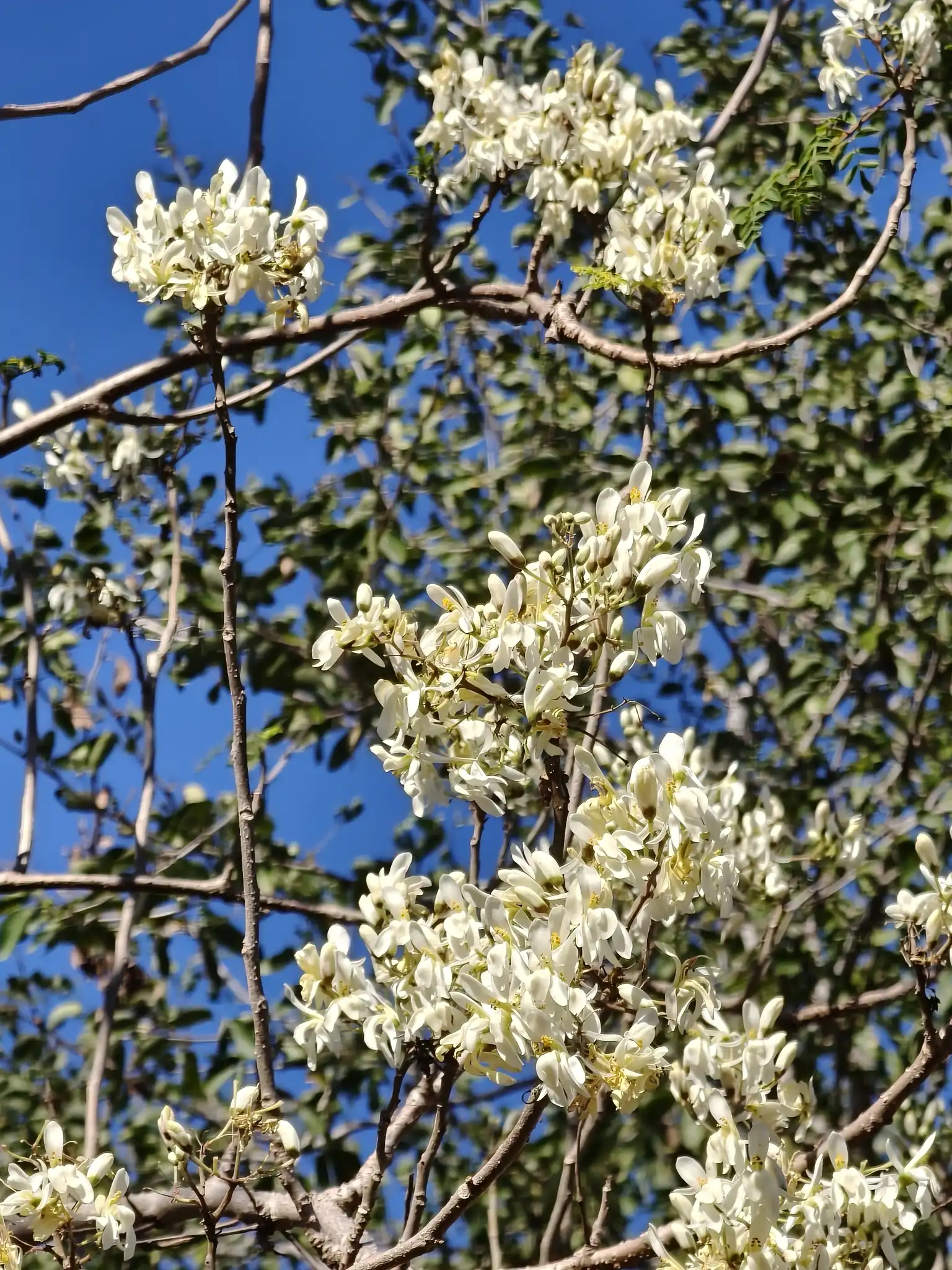
What sets it apart is speed combined with edibility: seedlings can reach 20 feet in one season, then carry erect panicles of fragrant white to cream flowers followed by long ribbed pods. Leaves, buds, flowers, young pods and seeds are eaten as vegetables, while the thickened roots smell of horseradish and are not for routine use.
Uses & Benefits:
Essentials
At a Glance
Plant Type
Tree
Height
400"
Width
180"
Light
Full Sun
Zones
9, 10
Water
Low
Humidity
Tolerant
Lifespan
Short-lived tree
Native To
N. India to NE Pakistan
Toxicity
Leaves and pods edible; roots not for routine use
Bloom period
Summer – Fall
In flower about 6 months of the year
Marketplace
Where to Buy
Shipping costs Year-round shipping Free shipping
Planting
How to Grow
- Plant after last frost in full sun in sandy loam that drains sharply; set the crown level and water in once.
- Allow 15 to 20 feet clearance from houses and paths; falling caterpillars and leaf litter stain paving.
- Water deeply at planting, then taper to occasional soakings; established trees take drought but rot in standing water.
- Coppice to 3 feet each spring and tip-prune after flowering to hold leaves and pods within reach.
- Weed 2 to 3 times a year and pick flowers and young pods often to keep production coming.
Pro Tip
Give it sharp drainage and withhold water once established — wet roots kill it faster than drought; if frost cuts it to the ground, cut the stump to a foot in spring and it reshoots within weeks.
Keep It Thriving
Care Guide
Do
- Plant high in sand or loam with sharp drainage.
- Prune hard once or twice a year to keep harvest in reach.
- Check leaf undersides for mites and aphids in dry weather.
Don't
- Do not overwater or plant in clay that stays wet.
- Do not leave mature pods to split and self-sow where spread is a concern.
- Do not use roots as a routine vegetable.
Seasonal Care Calendar
| Task | Jan | Feb | Mar | Apr | May | Jun | Jul | Aug | Sep | Oct | Nov | Dec |
|---|---|---|---|---|---|---|---|---|---|---|---|---|
| Harvest | ||||||||||||
| Pest Check | ||||||||||||
| Plant | ||||||||||||
| Prune | ||||||||||||
| Winter Prep |
Watch Out For
Pests & Diseases
Common Pests
Common Diseases
In the Garden
Landscape Uses & Companions
Landscape Uses
Companion Plants
Multiply
Propagation Methods
Good to Know
Common Questions
Drumstick Tree questions
What zones can Drumstick Tree grow in?
Drumstick Tree is hardy in USDA Zones 9–10: in that range it survives winter in the ground. Colder than Zone 9, winters are too cold for it to survive outdoors.
When does Drumstick Tree bloom?
Drumstick Tree typically blooms from summer to fall. Exact timing shifts a week or two with your zone — Sow's bloom calendar maps it to your garden.
Does Drumstick Tree need full sun?
Drumstick Tree does best in full sun (6+ hours).
Is Drumstick Tree drought tolerant?
Yes — once established (usually after the first full season), Drumstick Tree handles dry spells with minimal watering. Water deeply its first year to build the root system that makes that possible.
Keep exploring
Explore the genus
Hardy in your zone?
Grow Drumstick Tree with confidence
See it in a design of your actual yard, get zone-matched care reminders, and track it season by season in your garden journal.