The Story
Plant Bio
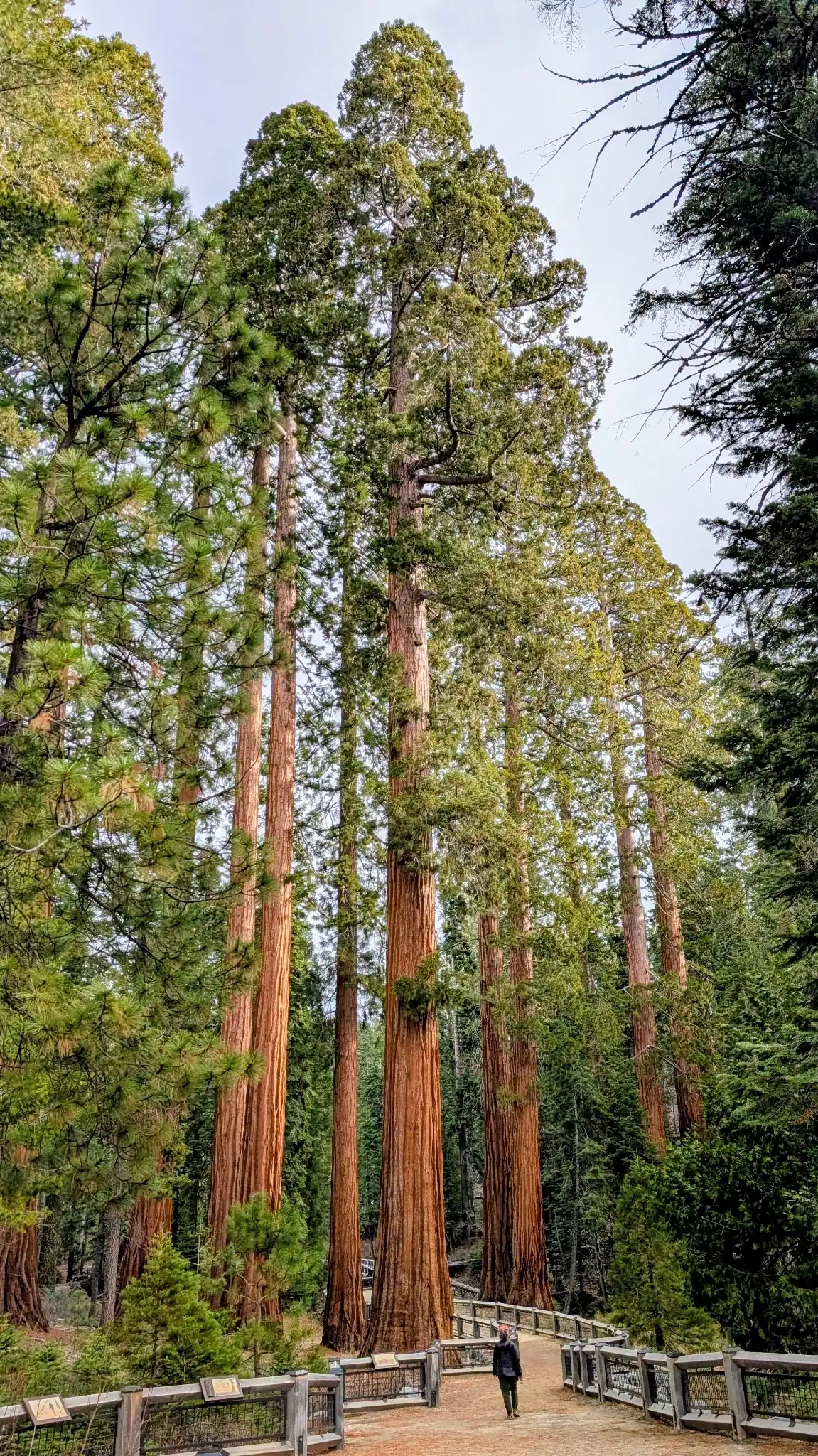
Sequoiadendron giganteum is a massive evergreen conifer developing a thick, fibrous, reddish-brown bark with deep furrows and a sharply flared base. Young specimens maintain a dense pyramidal silhouette with blue-green awl-shaped leaves, transitioning to a tall columnar canopy with bare lower trunks as they mature.
The spongy bark provides exceptional natural thermal insulation, while mature specimens can reach over one hundred feet tall in cultivated garden settings. Small, inconspicuous pollen and seed cones form at shoot ends in spring without ornamental flower displays.
Uses & Benefits:
Essentials
At a Glance
Plant Type
Tree
Height
1181"
Width
472"
Light
Full Sun
Zones
6, 7, 8, 9
Water
Medium
Humidity
Moderate
Lifespan
Perennial
Native To
California, USA
Toxicity
Non-toxic
Bloom period
Spring
In flower about 3 months of the year
Planting
How to Grow
- Select a wide planting site in full sun away from power lines and structural foundations.
- Dig a planting hole twice as wide as the root ball and equal to its depth, ensuring deep, well-draining soil.
- Set the tree so the root flare sits level with or slightly above the surrounding soil grade.
- Water thoroughly at planting and establish a consistent deep-watering schedule during the first three growing seasons.
Pro Tip
Never prune into old, leafless wood, as stems lacking green foliage cannot generate new adventitious buds.
Keep It Thriving
Care Guide
Do
- Plant in deep, well-draining sandy loam with a neutral to acidic pH.
- Provide supplemental deep irrigation during dry summer spells.
- Protect young saplings with physical tree guards to prevent browsing damage.
Don't
- Do not plant in heavy, waterlogged clay or poorly drained soils.
- Do not prune into old brown wood that lacks active green needles.
- Do not crowd in small residential beds or close to structural foundations.
Seasonal Care Calendar
| Task | Jan | Feb | Mar | Apr | May | Jun | Jul | Aug | Sep | Oct | Nov | Dec |
|---|---|---|---|---|---|---|---|---|---|---|---|---|
| Fertilize | ||||||||||||
| Mulch | ||||||||||||
| Pest Check | ||||||||||||
| Prune |
Watch Out For
Pests & Diseases
Common Pests
Common Diseases
In the Garden
Landscape Uses & Companions
Landscape Uses
Companion Plants
Multiply
Propagation Methods
Good to Know
Common Questions
Giant Sequoia questions
What zones can Giant Sequoia grow in?
Giant Sequoia is hardy in USDA Zones 6–9: in that range it survives winter in the ground. Colder than Zone 6, winters are too cold for it to survive outdoors. Warmer than Zone 9, winter isn't the problem: it prefers colder winters, and summer heat can shorten its life.
Is Giant Sequoia deer resistant?
Not reliably. Deer may browse Giant Sequoia, especially tender spring growth — plan on repellents or fencing where pressure is high.
When does Giant Sequoia bloom?
Giant Sequoia typically blooms in spring. Exact timing shifts a week or two with your zone — Sow's bloom calendar maps it to your garden.
Does Giant Sequoia need full sun?
Giant Sequoia does best in full sun (6+ hours).
Keep exploring
Explore the genus
Hardy in your zone?
Grow Giant Sequoia with confidence
See it in a design of your actual yard, get zone-matched care reminders, and track it season by season in your garden journal.