The Story
Plant Bio
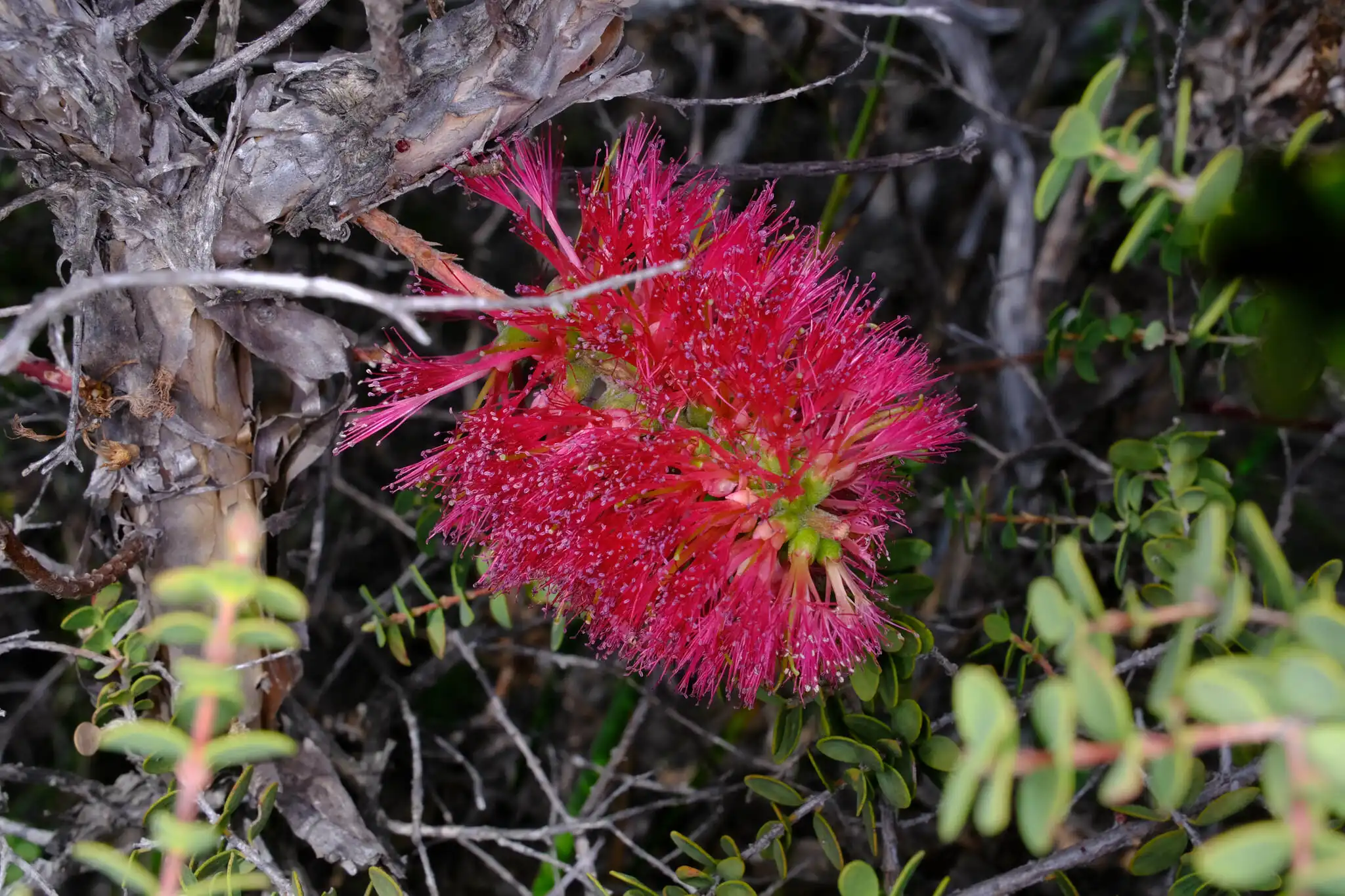
Melaleuca elliptica is an evergreen shrub from south Western Australia that reaches 7 to 9 feet tall and 5 to 6 feet wide in gardens, with crowded gray-green elliptical leaves and gray papery bark. Flowers are dense cylindrical bottlebrush spikes to 3 inches long in deep red to burgundy, borne on short laterals and old wood from spring into late summer.
The leaves are small, rounded and leathery, about one-half inch long, holding gray through summer and flushing purple after frost on intricately branched stems that gnarl with age. The brushes sit tucked inside the canopy rather than at the shoot tips, so plants left dense and unpruned hide the bloom and turn woody and open.
Uses & Benefits:
Essentials
At a Glance
Plant Type
Shrub
Height
108"
Width
72"
Light
Full Sun
Zones
8, 9, 10
Water
Low
Humidity
Low to moderate
Lifespan
Long-lived shrub
Native To
Western Australia
Toxicity
Unknown
Bloom period
Spring – Late summer
In flower about 6 months of the year
Planting
How to Grow
- Plant in spring after hard frost in full sun with open air around the crown.
- Dig a hole as deep as the container and twice as wide, backfilling with native soil.
- Water deeply at planting, then water to establish and let the top inches dry between waterings.
- Spread 2 inches of mulch kept back from the stems to hold moisture.
- Tip-prune lightly behind each spent spike to keep growth dense and expose the next bloom wood.
Pro Tip
Plant in full sun and tip-prune just behind each spent spike; shade and skipped pruning produce straggly wood with flowers buried in foliage.
Keep It Thriving
Care Guide
Do
- Give full sun and open spacing for dense growth.
- Tip-prune after each flush to display flowers borne on old wood.
- Water deeply during establishment, then allow drying between waterings.
Don't
- Do not plant in shade or crowded where stems stretch and turn straggly.
- Do not cut hard into old leafless wood.
- Do not keep soil constantly wet or waterlogged.
Seasonal Care Calendar
| Task | Jan | Feb | Mar | Apr | May | Jun | Jul | Aug | Sep | Oct | Nov | Dec |
|---|---|---|---|---|---|---|---|---|---|---|---|---|
| Mulch | ||||||||||||
| Pest Check | ||||||||||||
| Plant | ||||||||||||
| Propagate | ||||||||||||
| Prune |
Watch Out For
Pests & Diseases
Common Pests
Common Diseases
In the Garden
Landscape Uses & Companions
Landscape Uses
Multiply
Propagation Methods
Good to Know
Common Questions
Granite Bottlebrush questions
What zones can Granite Bottlebrush grow in?
Granite Bottlebrush is hardy in USDA Zones 8–10: in that range it survives winter in the ground. Colder than Zone 8, grow it in a container you can move to shelter for the winter.
When does Granite Bottlebrush bloom?
Granite Bottlebrush typically blooms from spring to summer. Exact timing shifts a week or two with your zone — Sow's bloom calendar maps it to your garden.
Does Granite Bottlebrush need full sun?
Granite Bottlebrush does best in full sun (6+ hours).
Is Granite Bottlebrush drought tolerant?
Yes — once established (usually after the first full season), Granite Bottlebrush handles dry spells with minimal watering. Water deeply its first year to build the root system that makes that possible.
More Melaleuca to compare
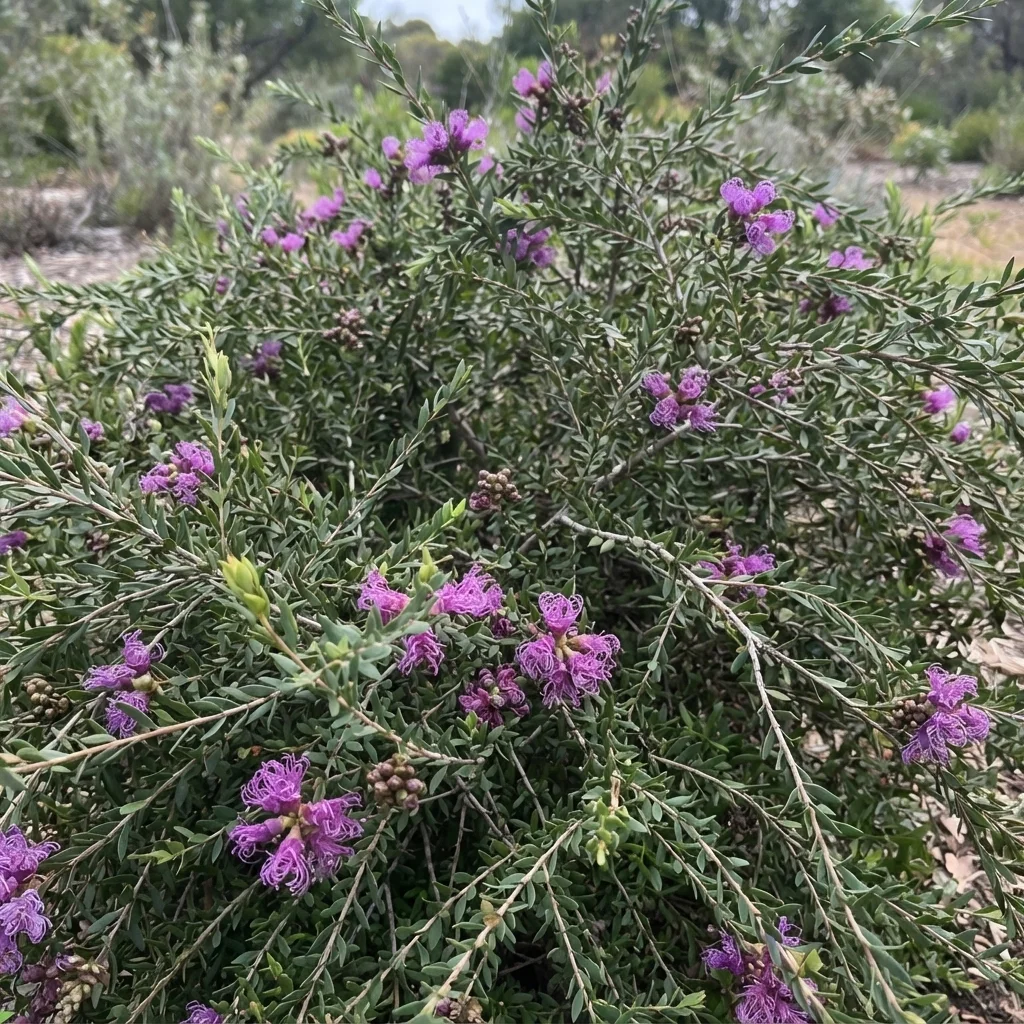
Thymeleaf Melaleuca
Melaleuca thymifolia
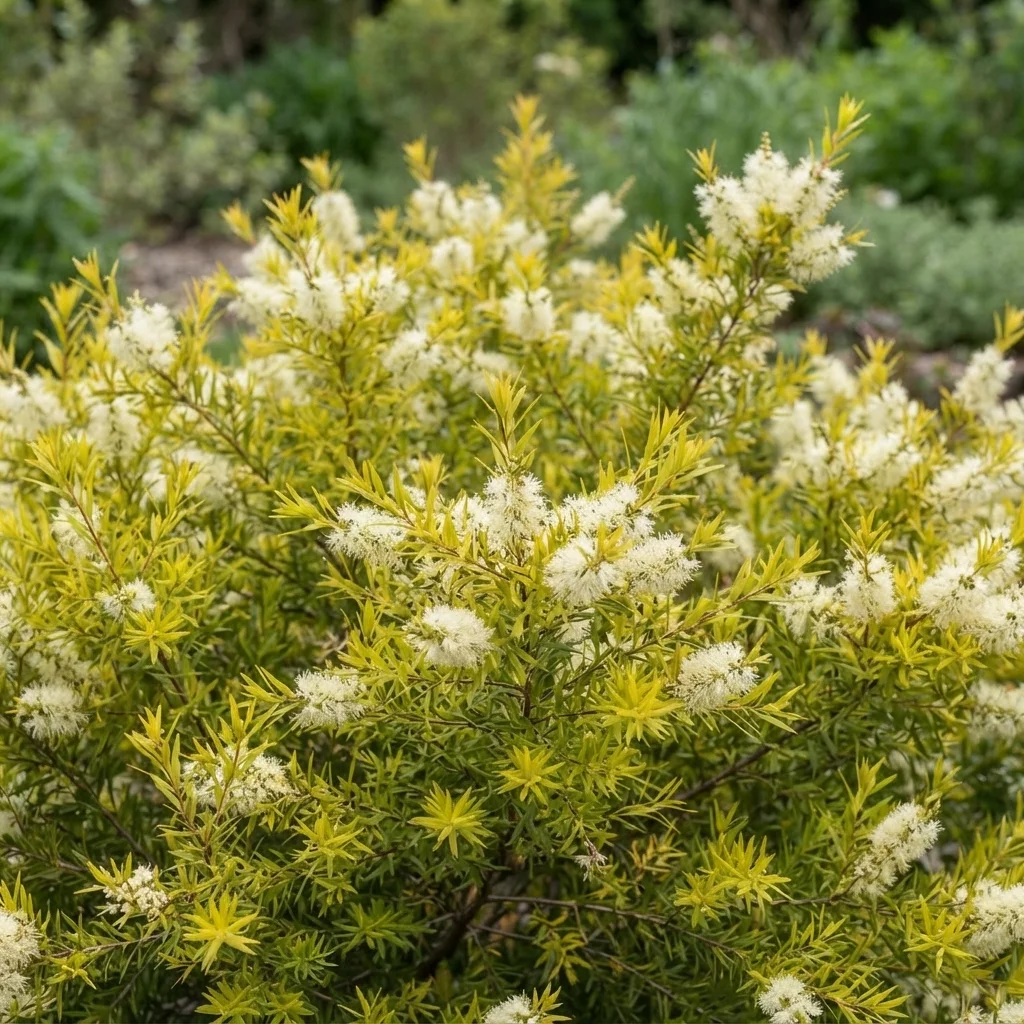
Golden Melaleuca
Melaleuca bracteata 'Golden Gem'
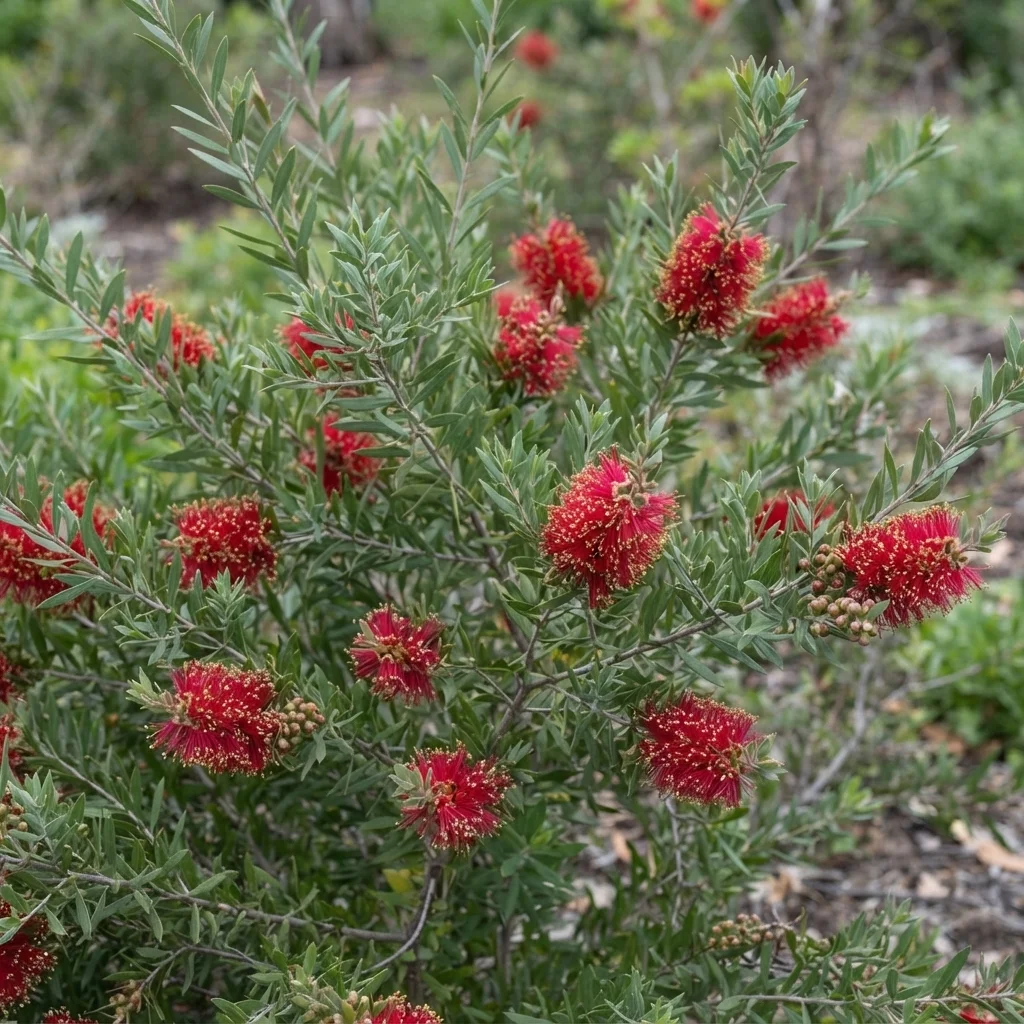
Scarlet Honey Myrtle
Melaleuca fulgens
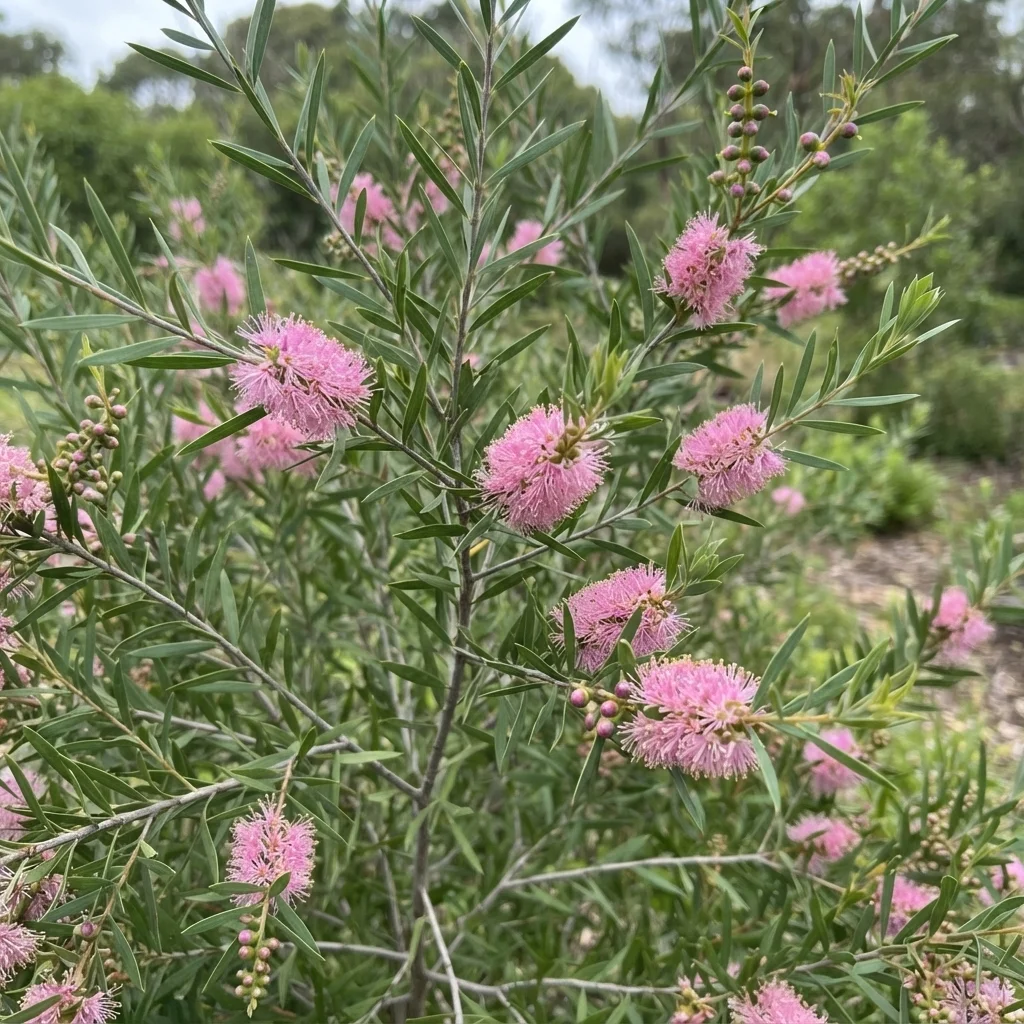
Graceful Honey-myrtle
Melaleuca radula
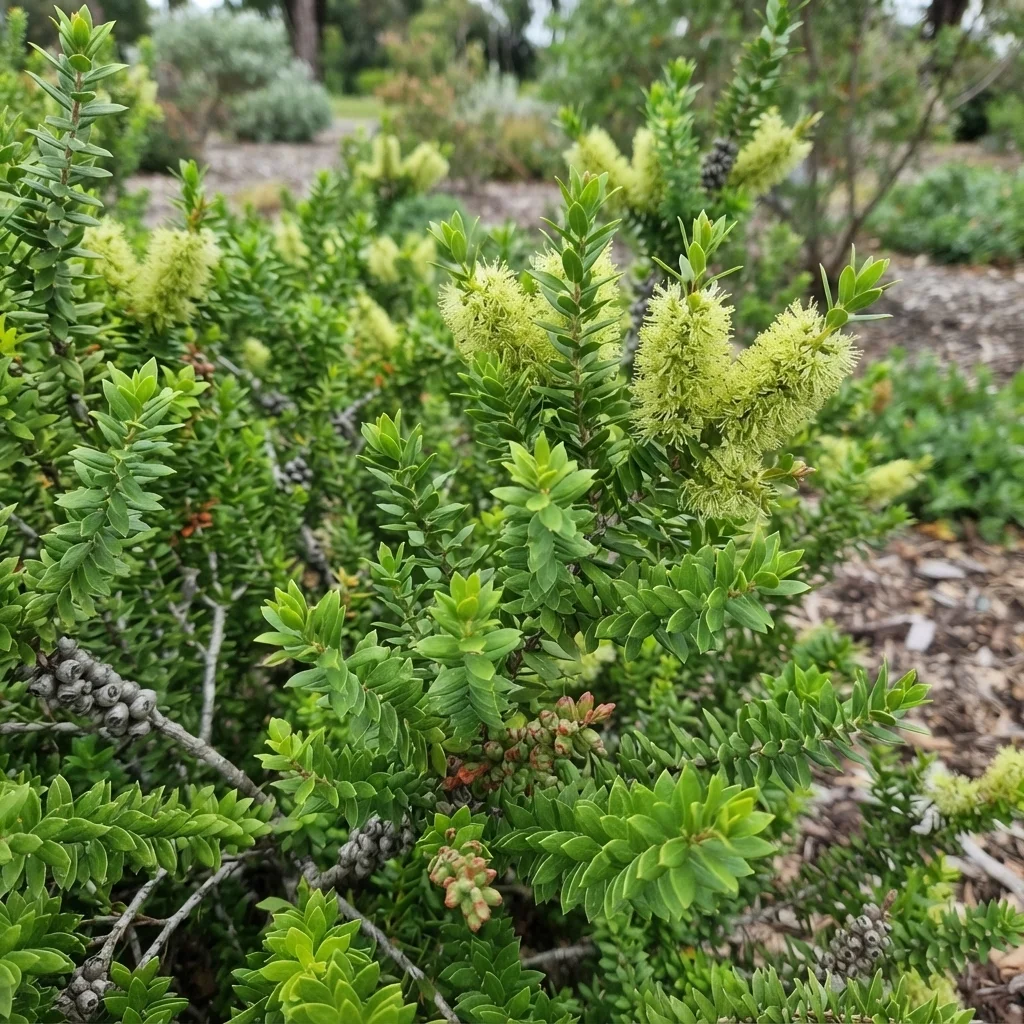
Green Honey Myrtle
Melaleuca diosmifolia
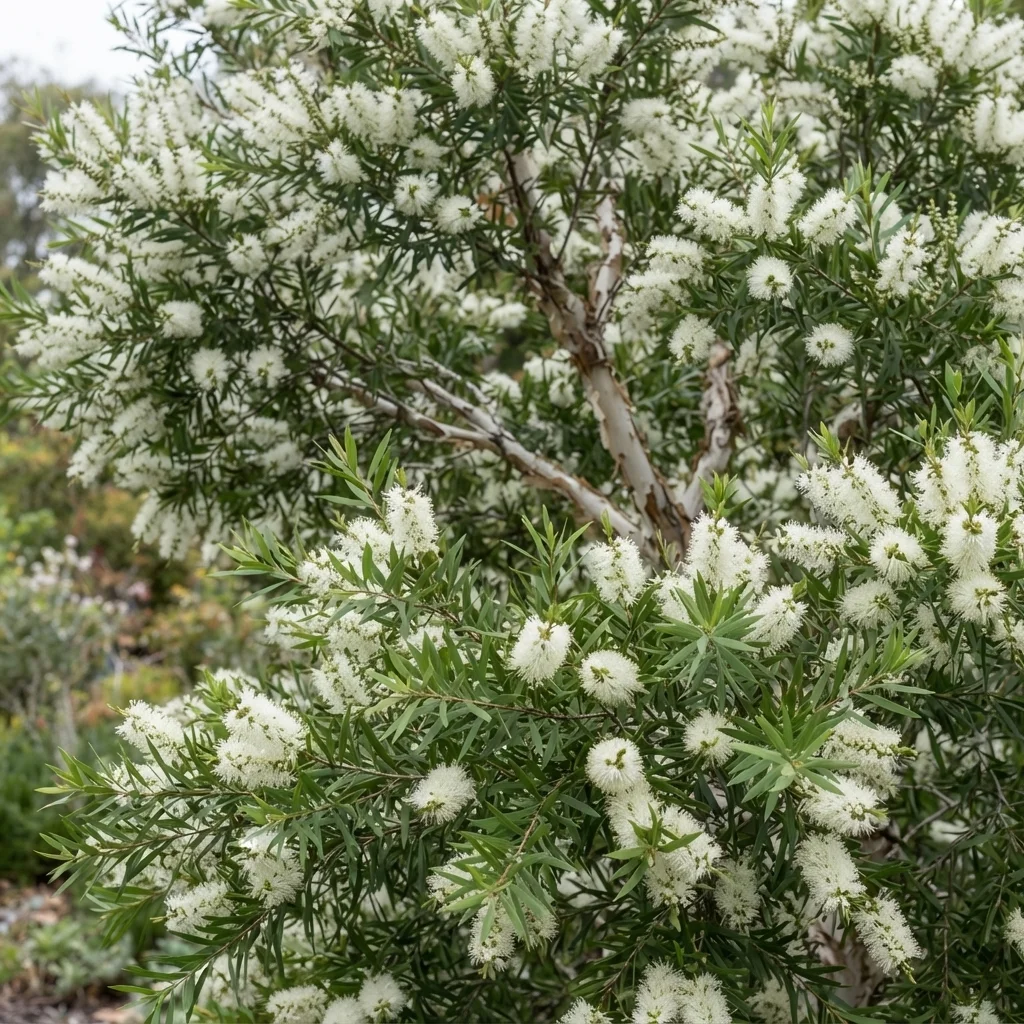
Snow-in-summer
Melaleuca linariifolia
Keep exploring
Explore the genus
Hardy in your zone?
Grow Granite Bottlebrush with confidence
See it in a design of your actual yard, get zone-matched care reminders, and track it season by season in your garden journal.