The Story
Plant Bio
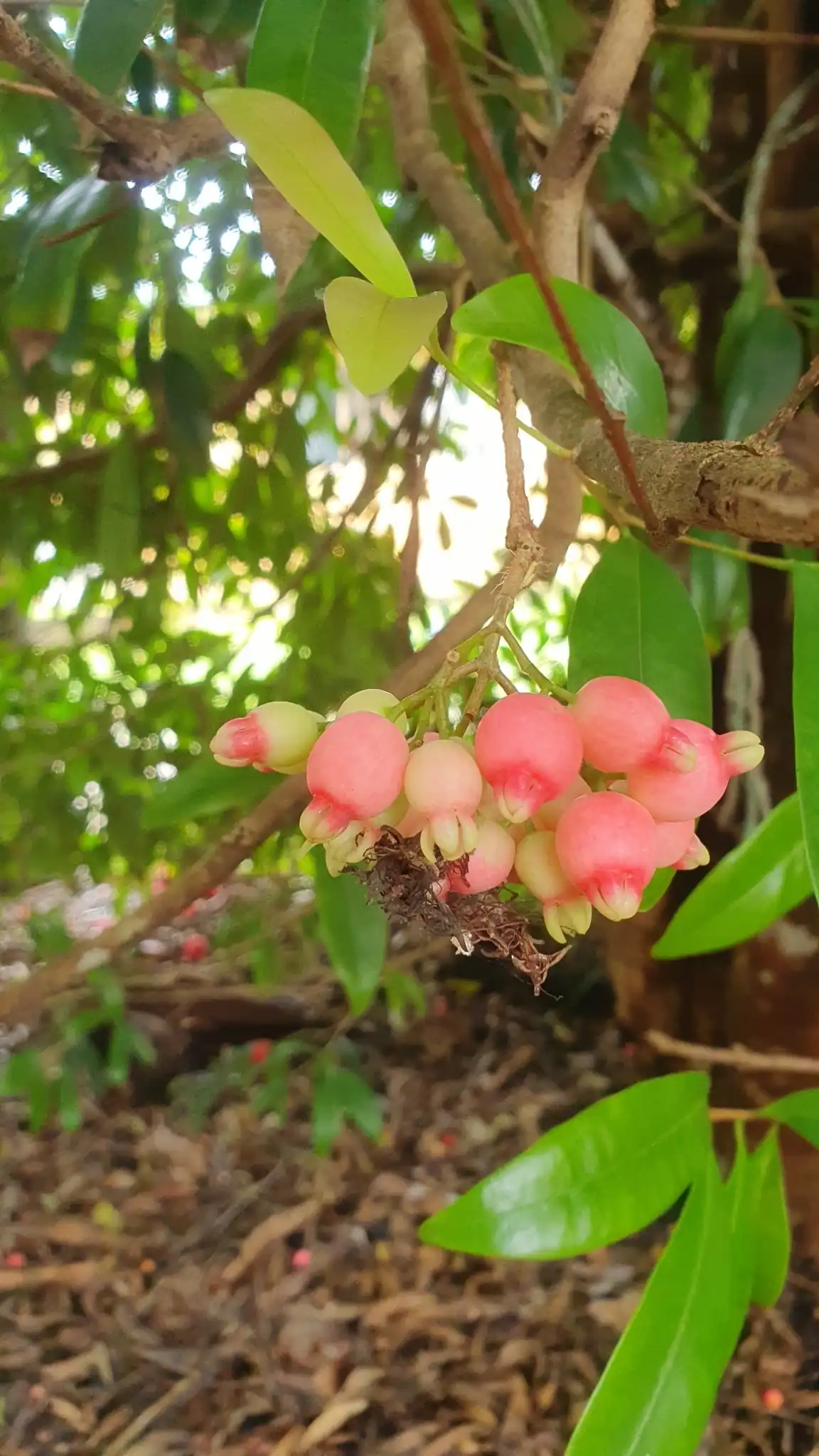
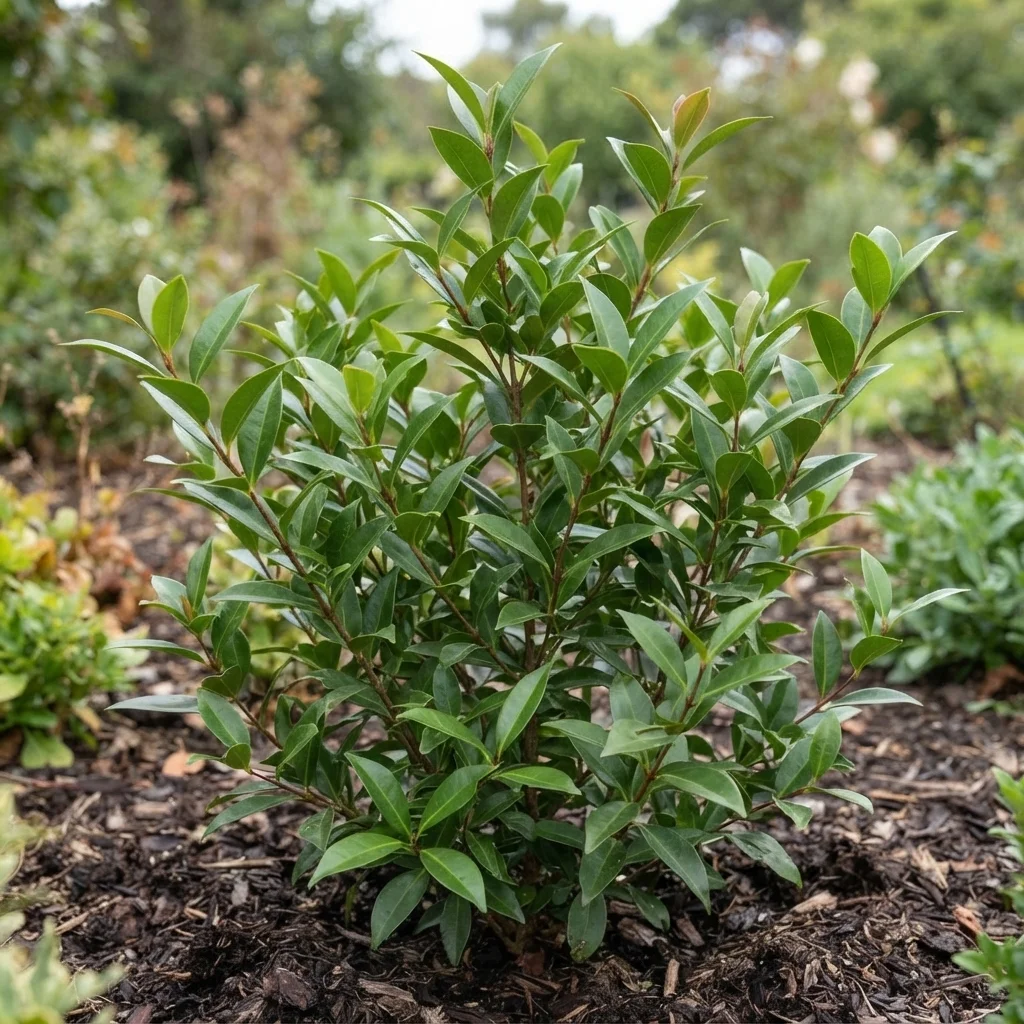
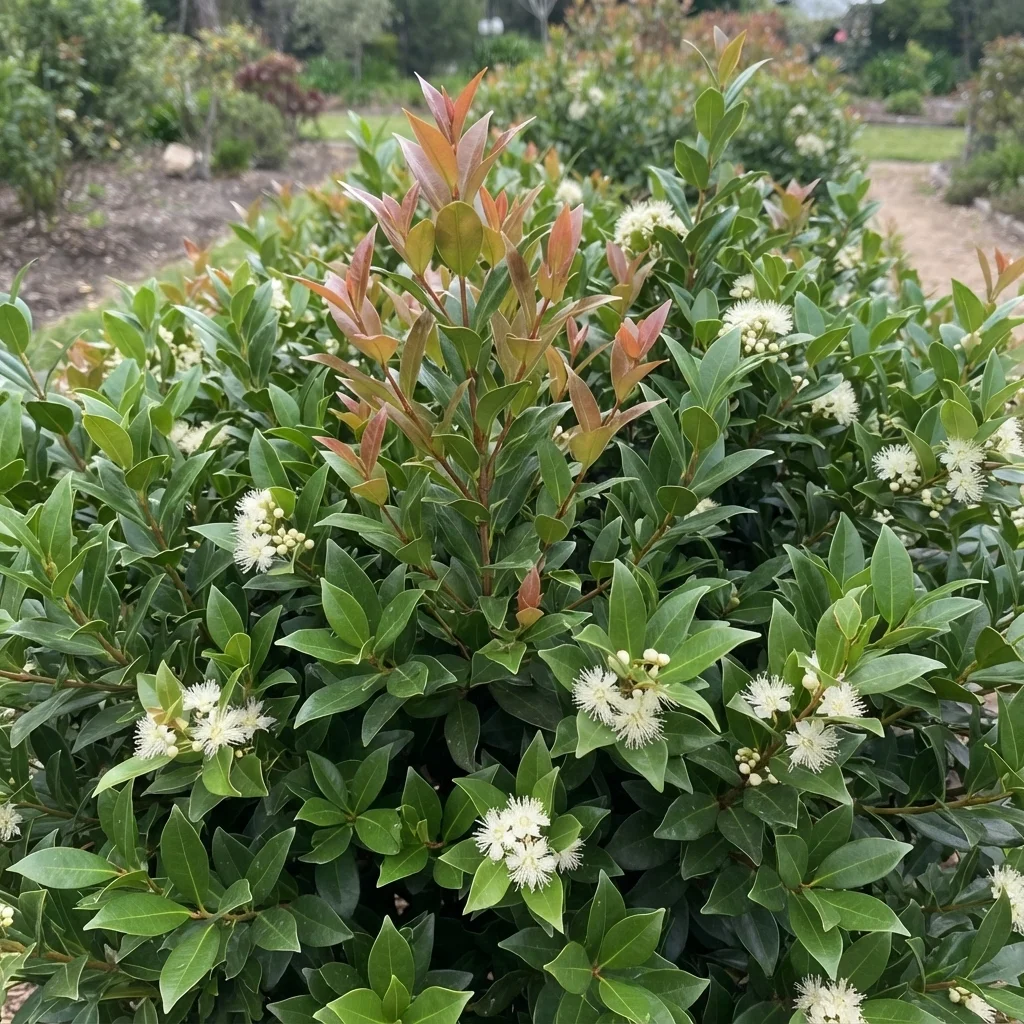
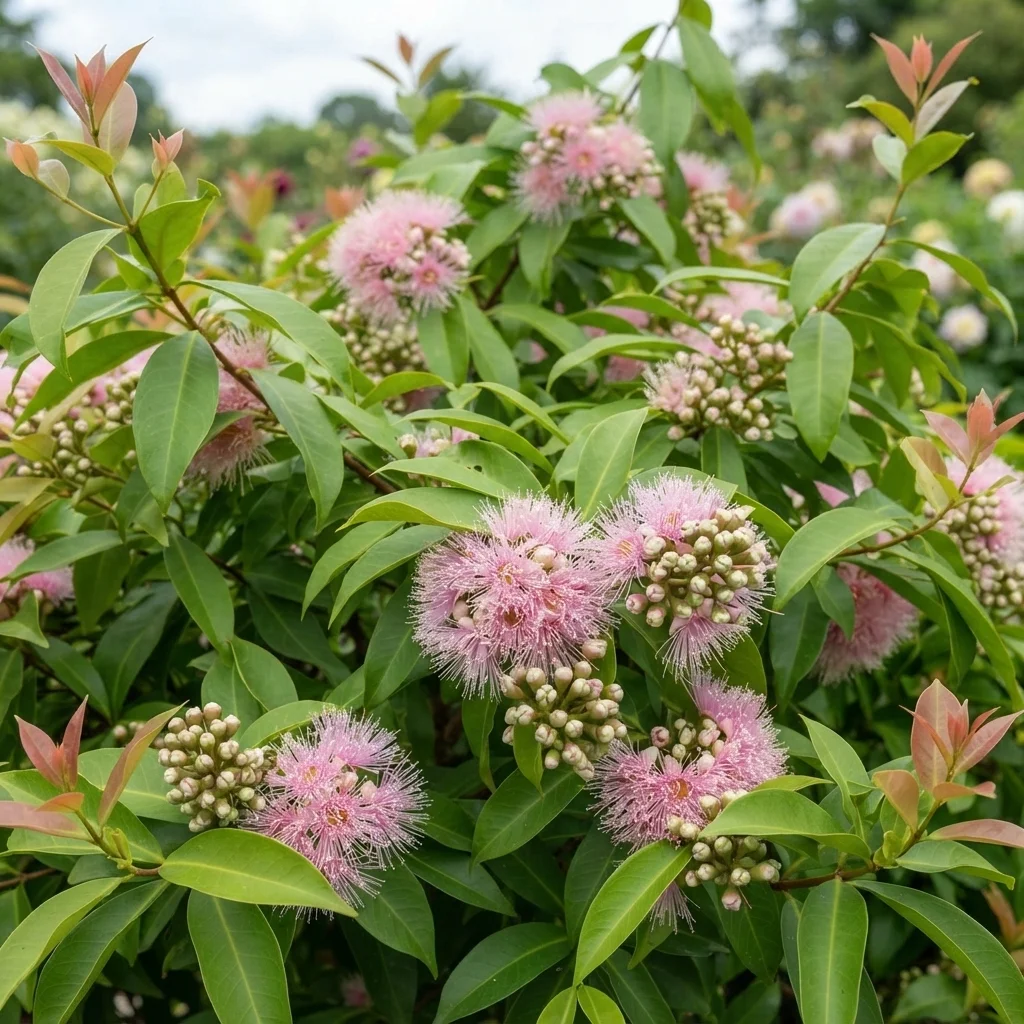
Syzygium fibrosum is a dense evergreen tree forming a rounded canopy up to twenty feet in cultivation, lined with opposite, glossy dark green elliptic leaves. Flushing branches produce flushes of amber, purplish-red, and bronze-pink foliage throughout the year alongside fluffy, brush-like cream to apricot flowers that develop into bright red berries.
Unlike many specialized Australian native Myrtaceae, this species is not sensitive to phosphorus and tolerates standard balanced fertilizers. Prominent long stamens bloom in upper leaf axils during winter and spring, followed by tart red fruits that can be processed into jellies and jams.
Uses & Benefits:
Essentials
At a Glance
Plant Type
Tree
Height
236"
Width
197"
Light
Full Sun, Partial Sun
Zones
10
Water
Moderate
Humidity
High
Lifespan
Perennial
Native To
Australasia (New Guinea, Northern Australia)
Toxicity
Non-toxic
Bloom period
Winter – Spring
In flower about 6 months of the year
Planting
How to Grow
- Plant in a warm, sheltered location receiving full sun to partial shade.
- Prepare rich, organic soil with a slightly acidic to neutral pH and excellent drainage.
- Apply a three-inch layer of organic mulch around the base, keeping it clear of the direct trunk.
- Water regularly during establishment to maintain consistent moisture around the root zone.
- Feed annually in spring with a balanced organic slow-release fertilizer.
Pro Tip
Prune lightly only after fruiting or in late winter; cutting back into old leafless wood results in slow, uneven epicormic shooting.
Keep It Thriving
Care Guide
Do
- Maintain consistent moisture in the root zone during dry periods.
- Keep soil well-mulched to retain organic matter and surface humidity.
- Provide shelter from strong, dry freezing winds.
Don't
- Do not stump or hard-prune into thick, leafless woody branches.
- Do not allow container soil to become waterlogged and stagnant.
- Do not expose young plants to hard freezing temperatures.
Seasonal Care Calendar
| Task | Jan | Feb | Mar | Apr | May | Jun | Jul | Aug | Sep | Oct | Nov | Dec |
|---|---|---|---|---|---|---|---|---|---|---|---|---|
| Fertilize | ||||||||||||
| Mulch | ||||||||||||
| Pest Check | ||||||||||||
| Prune |
Watch Out For
Pests & Diseases
Common Pests
Common Diseases
In the Garden
Landscape Uses & Companions
Landscape Uses
Companion Plants
Multiply
Propagation Methods
Good to Know
Common Questions
Small Red Apple questions
What zones can Small Red Apple grow in?
Small Red Apple is hardy in USDA Zone 10: in that range it survives winter in the ground. Colder than Zone 10, winters are too cold for it to survive outdoors.
When does Small Red Apple bloom?
Small Red Apple typically blooms from winter to spring. Exact timing shifts a week or two with your zone — Sow's bloom calendar maps it to your garden.
Does Small Red Apple need full sun?
Small Red Apple does best in full sun to part shade. In hot climates, afternoon shade keeps blooms fresher longer.
More Syzygium to compare
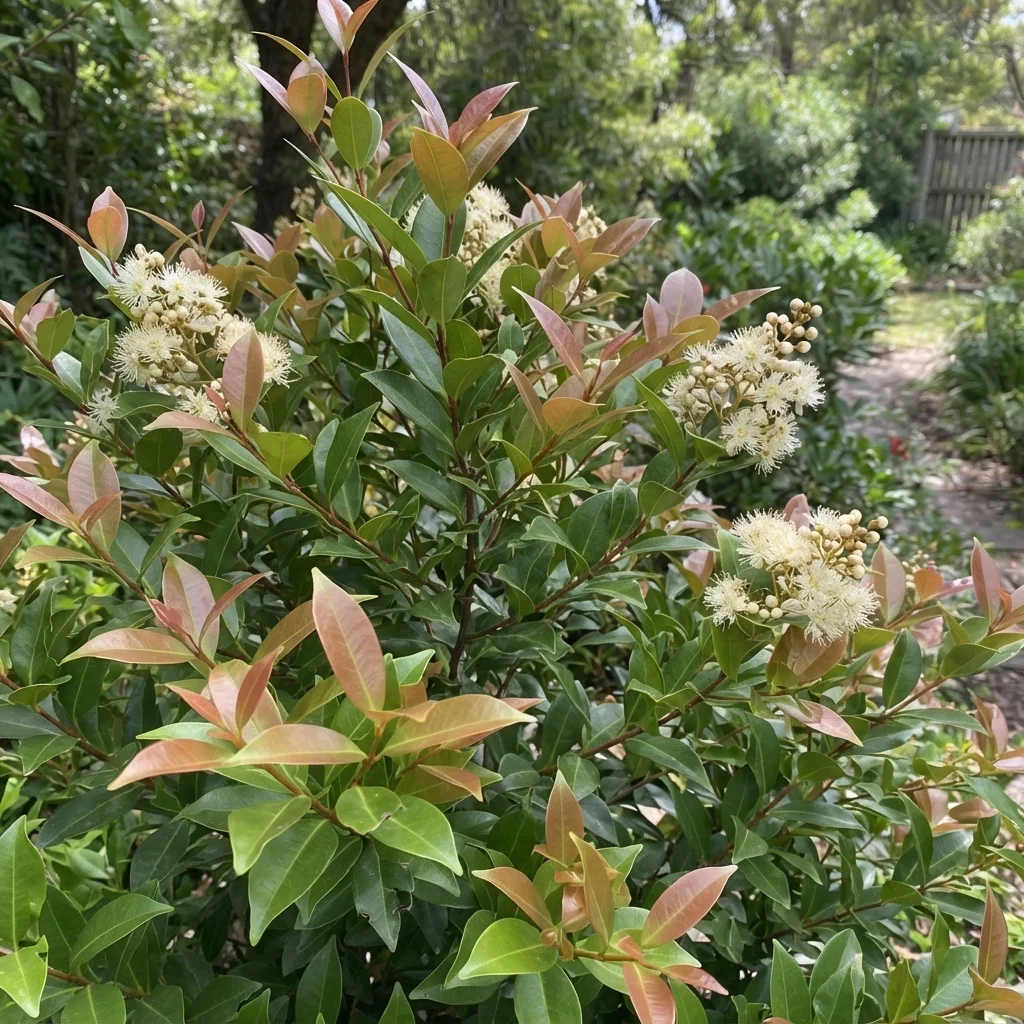
Backyard Bliss Lilly Pilly
Syzygium paniculatum 'Backyard Bliss'
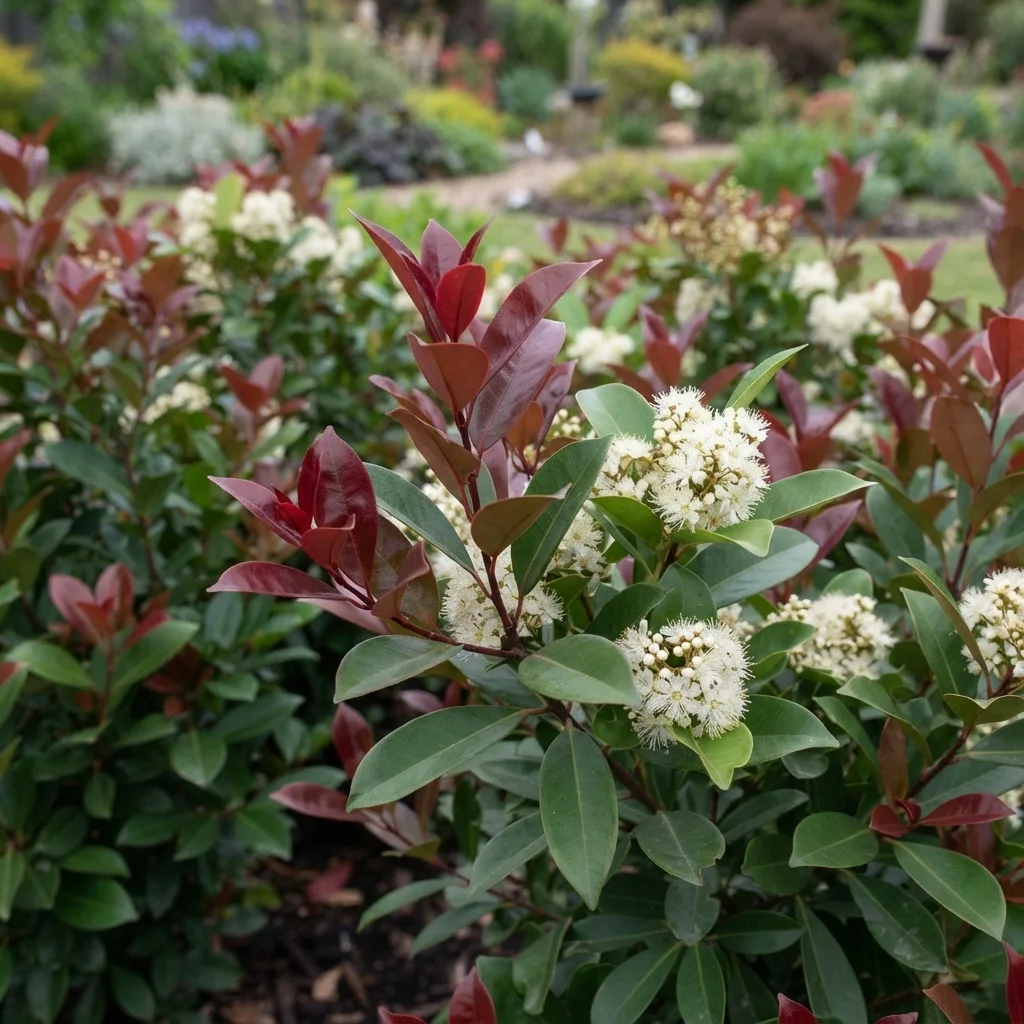
Big Red Lilly Pilly
Syzygium australe 'Big Red'
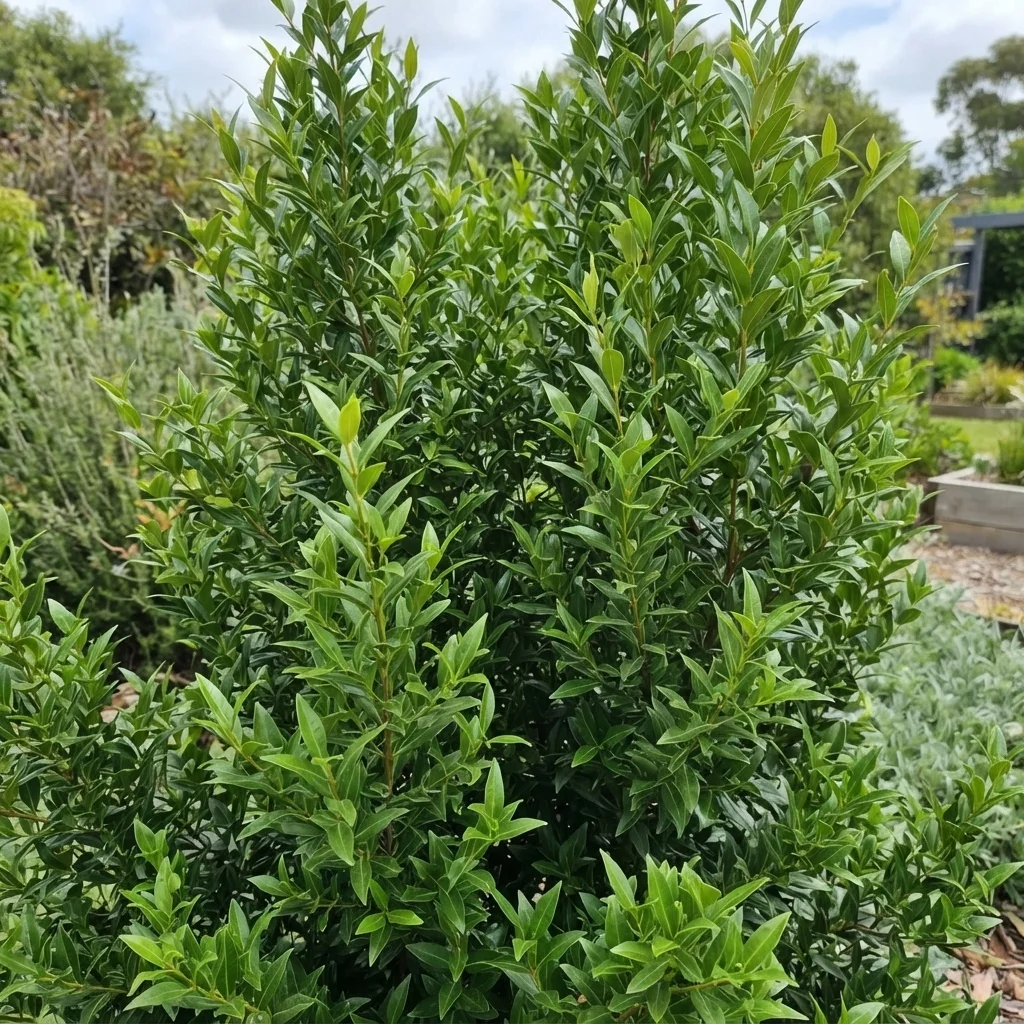
Straight and Narrow Lilly Pilly
Syzygium australe 'Straight and Narrow'
Baby Boomer Brush Cherry
Syzygium australe 'Baby Boomer'
Select Lilly Pilly
Syzygium australe 'Select'
Cascade Lilly Pilly
Syzygium x hybrida 'Cascade'
Keep exploring
Explore the genus
Hardy in your zone?
Grow Small Red Apple with confidence
See it in a design of your actual yard, get zone-matched care reminders, and track it season by season in your garden journal.