The Story
Plant Bio
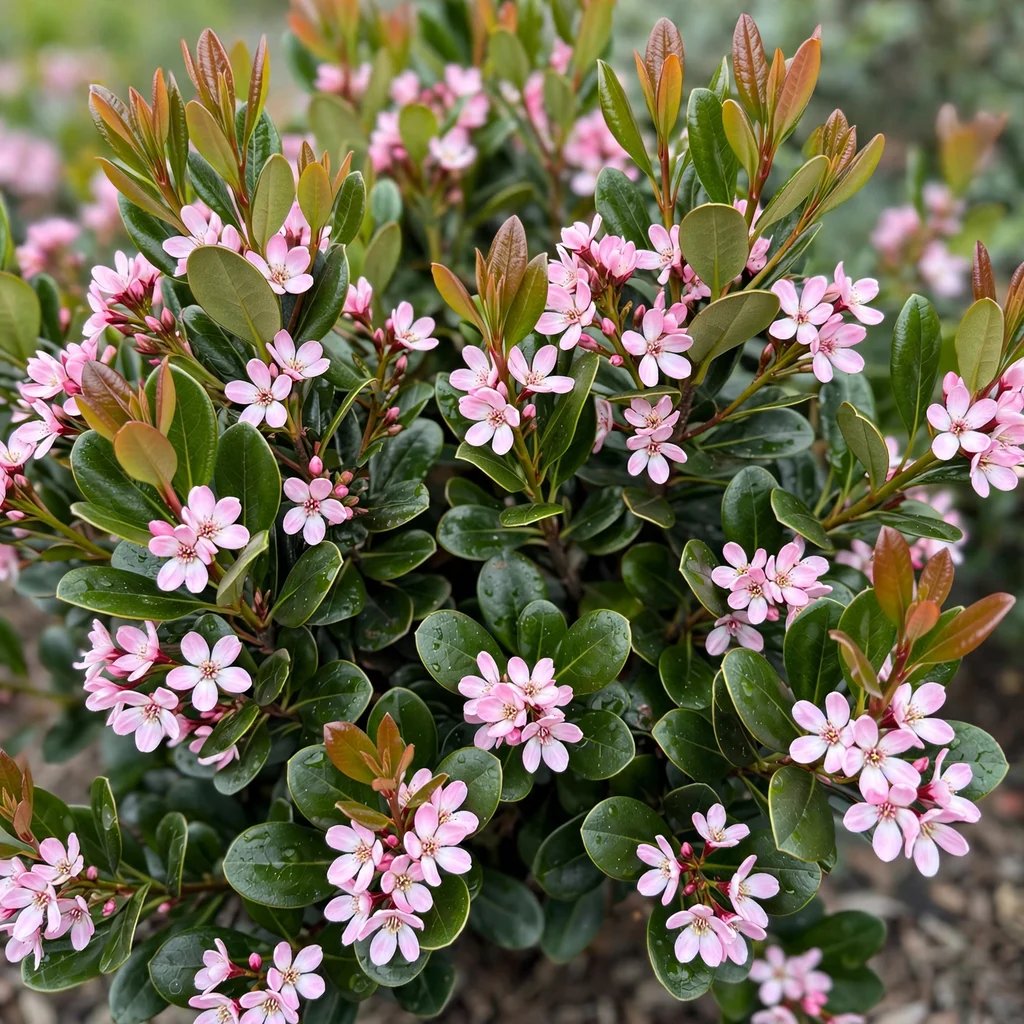
Rhaphiolepis is a genus of evergreen shrubs native to subtropical and tropical East Asia, valued for their dense, rounded growth habits and leathery foliage. These resilient plants produce clusters of small, five-petaled flowers in spring, followed by dark blue-black berries that persist into winter.
'Oriental Pink' is a compact, mounding hybrid that reaches about three feet in height and width, making it ideal for low hedges or foundation plantings. It is distinguished by its profuse display of soft pink, wheel-shaped flowers and deep glossy green leaves that emerge with a bronze tint.
Uses & Benefits:
Essentials
At a Glance
Plant Type
Shrub
Height
39"
Width
39"
Light
Full Sun, Partial Sun
Zones
8, 9, 10
Water
Low to moderate
Humidity
Moderate
Lifespan
15-20 years
Native To
Asia
Toxicity
Non-toxic
Bloom period
Spring – Late spring
In flower about 3 months of the year
Planting
How to Grow
- Select a planting site in full sun to maximize flower production and ensure rapid leaf drying.
- Amend heavy or poorly drained soils with organic matter, or construct raised beds to prevent waterlogged roots.
- Dig a hole twice as wide as the root ball and set the plant at the same depth it was growing in the container.
- Water deeply during the first growing season to establish a deep root system, directing water at the soil level.
Pro Tip
Avoid overhead watering to prevent Entomosporium leaf spot, and prune immediately after flowering to maintain a tight, rounded form without cutting back into old, leafless wood.
Keep It Thriving
Care Guide
Do
- Water at the base of the plant to keep the foliage dry.
- Apply a balanced slow-release fertilizer in early spring and mid-summer.
- Prune lightly immediately after the spring flowering cycle finishes.
Don't
- Do not use overhead sprinklers, which promote fungal leaf spot diseases.
- Do not prune hard into old, leafless wood, as it will fail to regenerate.
- Do not plant in low-lying areas where water pools or drains slowly.
Seasonal Care Calendar
| Task | Jan | Feb | Mar | Apr | May | Jun | Jul | Aug | Sep | Oct | Nov | Dec |
|---|---|---|---|---|---|---|---|---|---|---|---|---|
| Fertilize | ||||||||||||
| Mulch | ||||||||||||
| Pest Check | ||||||||||||
| Prune |
Watch Out For
Pests & Diseases
Common Pests
Common Diseases
In the Garden
Landscape Uses & Companions
Landscape Uses
Companion Plants
Multiply
Propagation Methods
Good to Know
Common Questions
Indian Hawthorn questions
What zones can Indian Hawthorn grow in?
Indian Hawthorn is hardy in USDA Zones 8–10. Inside that range it survives winter in the ground; outside it, grow it as an annual or a container plant you protect.
Is Indian Hawthorn deer resistant?
Not reliably. Deer may browse Indian Hawthorn, especially tender spring growth — plan on repellents or fencing where pressure is high.
When does Indian Hawthorn bloom?
Indian Hawthorn typically blooms in spring through late spring. Exact timing shifts a week or two with your zone — Sow's bloom calendar maps it to your garden.
Does Indian Hawthorn need full sun?
Indian Hawthorn does best in full sun to part shade. In hot climates, afternoon shade keeps blooms fresher longer.
Is Indian Hawthorn drought tolerant?
Yes — once established (usually after the first full season), Indian Hawthorn handles dry spells with minimal watering. Water deeply its first year to build the root system that makes that possible.
More Rhaphiolepis to compare
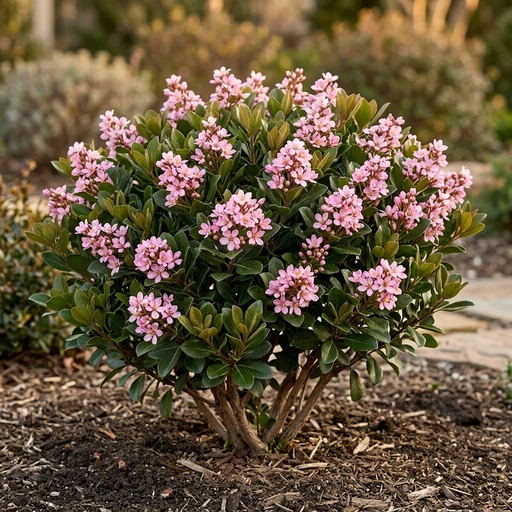
Pink Lady Indian Hawthorn
Rhaphiolepis indica 'Pink Lady'
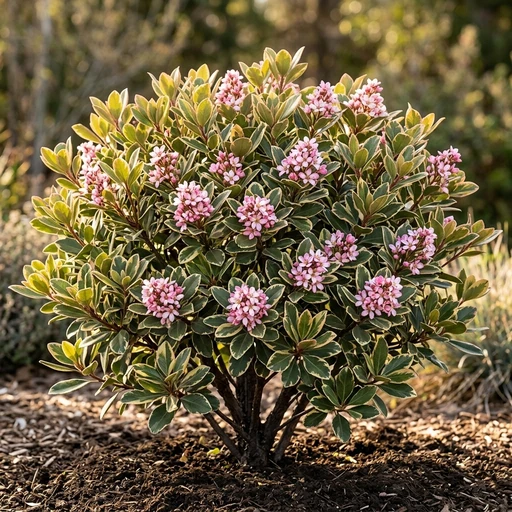
Pinkie Indian Hawthorn
Rhaphiolepis indica 'Pinkie'
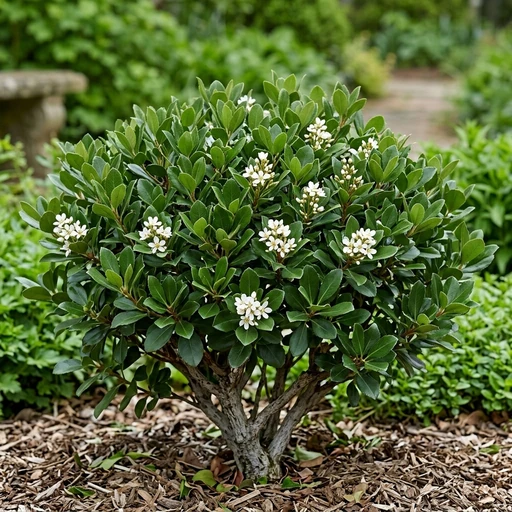
Snow White Indian Hawthorn
Rhaphiolepis indica 'Snow White'
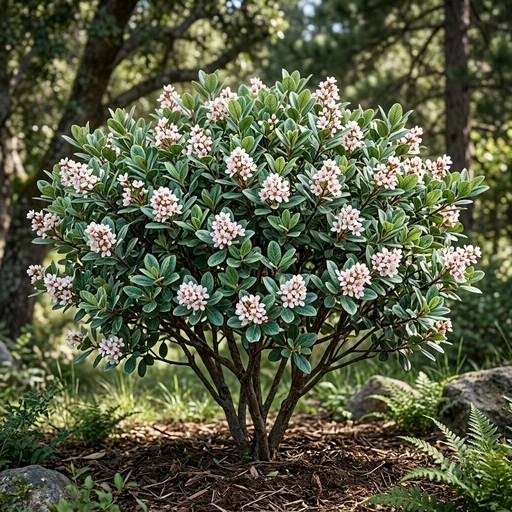
Eleanor Taber Indian Hawthorne
Rhaphiolepis indica 'Conor'
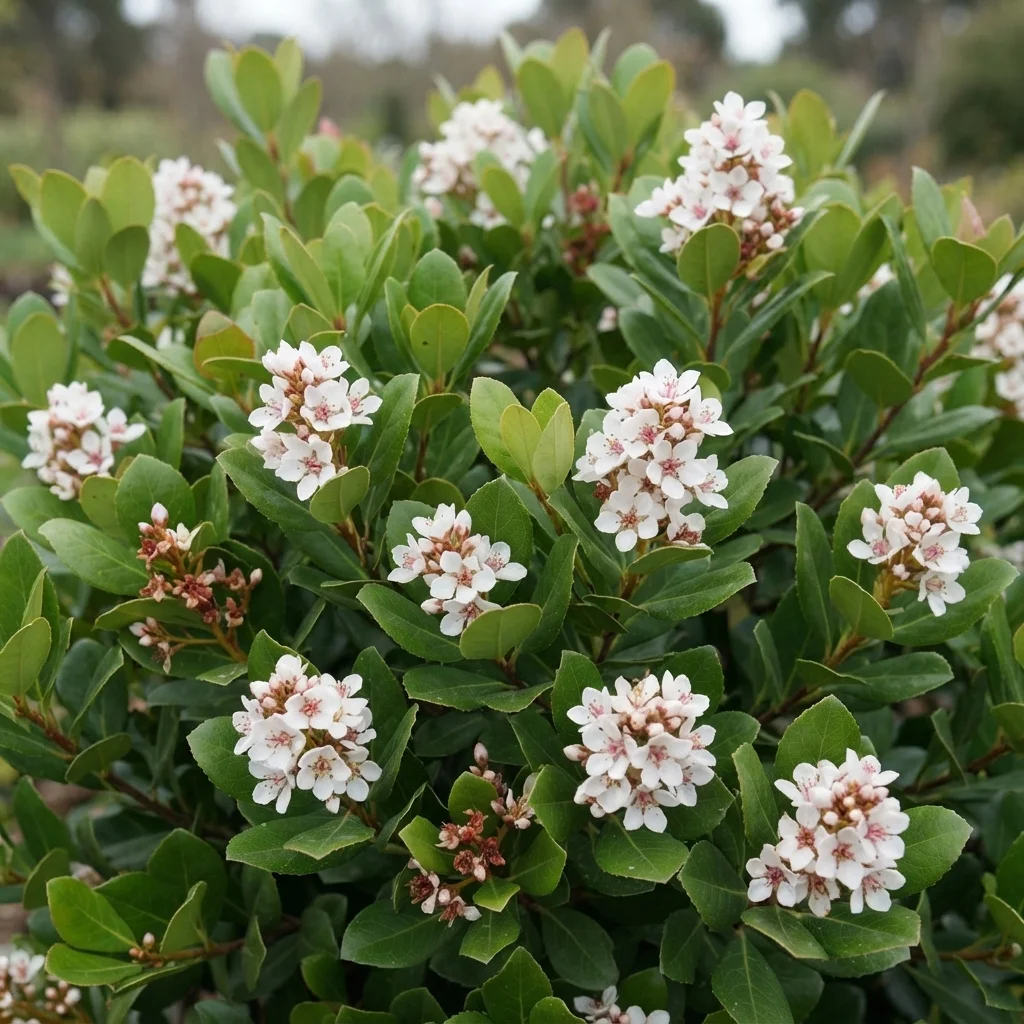
India Hawthorn
Rhaphiolepis indica 'Oriental Pearl'
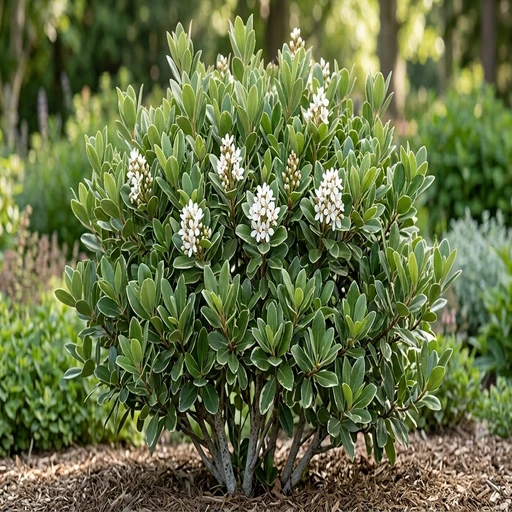
Clara Indian Hawthorn
Rhaphiolepis indica 'Clara'
Keep exploring
Explore the genus
Hardy in your zone?
Grow Indian Hawthorn with confidence
See it in a design of your actual yard, get zone-matched care reminders, and track it season by season in your garden journal.