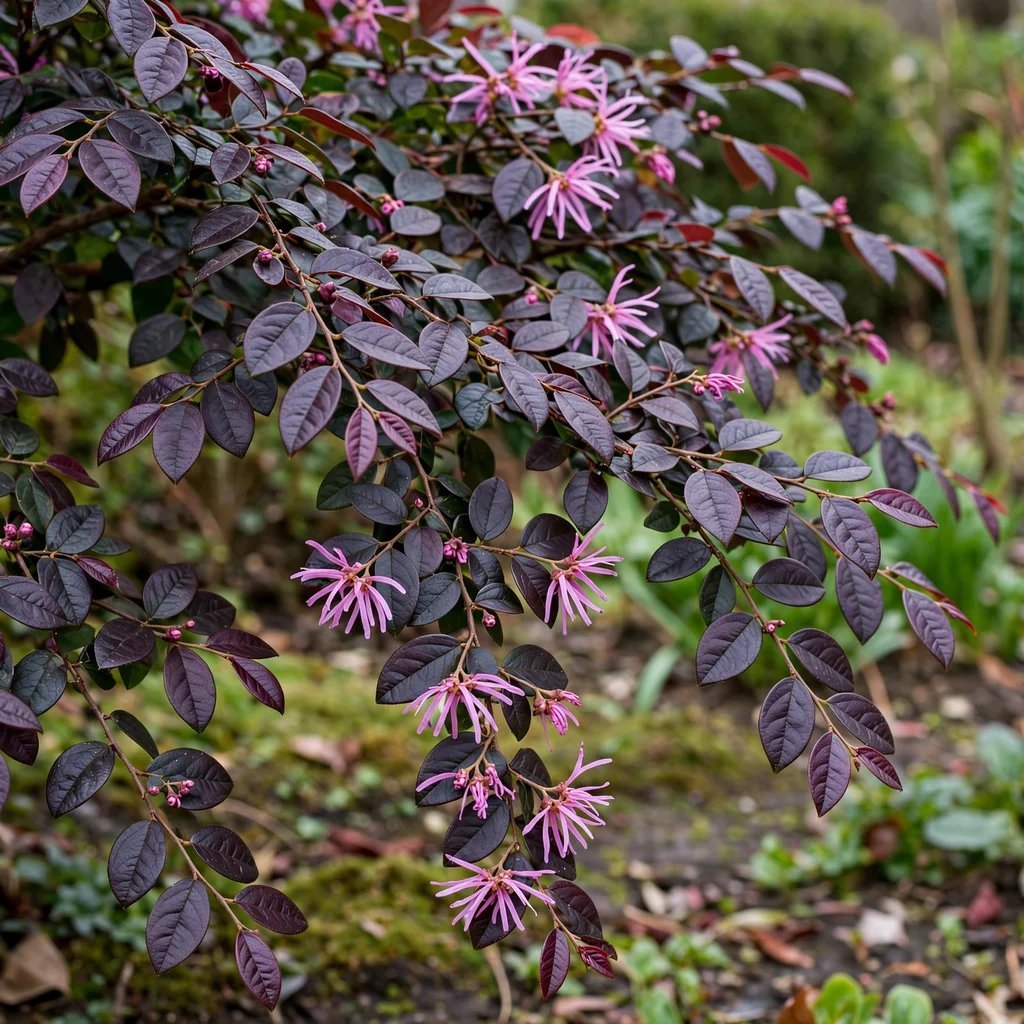
Species
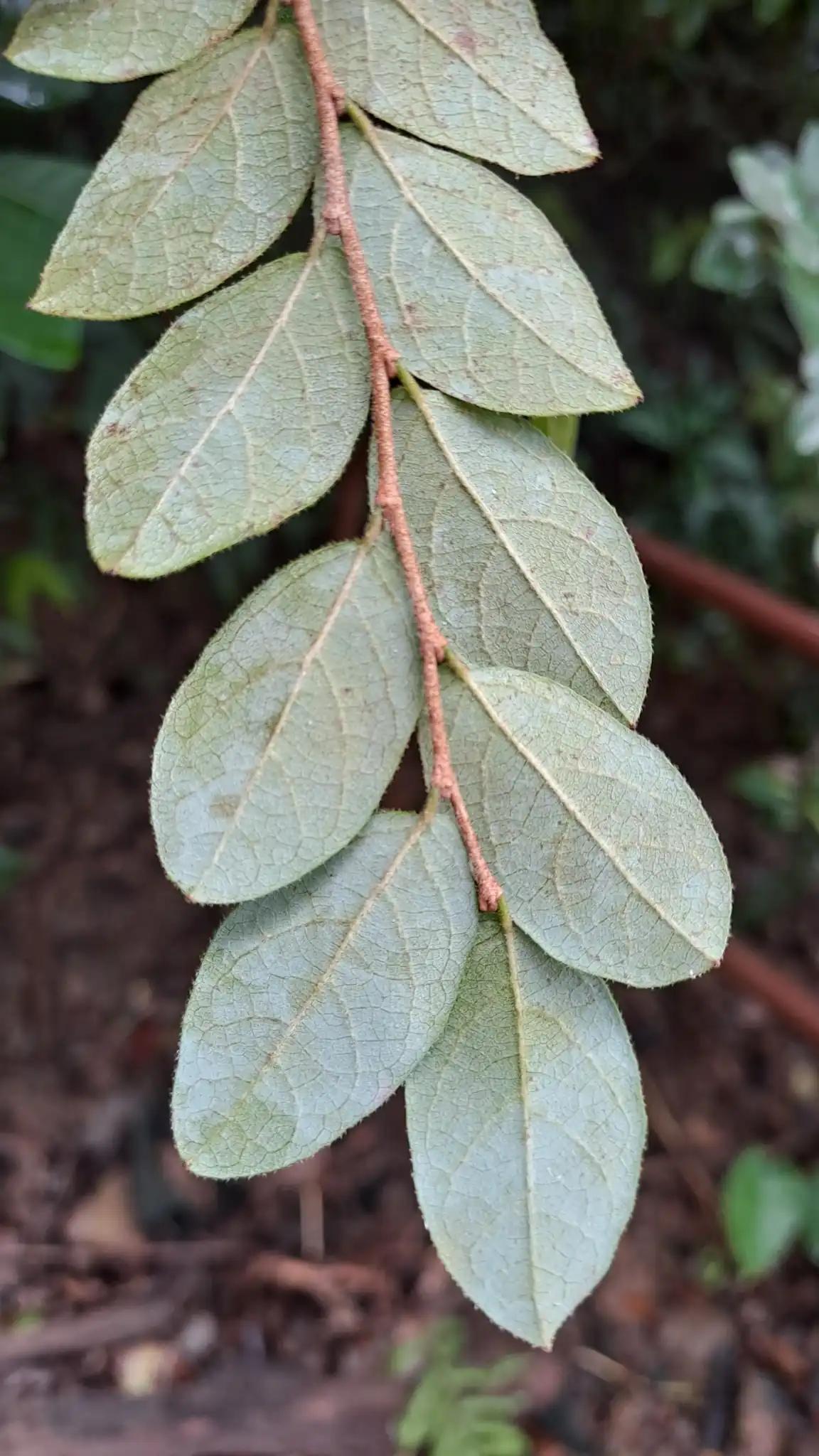
25 other cultivars
- ‘Crimson Fire’Crimson Fire Fringe Flower
- ‘Jazz Hands Mini’Jazz Hands Mini Chinese Fringe Flower
- ‘Purple Pixie’Purple Pixie Fringe Flower
- ‘Purple Daydream’Purple Daydream Chinese Fringe Flower
- ‘Purple Daydream Dwarf’Purple Daydream Chinese Fringe-Flower
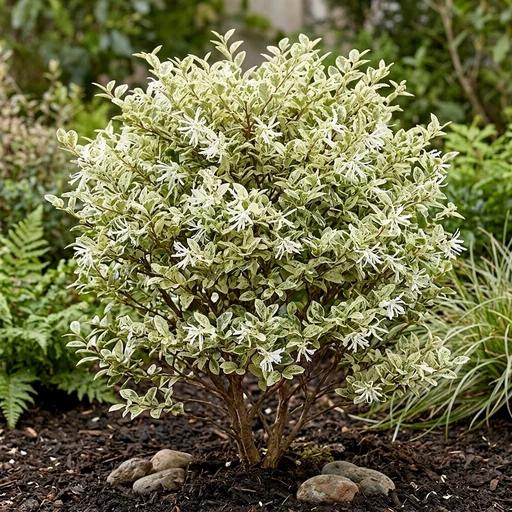
- ‘Emerald Snow’Emerald Snow Loropetalum
- ‘Red Chocolate’Red Chocolate Chinese Fringe Flower
- ‘Jazz Hands Bold’Loropetalum Jazz Hands Bold
- ‘Red Diamond’Red Diamond Midsize Chinese fringe-flower
- ‘Chang Nian Hong’Chang Nian Hong Ever Red Fringe Flower
- ‘Zhuzhou Fuchsia’Zhuzhou Fuchsia Chinese Fringe-flower
- ‘Carolina Midnight’Carolina Midnight Fringe Flower
- ‘Shang-Hi’Ever Red Loropetalum
- ‘Jazz Hands Dwarf Pink’Jazz Hands Dwarf Pink Chinese Fringe-flower
- ‘Daruma’Daruma Chinese Fringeflower
- ‘Hines Purpleleaf’Hines Purpleleaf Ever Red Fringe Flower
- ‘Irodori’Irodori Jazz Hands Variegated Chinese Fringe Flower
- ‘Shang-White’Emerald Snow Semi-dwarf Chinese fringe-flower
- ‘Ruby’Loropetalum Ruby
- ‘Night Moves’Night Moves Chinese Fringe-flower
- ‘Fire Dance’Fire Dance Chinese Fringe Flower
- ‘Jazz Hands Pink’Jazz Hands Pink Chinese Fringe-flower
- ‘Jazz Hands Variegated’Jazz Hands Variegated Chinese Fringe Flower
- ‘China Pink’China Pink Chinese Fringe Flower
- ‘Plum Gorgeous’Chinese Fringe Flower 'Plum Gorgeous'








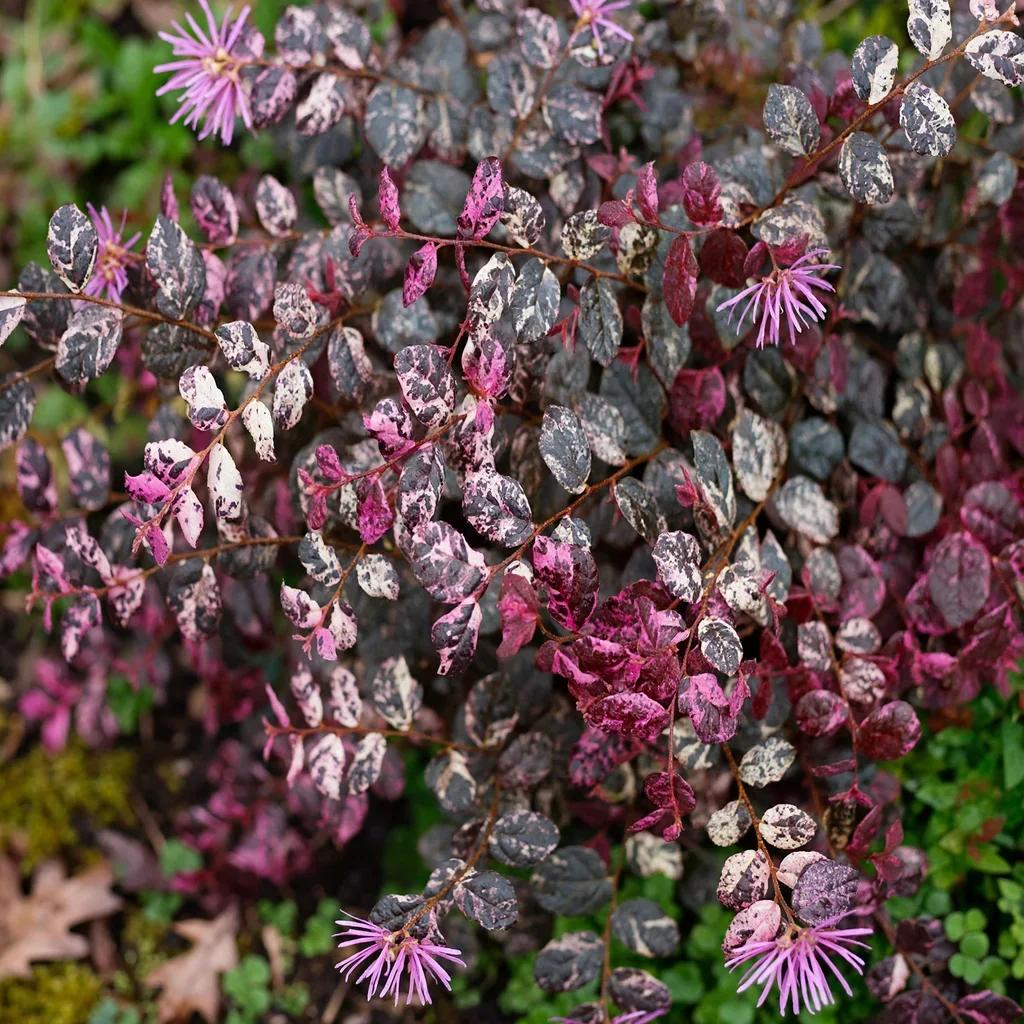


The Story
Plant Bio
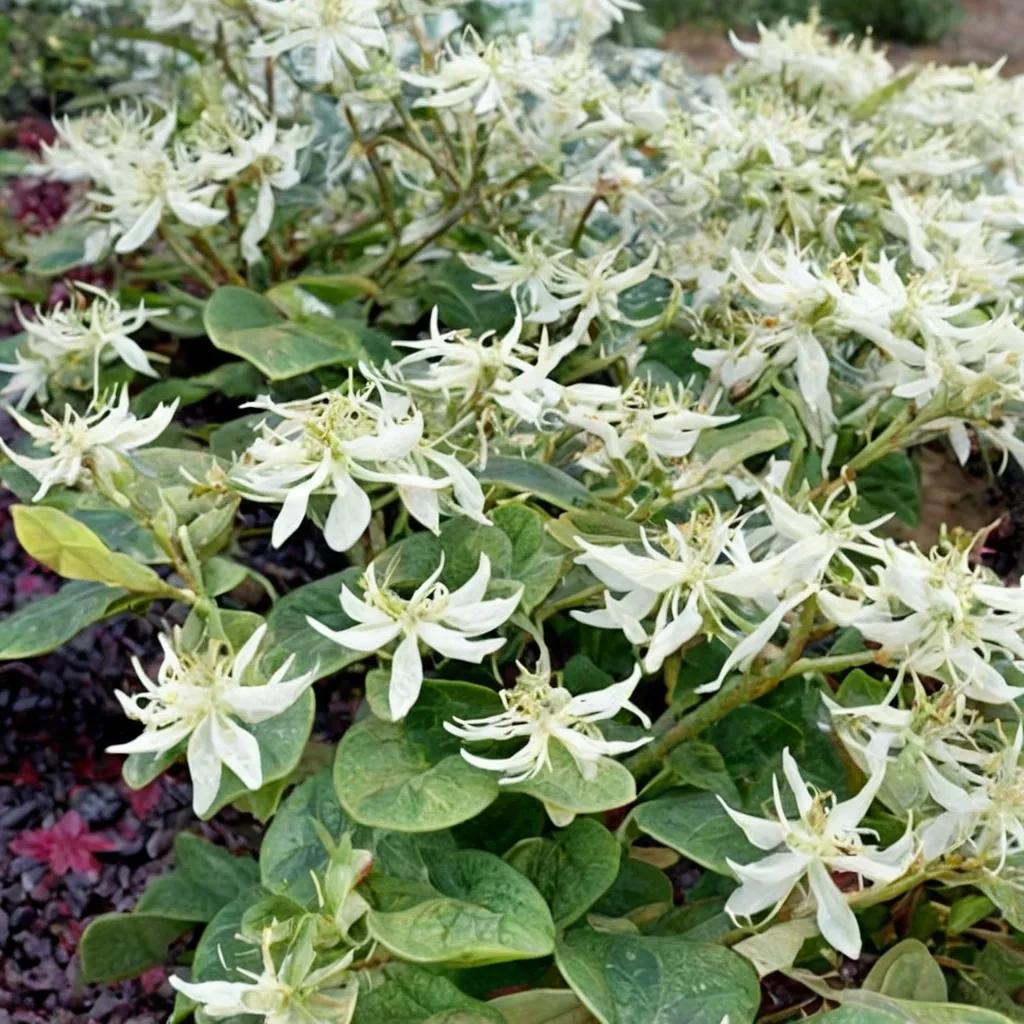
Loropetalum chinense, native to woodlands and thickets across China, Southeast Asia, and Japan, is an evergreen member of the witch hazel family. The species produces distinctive strap-shaped, fringed flowers and thrives in moist, acidic, well-drained soils.
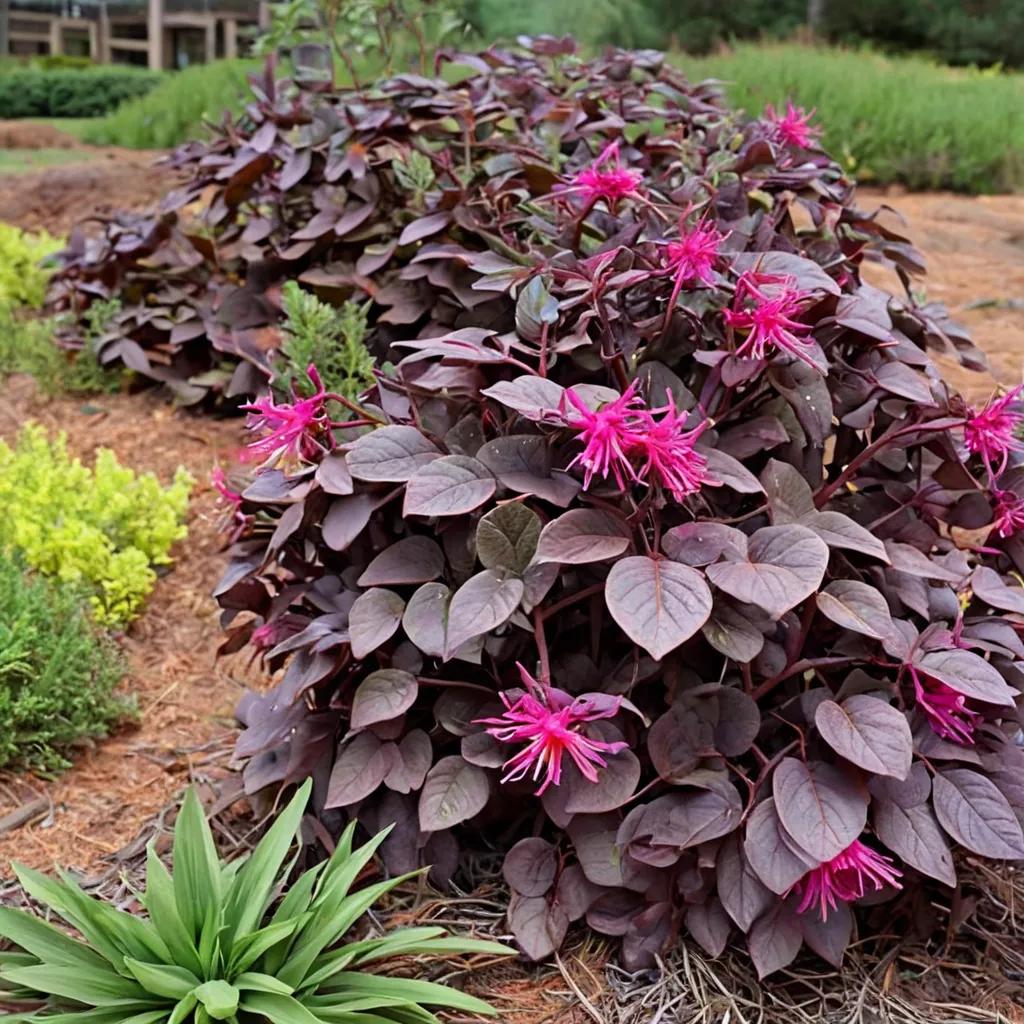
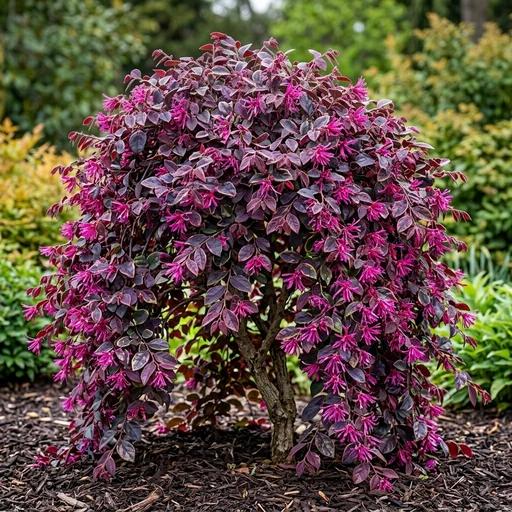
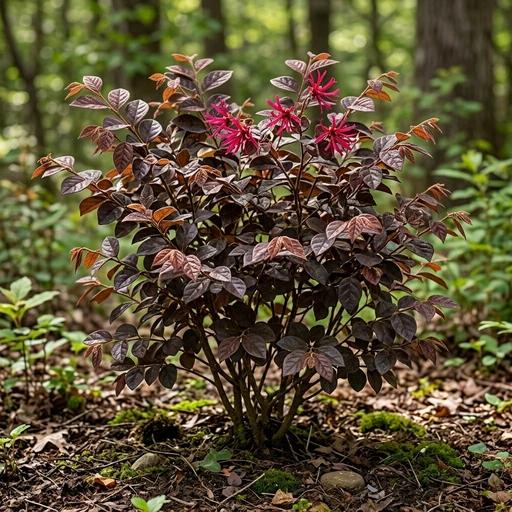
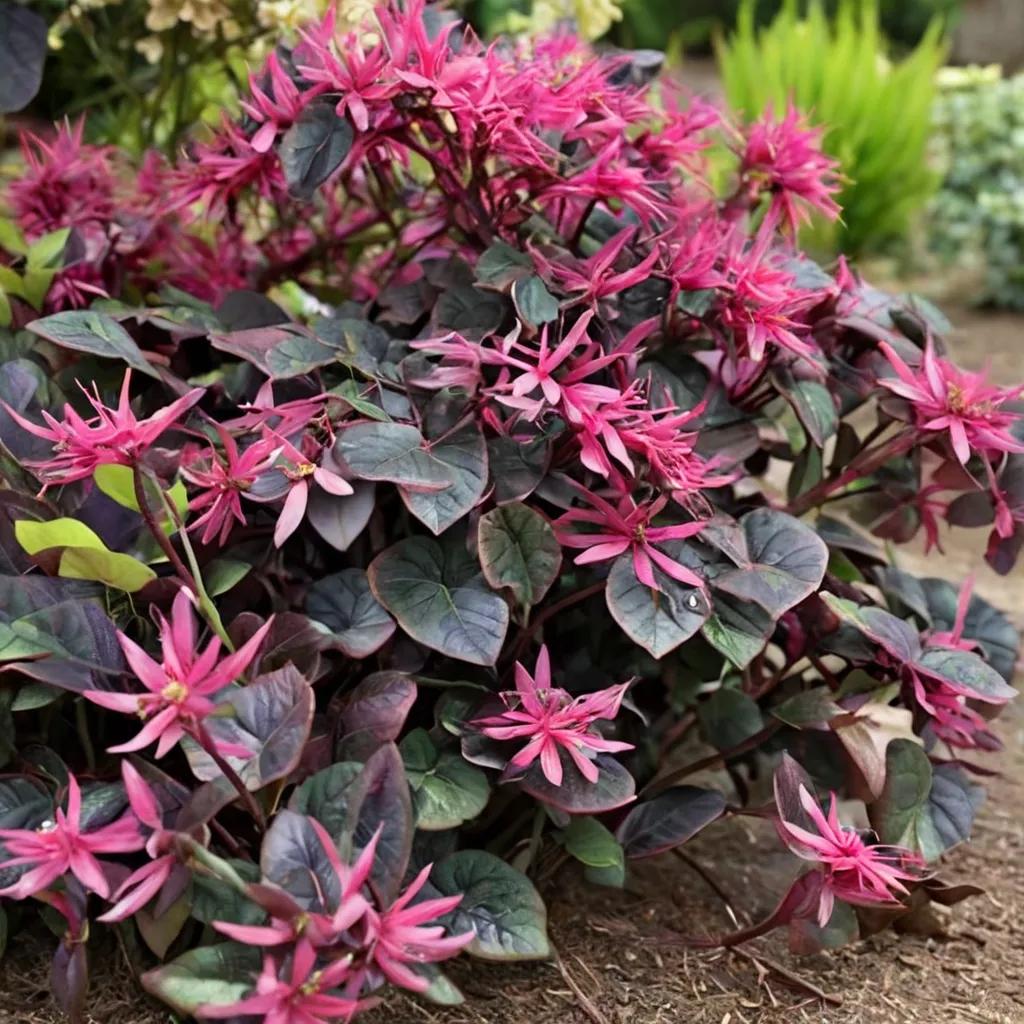
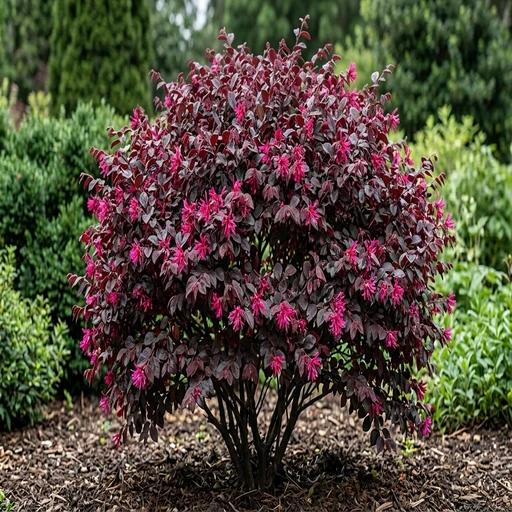
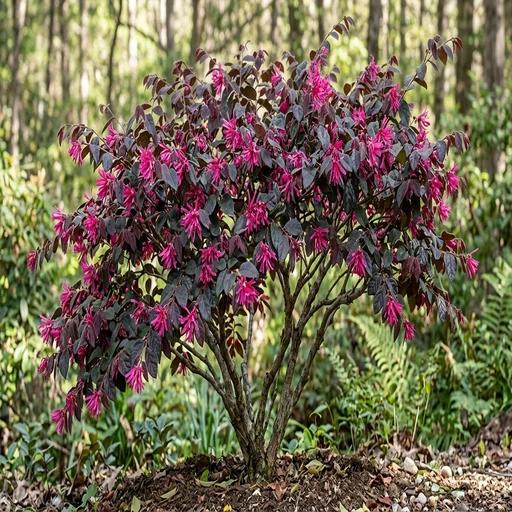
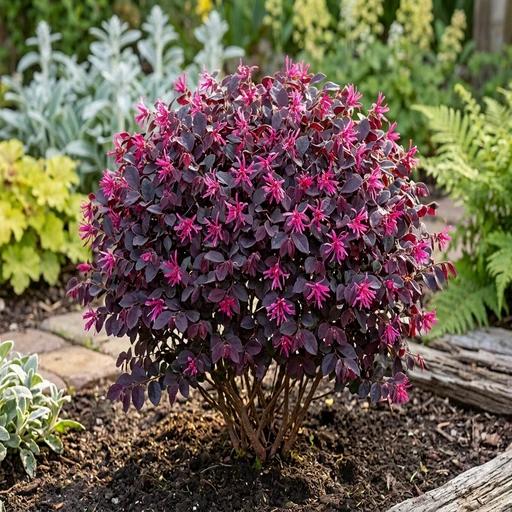
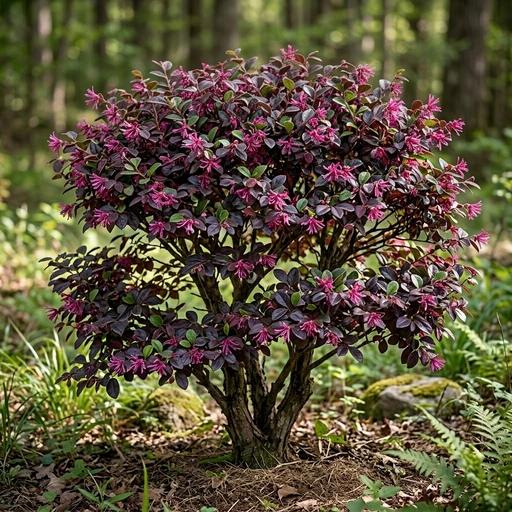
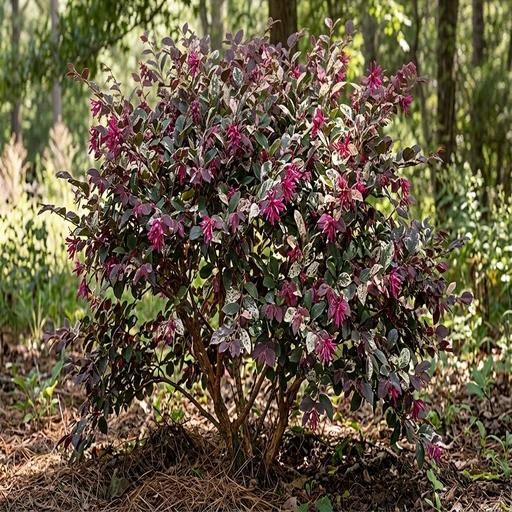
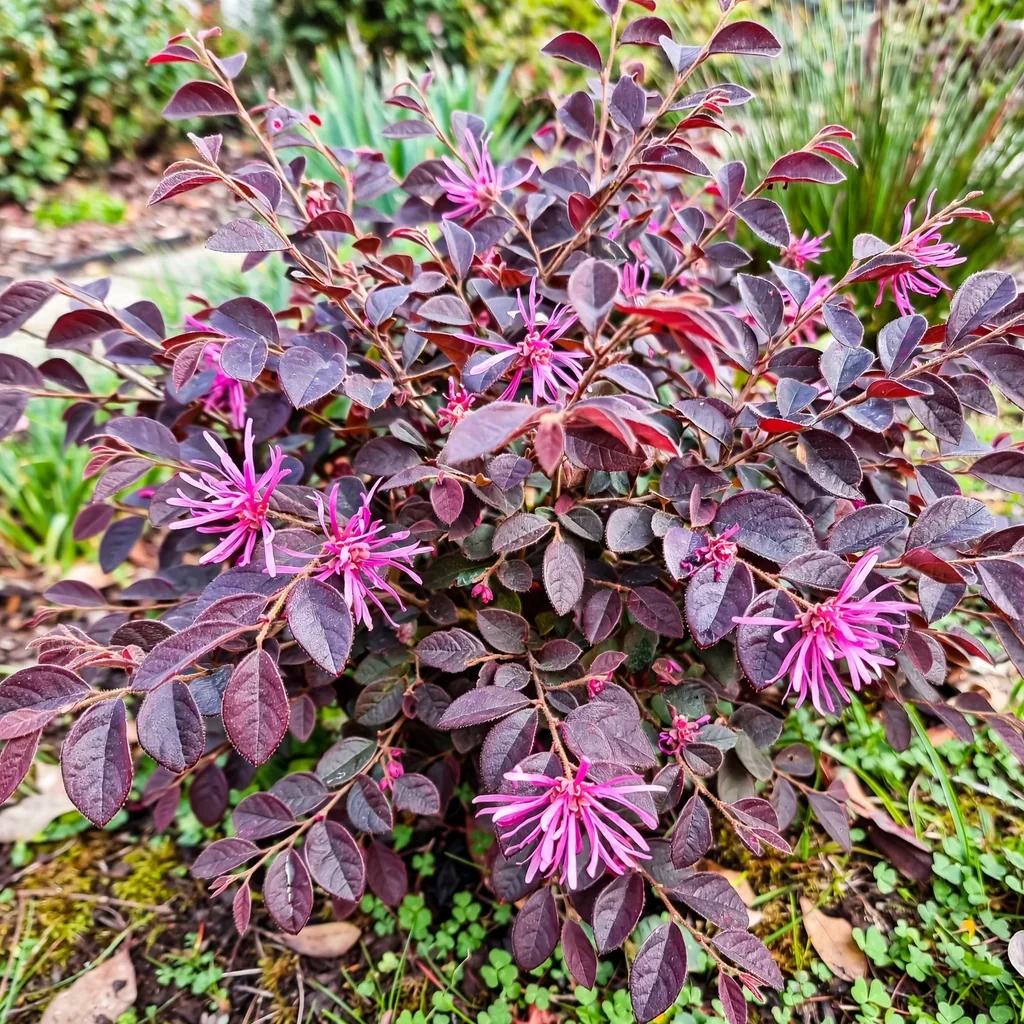
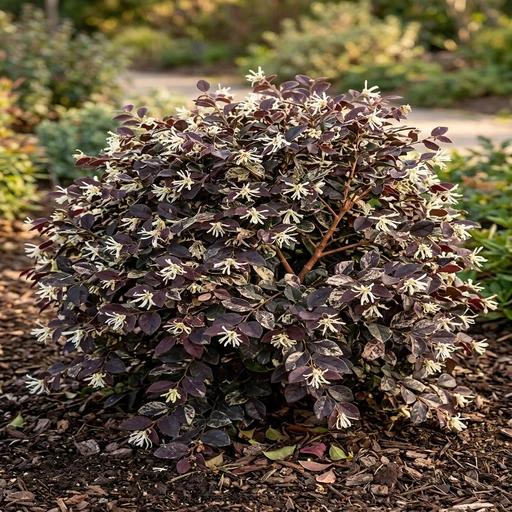
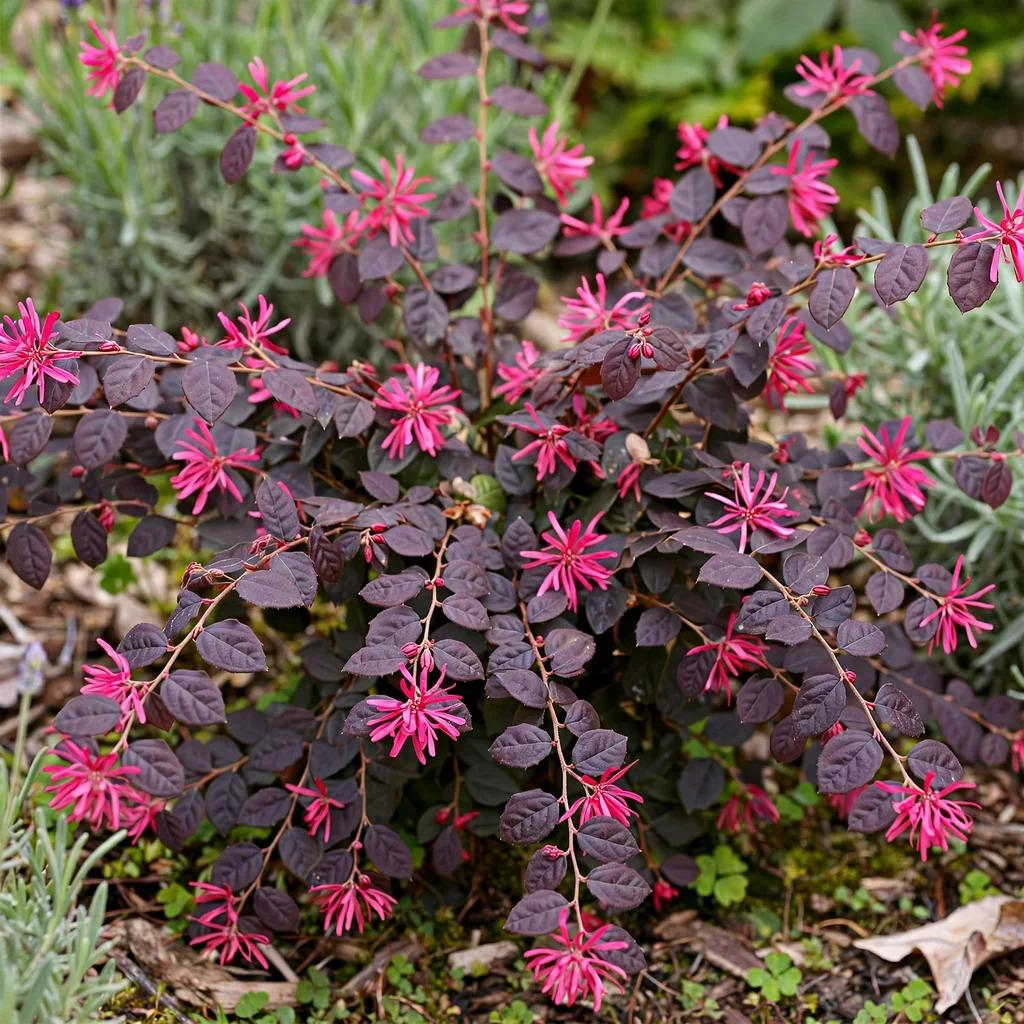
'Cerise Charm' is a genetic dwarf cultivar distinguished by its compact, mounded habit and intense burgundy-purple foliage that retains its dark plum color throughout summer heat. Its hot pink, spidery flowers open two to four weeks later than standard cultivars, protecting the buds from late spring frost damage.
Uses & Benefits:
Essentials
At a Glance
Plant Type
Shrub
Height
48"
Width
48"
Light
Full Sun, Partial Sun
Zones
7, 8, 9, 10
Water
Medium
Humidity
High
Lifespan
Long-lived
Native To
China, Southeast Asia, Japan
Toxicity
Non-toxic
Bloom period
Spring – Late spring
In flower about 3 months of the year
Marketplace
Where to Buy
Shipping costs Year-round shipping Free shipping
Planting
How to Grow
- Select a planting site in full sun to partial shade with rich, moist, well-draining acidic soil.
- Dig a hole twice as wide as the root ball but no deeper, ensuring the top of the root ball sits slightly above the surrounding soil grade to prevent waterlogging.
- Backfill with native soil, press firmly to eliminate air pockets, and water deeply to settle the soil.
- Apply a three-inch layer of organic mulch around the root zone, keeping it clear of the main stems, to conserve moisture and regulate soil temperature.
Pro Tip
Plant in elevated beds or amend heavy clay with organic matter to prevent fatal root rot, and avoid shearing into old, leafless bare wood which lacks the capacity to sprout cleanly.
Keep It Thriving
Care Guide
Do
- Plant in elevated beds or sloped areas if your native soil consists of heavy, poorly draining clay.
- Maintain a consistent layer of organic mulch to keep the root zone cool and moist.
- Prune lightly immediately after the spring flowering period to shape the shrub.
Don't
- Do not plant in low-lying areas where standing water accumulates.
- Do not shear the plant into old, leafless bare wood, as it will not regenerate well.
- Do not apply heavy fertilizer; use a slow-release acidic fertilizer sparingly in spring only if growth is sluggish.
Seasonal Care Calendar
| Task | Jan | Feb | Mar | Apr | May | Jun | Jul | Aug | Sep | Oct | Nov | Dec |
|---|---|---|---|---|---|---|---|---|---|---|---|---|
| Fertilize | ||||||||||||
| Mulch | ||||||||||||
| Pest Check | ||||||||||||
| Prune |
Watch Out For
Pests & Diseases
Common Pests
Common Diseases
In the Garden
Landscape Uses & Companions
Landscape Uses
Multiply
Propagation Methods
Good to Know
Common Questions
Cerise Charm Chinese Fringe Flower questions
What zones can Cerise Charm Chinese Fringe Flower grow in?
Cerise Charm Chinese Fringe Flower is hardy in USDA Zones 7–10: in that range it survives winter in the ground. Colder than Zone 7, grow it in a container you can move to shelter for the winter.
Is Cerise Charm Chinese Fringe Flower deer resistant?
Yes — Cerise Charm Chinese Fringe Flower is rated deer-resistant. Deer typically pass it over, though extreme hunger can override any plant's defenses.
When does Cerise Charm Chinese Fringe Flower bloom?
Cerise Charm Chinese Fringe Flower typically blooms in spring. Exact timing shifts a week or two with your zone — Sow's bloom calendar maps it to your garden.
Does Cerise Charm Chinese Fringe Flower need full sun?
Cerise Charm Chinese Fringe Flower does best in full sun to part shade. In hot climates, afternoon shade keeps blooms fresher longer.
Is Cerise Charm Chinese Fringe Flower drought tolerant?
Yes — once established (usually after the first full season), Cerise Charm Chinese Fringe Flower handles dry spells with minimal watering. Water deeply its first year to build the root system that makes that possible.
More Loropetalum to compare
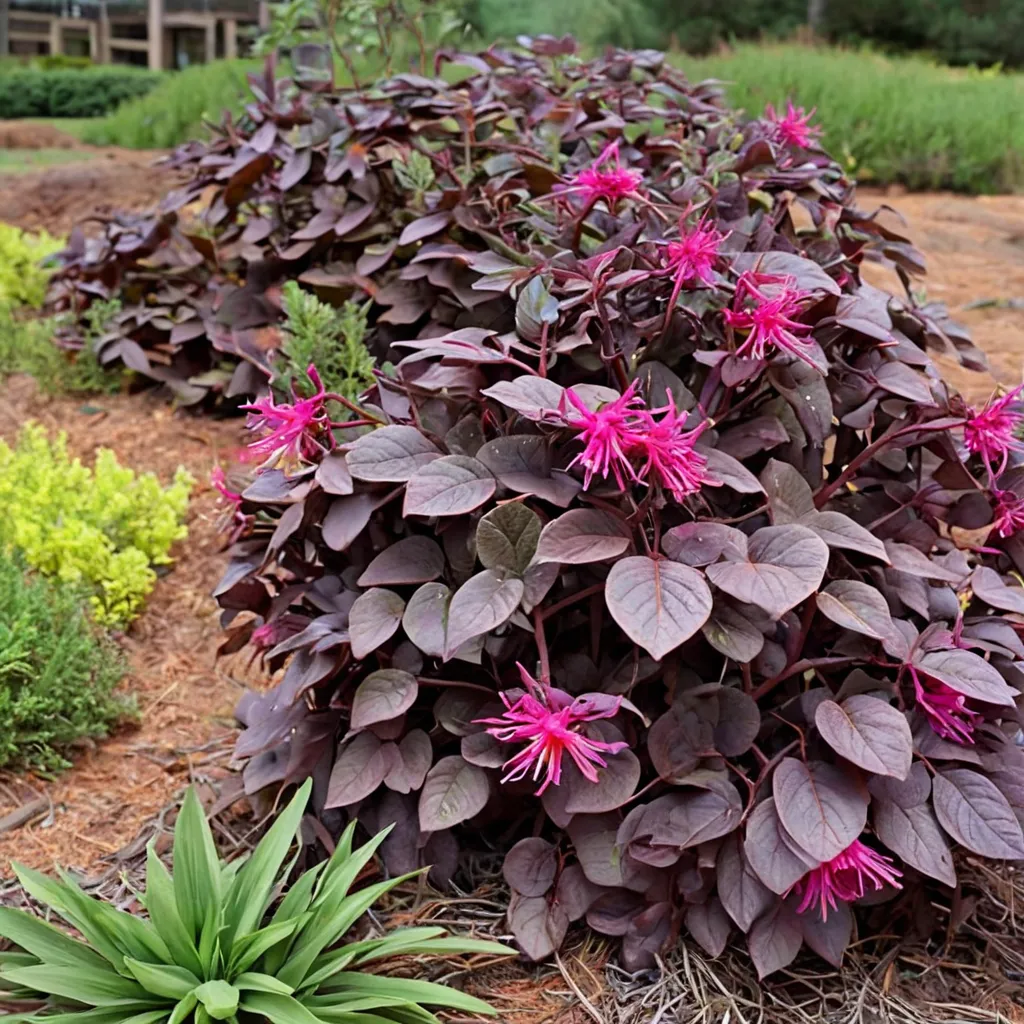
Crimson Fire Fringe Flower
Loropetalum chinense 'Crimson Fire'
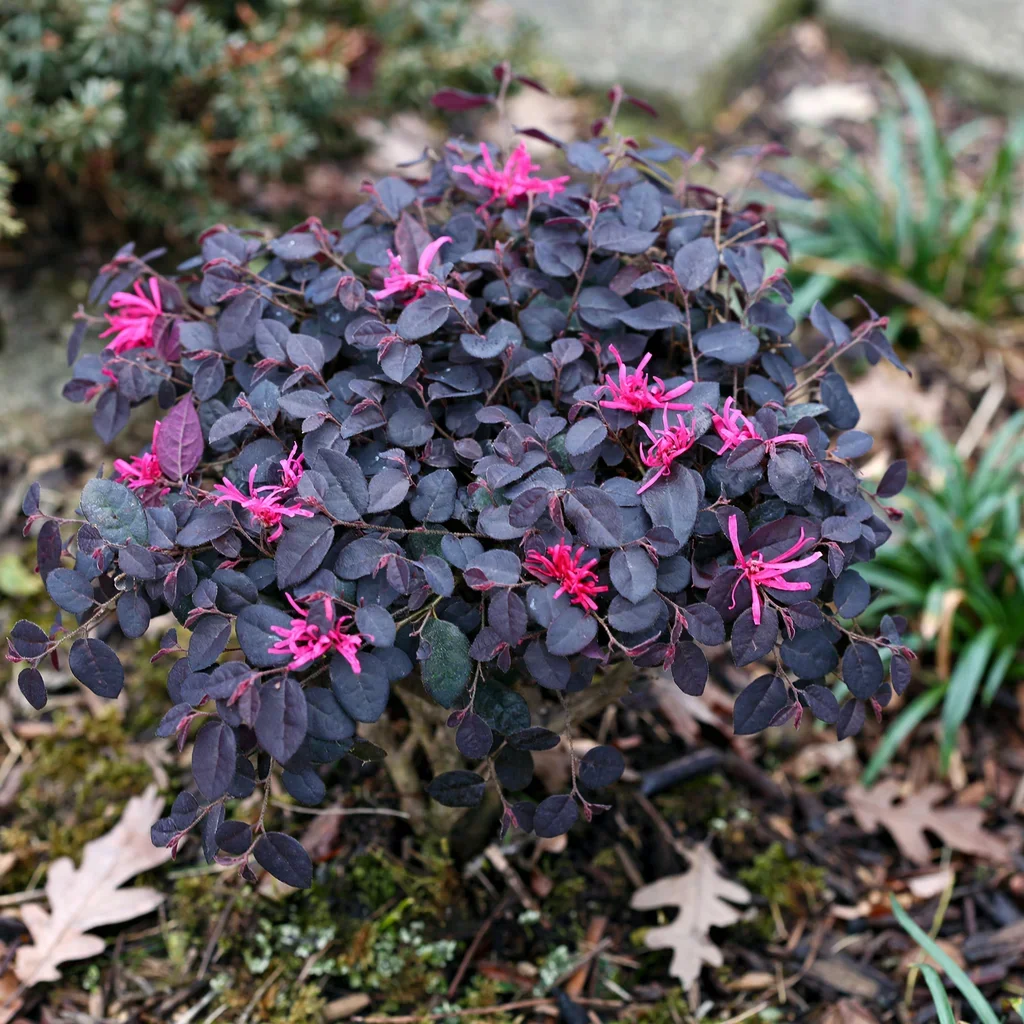
Jazz Hands Mini Chinese Fringe Flower
Loropetalum chinense 'Jazz Hands Mini'
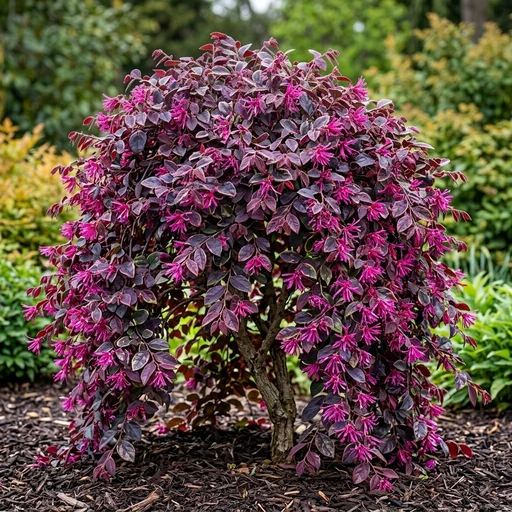
Purple Pixie Fringe Flower
Loropetalum chinense 'Purple Pixie'
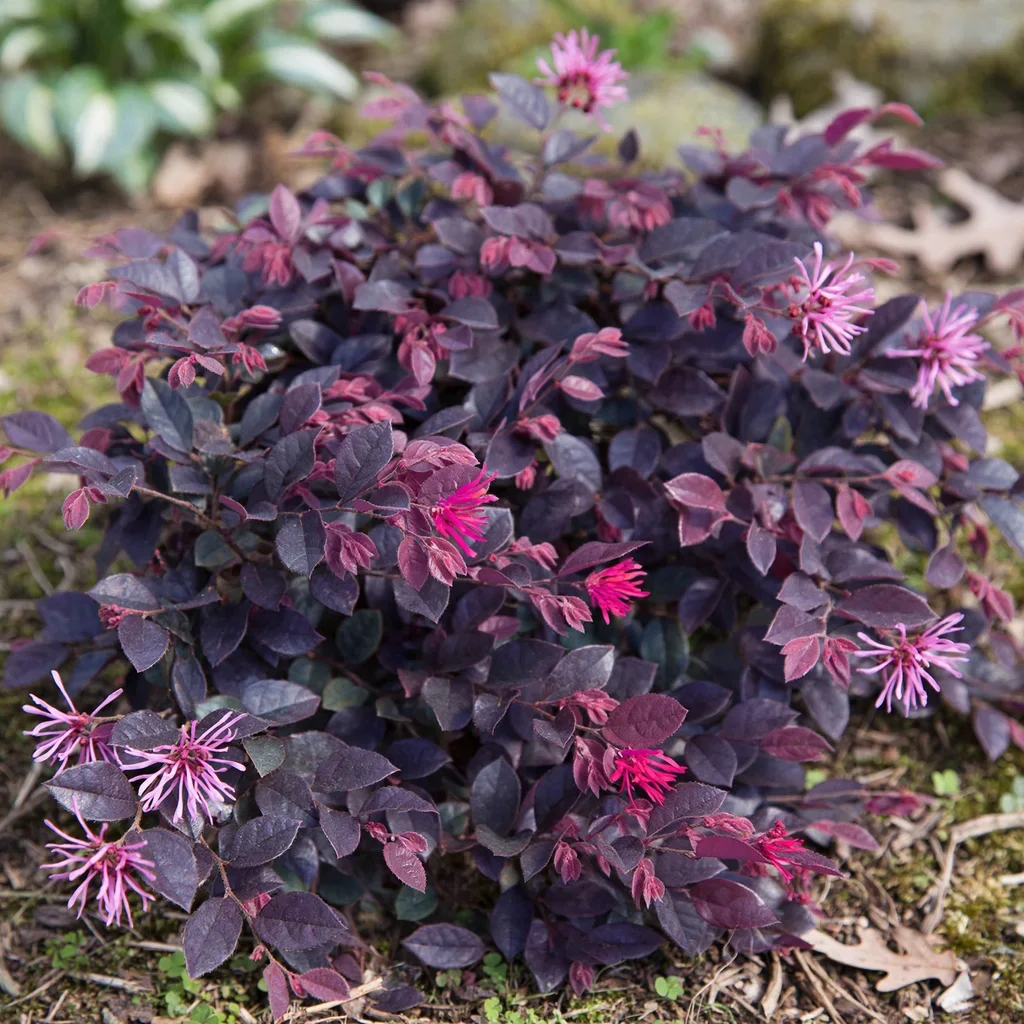
Purple Daydream Chinese Fringe Flower
Loropetalum chinense 'Purple Daydream'
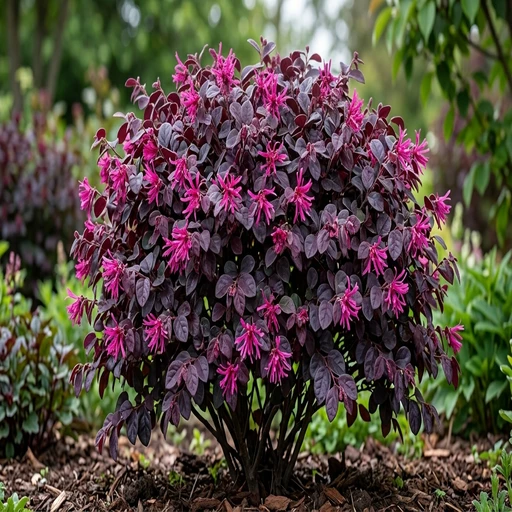
Purple Daydream Chinese Fringe-Flower
Loropetalum chinense 'Purple Daydream Dwarf'
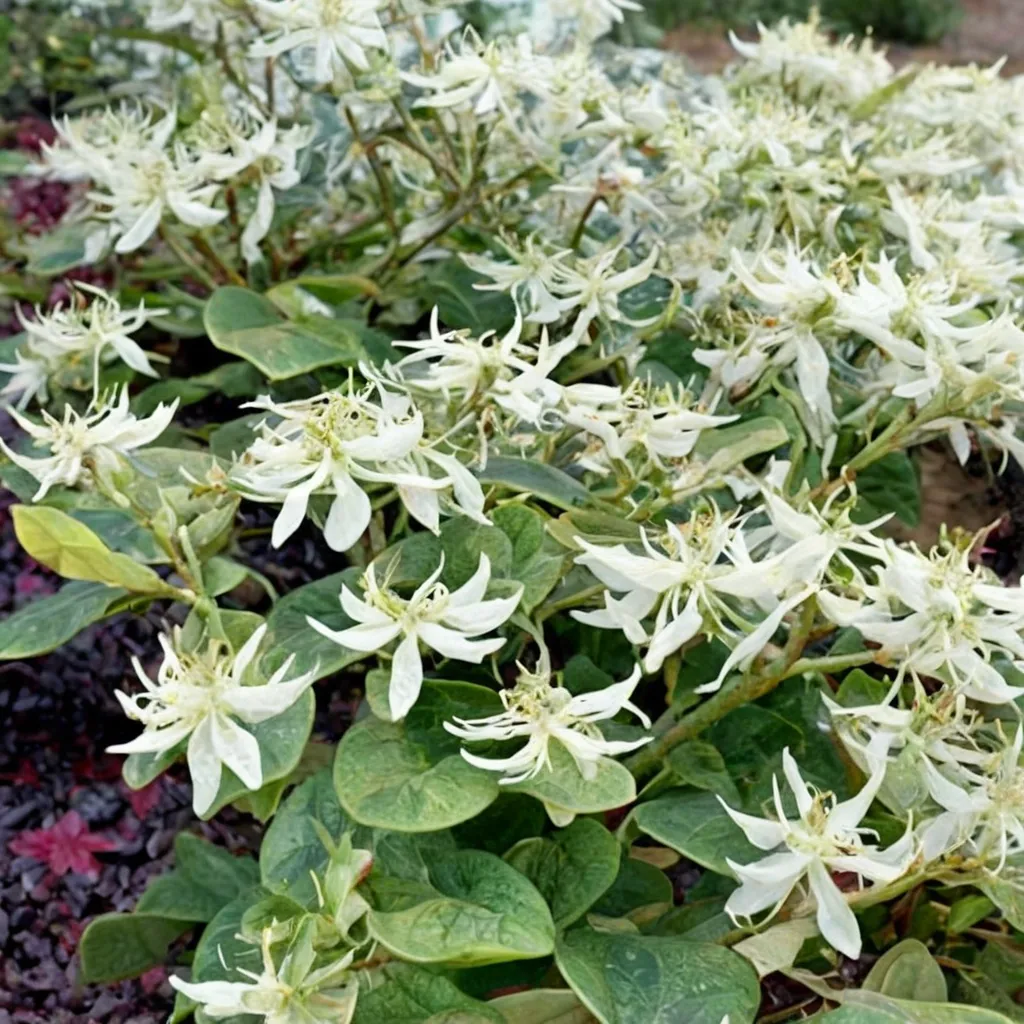
Emerald Snow Loropetalum
Loropetalum chinense 'Emerald Snow'
Keep exploring
Explore the genus
Hardy in your zone?
Grow Cerise Charm Chinese Fringe Flower with confidence
See it in a design of your actual yard, get zone-matched care reminders, and track it season by season in your garden journal.