The Story
Plant Bio
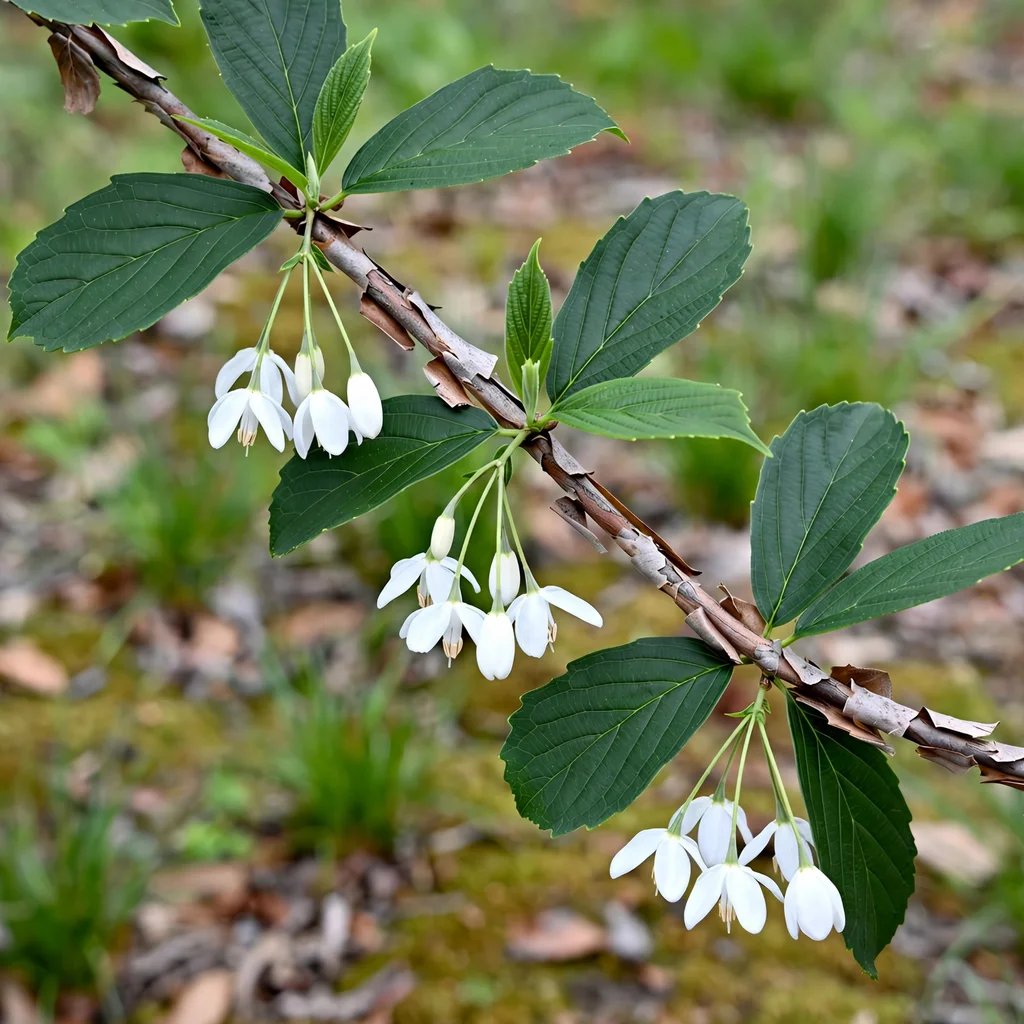
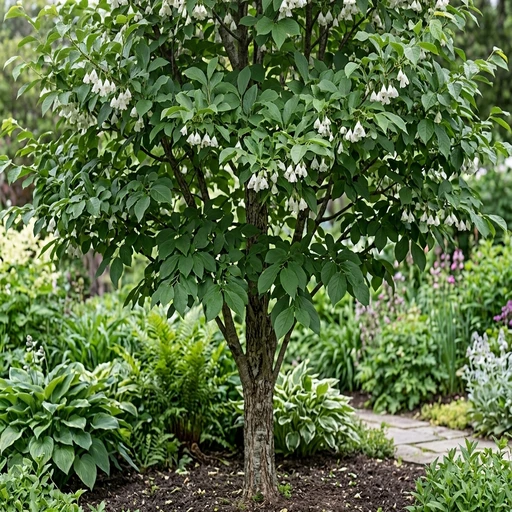
Halesia diptera, the two-winged silverbell, is a deciduous small tree or large multi-stemmed shrub from southeastern bottomlands, reaching 15 to 30 feet tall with an open rounded crown and low branches. Leaves are alternate, oval to obovate and irregularly toothed, dark green through summer and yellow in fall, carried on stems whose bark sheds in thin scales.
Flowers hang in clusters of two to seven white bells about one inch long, each deeply divided into four to five petals, opening in spring about one to two weeks after Carolina silverbell. Fruit sets as a dry two-winged drupe to two inches long that ripens in fall, the two wings separating it from the four-winged fruit of Halesia carolina.
Uses & Benefits:
Essentials
At a Glance
Plant Type
Tree
Height
360"
Width
300"
Light
Full Sun, Partial Sun
Zones
5, 6, 7, 8
Water
Moist
Humidity
Average
Lifespan
Decades
Native To
Southeastern USA
Toxicity
Unknown
Bloom period
Early spring – Late spring
In flower about 3 months of the year
Planting
How to Grow
- Plant in spring in full sun to part shade, with afternoon shade in hot areas.
- Dig a wide hole in moist, organically rich acid loam or sand with pH below 6.0, setting the crown level.
- Water deeply at planting and through dry spells; do not let the root zone dry out.
- Spread 2 to 3 inches of bark mulch over the root zone, keeping it off the trunk.
- Train young plants to a single trunk or leave multi-stemmed, pruning only after flowering.
Pro Tip
Keep the root zone mulched and evenly moist; on alkaline ground leaves yellow and growth stalls, so plant only where soil tests acid.
Keep It Thriving
Care Guide
Do
- Mulch yearly to hold soil moisture and keep roots cool
- Water during drought; this is a bottomland tree that suffers when dry
- Grow in acid soil testing below pH 6.0 for deep green leaves
Don't
- Do not plant in alkaline or chalky soil where leaves turn yellow
- Do not let the root zone dry out in summer heat
- Do not shear into formal shapes; it grows as an open rounded crown
Seasonal Care Calendar
| Task | Jan | Feb | Mar | Apr | May | Jun | Jul | Aug | Sep | Oct | Nov | Dec |
|---|---|---|---|---|---|---|---|---|---|---|---|---|
| Mulch | ||||||||||||
| Pest Check | ||||||||||||
| Plant | ||||||||||||
| Propagate | ||||||||||||
| Prune |
Watch Out For
Pests & Diseases
Common Pests
Common Diseases
In the Garden
Landscape Uses & Companions
Landscape Uses
Multiply
Propagation Methods
Good to Know
Common Questions
Two-Winged Silverbell questions
What zones can Two-Winged Silverbell grow in?
Two-Winged Silverbell is hardy in USDA Zones 5–8: in that range it survives winter in the ground. Colder than Zone 5, winters are too cold for it to survive outdoors. Warmer than Zone 8, winter isn't the problem: it prefers colder winters, and summer heat can shorten its life.
When does Two-Winged Silverbell bloom?
Two-Winged Silverbell typically blooms in spring. Exact timing shifts a week or two with your zone — Sow's bloom calendar maps it to your garden.
Does Two-Winged Silverbell need full sun?
Two-Winged Silverbell does best in full sun to part shade. In hot climates, afternoon shade keeps blooms fresher longer.
More Halesia to compare
Keep exploring
Explore the genus
Hardy in your zone?
Grow Two-Winged Silverbell with confidence
See it in a design of your actual yard, get zone-matched care reminders, and track it season by season in your garden journal.