The Story
Plant Bio
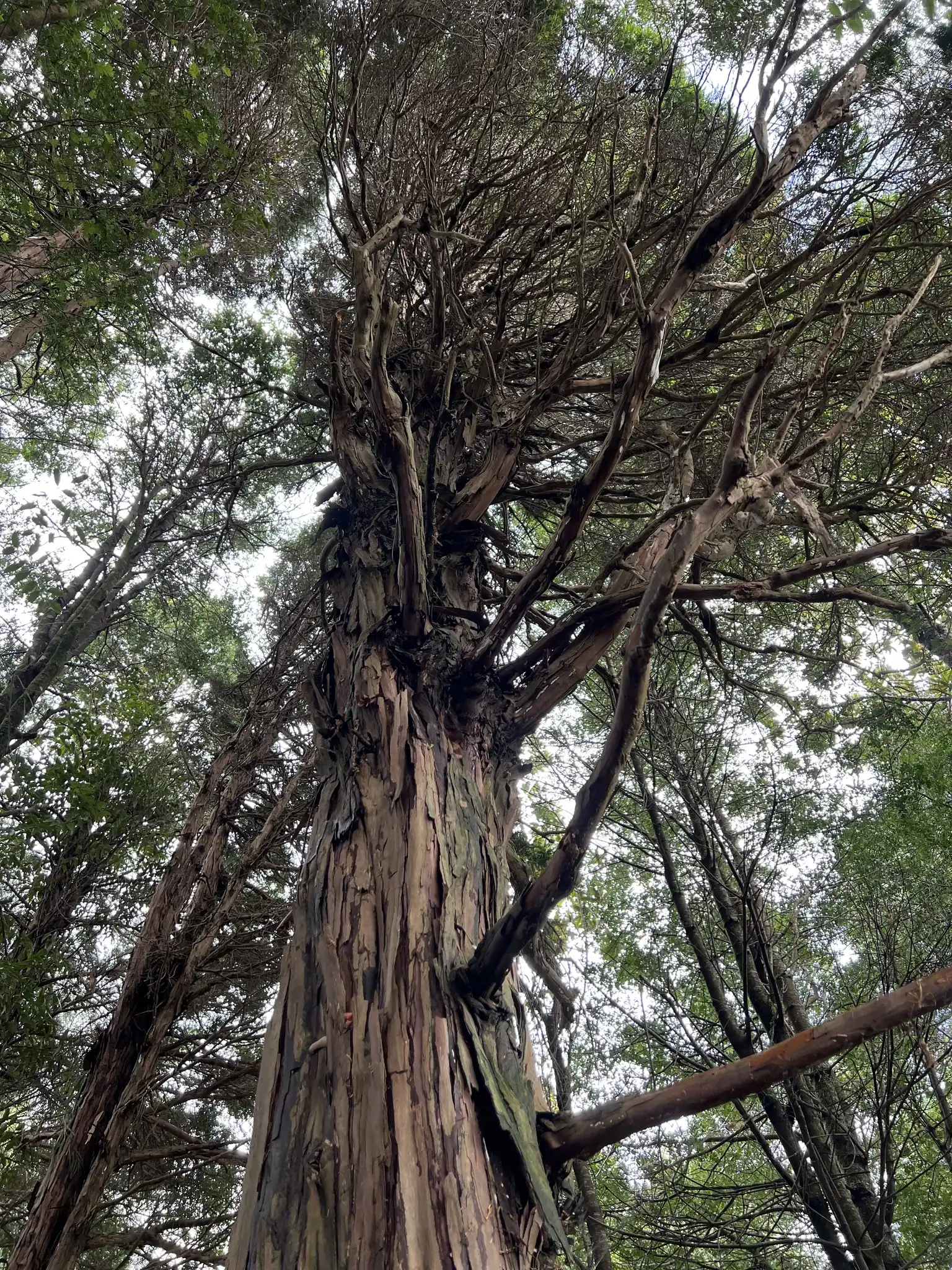
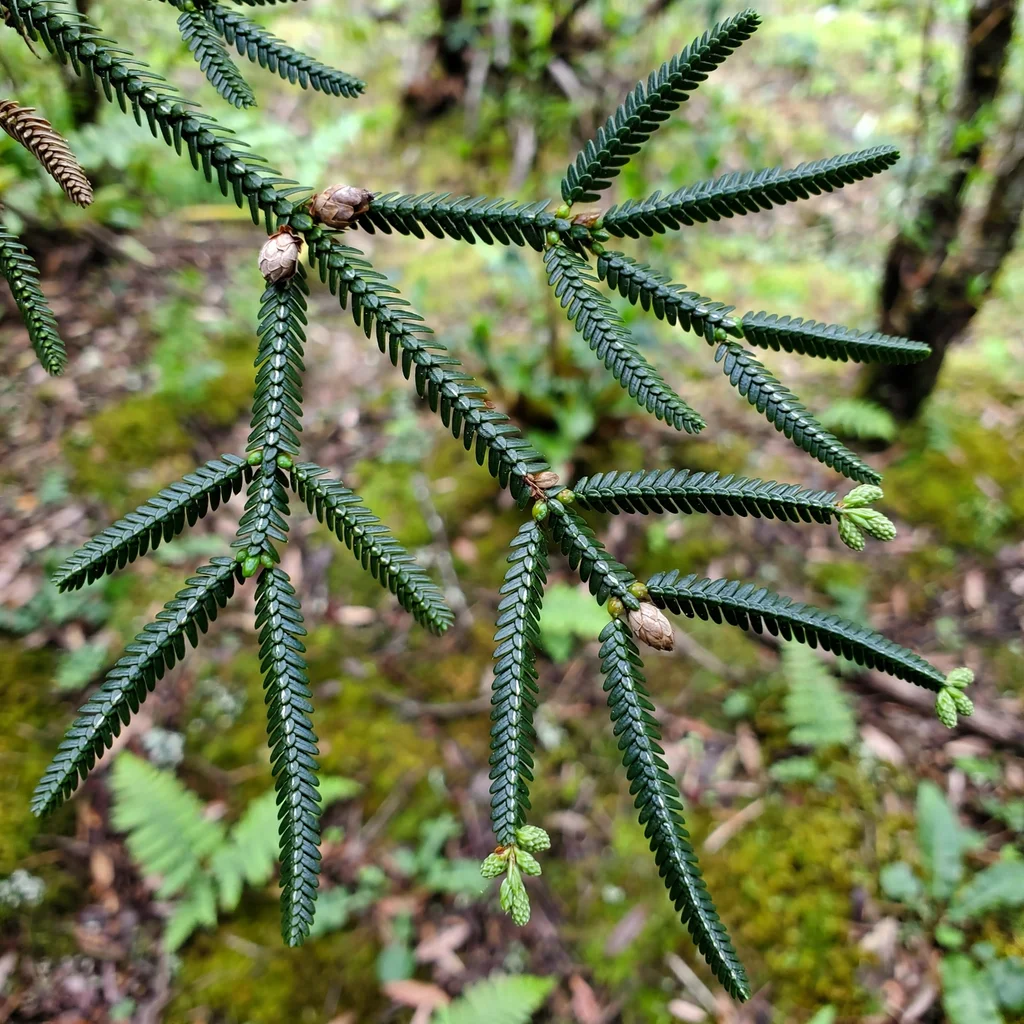
Libocedrus plumosa is an evergreen conifer forming a conical crown atop a long bare trunk with spreading branches. The foliage grows in flattened, feathery sprays that shift from broad juvenile scales to narrower adult branchlets as the tree matures.
The pronounced heteroblasty gives young specimens flat, fern-like fronds up to seven millimeters wide that differ dramatically from adult foliage. Small woody cones with curved spiny bracts develop at the ends of short branchlets following spring wind pollination.
Uses & Benefits:
Essentials
At a Glance
Plant Type
Tree
Height
1000"
Width
350"
Light
Full Sun, Partial Sun
Zones
8, 9, 10
Water
Moderate
Humidity
High
Lifespan
Long-lived
Native To
New Zealand
Toxicity
Non-toxic
Bloom period
Spring
In flower about 3 months of the year
Planting
How to Grow
- Select a planting site receiving full sun to partial shade that is sheltered from strong, drying winds.
- Amend heavy soils with organic matter to ensure high drainage before planting.
- Dig a hole twice as wide as the root ball and sit the plant at the same soil depth as its container.
- Water thoroughly upon planting and maintain consistent soil moisture throughout the first two growing seasons.
Pro Tip
Never prune into old leafless wood, as Cupressaceae lack adventitious buds and cannot regenerate foliage from bare brown stems.
Keep It Thriving
Care Guide
Do
- Keep soil consistently moist, especially during dry summer periods.
- Plant in rich, well-draining organic soil with an acidic to neutral pH.
Don't
- Do not plant in heavy, waterlogged clay soils where water stands.
- Do not prune back into bare, leafless wood.
Seasonal Care Calendar
| Task | Jan | Feb | Mar | Apr | May | Jun | Jul | Aug | Sep | Oct | Nov | Dec |
|---|---|---|---|---|---|---|---|---|---|---|---|---|
| Fertilize | ||||||||||||
| Mulch | ||||||||||||
| Pest Check | ||||||||||||
| Propagate | ||||||||||||
| Prune |
Watch Out For
Pests & Diseases
Common Pests
Common Diseases
In the Garden
Landscape Uses & Companions
Landscape Uses
Companion Plants
Multiply
Propagation Methods
Good to Know
Common Questions
Kawaka questions
What zones can Kawaka grow in?
Kawaka is hardy in USDA Zones 8–10: in that range it survives winter in the ground. Colder than Zone 8, winters are too cold for it to survive outdoors.
When does Kawaka bloom?
Kawaka typically blooms in spring. Exact timing shifts a week or two with your zone — Sow's bloom calendar maps it to your garden.
Does Kawaka need full sun?
Kawaka does best in full sun to part shade. In hot climates, afternoon shade keeps blooms fresher longer.
More Libocedrus to compare
Keep exploring
Explore the genus
Hardy in your zone?
Grow Kawaka with confidence
See it in a design of your actual yard, get zone-matched care reminders, and track it season by season in your garden journal.