The Story
Plant Bio
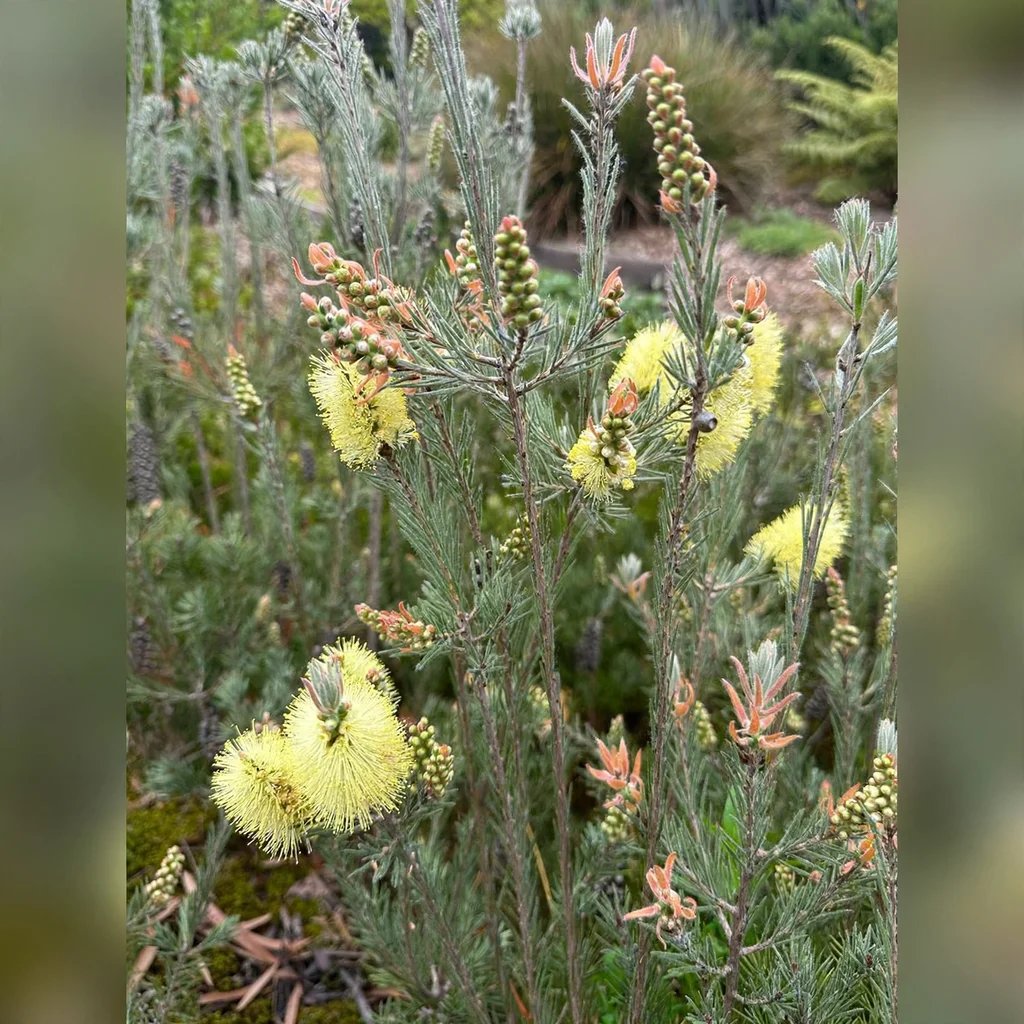
Callistemon pityoides, the alpine bottlebrush, is a dense evergreen shrub from high-elevation bogs and watercourses in southeastern Australia, reaching 3 to 8 feet in cultivation depending on provenance. The narrow linear leaves carry oil glands beneath and emerge densely silky-hairy, with pink-bronze bracts ringing the buds in spring growth.
It is the hardiest bottlebrush, tolerating heavy frost and boggy ground where other species fail, forming a compact thicket near 3 feet from upland seed and exceeding 10 feet from lower-elevation seed. The flowers are dense creamy-yellow bottlebrushes 1 to 3 inches long tipped by a continuing leafy shoot, followed by woody globular capsules 5 to 6 mm across; rare pink-flowered seedlings occur.
Uses & Benefits:
Essentials
At a Glance
Plant Type
Shrub
Height
96"
Width
60"
Light
Full Sun
Zones
7, 8, 9, 10
Water
Medium to wet
Humidity
Adaptable
Lifespan
Long-lived woody shrub
Native To
Southeastern Australia
Toxicity
Unknown - no record found
Bloom period
Late spring – Summer
In flower about 4 months of the year
Planting
How to Grow
- Plant in full sun in spring after hard frost, in medium to heavy loam or clay that holds moisture.
- Set the crown level with the soil surface and water deeply to settle, then mulch 2 inches deep keeping mulch off the stem.
- Water regularly the first season to establish, then reduce; established plants take drier spells but flower best with steady moisture.
- Feed once annually after flowering with a balanced fertilizer.
- Tip-prune just behind each spent brush to keep the thicket dense.
Pro Tip
Buy by provenance, not by species name alone; high-altitude dwarf forms stay near 3 feet but may flower poorly in warm low-elevation gardens, while lowland forms grow fast and tall.
Keep It Thriving
Care Guide
Do
- Give full sun and room for a 5-foot thicket.
- Keep soil moist the first year and during extended drought.
- Select provenance to match desired size.
Don't
- Do not plant in deep shade where flowering weakens.
- Do not let new transplants dry out before rooting.
- Do not expect a high-altitude dwarf to perform like a lowland form.
Seasonal Care Calendar
| Task | Jan | Feb | Mar | Apr | May | Jun | Jul | Aug | Sep | Oct | Nov | Dec |
|---|---|---|---|---|---|---|---|---|---|---|---|---|
| Fertilize | ||||||||||||
| Mulch | ||||||||||||
| Pest Check | ||||||||||||
| Plant | ||||||||||||
| Prune |
Watch Out For
Pests & Diseases
Common Pests
Common Diseases
In the Garden
Landscape Uses & Companions
Landscape Uses
Multiply
Propagation Methods
Good to Know
Common Questions
Alpine Bottlebrush questions
What zones can Alpine Bottlebrush grow in?
Alpine Bottlebrush is hardy in USDA Zones 7–10: in that range it survives winter in the ground. Colder than Zone 7, grow it in a container you can move to shelter for the winter.
Is Alpine Bottlebrush deer resistant?
Yes — Alpine Bottlebrush is rated deer-resistant. Deer typically pass it over, though extreme hunger can override any plant's defenses.
When does Alpine Bottlebrush bloom?
Alpine Bottlebrush typically blooms from late spring to late summer. Exact timing shifts a week or two with your zone — Sow's bloom calendar maps it to your garden.
Does Alpine Bottlebrush need full sun?
Alpine Bottlebrush does best in full sun (6+ hours).
Is Alpine Bottlebrush drought tolerant?
Yes — once established (usually after the first full season), Alpine Bottlebrush handles dry spells with minimal watering. Water deeply its first year to build the root system that makes that possible.
More Callistemon to compare
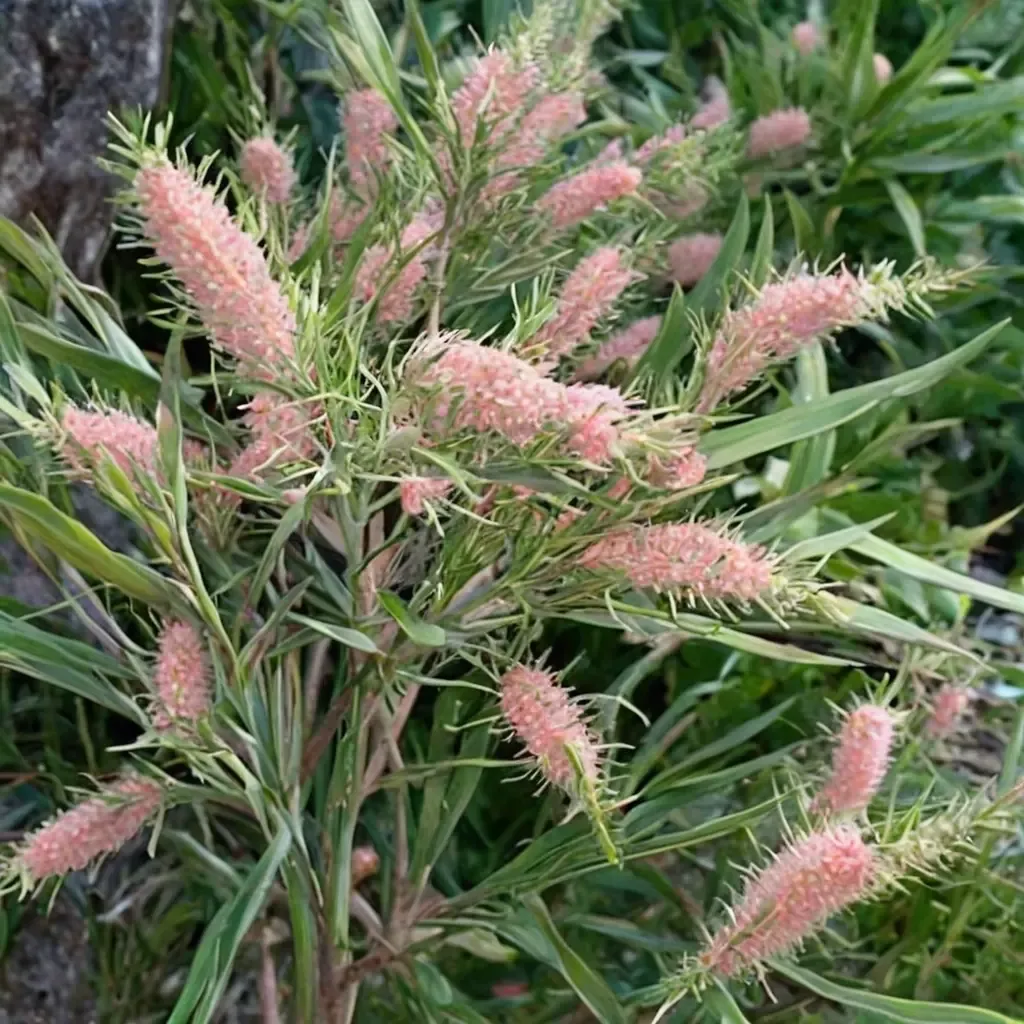
Cane's Hybrid Bottlebrush
Callistemon citrinus 'Cane's Hybrid'
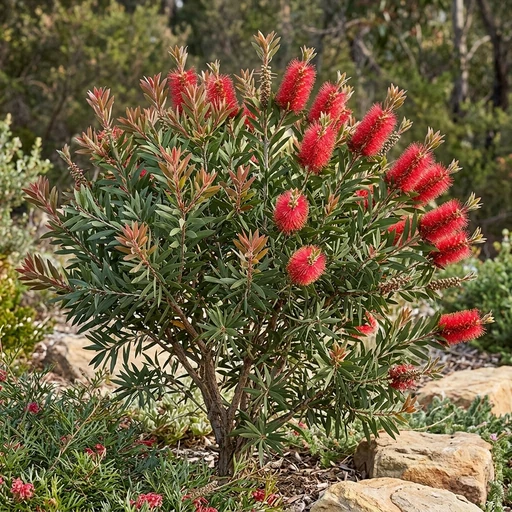
Little John Dwarf Bottlebrush
Callistemon citrinus 'Little John'
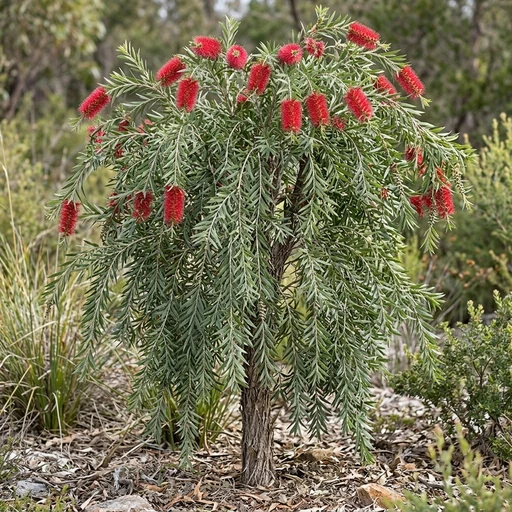
Weeping Bottlebrush
Callistemon viminalis
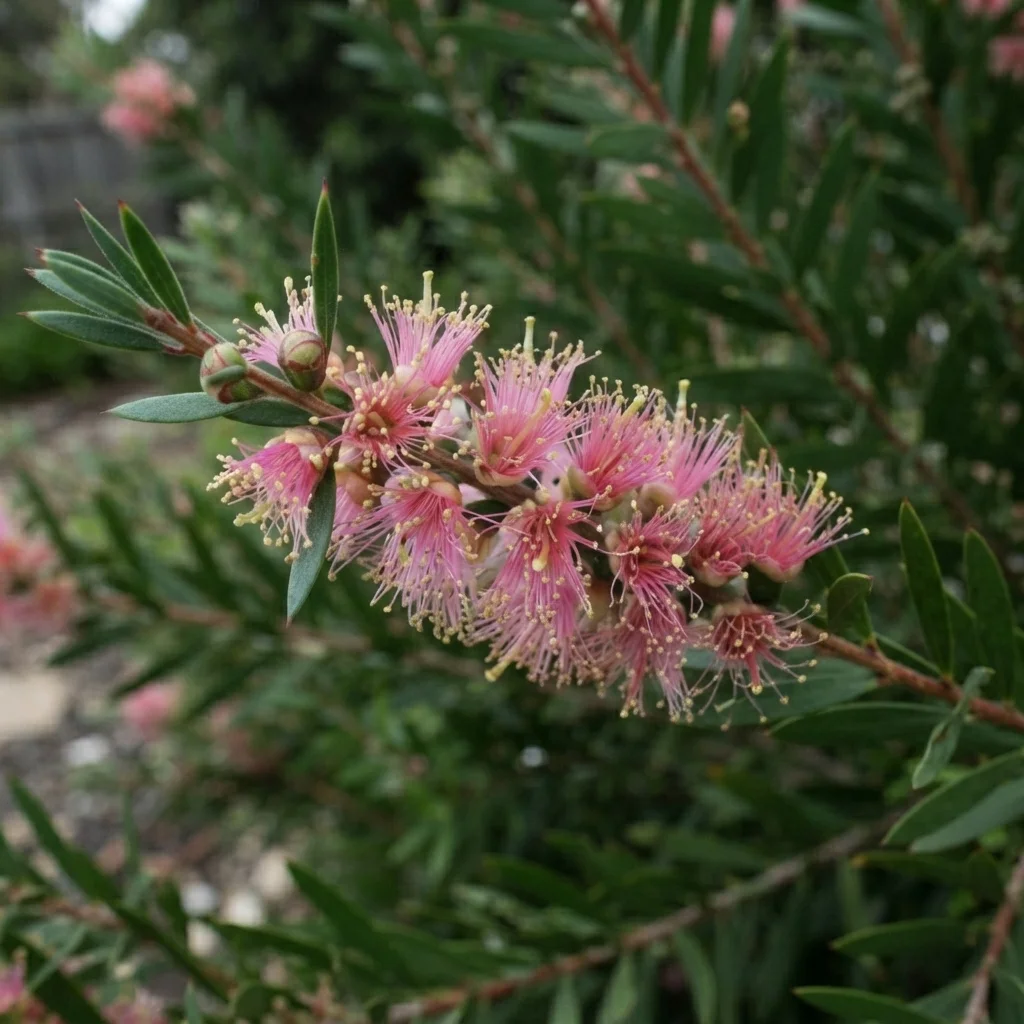
River Bottlebrush
Callistemon sieberi
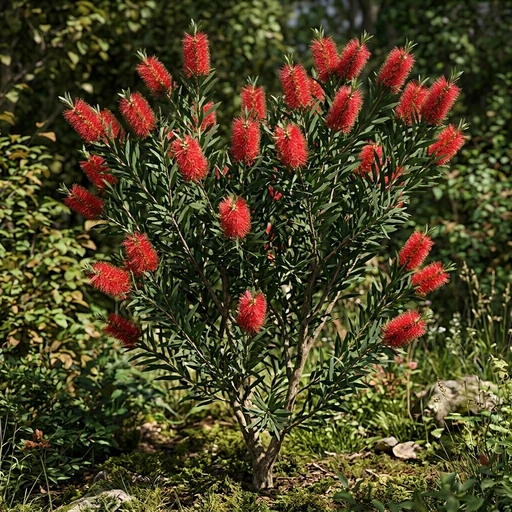
Woodlander's Hardy Bottlebrush
Callistemon x hybrida 'Woodlander'S Hardy'
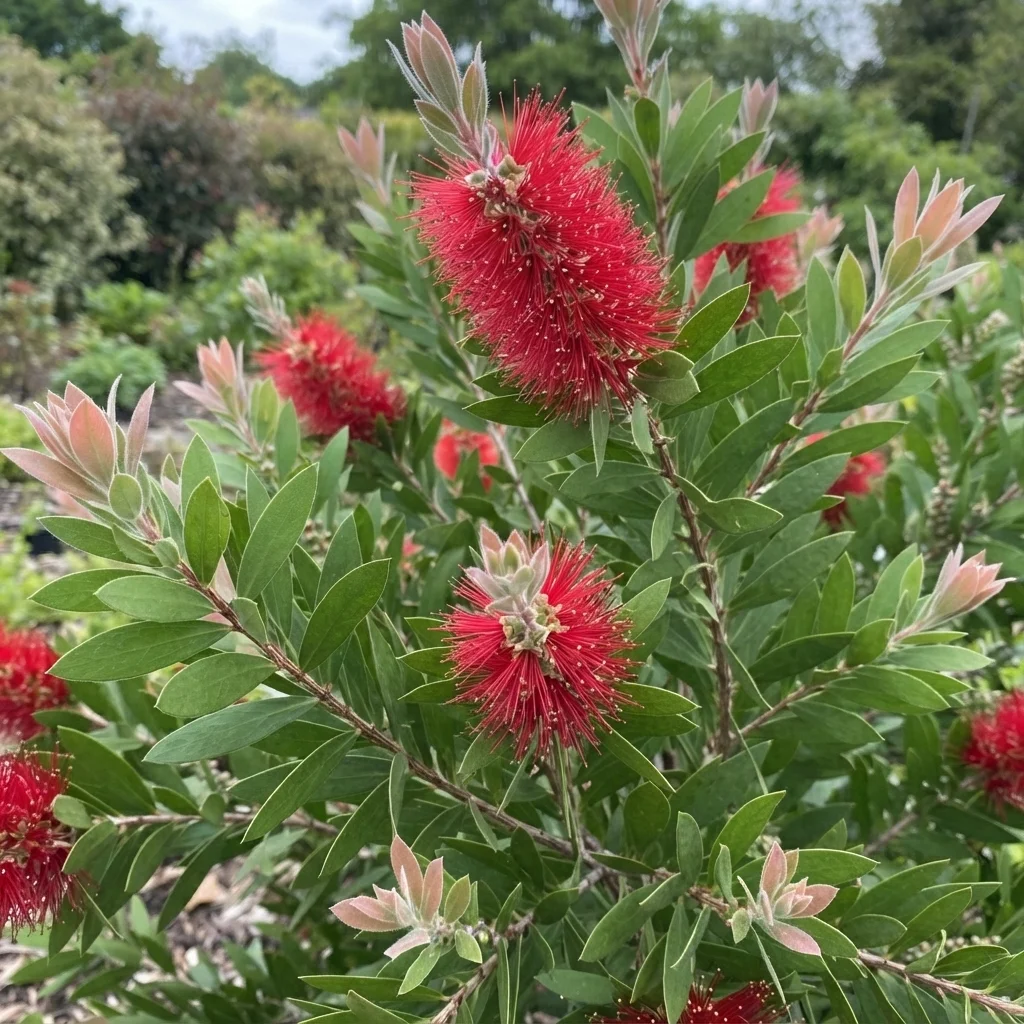
Crimson Bottlebrush 'Splendens'
Callistemon citrinus 'Splendens'
Keep exploring
Explore the genus
Hardy in your zone?
Grow Alpine Bottlebrush with confidence
See it in a design of your actual yard, get zone-matched care reminders, and track it season by season in your garden journal.