The Story
Plant Bio
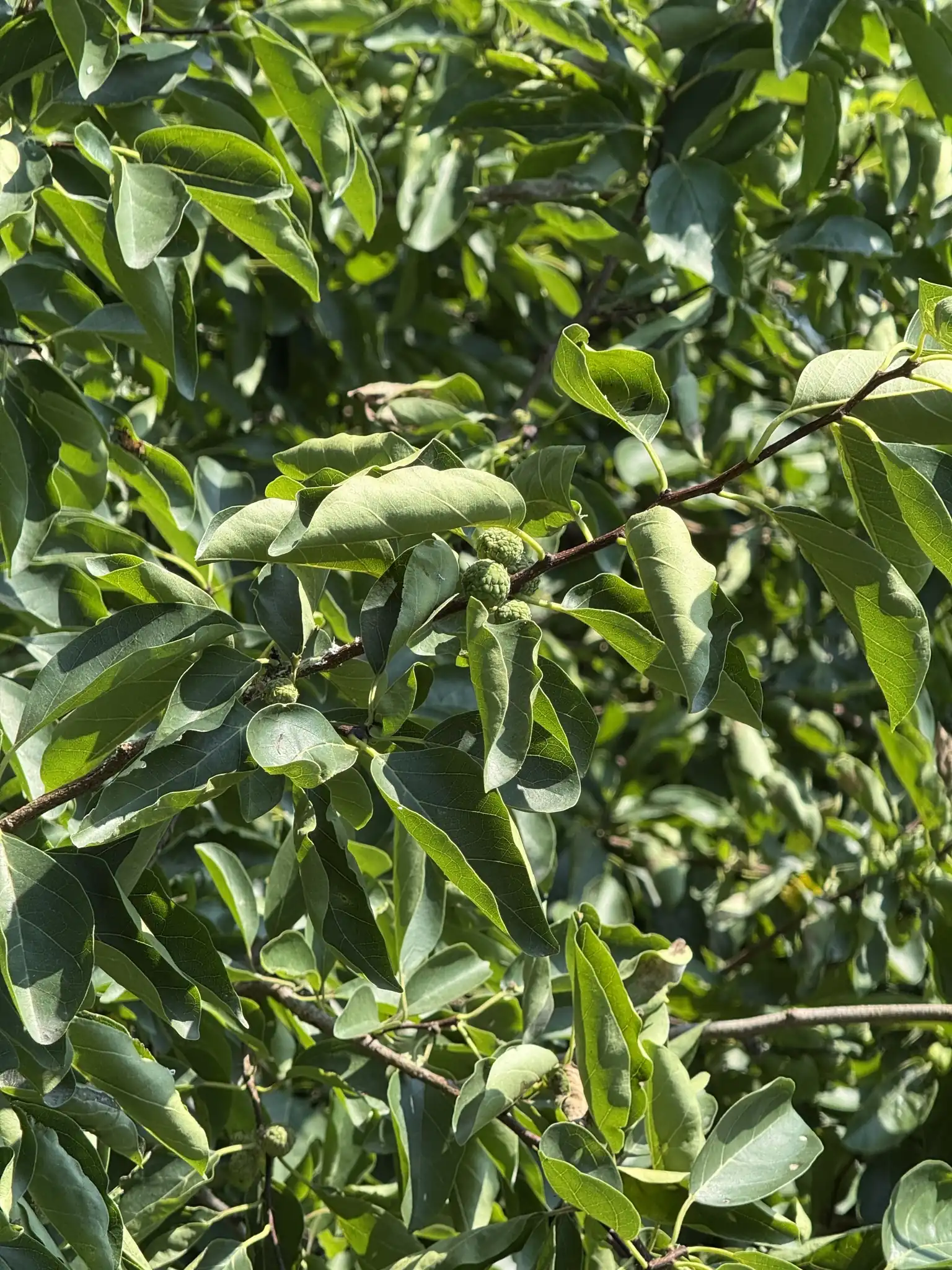
Maclura tricuspidata, the che or Chinese mulberry, is a deciduous shrub or small round-headed tree from temperate East Asia, reaching 8 to 20 feet in gardens with a broad spreading crown. The leaves are broad and deciduous and are used to feed silkworms, and the immature wood bears sharp spines 0.2 to 1.4 inches long that shed as the tree matures.
The species is dioecious, with pea-sized green male and female flowers borne on separate plants on current-season growth in summer. Female plants ripen glossy orange-red multiple fruits to 2 inches long in fall, edible only when fully ripe; unripe fruit and milky sap can upset the stomach and irritate skin.
Uses & Benefits:
Essentials
At a Glance
Plant Type
Fruit Vegetable
Height
236"
Width
299"
Light
Full Sun
Zones
5, 6, 7, 8, 9, 10
Water
Moderate
Humidity
Unknown
Lifespan
Long-lived woody
Native To
China, Korea, Vietnam
Toxicity
Mildly toxic - thorns, milky sap, unripe fruit
Bloom period
Summer
In flower about 3 months of the year
Planting
How to Grow
- Plant in a warm full-sun spot with rich well-drained soil, allowing up to 25 feet for a spreading crown.
- Set out a female plant with one male pollinator nearby to ensure fruit set.
- Water to establish, then maintain even moisture without waterlogging.
- Mulch to conserve moisture and keep mowers from wounding the trunk.
- Harvest only fully colored glossy orange-red fruit in fall; leave unripe fruit to ripen.
Pro Tip
Plant a sexed female with one male pollinator for fruit, and do not cull a thorny young plant — the spines shed as the wood matures.
Keep It Thriving
Care Guide
Do
- Plant male and female plants together if you want fruit
- Give full sun and sharp drainage, even in rocky soil
- Net ripening fruit if birds take them
Don't
- Do not expect fruit from a single seedling grown alone
- Do not over-prune young thorny wood or cull it for thorns
- Do not eat unripe fruit or handle milky sap with bare skin
Seasonal Care Calendar
| Task | Jan | Feb | Mar | Apr | May | Jun | Jul | Aug | Sep | Oct | Nov | Dec |
|---|---|---|---|---|---|---|---|---|---|---|---|---|
| Harvest | ||||||||||||
| Mulch | ||||||||||||
| Pest Check | ||||||||||||
| Plant | ||||||||||||
| Prune |
Watch Out For
Pests & Diseases
Common Pests
Common Diseases
In the Garden
Landscape Uses & Companions
Landscape Uses
Companion Plants
Multiply
Propagation Methods
Good to Know
Common Questions
Che questions
What zones can Che grow in?
Che is hardy in USDA Zones 5–10: in that range it survives winter in the ground. Colder than Zone 5, grow it in a container you can move to shelter for the winter, or as an annual.
Is Che deer resistant?
Not reliably. Deer may browse Che, especially tender spring growth — plan on repellents or fencing where pressure is high.
When does Che bloom?
Che typically blooms in summer. Exact timing shifts a week or two with your zone — Sow's bloom calendar maps it to your garden.
Does Che need full sun?
Che does best in full sun (6+ hours).
More Maclura to compare
Keep exploring
Explore the genus
Grow Che with confidence
See it in a design of your actual yard, get zone-matched care reminders, and track it season by season in your garden journal.