The Story
Plant Bio
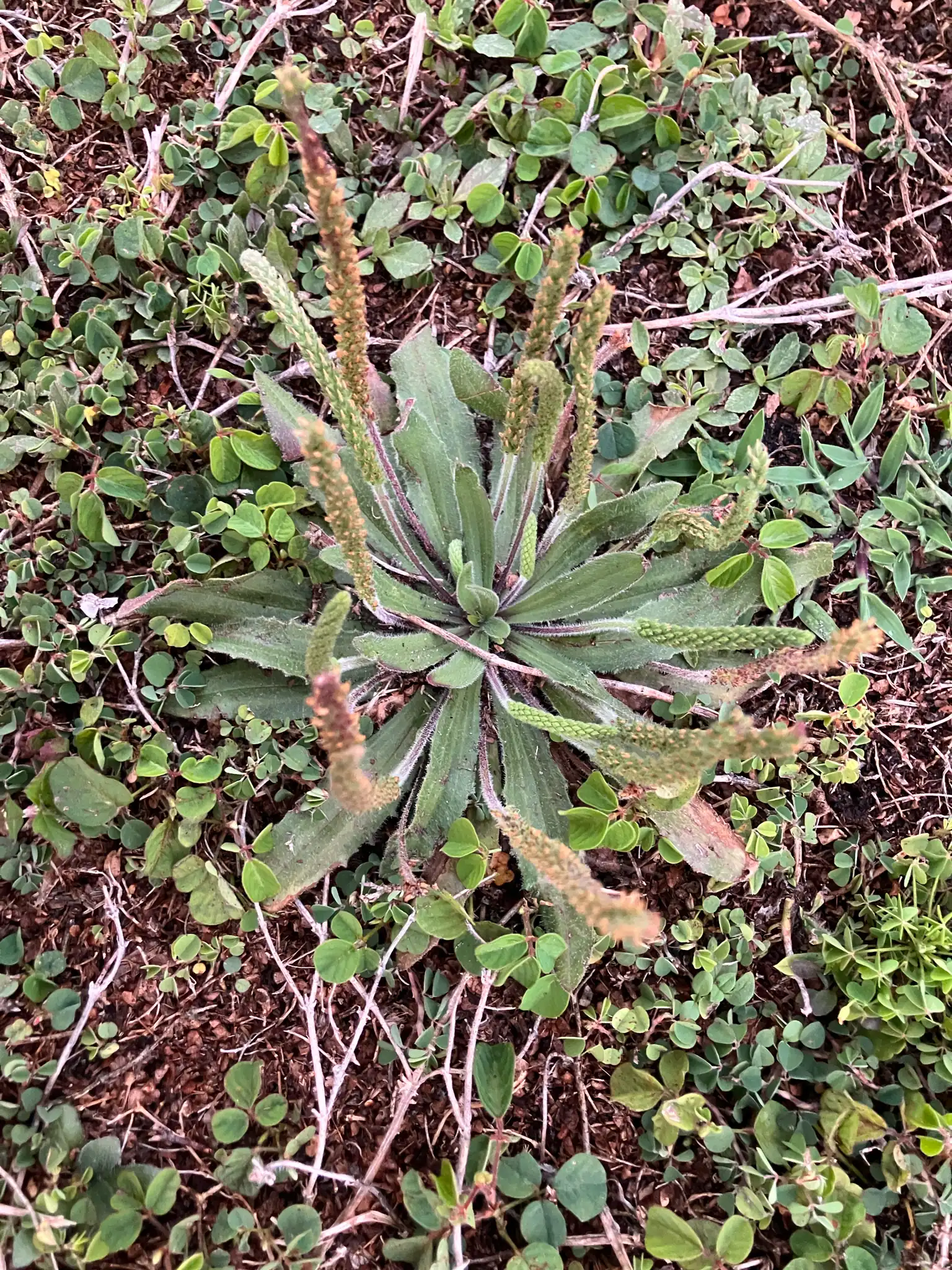
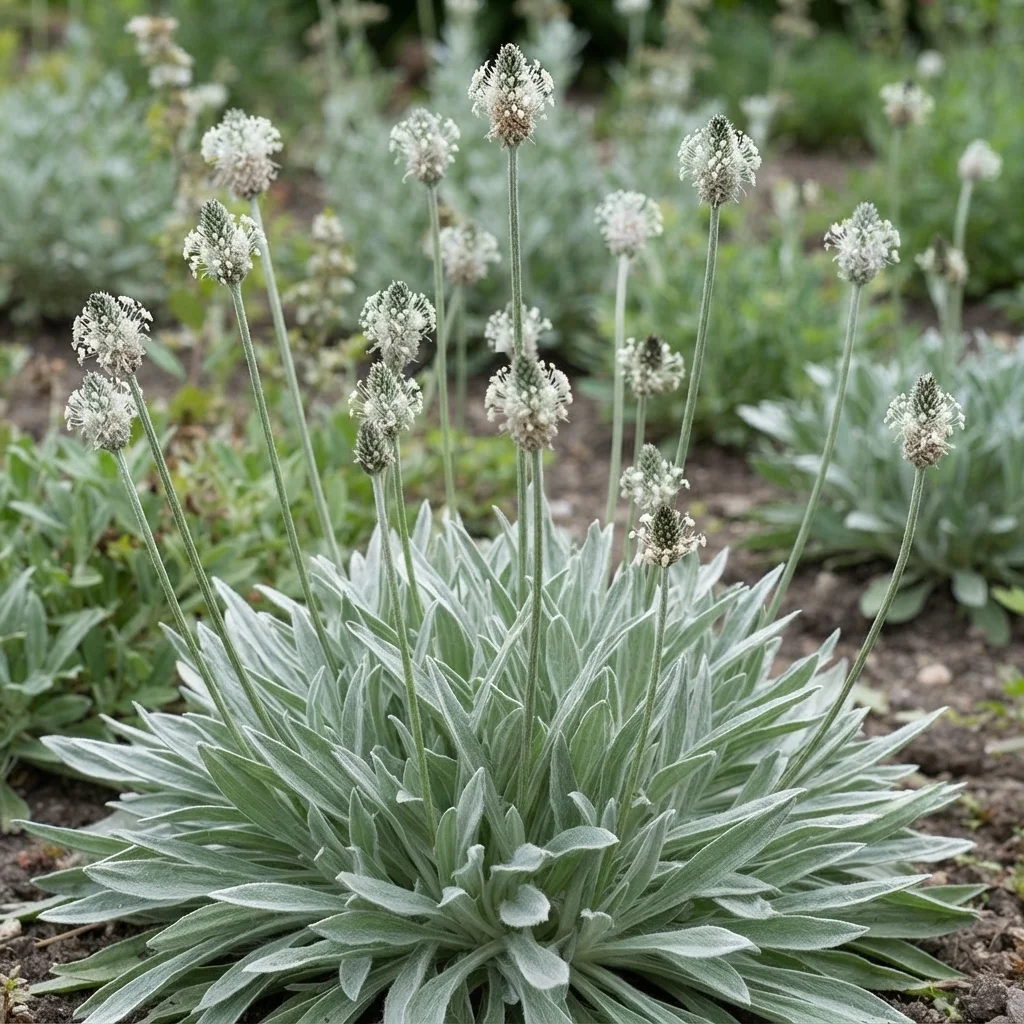
Plantago virginica is a winter annual or biennial plantain forming a small basal rosette on a taproot with one or more hairy hollow scapes. The leaves are oblanceolate to elliptic, three-veined and densely woolly, with flowering stalks rising four to eight inches above the rosette.
It separates from perennial plantains by very woolly foliage, petioles often purple at the base and irregularly toothed to entire margins. The unbranched scape carries a dense cylindrical spike of tiny white to greenish-white wind-pollinated flowers that age tan-brown and mature to two-seeded capsules.
Uses & Benefits:
Essentials
At a Glance
Plant Type
Annual
Height
8"
Width
6"
Light
Full Sun
Water
Low
Humidity
Average
Lifespan
Winter annual or biennial
Native To
Central and eastern USA to northern Mexico
Toxicity
Unknown
Bloom period
Spring – Early summer
In flower about 4 months of the year
Planting
How to Grow
- Leave undisturbed in full sun in sandy or thin rocky soil where water drains freely.
- Allow fall-germinated rosettes to overwinter in place without fertilizing.
- Let spring spikes flower and remove them before capsules ripen if spread is unwanted.
- Hand-pull the taproot to remove plants; mowing alone does not kill the rosette.
Pro Tip
Pull rosettes before spikes set seed; this winter annual renews only from seed and does not regrow once the taproot is removed.
Keep It Thriving
Care Guide
Do
- Grow in full sun in dry sandy ground.
- Remove spikes before seed ripens to limit spread.
- Hand-pull young rosettes when soil is moist.
Don't
- Do not fertilize or water to push growth; it favors poor dry sites.
- Do not mow to control it; the low rosette survives and still sets seed.
- Do not compost ripe spikes with mature capsules.
Seasonal Care Calendar
| Task | Jan | Feb | Mar | Apr | May | Jun | Jul | Aug | Sep | Oct | Nov | Dec |
|---|---|---|---|---|---|---|---|---|---|---|---|---|
| Deadhead | ||||||||||||
| Pest Check | ||||||||||||
| Plant | ||||||||||||
| Propagate | ||||||||||||
| Spring Cleanup |
Watch Out For
Pests & Diseases
Common Pests
Common Diseases
In the Garden
Landscape Uses & Companions
Landscape Uses
Multiply
Propagation Methods
Good to Know
Common Questions
Virginia Plantain questions
What zones can Virginia Plantain grow in?
Virginia Plantain is an annual: it grows, flowers and sets seed in one season, so winter cold doesn't limit where it grows. Gardeners in any zone can grow it by planting at the right time, usually after the last spring frost.
When does Virginia Plantain bloom?
Virginia Plantain typically blooms from early spring to early summer. Exact timing shifts a week or two with your zone — Sow's bloom calendar maps it to your garden.
Does Virginia Plantain need full sun?
Virginia Plantain does best in full sun (6+ hours).
Is Virginia Plantain drought tolerant?
Yes — once established (usually after the first full season), Virginia Plantain handles dry spells with minimal watering. Water deeply its first year to build the root system that makes that possible.
More Plantago to compare
Keep exploring
Explore the genus
Grow Virginia Plantain with confidence
See it in a design of your actual yard, get zone-matched care reminders, and track it season by season in your garden journal.