The Story
Plant Bio
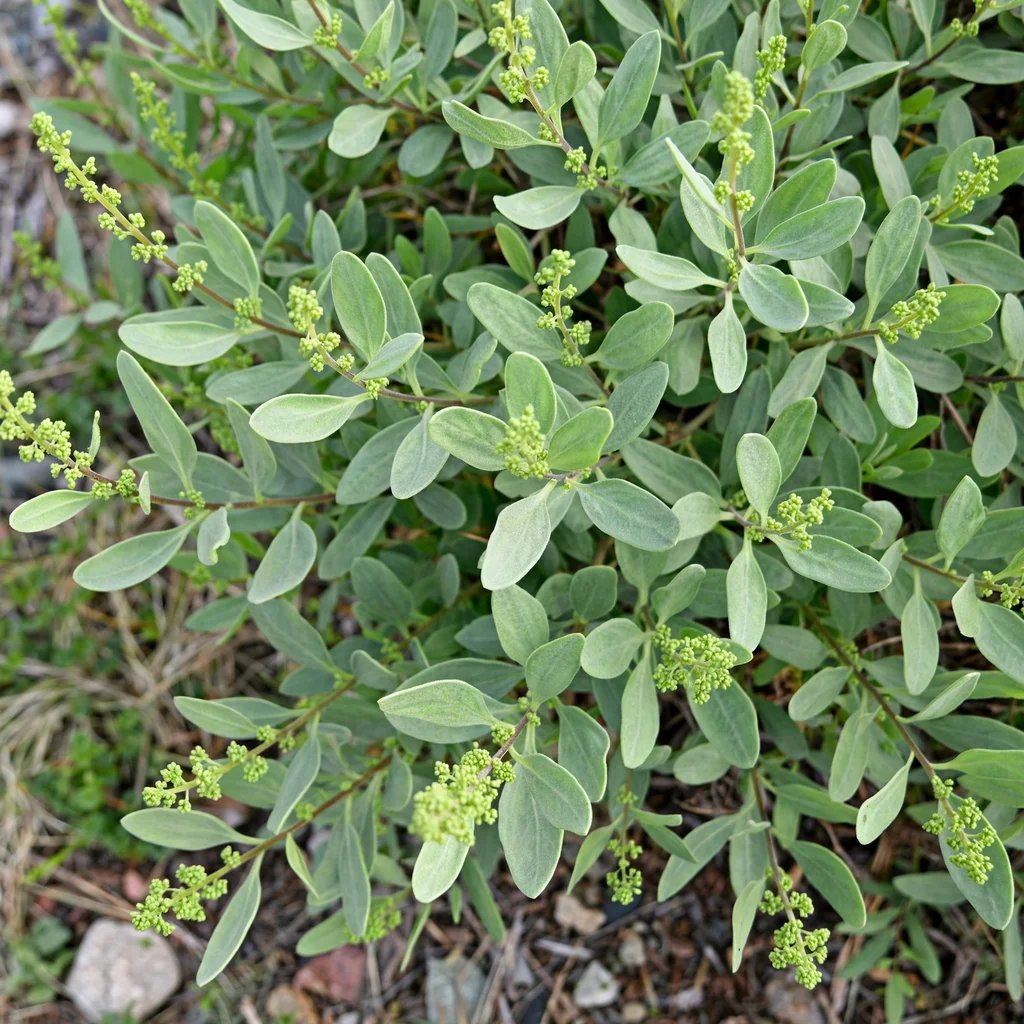
Iva hayesiana is an evergreen, mat-forming subshrub native to coastal canyons, alkaline flats, and moist depressions in San Diego County and Baja California. It forms dense, low mounds up to three feet tall that spread via layering stems clothed in fleshy green, aromatic leaves.
The foliage releases a pungent aroma when crushed, which renders the plant immune to deer and rabbit browsing while preventing severe weed establishment beneath its dense canopy. Inconspicuous greenish flower heads appear in spring and summer, producing cypselae seeds that provide seasonal food for songbirds.
Uses & Benefits:
Essentials
At a Glance
Plant Type
Groundcover
Height
39"
Width
118"
Light
Full Sun, Partial Sun
Zones
9, 10
Water
Low
Humidity
Low to Moderate
Lifespan
Perennial
Native To
Southwestern California, Baja California
Toxicity
Non-toxic (can cause mild contact dermatitis)
Bloom period
Spring – Summer
In flower about 6 months of the year
Planting
How to Grow
- Select a planting position in full sun or partial shade with adequate space to accommodate its wide mounding spread.
- Dig a planting hole as deep as the root ball and twice as wide, setting the crown flush with the surrounding soil level.
- Water thoroughly at installation and maintain modest irrigation through the first summer to encourage rapid stem layering.
- Apply a light mulch layer around the base to retain soil moisture while stems extend across the ground.
- Reduce irrigation frequency once established, watering only during prolonged dry periods if foliage wilts.
Pro Tip
Prune lightly along active tips to restrict lateral spread; cutting radically into bare, woody interior stems prevents regeneration.
Keep It Thriving
Care Guide
Do
- Provide well-drained soil when planting in standard landscape beds.
- Wear gloves when handling or pruning foliage if susceptible to mild contact dermatitis.
- Allow trailing branches contact with bare soil so stems can root and stabilize slopes.
Don't
- Do not prune hard into leafless old wood, as regrowing shoots depend on active green growth nodes.
- Do not overwater established plantings in poorly drained inland locations.
- Do not apply heavy fertilizers, as native foliage performs best in lean soils.
Seasonal Care Calendar
| Task | Jan | Feb | Mar | Apr | May | Jun | Jul | Aug | Sep | Oct | Nov | Dec |
|---|---|---|---|---|---|---|---|---|---|---|---|---|
| Pest Check | ||||||||||||
| Plant | ||||||||||||
| Propagate | ||||||||||||
| Prune |
Watch Out For
Pests & Diseases
Common Pests
Common Diseases
In the Garden
Landscape Uses & Companions
Landscape Uses
Multiply
Propagation Methods
Good to Know
Common Questions
San Diego Marsh-Elder questions
What zones can San Diego Marsh-Elder grow in?
San Diego Marsh-Elder is hardy in USDA Zones 9–10: in that range it survives winter in the ground. Colder than Zone 9, grow it in a container you can move to shelter for the winter, or as an annual.
Is San Diego Marsh-Elder deer resistant?
Yes — San Diego Marsh-Elder is rated deer-resistant. Deer typically pass it over, though extreme hunger can override any plant's defenses.
When does San Diego Marsh-Elder bloom?
San Diego Marsh-Elder typically blooms from spring to summer. Exact timing shifts a week or two with your zone — Sow's bloom calendar maps it to your garden.
Does San Diego Marsh-Elder need full sun?
San Diego Marsh-Elder does best in full sun to part shade. In hot climates, afternoon shade keeps blooms fresher longer.
Is San Diego Marsh-Elder drought tolerant?
Yes — once established (usually after the first full season), San Diego Marsh-Elder handles dry spells with minimal watering. Water deeply its first year to build the root system that makes that possible.
More Iva to compare
Keep exploring
Explore the genus
Hardy in your zone?
Grow San Diego Marsh-Elder with confidence
See it in a design of your actual yard, get zone-matched care reminders, and track it season by season in your garden journal.