The Story
Plant Bio
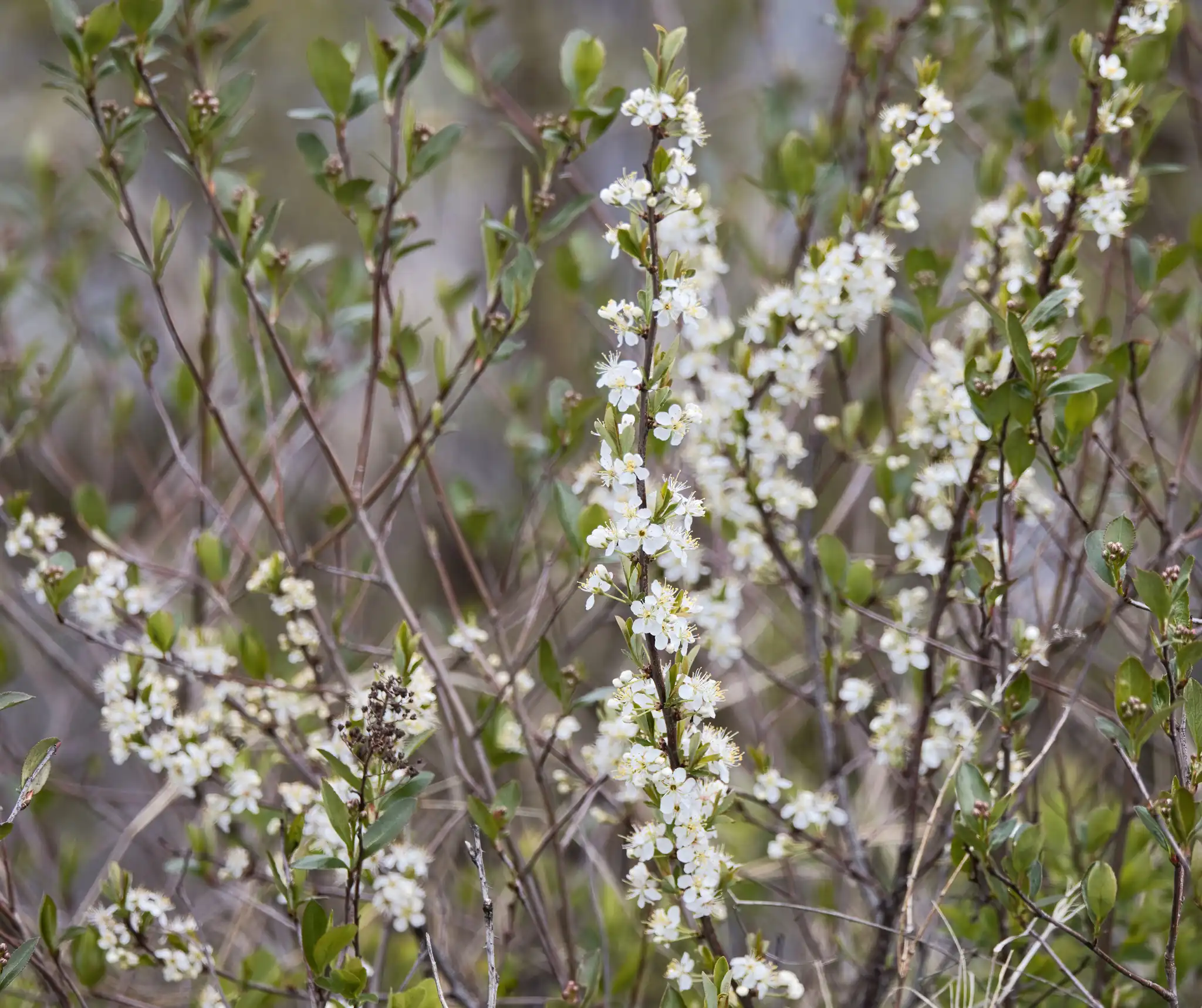
Prunus pumila is a suckering deciduous shrub reaching 4 to 6 feet tall and wide, spreading by rhizomes into a thicket of multiple stems that are red when young and gray with age. The narrow elliptic leaves are gray-green above and paler below, and white five-petaled flowers about half an inch across open in clusters of two to four in the leaf axils in spring.
True sand cherry carries green to gray-green foliage and sweet reddish to purplish-black drupes in July and August, and it holds loose sand on dunes and dry banks. It is not the purple-leaf shrub sold as sand cherry, which is the hybrid Prunus x cistena with dark purple foliage to about 8 feet.
Uses & Benefits:
Essentials
At a Glance
Plant Type
Shrub
Height
72"
Width
72"
Light
Full Sun, Partial Sun
Zones
4, 5, 6, 7
Water
Low
Humidity
Adaptable
Lifespan
Deciduous shrub
Native To
Eastern and Central North America
Toxicity
Seeds toxic if ingested
Bloom period
Spring – Early summer
In flower about 4 months of the year
Marketplace
Where to Buy
Shipping costs Year-round shipping Free shipping
Planting
How to Grow
- Set in full sun for best flowering, with part shade tolerated.
- Plant in sand or deep loam that drains freely and never stays waterlogged.
- Water to establish, then reduce; established plants use little water and tolerate drought.
- Allow suckers to spread into a colony where cover is wanted.
- Monitor foliage in summer for leaf spot, mildew, and chewing insects.
Pro Tip
Let root suckers extend into a colony for sand stabilization and remove only damaged wood; cutting the thicket back hard breaks its spreading habit.
Keep It Thriving
Care Guide
Do
- Plant in full sun on sand or well-drained loam.
- Allow suckering to form a spreading thicket.
- Pick ripe reddish to purplish-black fruit in July and August.
- Prune out damaged or diseased stems and remove fallen spotted leaves.
Don't
- Don't plant in low ground that holds water or stays humid.
- Don't eat seeds or young shoots; they contain cyanide-forming compounds.
- Don't buy purple-leaf stock as a substitute for the wild species.
Seasonal Care Calendar
| Task | Jan | Feb | Mar | Apr | May | Jun | Jul | Aug | Sep | Oct | Nov | Dec |
|---|---|---|---|---|---|---|---|---|---|---|---|---|
| Harvest | ||||||||||||
| Mulch | ||||||||||||
| Pest Check | ||||||||||||
| Plant |
Watch Out For
Pests & Diseases
Common Pests
Common Diseases
In the Garden
Landscape Uses & Companions
Landscape Uses
Multiply
Propagation Methods
Good to Know
Common Questions
Sand Cherry questions
What zones can Sand Cherry grow in?
Sand Cherry is hardy in USDA Zones 4–7: in that range it survives winter in the ground. Warmer than Zone 7, winter isn't the problem: it prefers colder winters, and summer heat can shorten its life.
When does Sand Cherry bloom?
Sand Cherry typically blooms from early spring to early summer. Exact timing shifts a week or two with your zone — Sow's bloom calendar maps it to your garden.
Does Sand Cherry need full sun?
Sand Cherry does best in full sun to part shade. In hot climates, afternoon shade keeps blooms fresher longer.
Is Sand Cherry drought tolerant?
Yes — once established (usually after the first full season), Sand Cherry handles dry spells with minimal watering. Water deeply its first year to build the root system that makes that possible.
More Prunus to compare
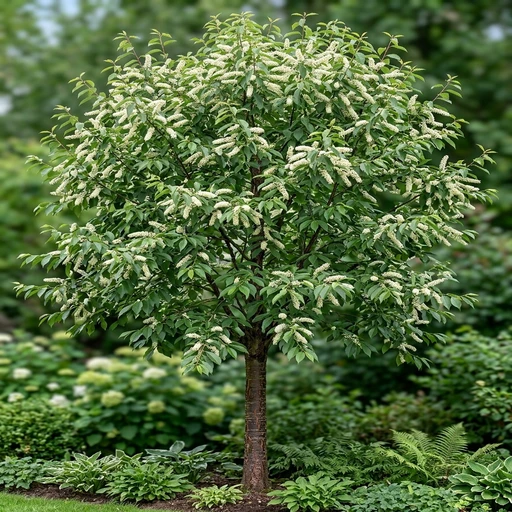
Black Cherry
Prunus serotina
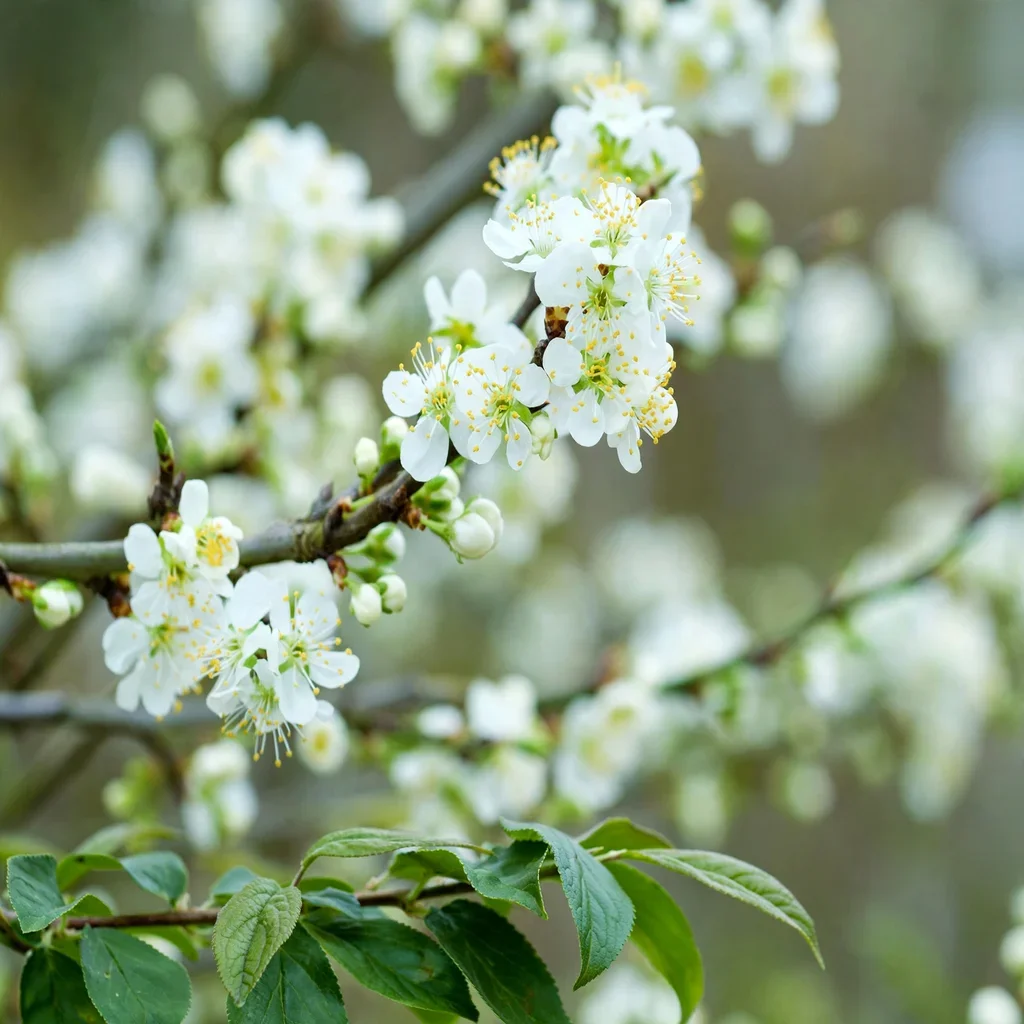
Sugar Plum
Prunus domestica 'Sugar Plum'
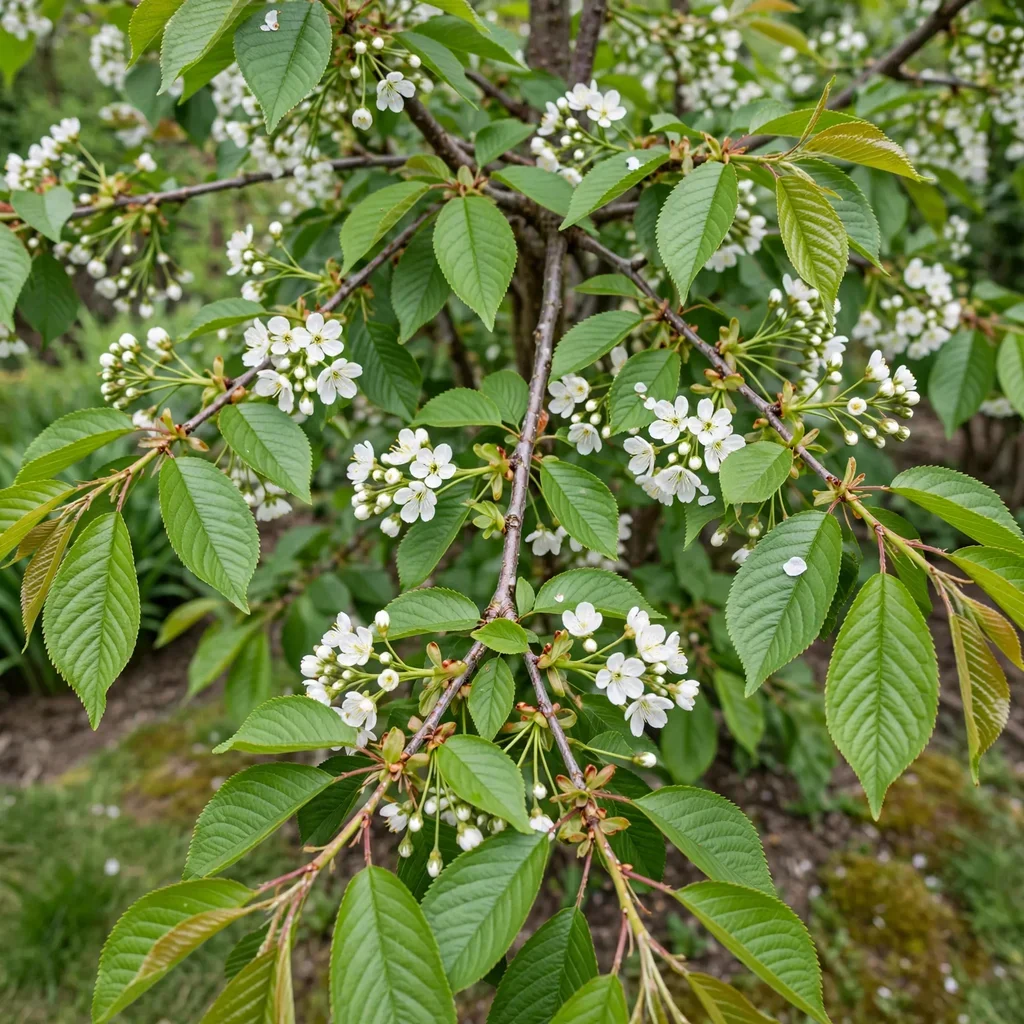
Sweet Cherry Mix
Prunus avium 'Mix'
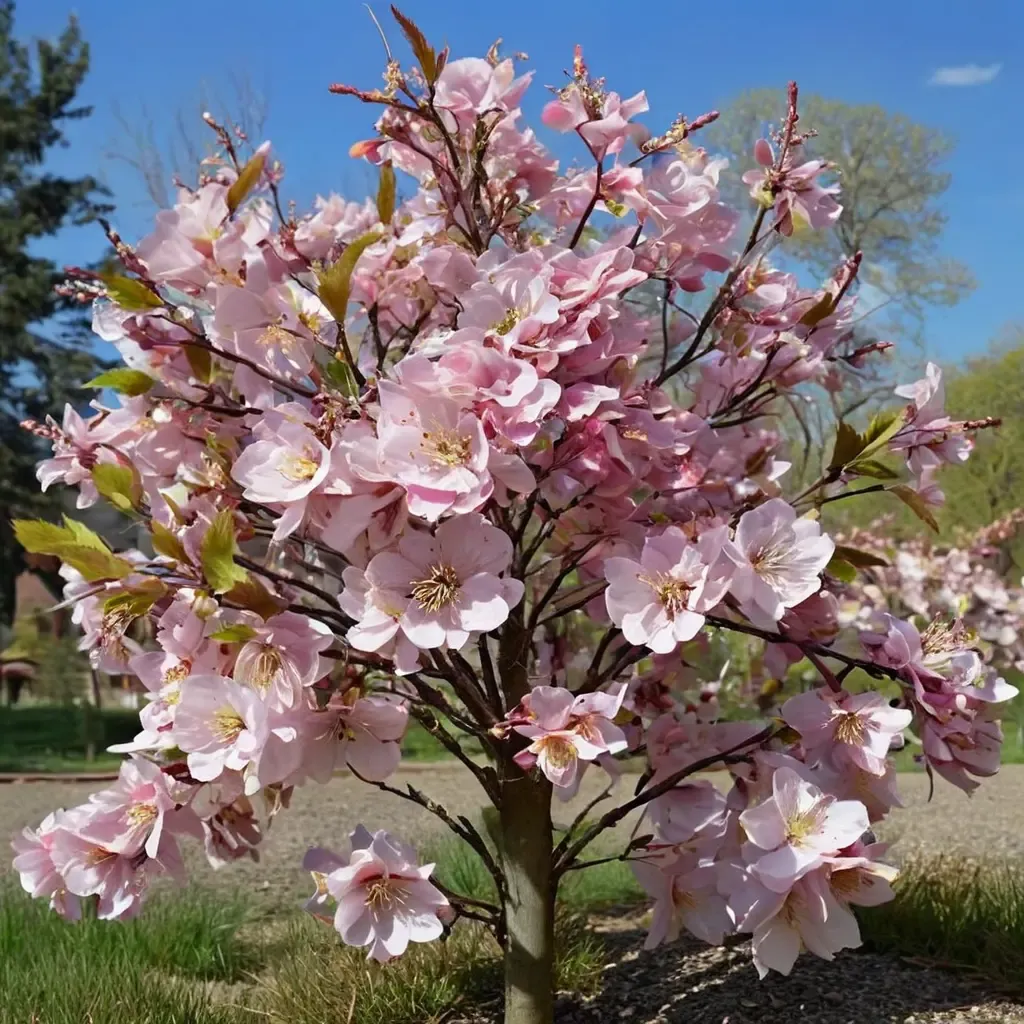
Japanese Flowering Cherry
Prunus serrulata
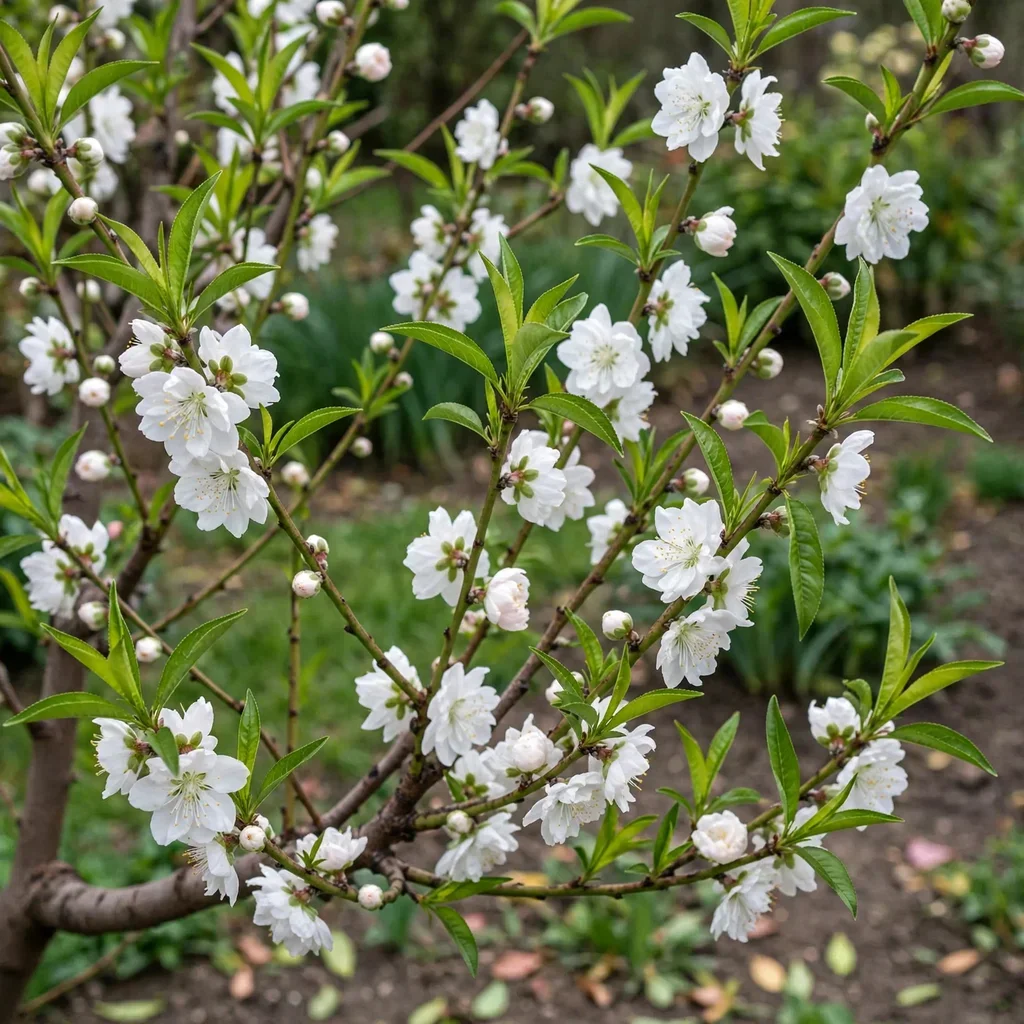
Feiching Tao White Peach
Prunus persica 'Feiching Tao White'
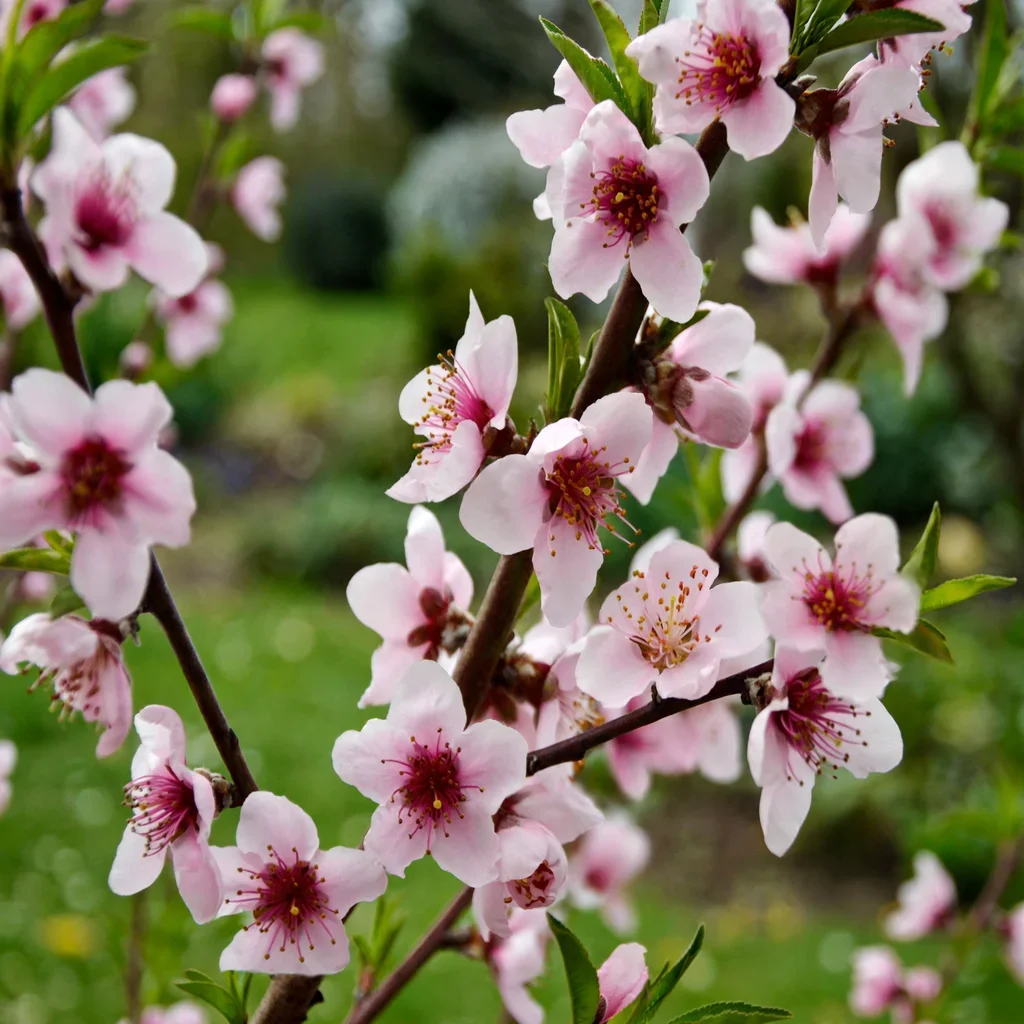
Hale Haven Peach
Prunus persica 'Hale Haven'
Keep exploring
Explore the genus
Hardy in your zone?
Grow Sand Cherry with confidence
See it in a design of your actual yard, get zone-matched care reminders, and track it season by season in your garden journal.