The Story
Plant Bio
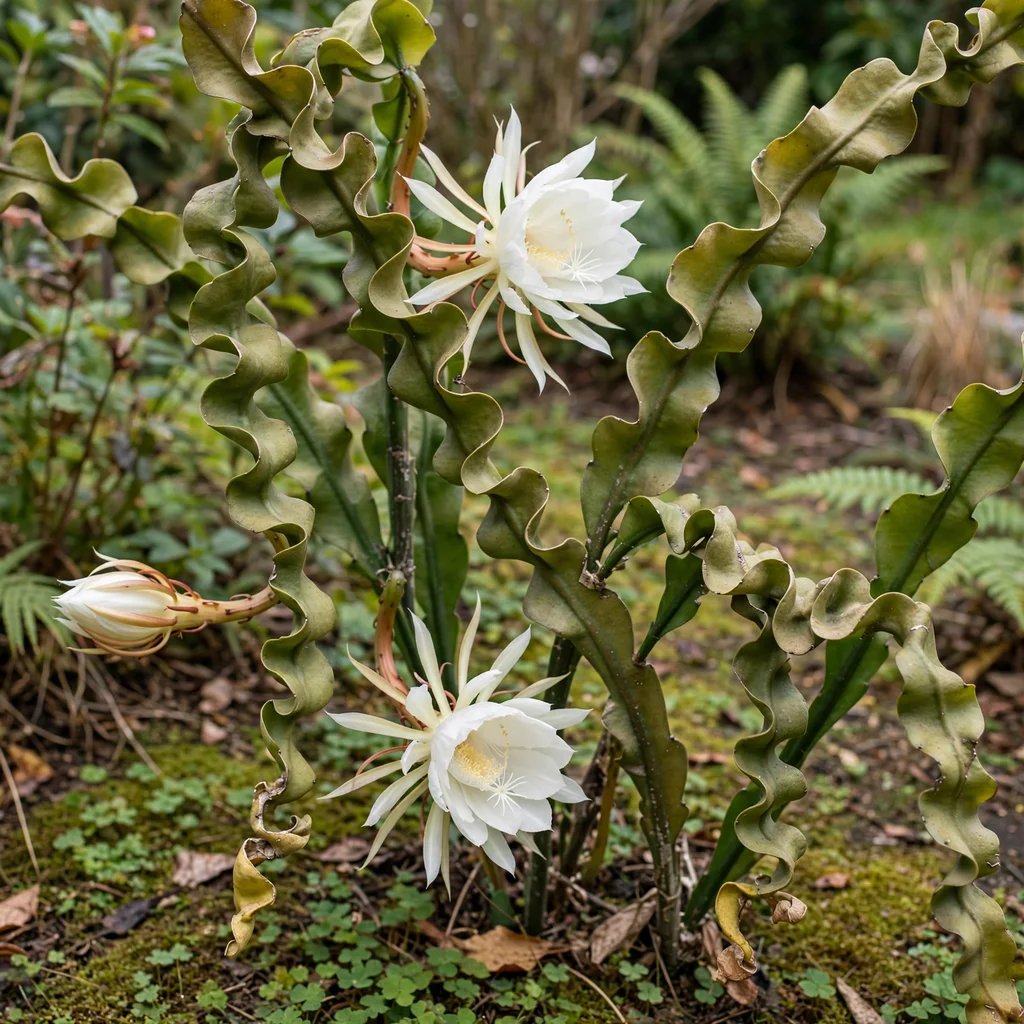
Epiphyllum hookeri subsp. guatemalense is a spineless epiphytic cactus from wet tropical forest in southern Mexico to Central America, forming a loose mass of long flat leaf-like stems that climb or trail. It opens large solitary white funnel flowers to 8 inches wide on a 6-inch tube at night, fragrant and pollinated after dark.
Nursery stock is almost all the monstrosa form sold as Curly Sue, whose flat deeply notched stems curl and spiral instead of hanging straight. Buds still form on the margins of mature stems and open as night-blooming funnels that self-pollinate even when half-open, then set pink to red fruit.
Uses & Benefits:
Essentials
At a Glance
Plant Type
Cactus Succulent
Height
36"
Width
36"
Light
Partial Sun, Shade
Zones
10
Water
Moderate
Humidity
High
Lifespan
Long-lived perennial
Native To
Southern Mexico to Central America
Toxicity
Low - may cause stomach upset if eaten
Bloom period
Spring – Summer
In flower about 6 months of the year
Planting
How to Grow
- Pot in a rich sandy bark-based cactus mix that drains fast, with the crown at mix level.
- Place in bright indirect light with light afternoon shade; give extra light in late winter to trigger buds.
- Water regularly in spring and summer, letting the top dry slightly between waterings but never drying hard.
- Keep humidity above 50 percent and temperatures above 50F; bring indoors before fall chill.
- Repot only when root-bound and remove spent or damaged stems after flowering.
Pro Tip
Grow it as a jungle cactus, not a desert cactus: coarse fast-draining bark mix kept evenly moist in spring and summer, bright indirect light with extra sun in late winter to set buds, and a cool dry rest above 50F in winter.
Keep It Thriving
Care Guide
Do
- Do give bright indirect light and high humidity in growth.
- Do water steadily in spring-summer and keep winter drier.
- Do use a coarse fast-draining mix and a hanging basket or slatted pot.
Don't
- Do not treat it as a desert cactus with full sun and prolonged drought.
- Do not overwater or leave the pot waterlogged.
- Do not hard-prune into old bare stems or handle the brittle stems roughly.
Seasonal Care Calendar
| Task | Jan | Feb | Mar | Apr | May | Jun | Jul | Aug | Sep | Oct | Nov | Dec |
|---|---|---|---|---|---|---|---|---|---|---|---|---|
| Pest Check | ||||||||||||
| Plant | ||||||||||||
| Propagate | ||||||||||||
| Prune | ||||||||||||
| Winter Prep |
Watch Out For
Pests & Diseases
Common Pests
Common Diseases
In the Garden
Landscape Uses & Companions
Landscape Uses
Multiply
Propagation Methods
Good to Know
Common Questions
Curly Locks questions
What zones can Curly Locks grow in?
Curly Locks is hardy in USDA Zone 10: in that range it survives winter in the ground. Colder than Zone 10, grow it in a container you can move to shelter for the winter, or as an annual.
When does Curly Locks bloom?
Curly Locks typically blooms from spring to summer. Exact timing shifts a week or two with your zone — Sow's bloom calendar maps it to your garden.
Does Curly Locks need full sun?
Curly Locks does best in part shade.
More Epiphyllum to compare
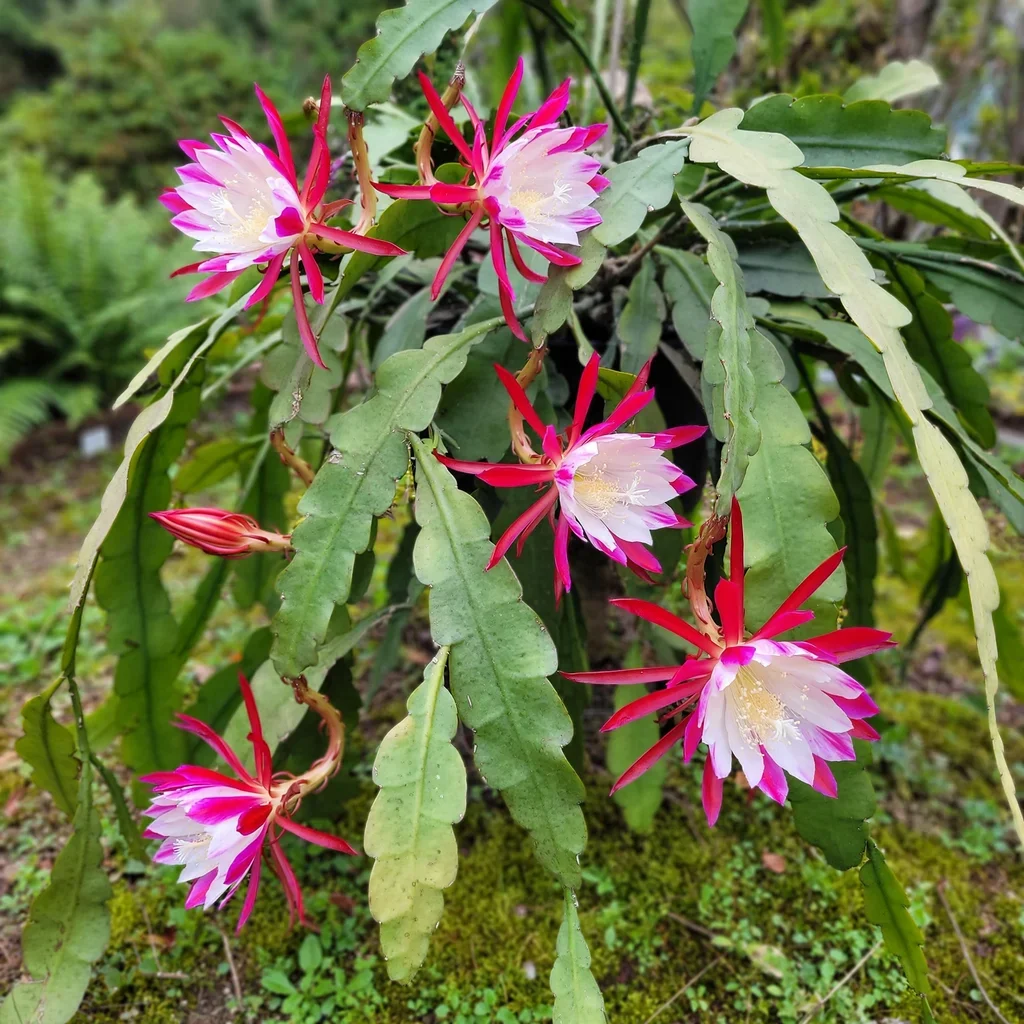
'Clown' Orchid Cactus
Epiphyllum x hybrida 'Clown'
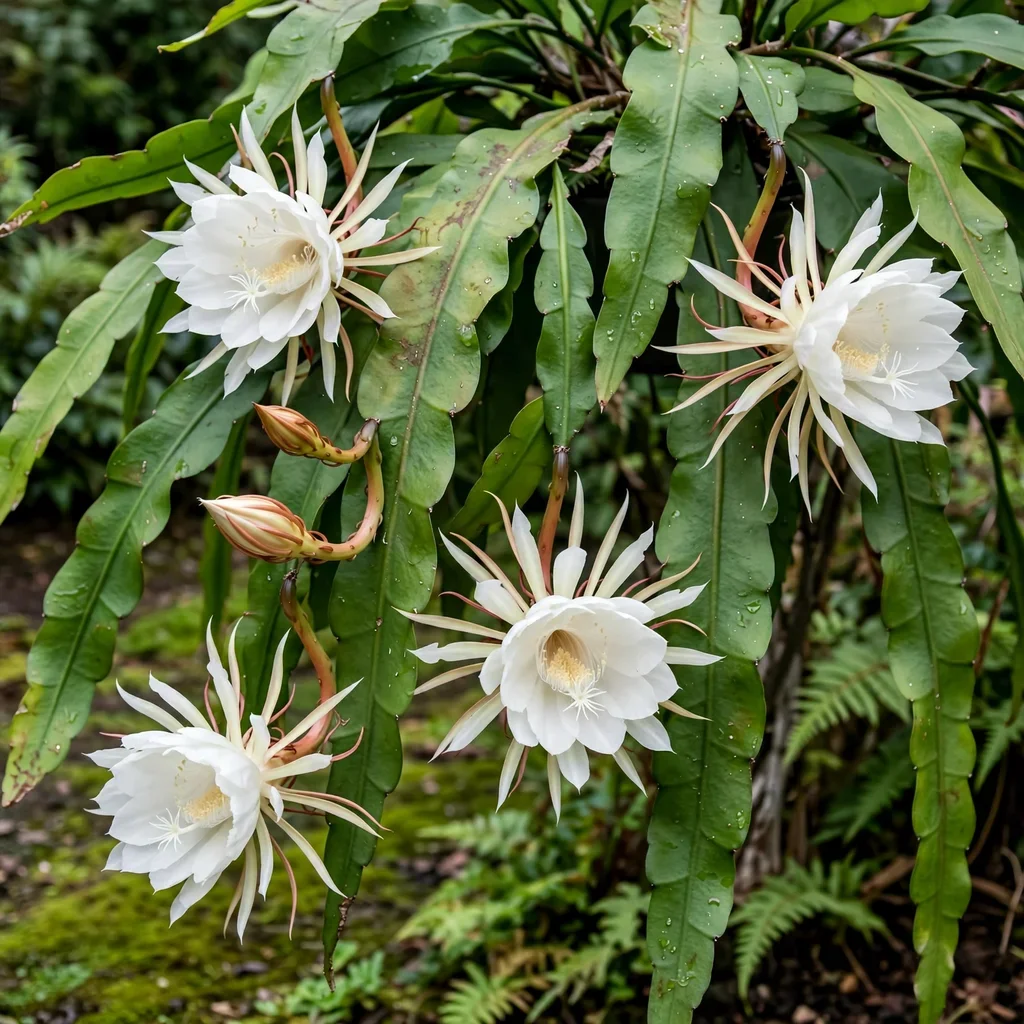
Queen of the Night
Epiphyllum oxypetalum
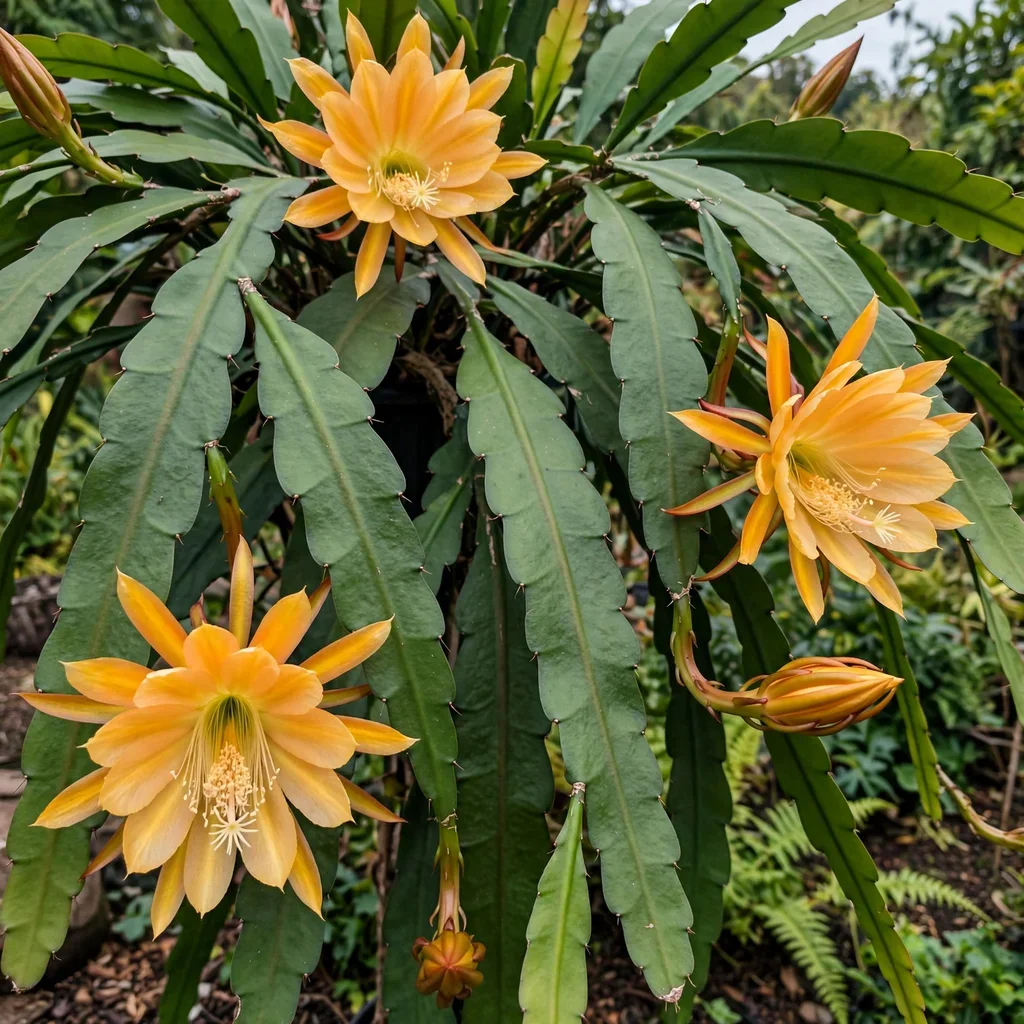
King Midas Orchid Cactus
Epiphyllum x hybrida 'King Midas'
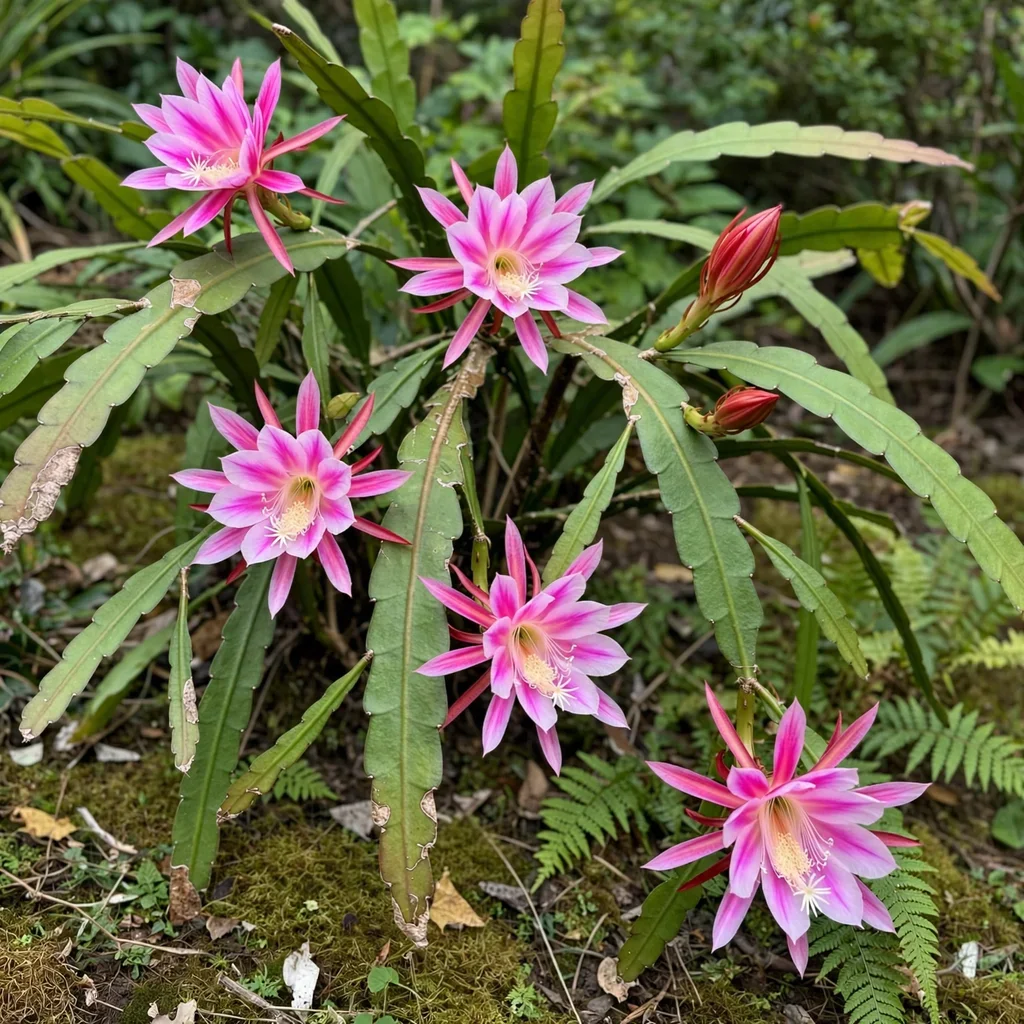
Raspberry Delight Orchid Cactus
Epiphyllum x hybrida 'Raspberry Delight'
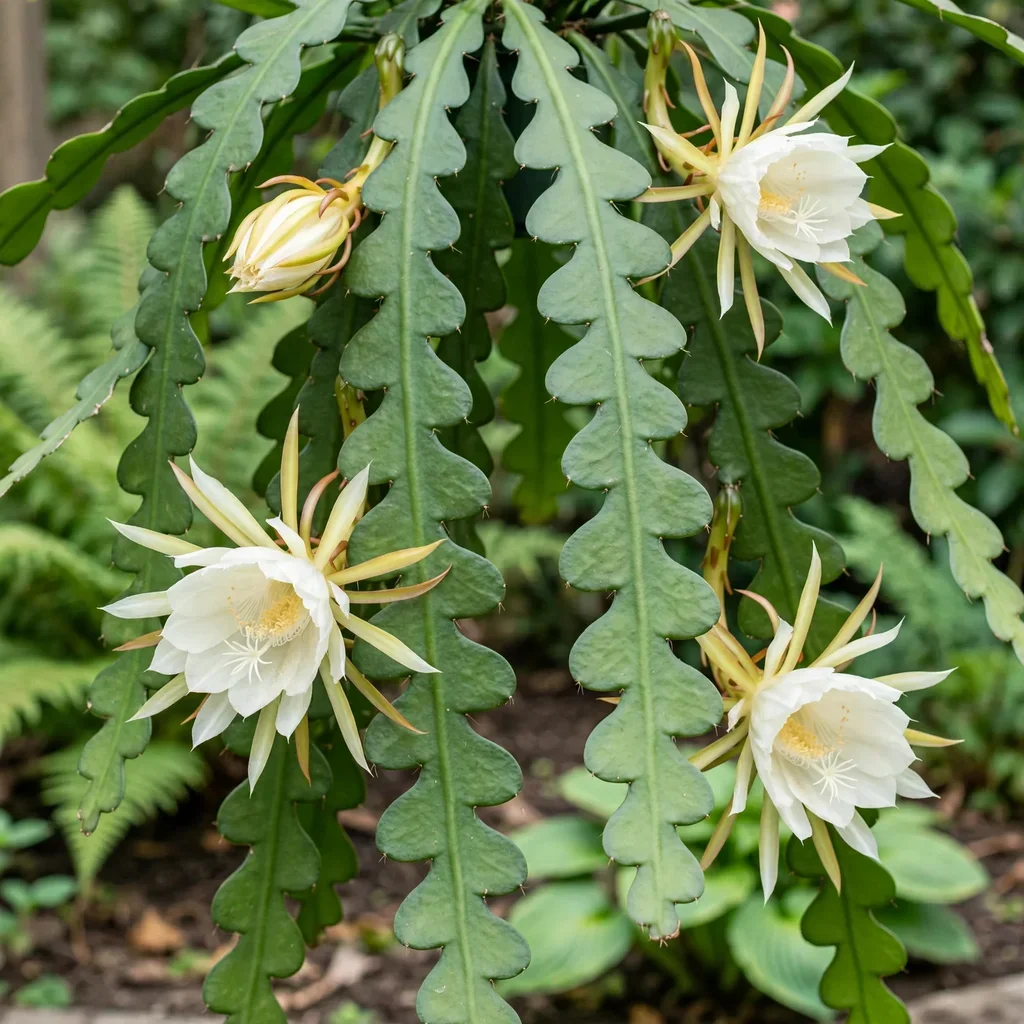
Ric Rac Cactus Fishbone Cactus
Epiphyllum anguliger
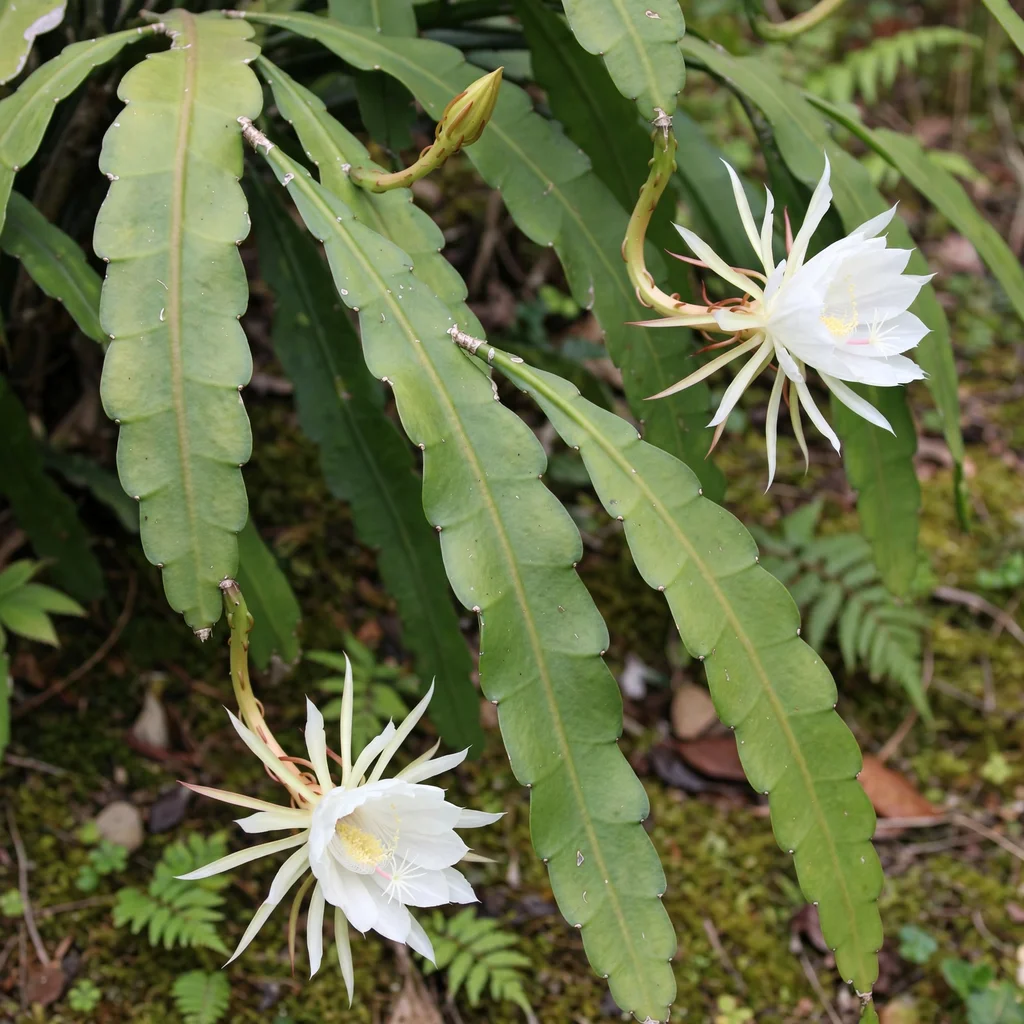
Hooker's Orchid Cactus
Epiphyllum hookeri
Keep exploring
Explore the genus
Hardy in your zone?
Grow Curly Locks with confidence
See it in a design of your actual yard, get zone-matched care reminders, and track it season by season in your garden journal.