The Story
Plant Bio
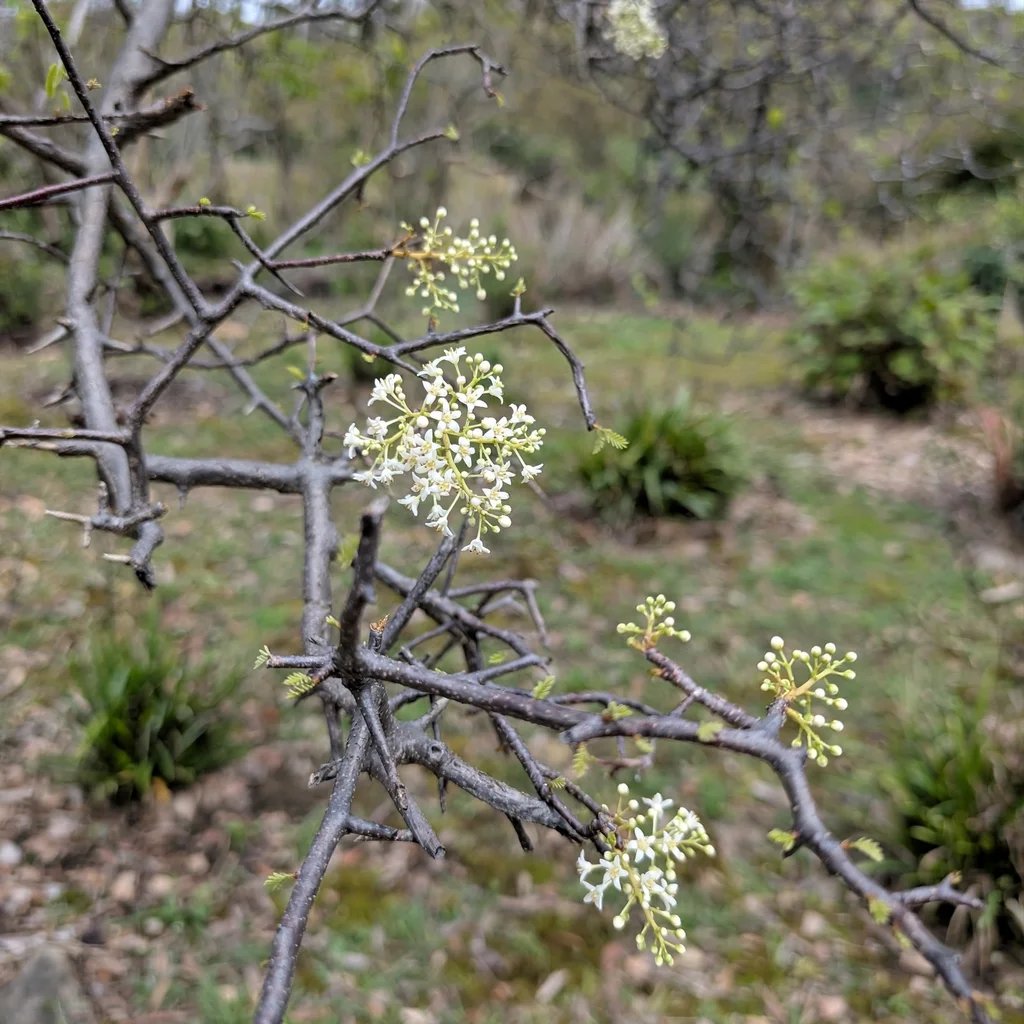
Spondias dulcis, sold as Spondias cytherea, is a fast-growing dry-deciduous tree in the cashew family that reaches about 30 feet in South Florida with open horizontal limbs and very brittle wood. Leaves are pinnate to 24 inches long with 9 to 25 leaflet pairs and fall in the dry season, with 20-inch terminal panicles of small white male, female and bisexual flowers emerging before the new leaves.
Fruit follows as an oval green plum that ripens golden yellow with sweet-tart pulp around a large fibrous pit, harvested mature-green for cooking or fully ripe for fresh eating. Trees need heat, full sun and rapid drainage on sand or limestone, tolerating brief flooding but developing root rot in standing water and suffering flower and fruit damage below 40F.
Uses & Benefits:
Essentials
At a Glance
Plant Type
Tree
Height
360"
Width
300"
Light
Full Sun
Zones
9, 10
Water
Moderate
Humidity
High
Lifespan
Long-lived deciduous tree
Native To
Indo-Malaysia to Polynesia
Toxicity
Toxic to horses
Bloom period
Spring – Early summer
In flower about 4 months of the year
Planting
How to Grow
- Plant after danger of frost in the warmest full-sun frost-free spot, spaced 20 to 30 feet from buildings to allow for brittle limbs.
- Dig a hole twice the width of the container at the same depth, backfilling with native soil and mounding 24 to 36 inches high if the water table is high.
- Water deeply at planting and through flowering, fruiting and drought, then allow the surface to drain with no standing water.
- Fertilize young trees every 2 to 3 months in year one, then 2 to 4 times per year with a complete fertilizer plus micronutrient sprays and chelated iron as needed.
- Keep trees at 12 to 15 feet by light containment pruning and thin excess fruit on dwarf trees to prevent stunting.
Pro Tip
Thin heavy fruit sets on dwarf trees and plant only in the warmest frost-free full-sun spot with no standing water; chronic overwatering and overbearing stunt and kill young trees.
Keep It Thriving
Care Guide
Do
- Grow in full sun in fertile, fast-draining sand or limestone.
- Water during bloom, fruit development and dry spells.
- Fertilize on schedule with micronutrients and iron on alkaline soils.
- Thin dwarf trees when fruit load threatens to stall shoot growth.
Don't
- Do not plant where water stands or drainage is slow.
- Do not over-prune brittle wood or cut back hard into large limbs.
- Do not let dwarf trees carry a full crop in their first bearing years.
- Do not expose young trees or flowers to frost below the mid-20s and 40F respectively.
Seasonal Care Calendar
| Task | Jan | Feb | Mar | Apr | May | Jun | Jul | Aug | Sep | Oct | Nov | Dec |
|---|---|---|---|---|---|---|---|---|---|---|---|---|
| Fertilize | ||||||||||||
| Harvest | ||||||||||||
| Pest Check | ||||||||||||
| Plant | ||||||||||||
| Prune |
Watch Out For
Pests & Diseases
Common Pests
Common Diseases
In the Garden
Landscape Uses & Companions
Landscape Uses
Companion Plants
Multiply
Propagation Methods
Good to Know
Common Questions
June Plum questions
What zones can June Plum grow in?
June Plum is hardy in USDA Zones 9–10: in that range it survives winter in the ground. Colder than Zone 9, winters are too cold for it to survive outdoors.
When does June Plum bloom?
June Plum typically blooms from early spring to early summer. Exact timing shifts a week or two with your zone — Sow's bloom calendar maps it to your garden.
Does June Plum need full sun?
June Plum does best in full sun (6+ hours).
Is June Plum drought tolerant?
Yes — once established (usually after the first full season), June Plum handles dry spells with minimal watering. Water deeply its first year to build the root system that makes that possible.
More Spondias to compare
Keep exploring
Explore the genus
Hardy in your zone?
Grow June Plum with confidence
See it in a design of your actual yard, get zone-matched care reminders, and track it season by season in your garden journal.