The Story
Plant Bio
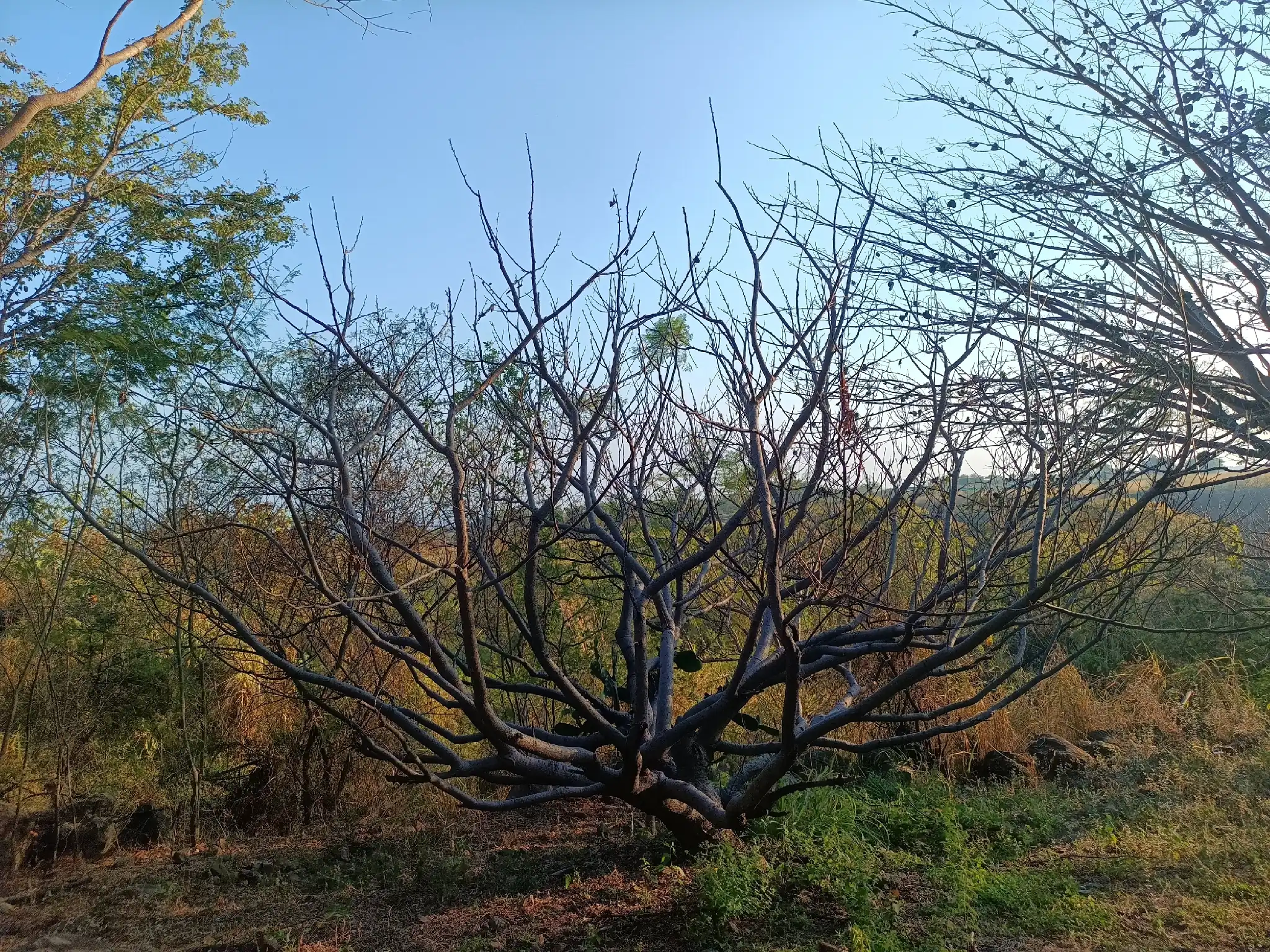
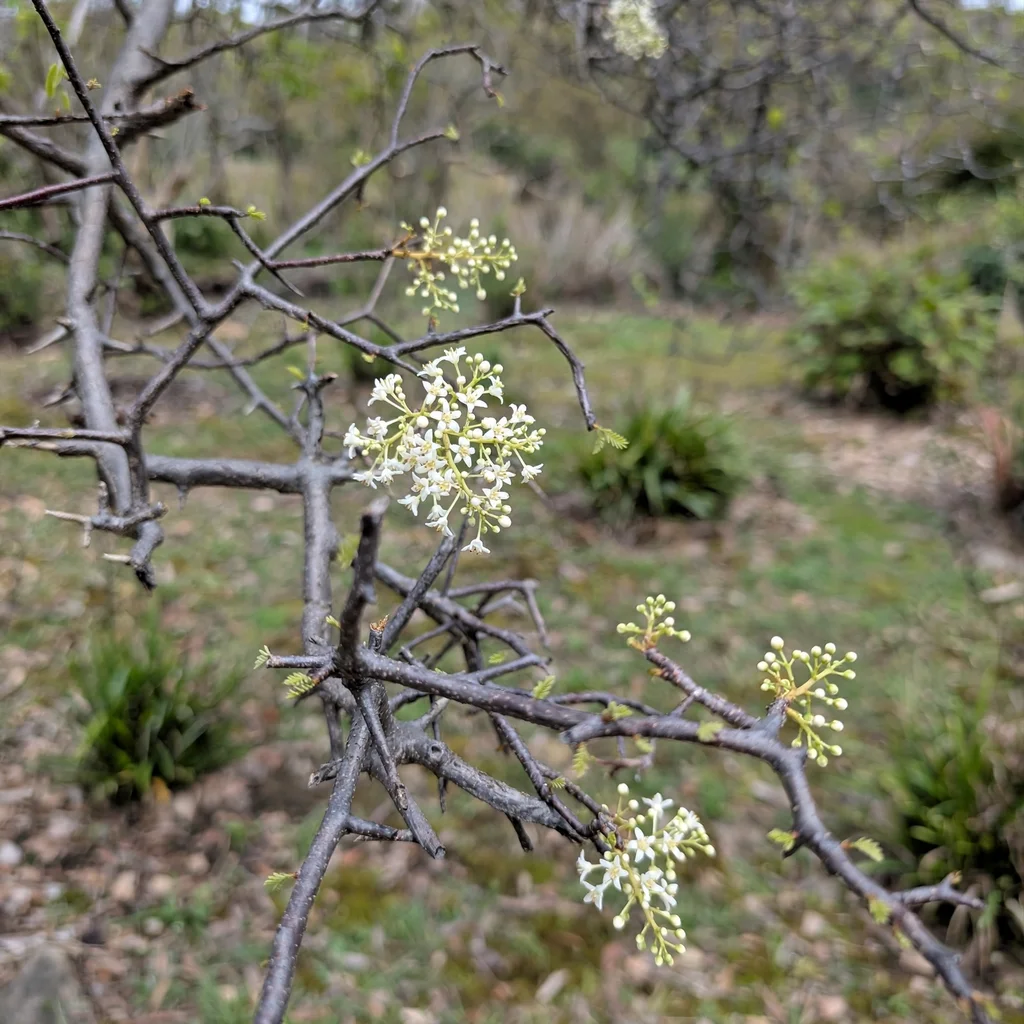
Spondias purpurea, the jocote or purple mombin, is a deciduous small to medium tree from seasonally dry tropical forest, reaching 25 to 50 feet wild but held to 8 to 12 feet as a garden fruit tree. It drops its pinnate leaves in the dry season and flowers on bare one-year-old wood before the new leaves emerge.
Flowers are borne in short pubescent panicles with small red to reddish-purple petals, followed by plum-like yellow to red fruit that forms only on female or bisexual plants. Sap and unripe peel carry urushiol, so handling cut stems and green fruit can raise a poison-ivy-like rash in sensitized people.
Uses & Benefits:
Essentials
At a Glance
Plant Type
Tree
Height
394"
Width
394"
Light
Full Sun
Zones
9, 10
Water
Low
Humidity
Moderate to high
Lifespan
Perennial tree
Native To
Mexico to Colombia and Caribbean
Toxicity
Skin irritant, ripe fruit edible
Bloom period
Spring
In flower about 3 months of the year
Planting
How to Grow
- Plant in full sun in well-draining soil after nights stay above 50F, with room for a spreading crown.
- Water to establish, then water sparingly; do not keep the root zone soggy or flooded.
- Hold the tree at 8 to 12 feet by tip-pruning after flowering and fruiting.
- Harvest fruit promptly as it colors and pick up fallen fruit daily.
- Protect from frost; move containers under cover before nights near 30F.
Pro Tip
Plant a fruiting female with a compatible male nearby; large fresh cuttings root in well-draining soil with no misting, so fence-post cuttings establish fast.
Keep It Thriving
Care Guide
Do
- Grow in full sun and well-draining soil.
- Harvest ripe fruit promptly and clear fallen fruit.
- Keep the tree compact for picking.
Don't
- Do not overwater or plant where water stands.
- Do not expect reliable fruit from a lone tree without a compatible type.
- Do not handle sap and green peel bare-handed if sensitive to poison ivy.
Seasonal Care Calendar
| Task | Jan | Feb | Mar | Apr | May | Jun | Jul | Aug | Sep | Oct | Nov | Dec |
|---|---|---|---|---|---|---|---|---|---|---|---|---|
| Harvest | ||||||||||||
| Pest Check | ||||||||||||
| Propagate | ||||||||||||
| Prune | ||||||||||||
| Winter Prep |
Watch Out For
Pests & Diseases
Common Pests
Common Diseases
In the Garden
Landscape Uses & Companions
Landscape Uses
Companion Plants
Multiply
Propagation Methods
Good to Know
Common Questions
Jocote questions
What zones can Jocote grow in?
Jocote is hardy in USDA Zones 9–10: in that range it survives winter in the ground. Colder than Zone 9, winters are too cold for it to survive outdoors.
When does Jocote bloom?
Jocote typically blooms in spring. Exact timing shifts a week or two with your zone — Sow's bloom calendar maps it to your garden.
Does Jocote need full sun?
Jocote does best in full sun (6+ hours).
Is Jocote drought tolerant?
Yes — once established (usually after the first full season), Jocote handles dry spells with minimal watering. Water deeply its first year to build the root system that makes that possible.
More Spondias to compare
Keep exploring
Explore the genus
Hardy in your zone?
Grow Jocote with confidence
See it in a design of your actual yard, get zone-matched care reminders, and track it season by season in your garden journal.