The Story
Plant Bio
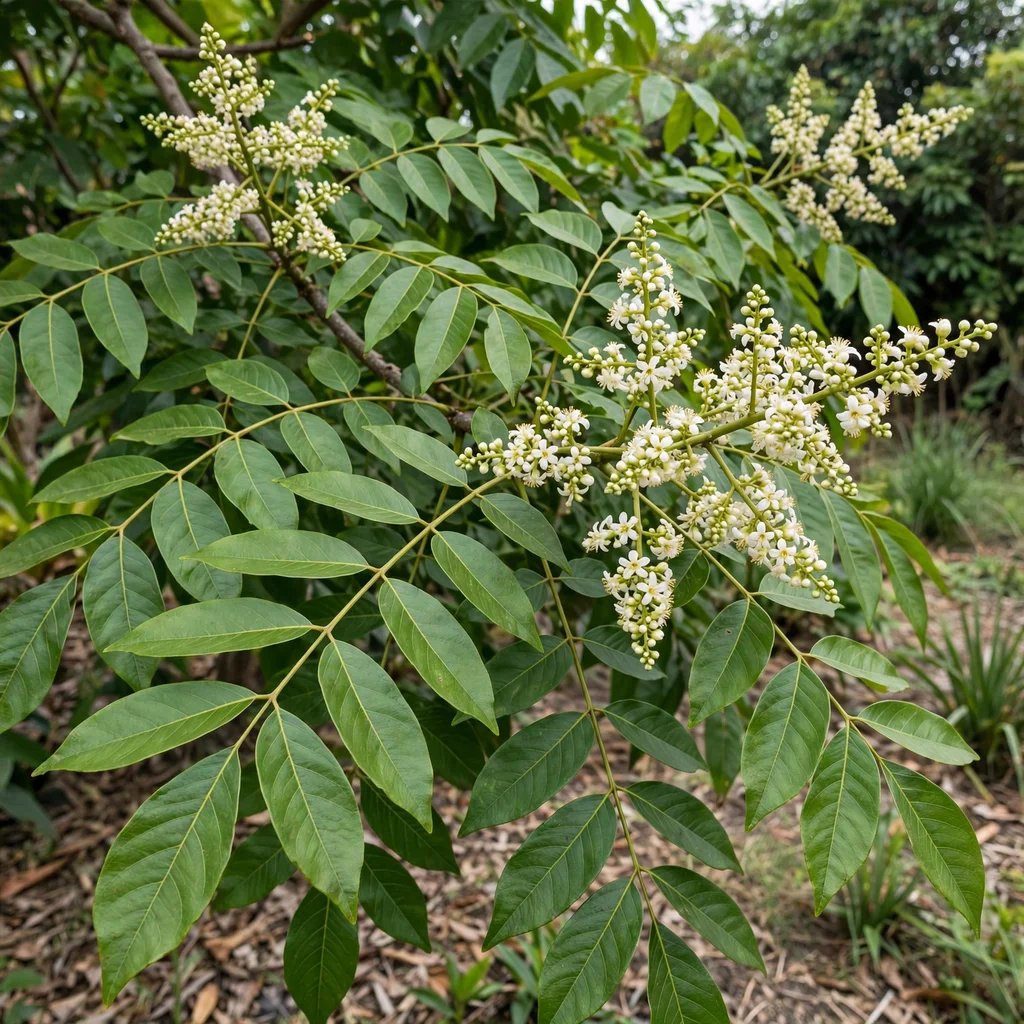
Spondias mombin, the yellow mombin, is a deciduous Neotropical tree to 50 feet tall with an open spreading crown of horizontal branches and brittle wood prone to breakage and rot. The leaves are imparipinnate, 6 to 11 inches long with 5 to 27 leaflets, and drop in the dry season before the new flowers emerge.
It blooms on bare wood in terminal panicles 8 to 24 inches long carrying up to 2,000 small white male, female and bisexual flowers less than 1 inch across. There are no named cultivars; a superior fruiting tree must be cloned from mature wood because seedlings do not come true and fruit must be thinned to avoid stunting.
Uses & Benefits:
Essentials
At a Glance
Plant Type
Tree
Height
600"
Width
360"
Light
Full Sun
Zones
10
Water
Medium
Humidity
High
Lifespan
Long-lived tree
Native To
Southern Mexico to Peru, Brazil and Caribbean
Toxicity
Skin irritant; excess fruit upsets stomach
Bloom period
Spring – Summer
In flower about 6 months of the year
Planting
How to Grow
- Plant in full sun with 20 to 30 feet of clear space in deep, well-drained sand or limestone soil.
- Set the root ball level with the grade, backfill with native soil only, and water in thoroughly.
- Mound the planting 2 to 3 feet high if the site floods, and mulch 3 inches deep clear of the trunk.
- Water young trees in severe drought and at flowering and fruit development.
- Feed with a balanced fruit-tree fertilizer on a regular schedule and protect from any freeze.
Pro Tip
Plant only in full sun on high, well-drained ground in the warmest frost-free pocket, and start a good tree from mature-wood cuttings rather than seed.
Keep It Thriving
Care Guide
Do
- Give full sun and high, well-drained soil; fertile soil gives the best growth and fruit.
- Water young trees in severe drought and through flowering and fruiting.
- Feed young trees every 2 to 3 months the first year, then 2 to 4 times per year to 10 to 12 pounds per year for a mature tree.
- Remove fallen fruit promptly to reduce fruit-fly breeding.
Don't
- Do not plant in low, poorly drained soil or shade; roots rot and growth stalls.
- Do not damage the limbs; the wood is very brittle and broken stubs rot.
- Do not eat large quantities on an empty stomach and avoid sap contact if your skin reacts to the cashew family.
Seasonal Care Calendar
| Task | Jan | Feb | Mar | Apr | May | Jun | Jul | Aug | Sep | Oct | Nov | Dec |
|---|---|---|---|---|---|---|---|---|---|---|---|---|
| Fertilize | ||||||||||||
| Harvest | ||||||||||||
| Pest Check | ||||||||||||
| Plant | ||||||||||||
| Prune |
Watch Out For
Pests & Diseases
Common Pests
Common Diseases
In the Garden
Landscape Uses & Companions
Landscape Uses
Companion Plants
Multiply
Propagation Methods
Good to Know
Common Questions
Yellow Mombin questions
What zones can Yellow Mombin grow in?
Yellow Mombin is hardy in USDA Zone 10: in that range it survives winter in the ground. Colder than Zone 10, winters are too cold for it to survive outdoors.
When does Yellow Mombin bloom?
Yellow Mombin typically blooms from spring to summer. Exact timing shifts a week or two with your zone — Sow's bloom calendar maps it to your garden.
Does Yellow Mombin need full sun?
Yellow Mombin does best in full sun (6+ hours).
More Spondias to compare
Keep exploring
Explore the genus
Hardy in your zone?
Grow Yellow Mombin with confidence
See it in a design of your actual yard, get zone-matched care reminders, and track it season by season in your garden journal.