The Story
Plant Bio
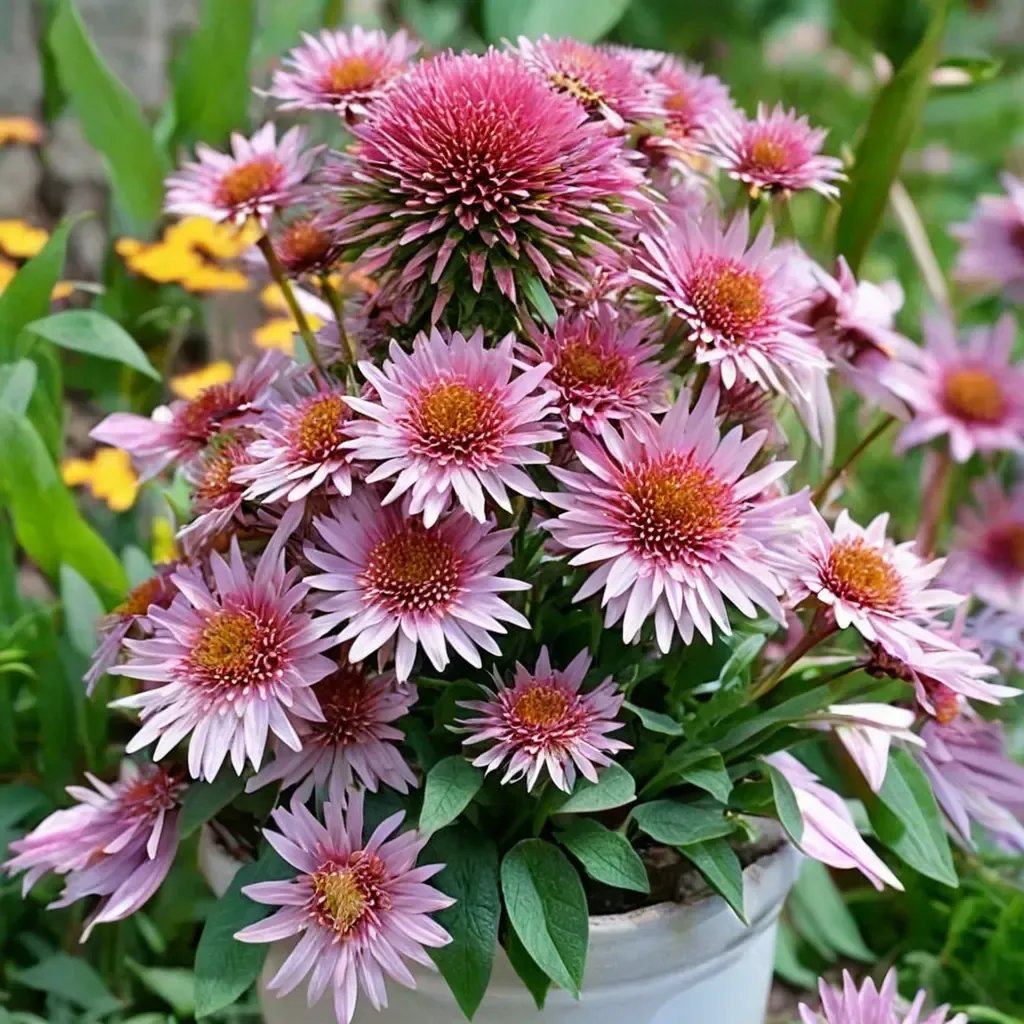
A hardy perennial known for its daisy-like flowers that attract pollinators and are drought tolerant.
The prominent, spiny, cone-shaped center of the flower is a food source for goldfinches and other birds in the fall and winter.
Uses & Benefits:
Echinacea purpurea Butterfly adds vibrant color and attracts pollinators, enhancing garden beauty and ecological health.
Its medicinal properties can boost immune health and reduce inflammation.
Supports bees and butterflies, promoting biodiversity.
Essentials
At a Glance
Plant Type
Perennial
Height
36"
Width
24"
Light
Full Sun, Partial Sun
Zones
4, 5, 6, 7, 8
Water
Moderate
Humidity
Average
Lifespan
Perennial
Native To
North America
Toxicity
Non-toxic
Bloom period
Mid-summer – Late summer
J
F
M
A
M
J
J
A
S
O
N
D
In flower about 2 months of the year
Planting
How to Grow
- Tuck seeds lightly into well-draining soil in early spring.
- Mist cuttings regularly to maintain humidity and encourage rooting.
- Water deeply once a week during dry spells for healthy growth.
- Apply a balanced fertilizer in spring to promote vibrant blooms.
- Divide clumps in early spring or fall to rejuvenate plants.
- Mulch around plants to retain moisture and suppress weeds.
Pro Tip
Use organic compost to enrich soil and enhance flower color and health.
Keep It Thriving
Care Guide
Do
- Water in the morning to prevent fungal issues 🌱
- Deadhead spent flowers to promote continuous blooming
- Mulch to conserve moisture and regulate soil temperature
- Provide full sun for optimal growth
- Divide every 3-4 years to prevent overcrowding
Don't
- Overwater, which can cause root rot ❌
- Allow soil to become compacted or waterlogged
- Neglect deadheading, which reduces flowering
- Plant in shady areas, as it prefers full sun
Seasonal Care Calendar
| Task | Jan | Feb | Mar | Apr | May | Jun | Jul | Aug | Sep | Oct | Nov | Dec |
|---|---|---|---|---|---|---|---|---|---|---|---|---|
| Deadhead | ||||||||||||
| Divide | ||||||||||||
| Mulch | ||||||||||||
| Plant | ||||||||||||
| Spring Cleanup |
Watch Out For
Pests & Diseases
Common Pests
Common Diseases
In the Garden
Landscape Uses & Companions
Landscape Uses
Vivid perennial border with purple flowersWildflower meadow for ecological benefitsPollinator-friendly butterfly garden
Multiply
Propagation Methods
Good to Know