The Story
Plant Bio
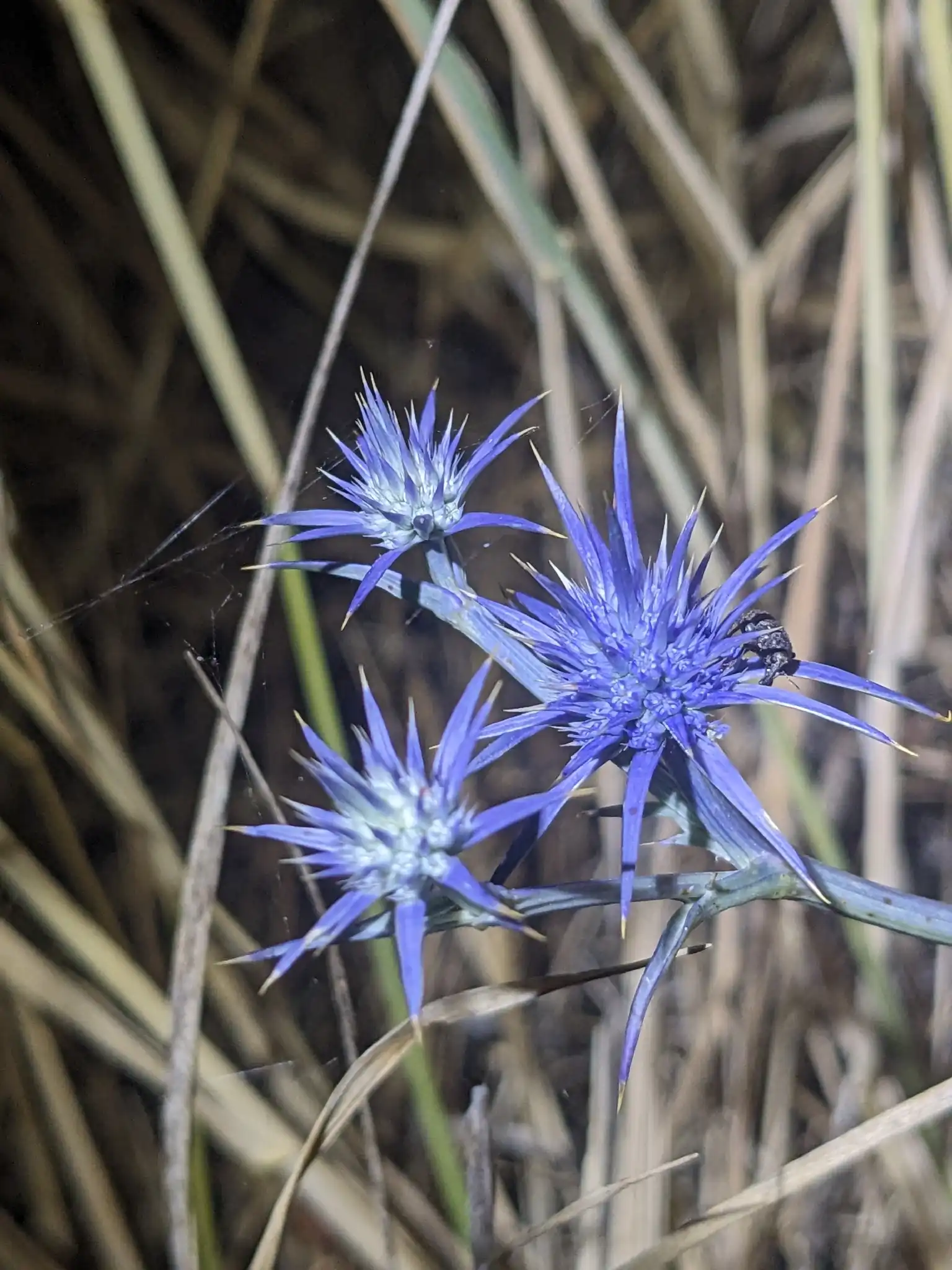
Eryngium ovinum is a short-lived perennial herb native to southern and eastern Australia, forming a low rosette of deeply divided, spiny, waxy grey-green leaves. In summer, stiffly erect stems produce ovoid thistle-like flower heads surrounded by rigid, needle-sharp bracts that develop a metallic cobalt-blue coloration.
The upper stems and floral bracts take on an intense steel-blue hue in high sunlight, sustaining summer pollinators on nectar. It survives heat and dry spells by storing reserves in underground fleshy tubers before dying back to the ground in autumn.
Uses & Benefits:
Essentials
At a Glance
Plant Type
Perennial
Height
24"
Width
31"
Light
Full Sun
Zones
8, 9, 10
Water
Low
Humidity
Moderate
Lifespan
Short-lived perennial
Native To
Australia
Toxicity
Non-toxic (spiny leaves cause skin irritation)
Bloom period
Summer
In flower about 3 months of the year
Planting
How to Grow
- Select a position in full sun with sharp soil drainage, such as a rockery or raised gravel bed.
- Sow seeds on the soil surface, lightly pressing them into well-drained potting mix without fully burying them.
- Water moderately during active spring growth, then reduce irrigation once flower stems mature.
- Allow foliage to turn brown and dry completely in autumn before cutting spent stems to soil level.
Pro Tip
Avoid watering while the plant is dormant in autumn and winter; persistent wet conditions in winter cause the fleshy rootstock to rot.
Keep It Thriving
Care Guide
Do
- Wear heavy protective gloves when handling foliage or spent flowering stems to avoid painful punctures.
- Ensure excellent soil drainage to prevent taproot rot during wet periods.
- Leave spent floral stems until fully brown to allow seeds to mature.
Don't
- Do not overwater during winter when the rootstock is dormant underground.
- Do not apply heavy, nitrogen-rich fertilizers, which produce soft, weak growth.
- Do not discard the root system when stems die down in autumn, as it will re-emerge in spring.
Seasonal Care Calendar
| Task | Jan | Feb | Mar | Apr | May | Jun | Jul | Aug | Sep | Oct | Nov | Dec |
|---|---|---|---|---|---|---|---|---|---|---|---|---|
| Pest Check | ||||||||||||
| Propagate | ||||||||||||
| Prune | ||||||||||||
| Spring Cleanup |
Watch Out For
Pests & Diseases
Common Pests
Common Diseases
In the Garden
Landscape Uses & Companions
Landscape Uses
Companion Plants
Multiply
Propagation Methods
Good to Know
Common Questions
Blue Devil questions
What zones can Blue Devil grow in?
Blue Devil is hardy in USDA Zones 8–10: in that range it survives winter in the ground. Colder than Zone 8, grow it in a container you can move to shelter for the winter, or as an annual.
When does Blue Devil bloom?
Blue Devil typically blooms in summer. Exact timing shifts a week or two with your zone — Sow's bloom calendar maps it to your garden.
Does Blue Devil need full sun?
Blue Devil does best in full sun (6+ hours).
Is Blue Devil drought tolerant?
Yes — once established (usually after the first full season), Blue Devil handles dry spells with minimal watering. Water deeply its first year to build the root system that makes that possible.
More Eryngium to compare
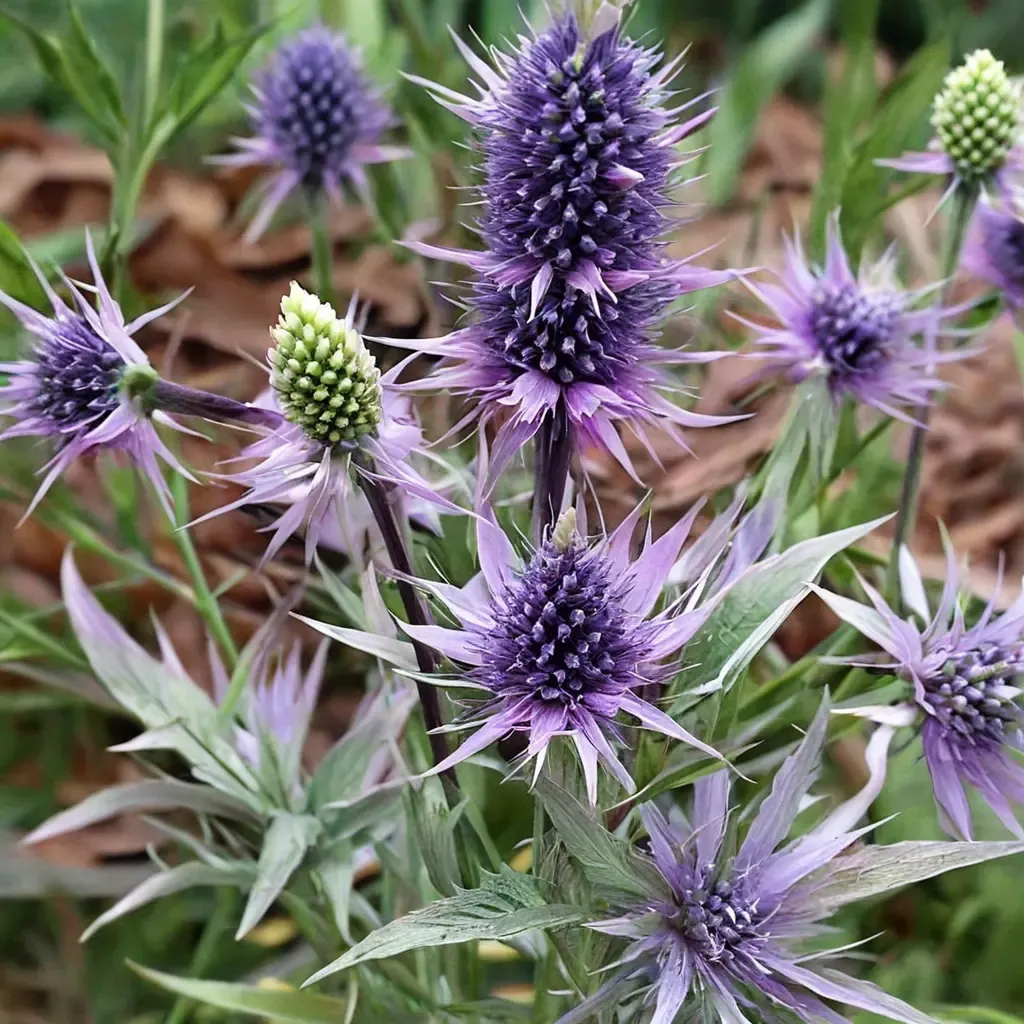
Sea Holly
Eryngium heterophyllum
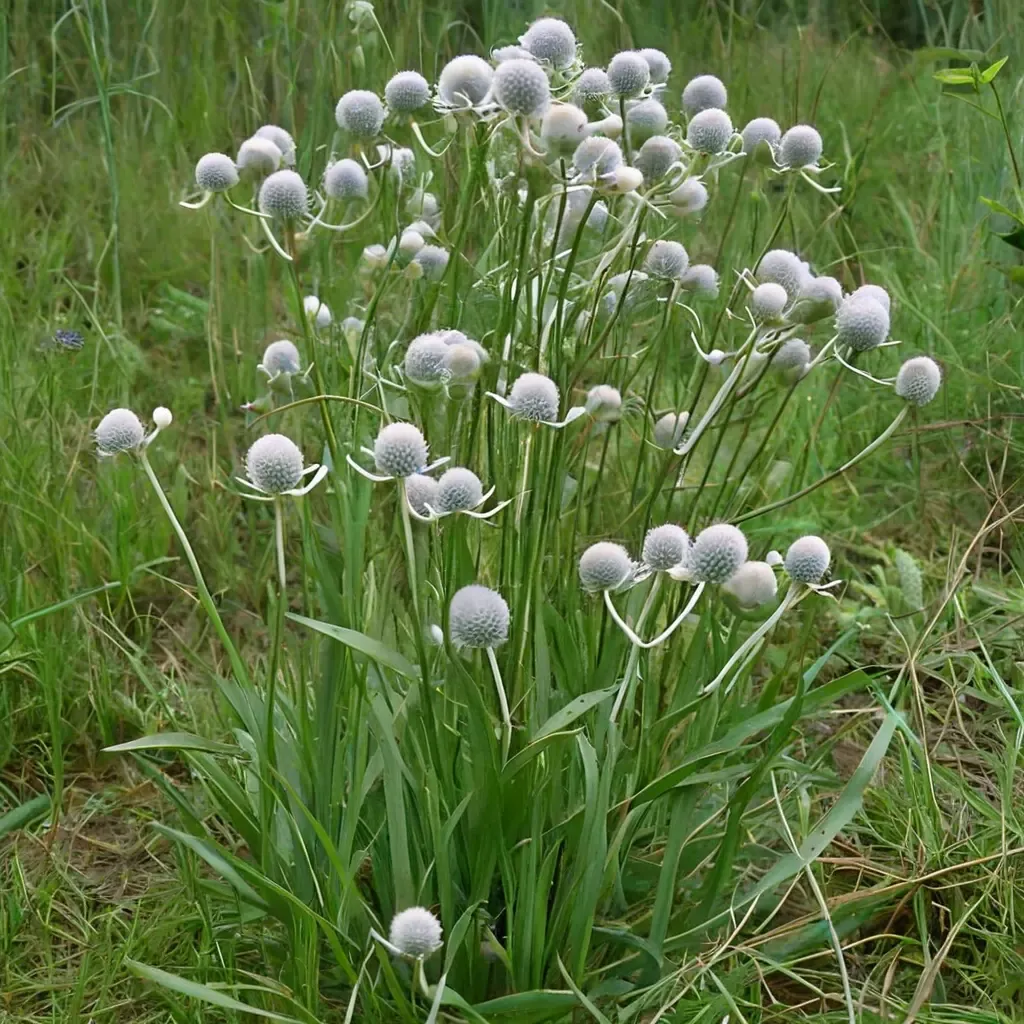
Rattlesnake master
Eryngium yuccifolium
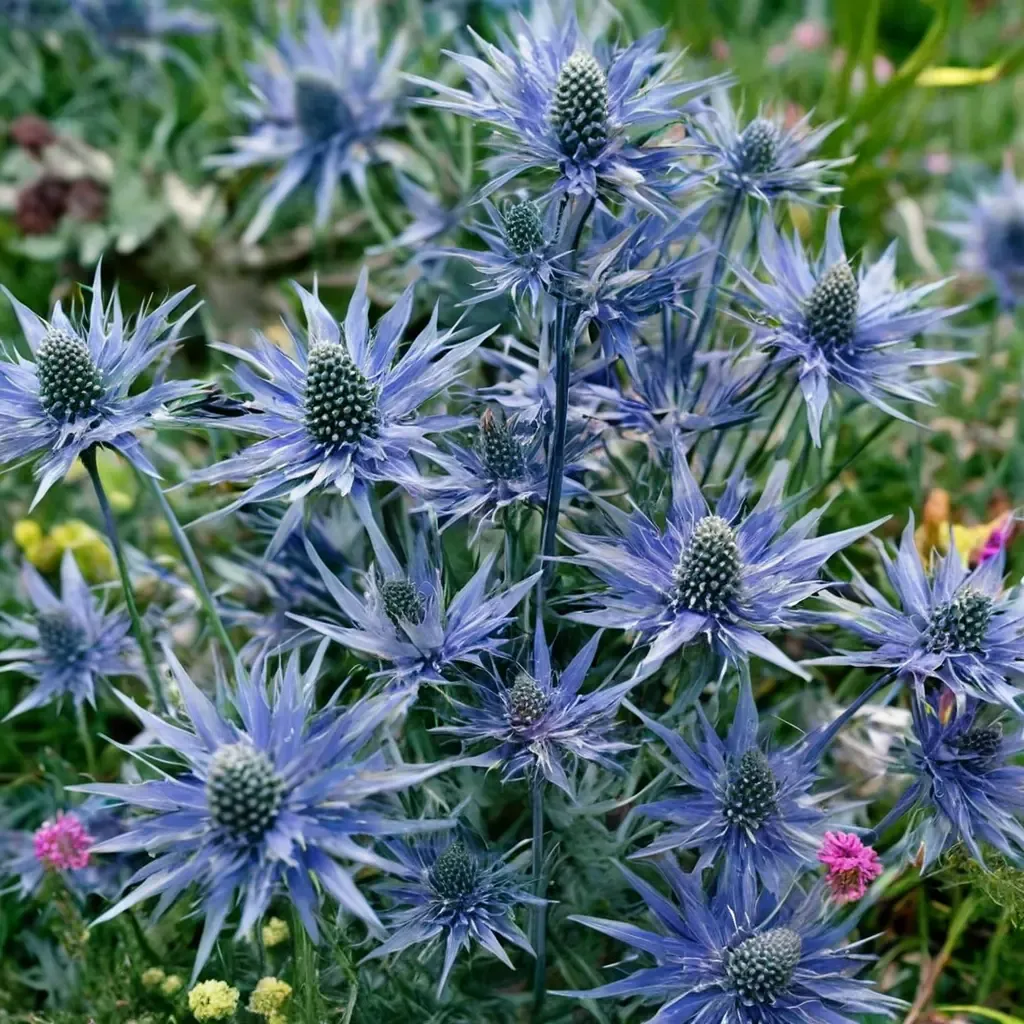
Big Blue Sea Holly
Eryngium x hybrida 'Big Blue'
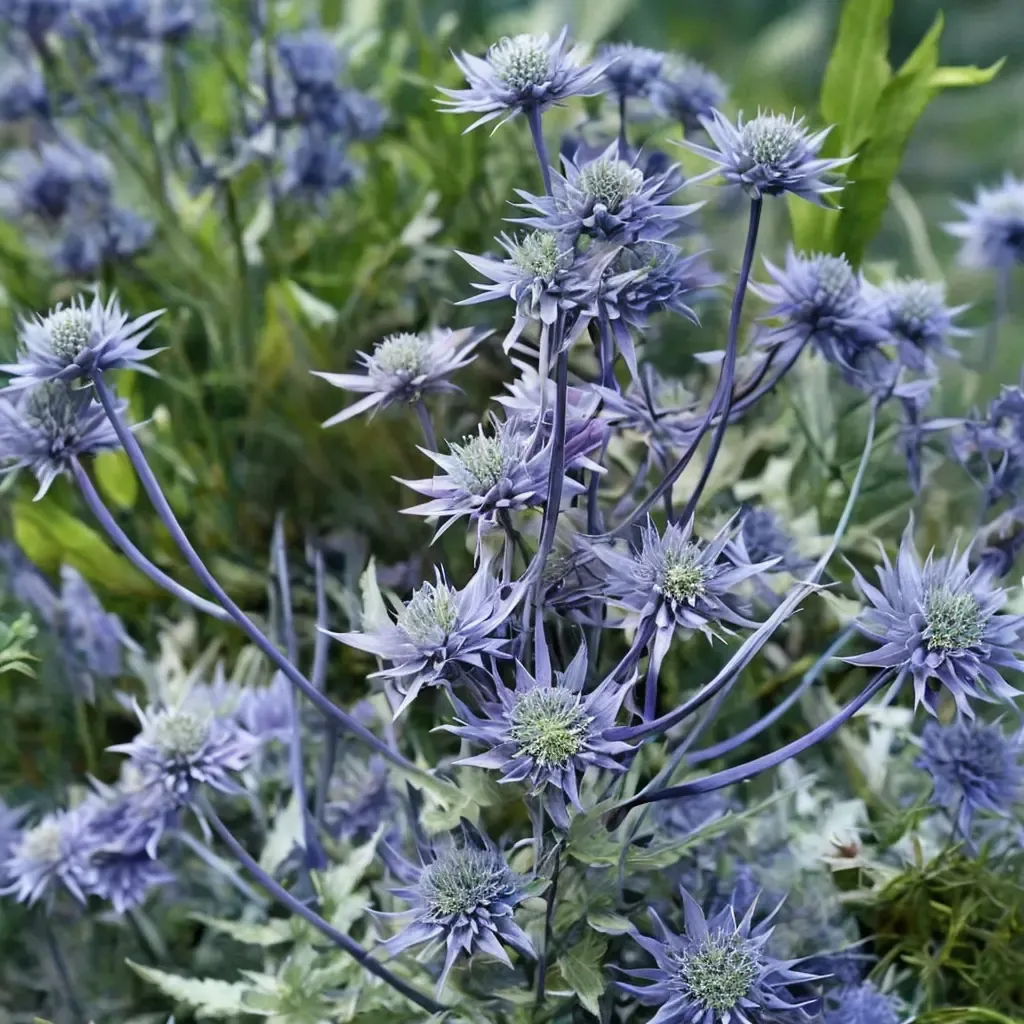
Blue Glitter Sea Holly
Eryngium planum 'Blue Glitter'
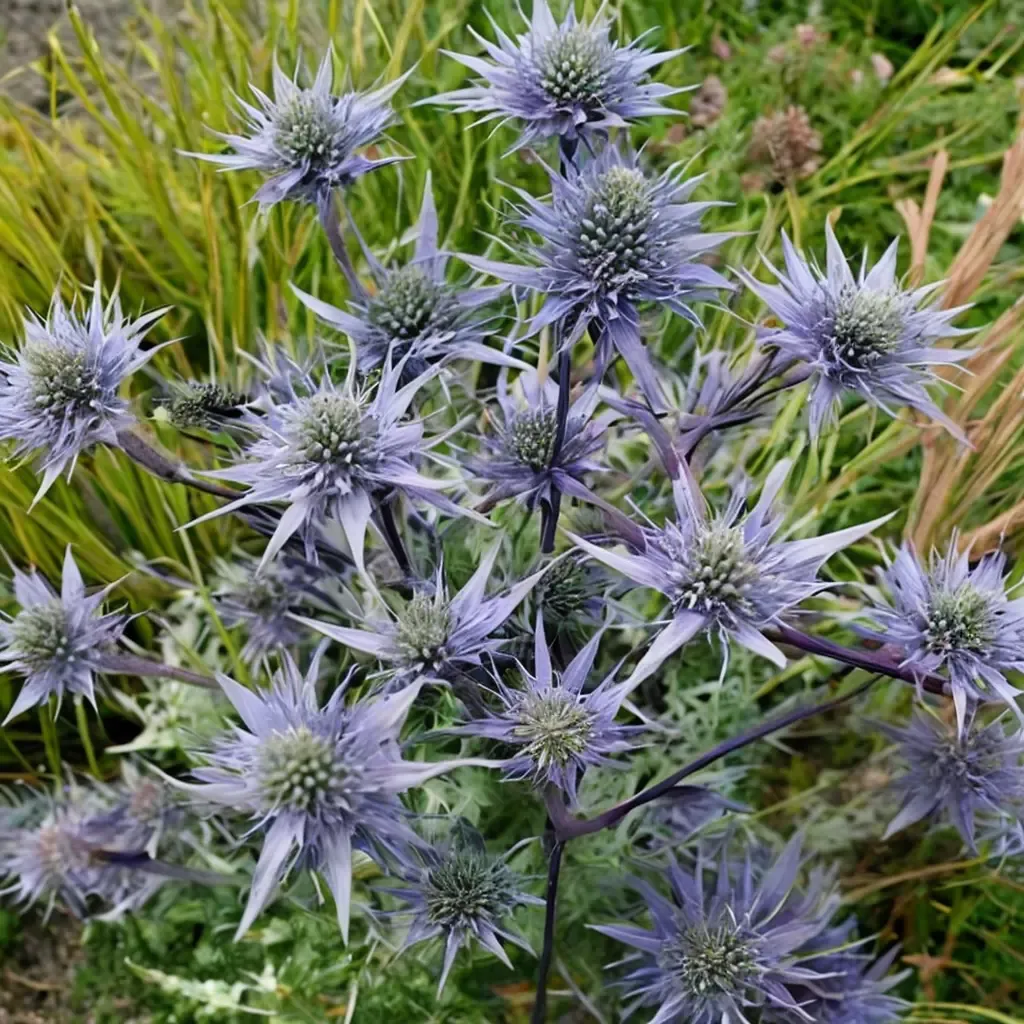
Picos Blue Sea Holly
Eryngium bourgatii 'Picos Blue'
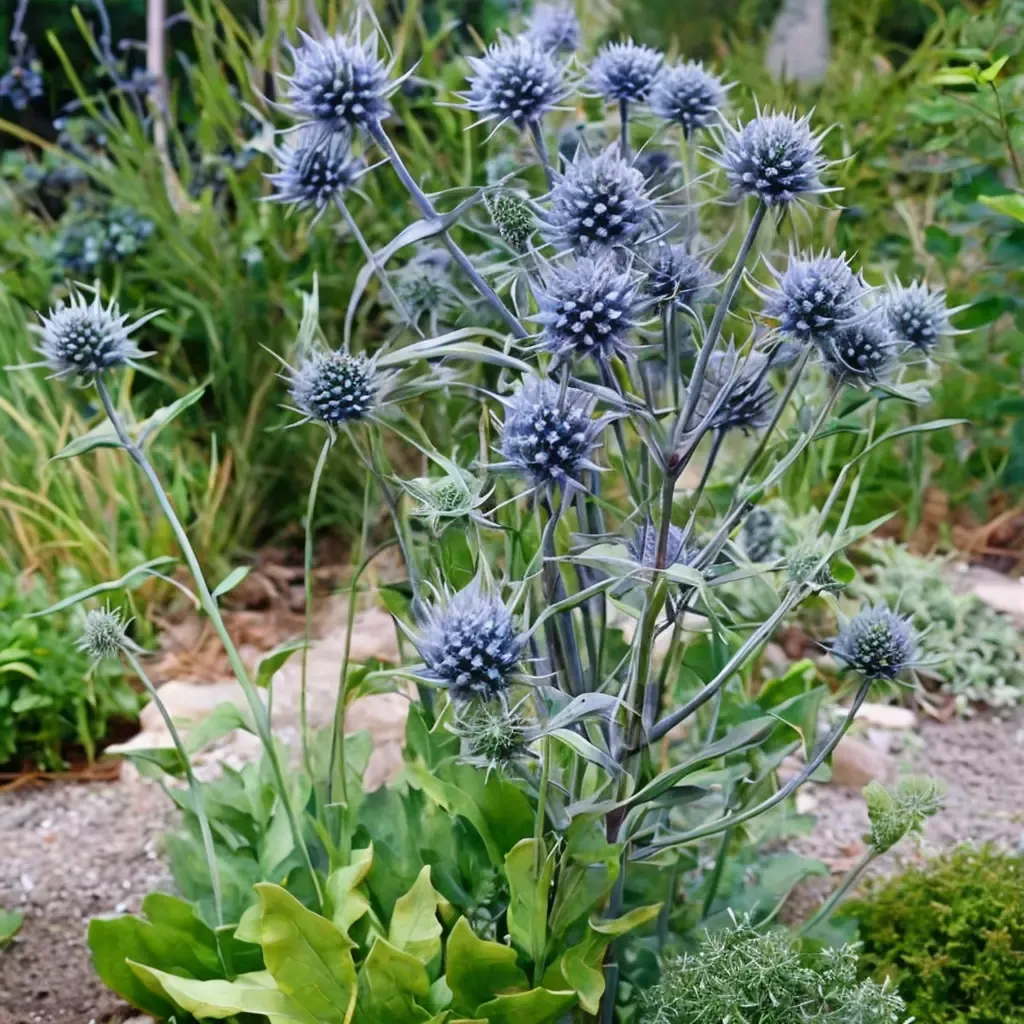
Flat Sea Holly
Eryngium planum
Keep exploring
Explore the genus
Hardy in your zone?
Grow Blue Devil with confidence
See it in a design of your actual yard, get zone-matched care reminders, and track it season by season in your garden journal.