The Story
Plant Bio
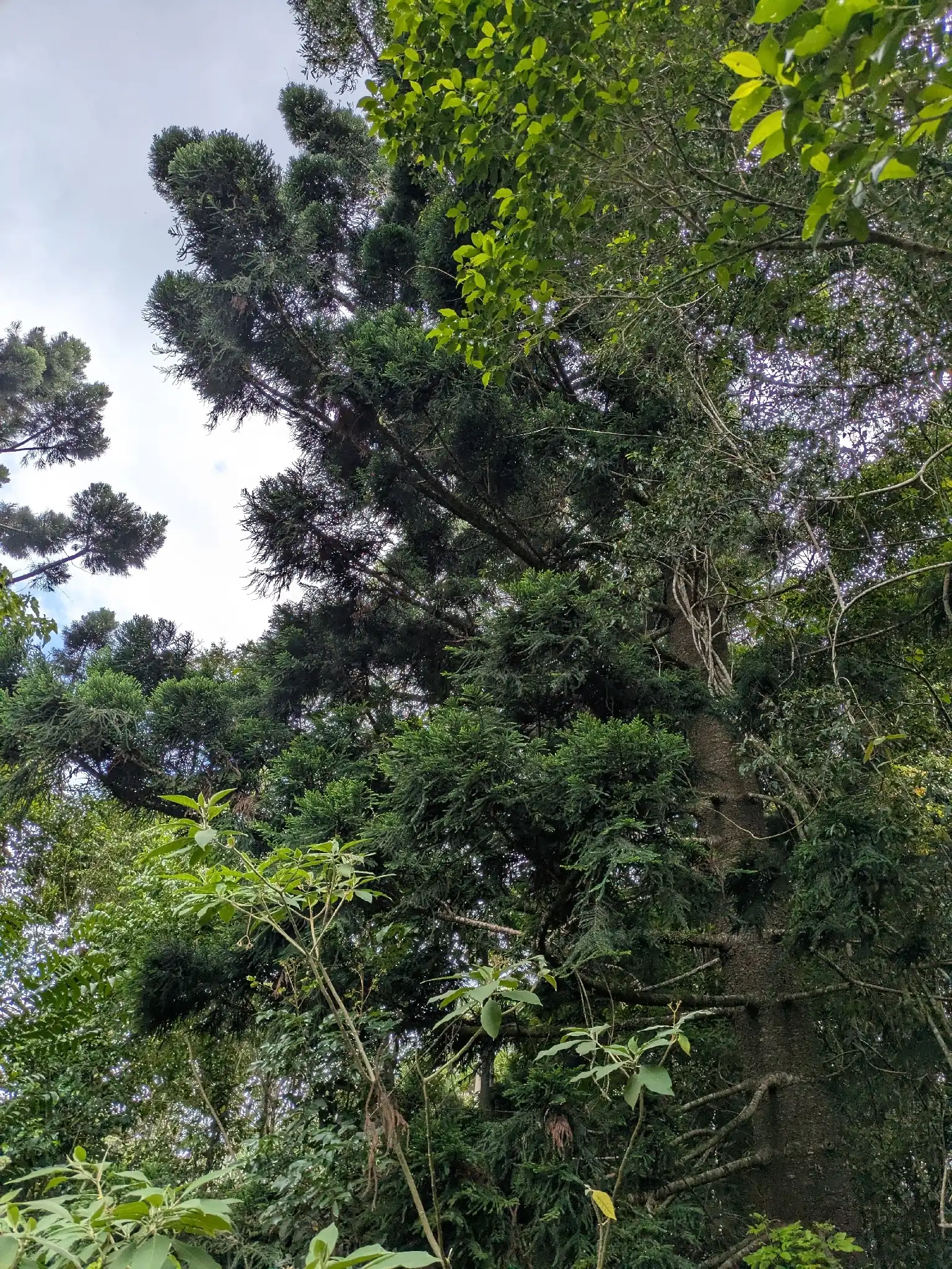
Araucaria cunninghamii, known as the hoop pine, is a large evergreen conifer with a distinctly symmetrical, columnar growth habit and horizontal branch whorls. Its rough outer bark peels in characteristic horizontal circular rings, while rigid, fine-textured green leaves mature into dark glossy scales.
Unlike soft-foliaged true pines, this species bears stiff, needle-like foliage that is sharply pointed and arranged spirally along slender branchlets. It forms a precise, narrow geometric spire that maintains its structural outline with minimal maintenance.
Uses & Benefits:
Essentials
At a Glance
Plant Type
Tree
Height
2362"
Width
590"
Light
Full Sun, Partial Sun
Zones
9, 10
Water
Moderate
Humidity
High
Lifespan
Perennial
Native To
Australia, New Guinea
Toxicity
Non-toxic (sharp foliage)
Planting
How to Grow
- Select a planting location in full sun to light shade with deep, fast-draining loamy or sandy soil.
- Dig a planting hole twice as wide as the root ball and equal in depth, ensuring the root flare remains at soil level.
- Backfill with native soil enriched with organic matter, firming gently around the roots to eliminate air pockets.
- Water thoroughly at planting and maintain consistent moisture during the first two growing seasons.
- Apply a 2- to 3-inch layer of organic mulch around the base, keeping it clear of direct contact with the trunk bark.
Pro Tip
Never cut branches back into old, bare wood; stems trimmed beyond the green, foliage-bearing zone cannot generate new buds and will suffer permanent dieback.
Keep It Thriving
Care Guide
Do
- Provide loose, open soil structure to facilitate deep taproot development and sharp drainage.
- Protect young saplings from browsing animals using tree guards or protective fencing.
- Space adequately from structures to accommodate its mature canopy height and width.
Don't
- Do not plant in heavy, waterlogged clay soils subject to prolonged moisture retention.
- Do not prune branch tips into old brown timber past the active green leaves.
- Do not over-fertilize, particularly with high-nitrogen synthetic feeds.
Seasonal Care Calendar
| Task | Jan | Feb | Mar | Apr | May | Jun | Jul | Aug | Sep | Oct | Nov | Dec |
|---|---|---|---|---|---|---|---|---|---|---|---|---|
| Fertilize | ||||||||||||
| Mulch | ||||||||||||
| Pest Check | ||||||||||||
| Prune |
Watch Out For
Pests & Diseases
Common Pests
Common Diseases
In the Garden
Landscape Uses & Companions
Landscape Uses
Multiply
Propagation Methods
Good to Know
Common Questions
Hoop Pine questions
What zones can Hoop Pine grow in?
Hoop Pine is hardy in USDA Zones 9–10: in that range it survives winter in the ground. Colder than Zone 9, winters are too cold for it to survive outdoors.
Is Hoop Pine deer resistant?
Not reliably. Deer may browse Hoop Pine, especially tender spring growth — plan on repellents or fencing where pressure is high.
Does Hoop Pine need full sun?
Hoop Pine does best in full sun to part shade. In hot climates, afternoon shade keeps blooms fresher longer.
Is Hoop Pine drought tolerant?
Yes — once established (usually after the first full season), Hoop Pine handles dry spells with minimal watering. Water deeply its first year to build the root system that makes that possible.
More Araucaria to compare
Keep exploring
Explore the genus
Hardy in your zone?
Grow Hoop Pine with confidence
See it in a design of your actual yard, get zone-matched care reminders, and track it season by season in your garden journal.