The Story
Plant Bio
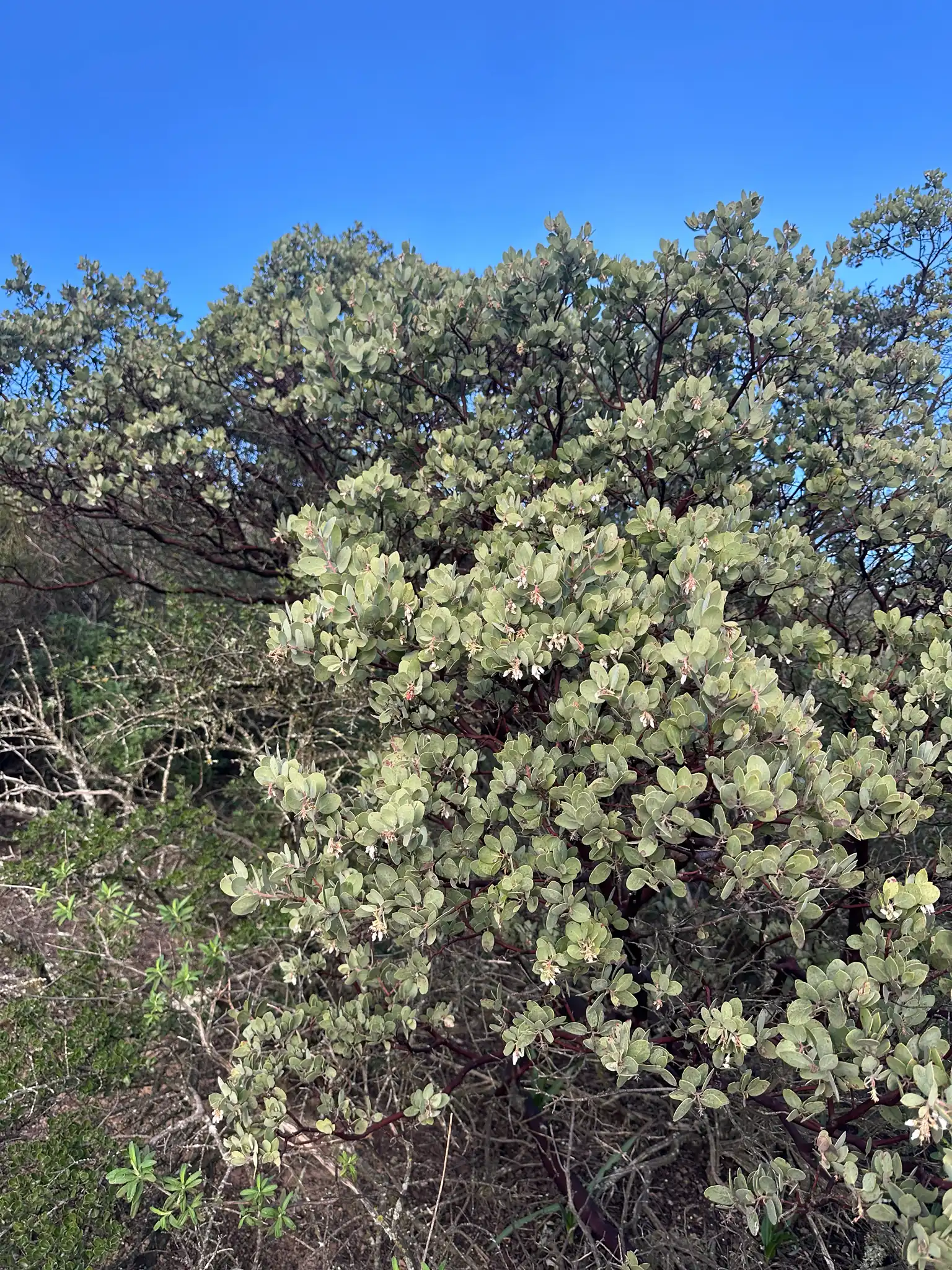
Arctostaphylos obispoensis is an evergreen shrub or multi-stemmed small tree reaching 4 to 8 feet in gardens, with smooth mahogany-red bark and dull gray-green leaves. The leaves carry a fuzzy gray coating when young and the winter flowers are small white to pink urns borne in branched panicles.
This is the serpentine manzanita of the southern Santa Lucia Mountains, growing naturally on shallow rocky serpentine in chaparral and closed-cone forest at 200 to 700 meters. It forms an upright mounding shrub without a basal burl, so unlike burl-forming manzanitas it does not resprout after crown fire or a hard cut into old wood.
Uses & Benefits:
Essentials
At a Glance
Plant Type
Shrub
Height
96"
Width
72"
Light
Full Sun, Partial Sun
Water
Unknown
Humidity
Unknown
Lifespan
Woody perennial shrub
Native To
California, USA
Toxicity
Unknown
Bloom period
Winter – Early spring
In flower about 4 months of the year
Marketplace
Where to Buy
Shipping costs Year-round shipping Free shipping
Planting
How to Grow
- Site in full sun to light partial shade with open air and no overhead irrigation.
- Dig a shallow, wide hole in lean rocky soil and set the crown slightly high.
- Backfill with native soil only, firming gently without rich amendment.
- Water in once to settle, then water sparingly through the first winter.
- Top with thin gravel mulch kept back from the stem.
Pro Tip
Plant in lean, rocky, fast-draining soil in full sun and withhold summer water once established; never cut back into leafless old wood, as stems without a burl do not resprout.
Keep It Thriving
Care Guide
Do
- Do plant in rocky, fast-draining serpentine or sandy lean soil.
- Do give full sun and good air circulation.
- Do tip-prune lightly after bloom to shape.
Don't
- Do not cut into bare old wood or coppice to the base.
- Do not overwater in summer or plant in wet clay.
- Do not bring in field soil or infected nursery stock that can carry Phytophthora.
Seasonal Care Calendar
| Task | Jan | Feb | Mar | Apr | May | Jun | Jul | Aug | Sep | Oct | Nov | Dec |
|---|---|---|---|---|---|---|---|---|---|---|---|---|
| Mulch | ||||||||||||
| Pest Check | ||||||||||||
| Plant | ||||||||||||
| Prune |
Watch Out For
Pests & Diseases
Common Pests
Common Diseases
In the Garden
Landscape Uses & Companions
Landscape Uses
Good to Know
Common Questions
Bishop Manzanita questions
Is Bishop Manzanita deer resistant?
Yes — Bishop Manzanita is rated deer-resistant. Deer typically pass it over, though extreme hunger can override any plant's defenses.
When does Bishop Manzanita bloom?
Bishop Manzanita typically blooms from early winter to early spring. Exact timing shifts a week or two with your zone — Sow's bloom calendar maps it to your garden.
Does Bishop Manzanita need full sun?
Bishop Manzanita does best in full sun to part shade. In hot climates, afternoon shade keeps blooms fresher longer.
More Arctostaphylos to compare
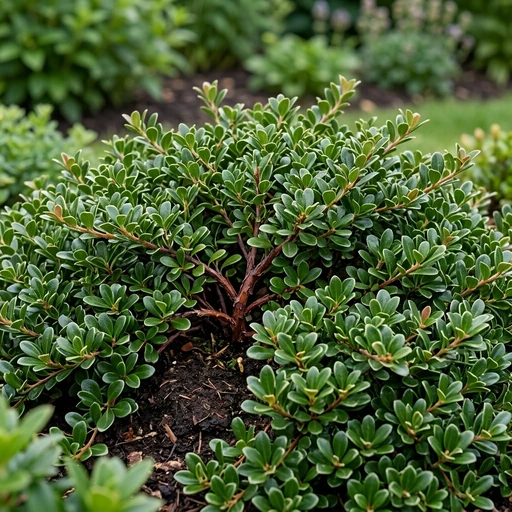
Massachusetts Common Bearberry
Arctostaphylos uva-ursi 'Massachusetts'
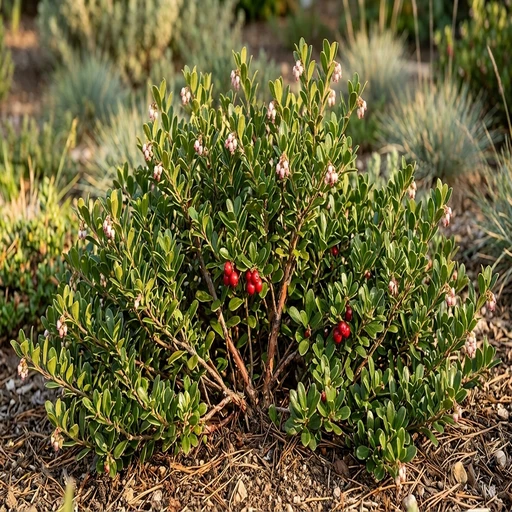
Bearberry
Arctostaphylos uva-ursi
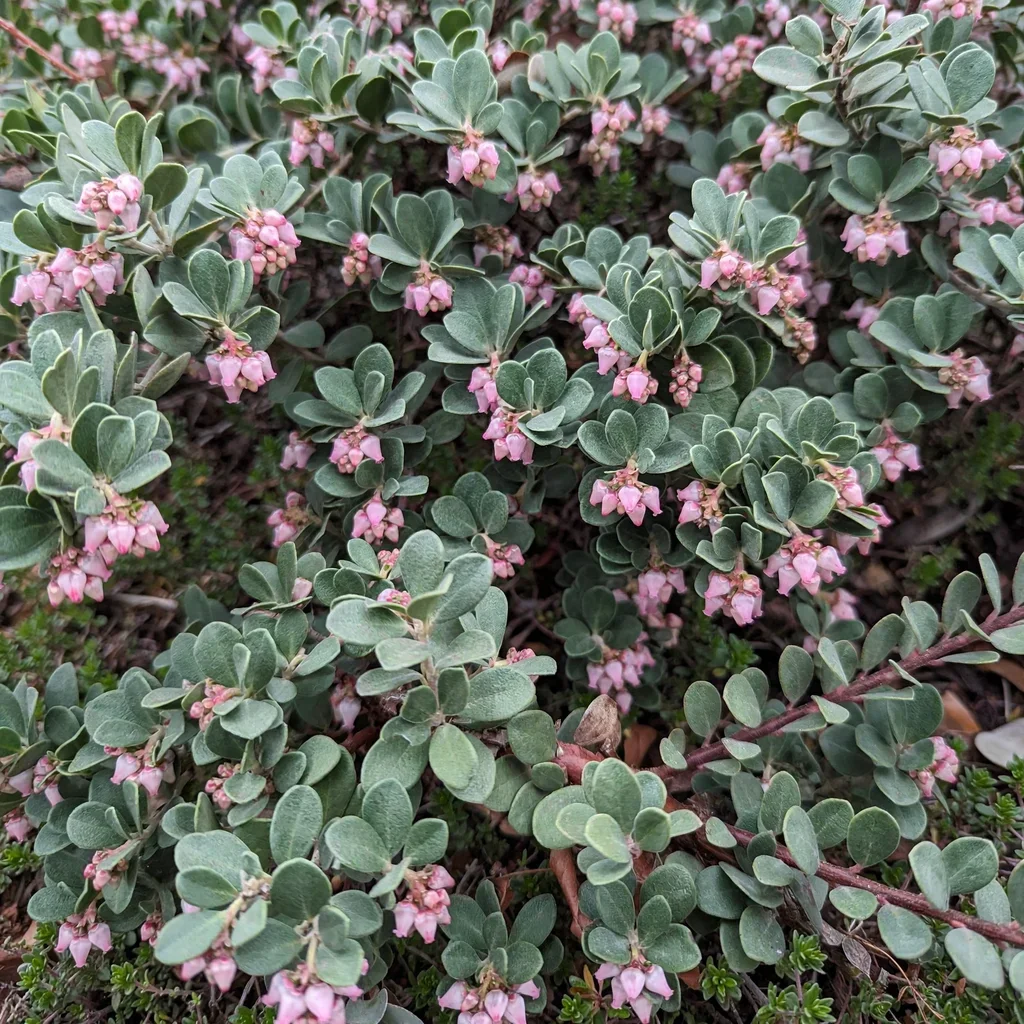
Ron Clendenen Manzanita
Arctostaphylos x media 'Ron Clendenen'
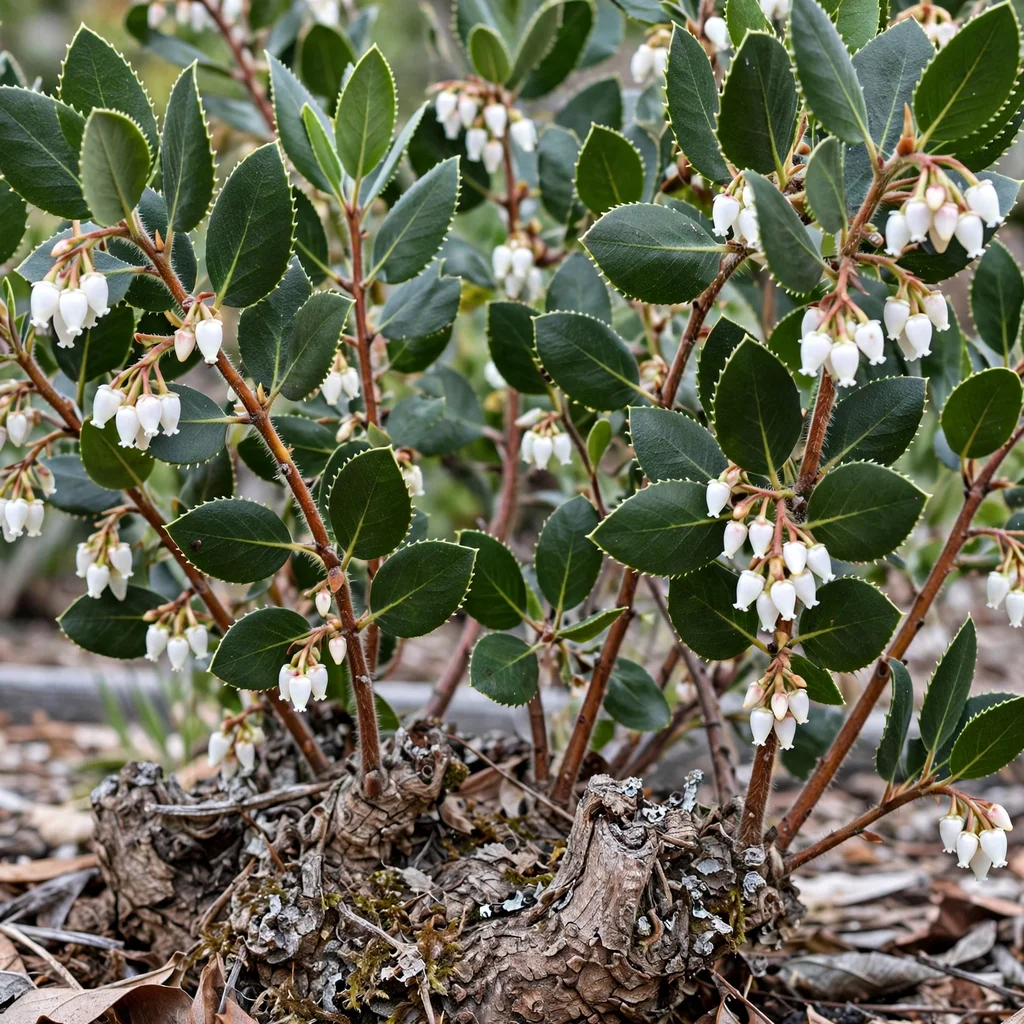
Brittleleaf Manzanita
Arctostaphylos crustacea
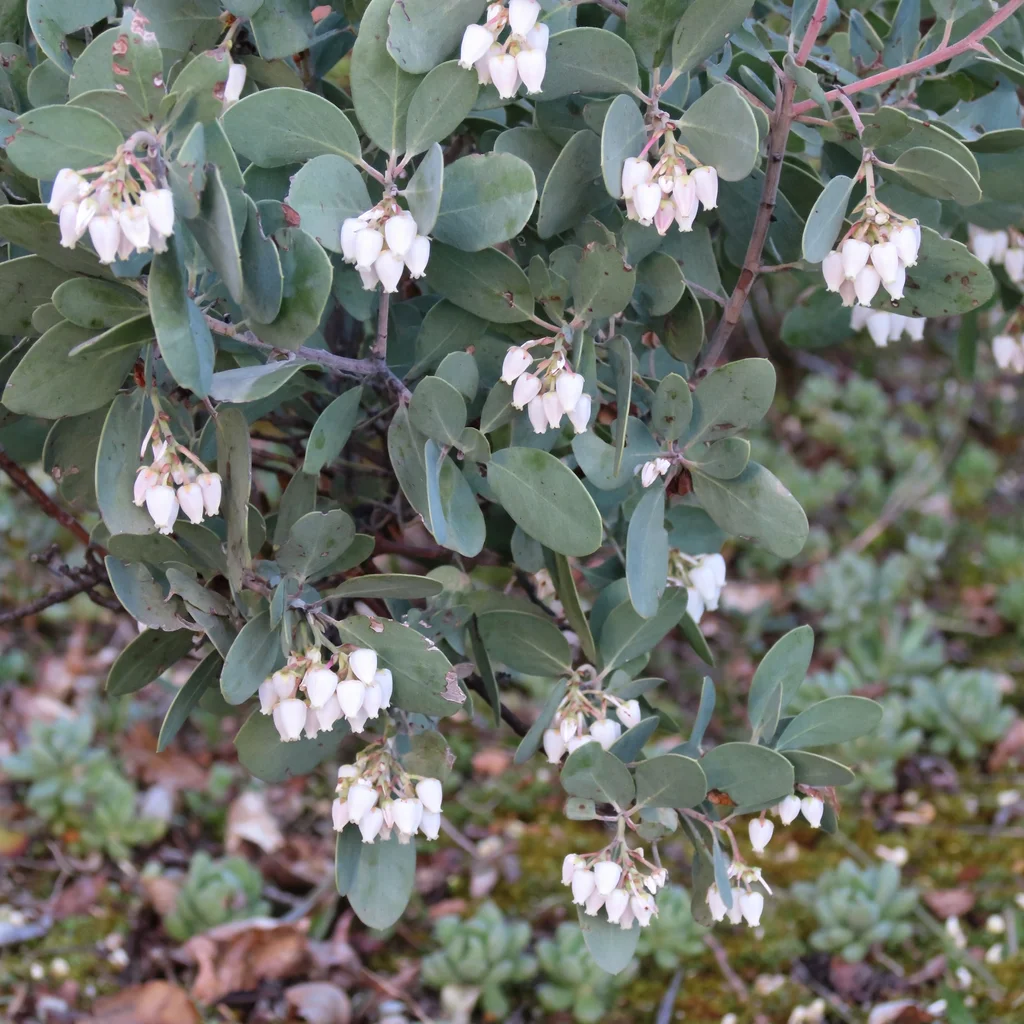
Common Manzanita
Arctostaphylos manzanita
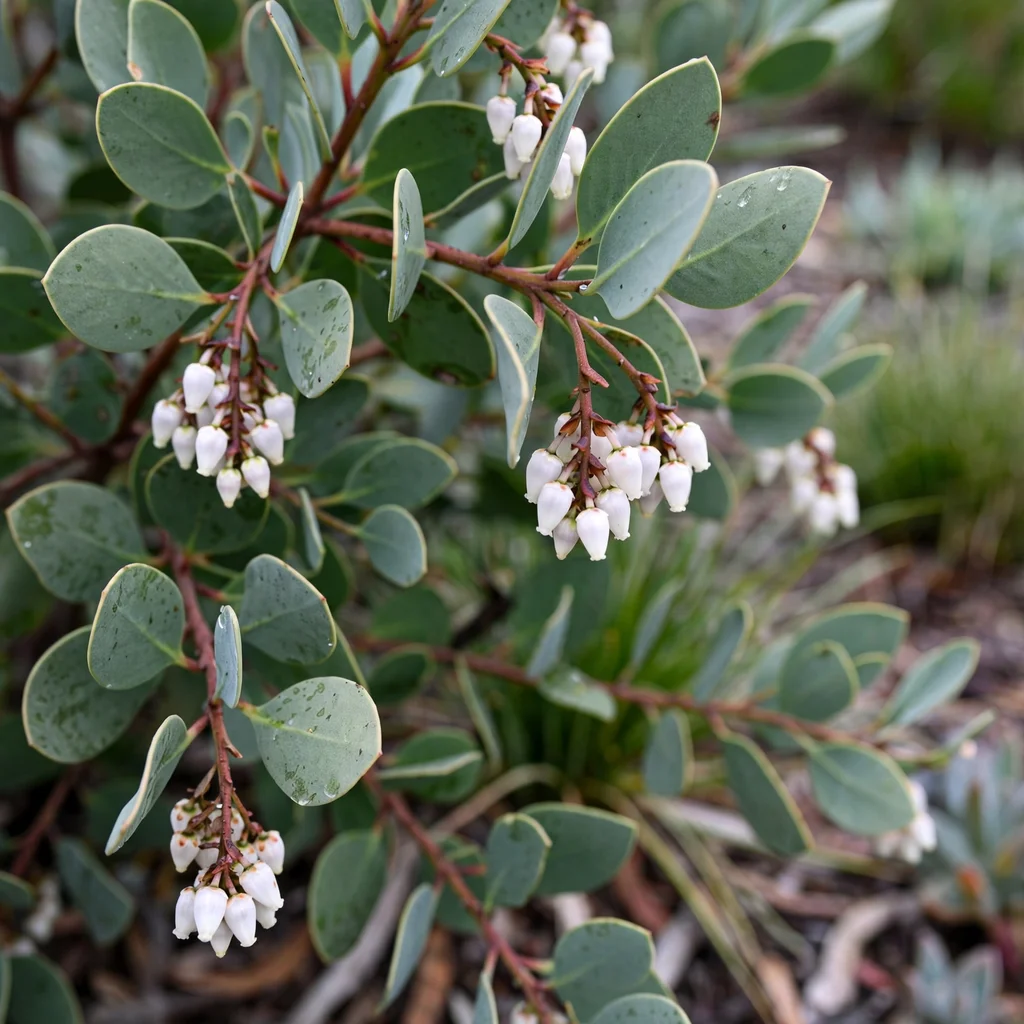
Rainbow Manzanita
Arctostaphylos rainbowensis
Keep exploring
Explore the genus
Grow Bishop Manzanita with confidence
See it in a design of your actual yard, get zone-matched care reminders, and track it season by season in your garden journal.