The Story
Plant Bio
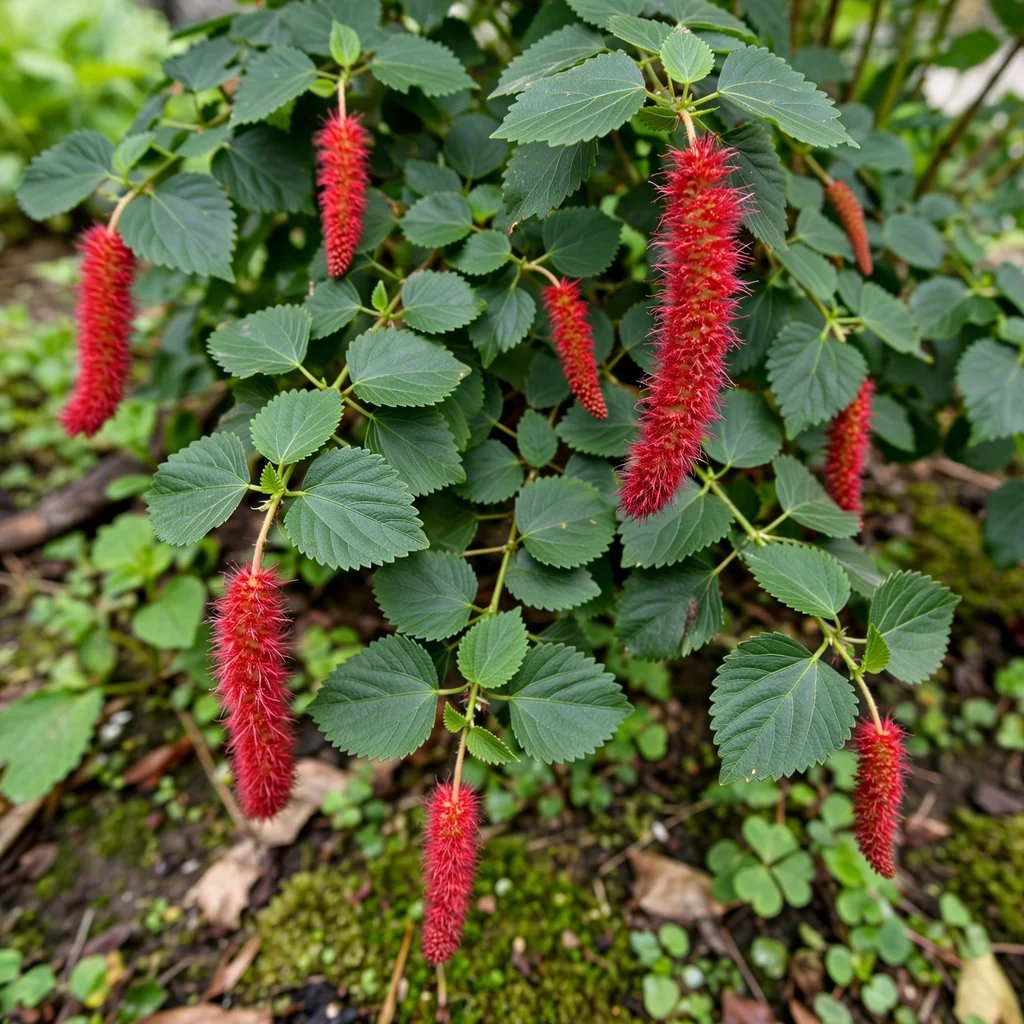
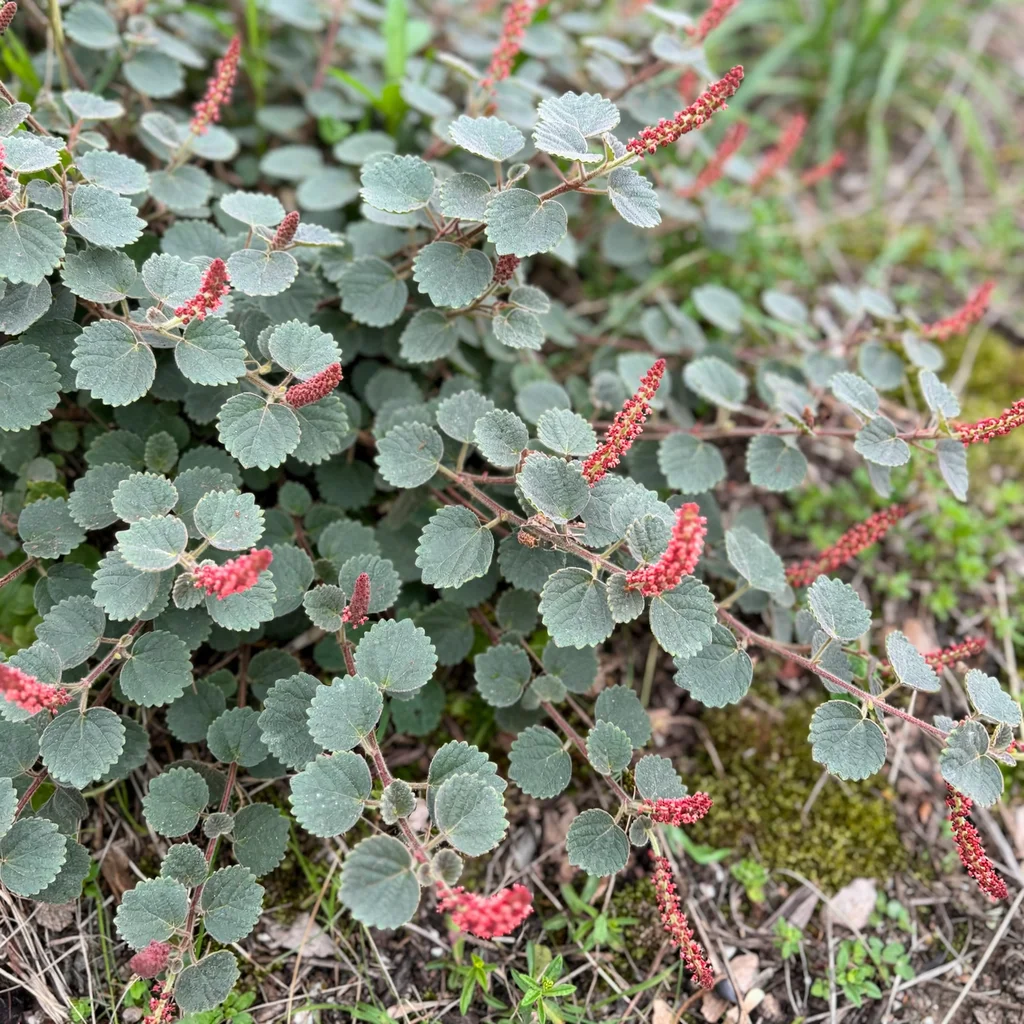
Acalypha pendula is a low spreading evergreen herb reaching six inches tall and trailing to fifteen inches wide, with tiny opposite heart-shaped dark green leaves with toothed edges. The display comes from upright fuzzy bright red catkins held just above the foliage, lengthening into dangling tassels.
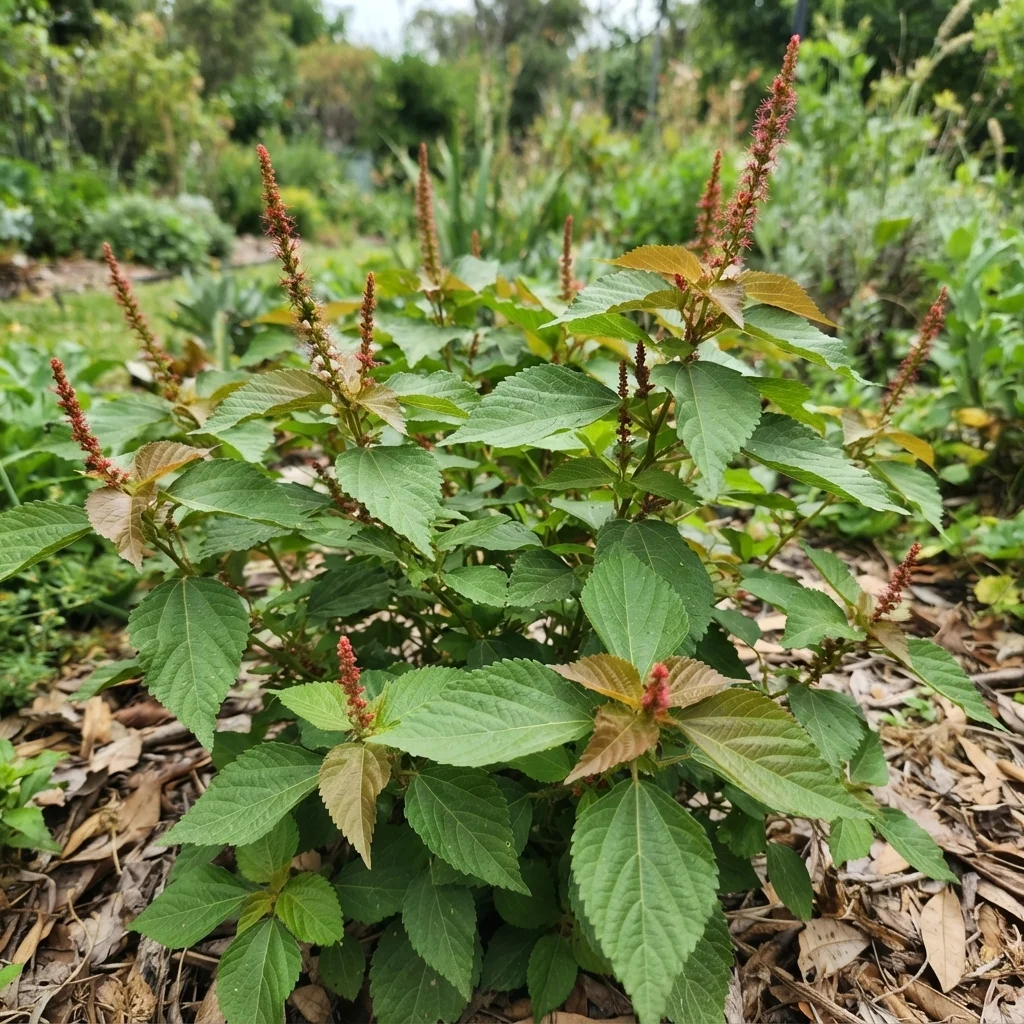
Unlike the tall chenille shrub Acalypha hispida, this dwarf form stays mounded and cascading to make a dense mat for hanging baskets, containers and walls. The garden plant sold as Acalypha pendula, Acalypha reptans or Acalypha repens is the cultivated dwarf chenille now referred to Acalypha herzogiana, distinct from the wild Cuban endemic.
Uses & Benefits:
Essentials
At a Glance
Plant Type
Groundcover
Height
6"
Width
15"
Light
Full Sun, Partial Sun
Zones
9, 10
Water
Average to moist, do not dry out
Humidity
Unknown
Lifespan
Annual, perennial in zones 9B-11B
Native To
Cuba, Dominican Republic, Haiti
Toxicity
Toxic if ingested
Bloom period
Early summer – Autumn
In flower about 6 months of the year
Planting
How to Grow
- Set out after last frost in full sun to partial shade; afternoon shade gives the densest growth.
- Plant in average to moist well-drained sand or loam, spacing 18 to 24 inches apart.
- Water to keep soil evenly moist and do not let it dry out; water containers more frequently.
- Cut back in late fall and keep plantings out of foot traffic.
- Treat as an annual except in zones 9B to 11B, where it persists as a perennial.
Pro Tip
Cut back in late fall and keep it out of foot traffic; crushed stems leave thin spots, and containers need watering more often than ground plantings to stay evenly moist.
Keep It Thriving
Care Guide
Do
- Keep soil evenly moist and mulch to hold moisture.
- Give partial shade for the densest foliage.
- Water containers frequently in summer heat.
Don't
- Do not let soil dry out completely.
- Do not plant in walkways where feet crush the stems.
- Do not expect it to overwinter outdoors below zone 9B.
Seasonal Care Calendar
| Task | Jan | Feb | Mar | Apr | May | Jun | Jul | Aug | Sep | Oct | Nov | Dec |
|---|---|---|---|---|---|---|---|---|---|---|---|---|
| Pest Check | ||||||||||||
| Plant | ||||||||||||
| Prune | ||||||||||||
| Winter Prep |
Watch Out For
Pests & Diseases
Common Pests
Common Diseases
In the Garden
Landscape Uses & Companions
Landscape Uses
Companion Plants
Good to Know
Common Questions
Dwarf Chenille Plant questions
What zones can Dwarf Chenille Plant grow in?
Dwarf Chenille Plant is an annual: it grows, flowers and sets seed in one season, so winter cold doesn't limit where it grows. Gardeners in any zone can grow it by planting at the right time, usually after the last spring frost.
When does Dwarf Chenille Plant bloom?
Dwarf Chenille Plant typically blooms from summer to fall. Exact timing shifts a week or two with your zone — Sow's bloom calendar maps it to your garden.
Does Dwarf Chenille Plant need full sun?
Dwarf Chenille Plant does best in full sun to part shade. In hot climates, afternoon shade keeps blooms fresher longer.
Is Dwarf Chenille Plant drought tolerant?
Yes — once established (usually after the first full season), Dwarf Chenille Plant handles dry spells with minimal watering. Water deeply its first year to build the root system that makes that possible.
More Acalypha to compare
Keep exploring
Explore the genus
Hardy in your zone?
Grow Dwarf Chenille Plant with confidence
See it in a design of your actual yard, get zone-matched care reminders, and track it season by season in your garden journal.