The Story
Plant Bio
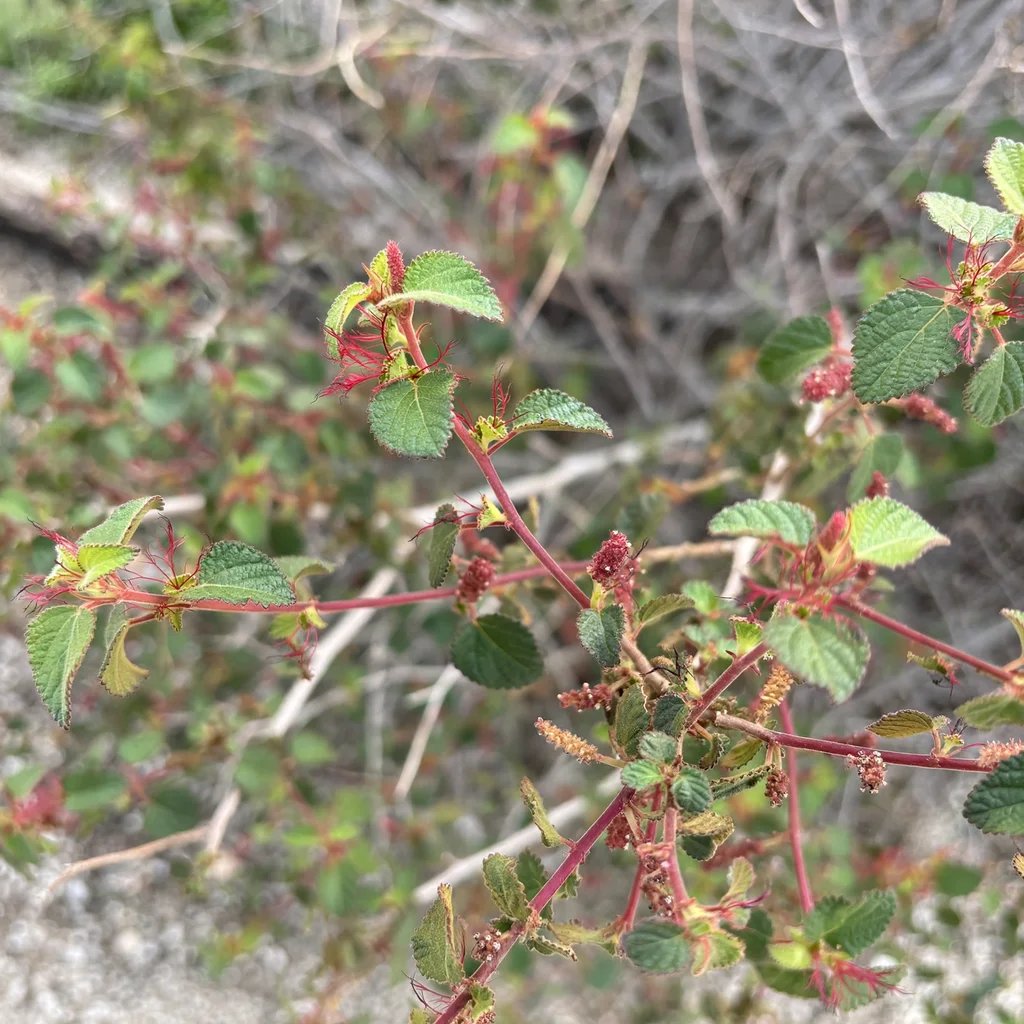
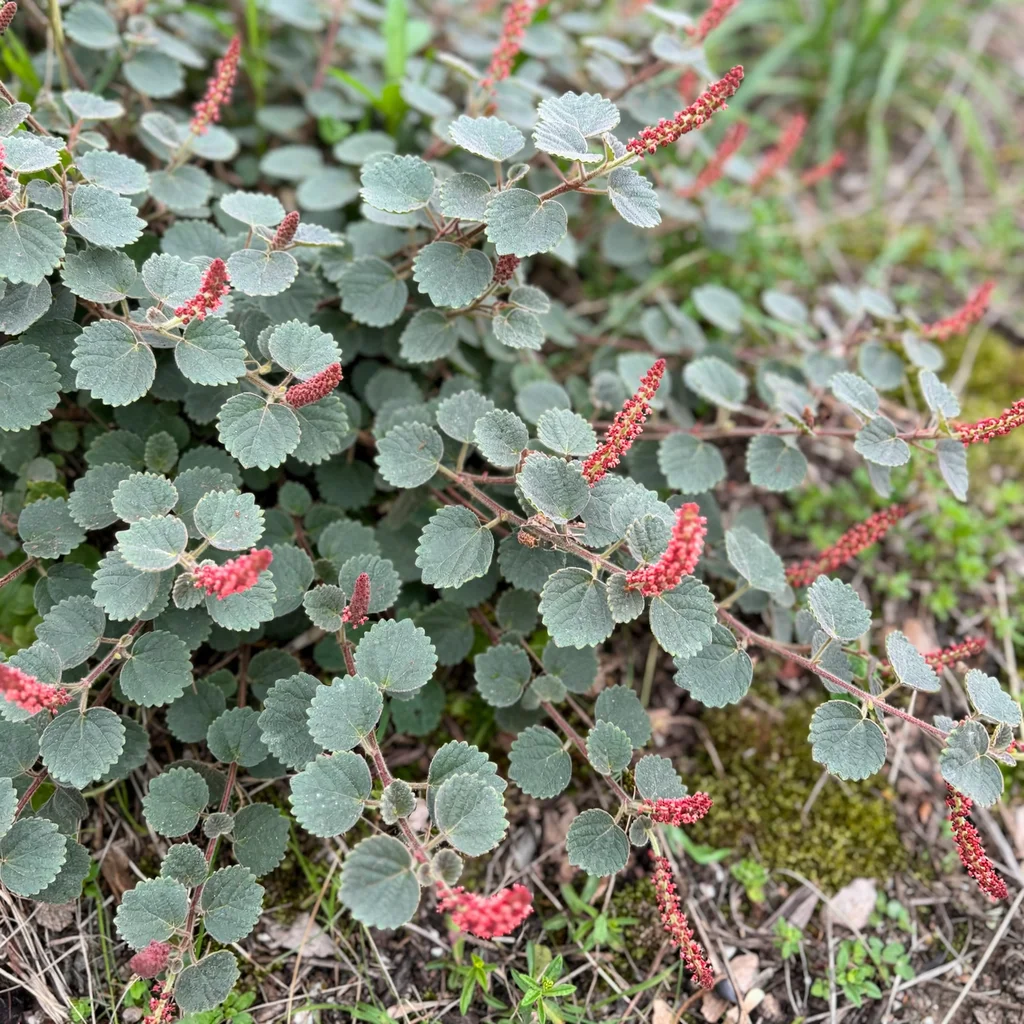
Acalypha californica is a rounded, dense evergreen shrub native to the chaparral, coastal sage scrub, and dry rocky slopes of Southern California, Arizona, and northwestern Mexico. It features small, hairy light green leaves with wavy edges that shift to pink or copper tones during hot summer weather.
The shrub produces slender, bumpy burgundy-red catkin spikes from leaf axils across winter, spring, and summer. Unlike tropical members of the genus, this species is strictly adapted to dry Mediterranean climates and demands sharp mineral drainage.
Uses & Benefits:
Essentials
At a Glance
Plant Type
Shrub
Height
60"
Width
60"
Light
Full Sun, Partial Sun
Zones
9, 10
Water
Low
Humidity
Low
Lifespan
Perennial
Native To
Southwestern US, Northwestern Mexico
Toxicity
Sap may cause minor skin irritation
Bloom period
Winter – Summer
In flower about 9 months of the year
Planting
How to Grow
- Select a site in full sun to light shade with fast-draining, rocky or sandy soil.
- Dig a planting hole as deep as the root ball and twice as wide, keeping the root crown elevated slightly above surrounding soil.
- Backfill with native soil without adding rich organic compost or fertilizers.
- Water thoroughly at planting, then irrigate only occasionally during the first winter and spring to establish roots.
- Taper off watering completely once established, relying solely on natural seasonal rainfall.
Pro Tip
Plant in crumbling granite or gritty mineral soil and withhold summer irrigation once established; watering during hot weather invites fatal root rot.
Keep It Thriving
Care Guide
Do
- Plant in sharply draining mineral or granitic soils.
- Provide full sun exposure to promote compact growth and rich foliage color.
- Allow soil to dry out completely between occasional establishment waterings.
Don't
- Do not apply regular irrigation during warm summer months.
- Avoid heavy pruning into old, leafless woody stems.
- Do not plant in soggy soils or low spots where water accumulates.
Seasonal Care Calendar
| Task | Jan | Feb | Mar | Apr | May | Jun | Jul | Aug | Sep | Oct | Nov | Dec |
|---|---|---|---|---|---|---|---|---|---|---|---|---|
| Pest Check | ||||||||||||
| Plant | ||||||||||||
| Prune | ||||||||||||
| Winter Prep |
Watch Out For
Pests & Diseases
Common Pests
Common Diseases
In the Garden
Landscape Uses & Companions
Landscape Uses
Multiply
Propagation Methods
Good to Know
Common Questions
California Copperleaf questions
What zones can California Copperleaf grow in?
California Copperleaf is hardy in USDA Zones 9–10: in that range it survives winter in the ground. Colder than Zone 9, grow it in a container you can move to shelter for the winter.
When does California Copperleaf bloom?
California Copperleaf typically blooms from winter to summer. Exact timing shifts a week or two with your zone — Sow's bloom calendar maps it to your garden.
Does California Copperleaf need full sun?
California Copperleaf does best in full sun to part shade. In hot climates, afternoon shade keeps blooms fresher longer.
Is California Copperleaf drought tolerant?
Yes — once established (usually after the first full season), California Copperleaf handles dry spells with minimal watering. Water deeply its first year to build the root system that makes that possible.
More Acalypha to compare
Keep exploring
Explore the genus
Hardy in your zone?
Grow California Copperleaf with confidence
See it in a design of your actual yard, get zone-matched care reminders, and track it season by season in your garden journal.