The Story
Plant Bio
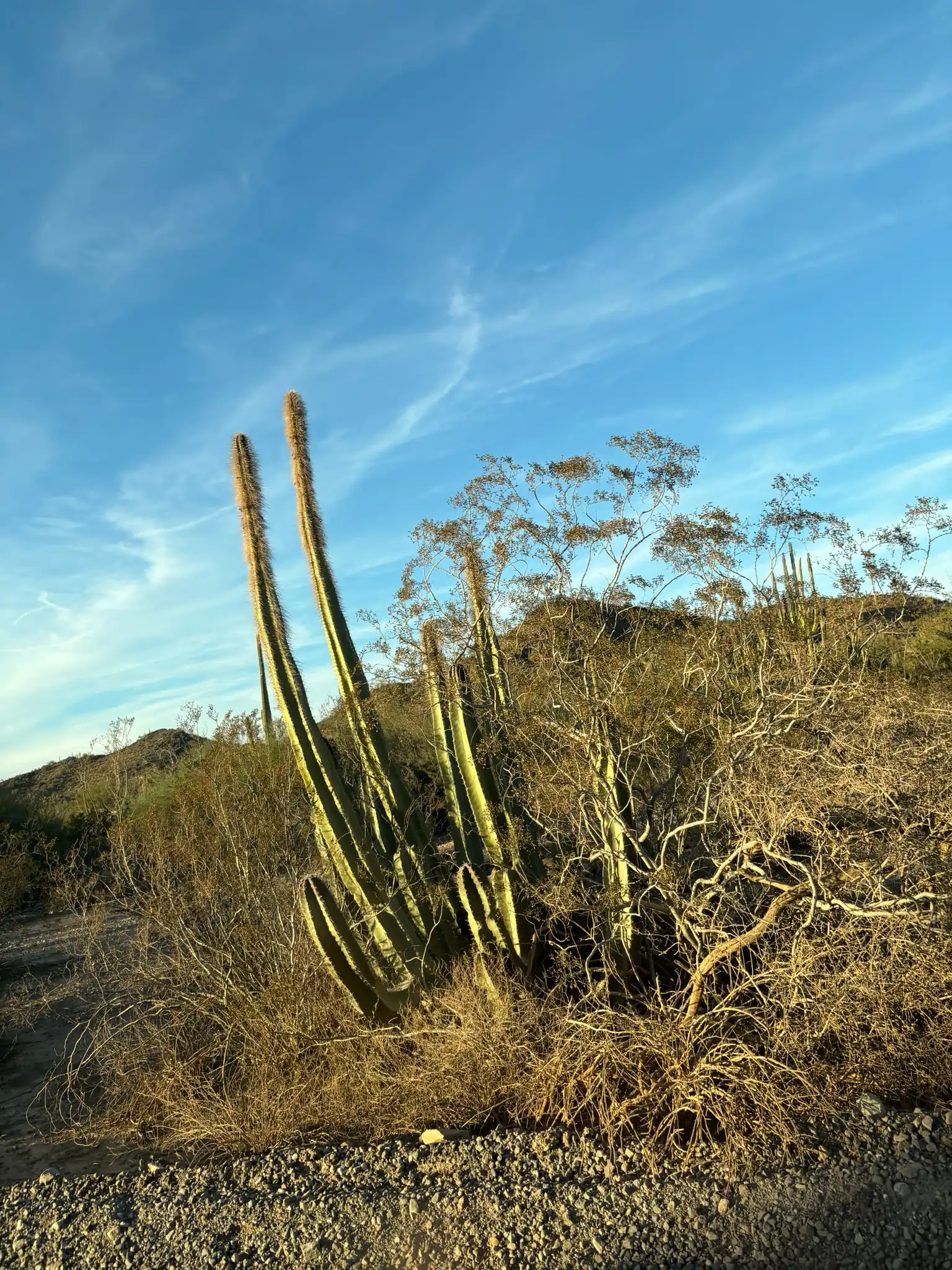
Pachycereus schottii, sold as senita cactus, is a slow-growing columnar cactus that branches from the base to form a clump of erect grey-green stems. Mature clumps reach 7 to 13 feet tall in warm gardens, with stems 2 to 8 inches thick, ribbed and armed with dense spines.
What sets senita apart is the lateral bristly patch of dense spines and whiskery hairs where white to pale pink funnels 1 to 2 inches long open after sunset and close by dawn. Flowers are moth-pollinated by the senita moth, which lays its eggs in the blooms, and the wild form is densely spiny while the nursery form sold as Totem Pole is a spineless monstrose selection.
Uses & Benefits:
Essentials
At a Glance
Plant Type
Cactus Succulent
Height
120"
Width
84"
Light
Full Sun, Partial Sun
Zones
9, 10
Water
Low
Humidity
Low
Lifespan
Long-lived
Native To
Sonoran Desert, Arizona to Mexico
Toxicity
Non-toxic
Bloom period
Spring – Summer
In flower about 6 months of the year
Planting
How to Grow
- Plant in full sun in poor, rocky, sharply drained soil with the root crown at soil level.
- Water in once, then water sparingly only when soil is fully dry; keep winter-dry.
- Feed rarely or not at all; excess fertilizer and organic matter promote rot.
- Protect stem tips with frost cloth when temperatures drop toward 18F.
Pro Tip
Give it full sun in poor, sharply drained soil and leave it alone — water deeply only when fully dry, feed almost never, and drape frost cloth over the stem tips rather than wrapping the whole plant when frost threatens.
Keep It Thriving
Care Guide
Do
- Do plant on a slope, berm, or raised bed for fast drainage.
- Do handle with thick gloves and tongs because of sharp spines.
- Do leave established clumps undisturbed; they resent moving.
Don't
- Do not overwater or keep soil wet; wet roots rot quickly.
- Do not plant in rich soil or heavy clay that holds water.
- Do not prune unless needed to remove damaged stems.
Seasonal Care Calendar
| Task | Jan | Feb | Mar | Apr | May | Jun | Jul | Aug | Sep | Oct | Nov | Dec |
|---|---|---|---|---|---|---|---|---|---|---|---|---|
| Pest Check | ||||||||||||
| Plant | ||||||||||||
| Propagate | ||||||||||||
| Spring Cleanup | ||||||||||||
| Winter Prep |
Watch Out For
Pests & Diseases
Common Pests
Common Diseases
In the Garden
Landscape Uses & Companions
Landscape Uses
Multiply
Propagation Methods
Good to Know
Common Questions
Senita Cactus questions
What zones can Senita Cactus grow in?
Senita Cactus is hardy in USDA Zones 9–10: in that range it survives winter in the ground. Colder than Zone 9, grow it in a container you can move to shelter for the winter, or as an annual.
When does Senita Cactus bloom?
Senita Cactus typically blooms from spring to summer. Exact timing shifts a week or two with your zone — Sow's bloom calendar maps it to your garden.
Does Senita Cactus need full sun?
Senita Cactus does best in full sun to part shade. In hot climates, afternoon shade keeps blooms fresher longer.
Is Senita Cactus drought tolerant?
Yes — once established (usually after the first full season), Senita Cactus handles dry spells with minimal watering. Water deeply its first year to build the root system that makes that possible.
More Pachycereus to compare
Keep exploring
Explore the genus
Hardy in your zone?
Grow Senita Cactus with confidence
See it in a design of your actual yard, get zone-matched care reminders, and track it season by season in your garden journal.