The Story
Plant Bio
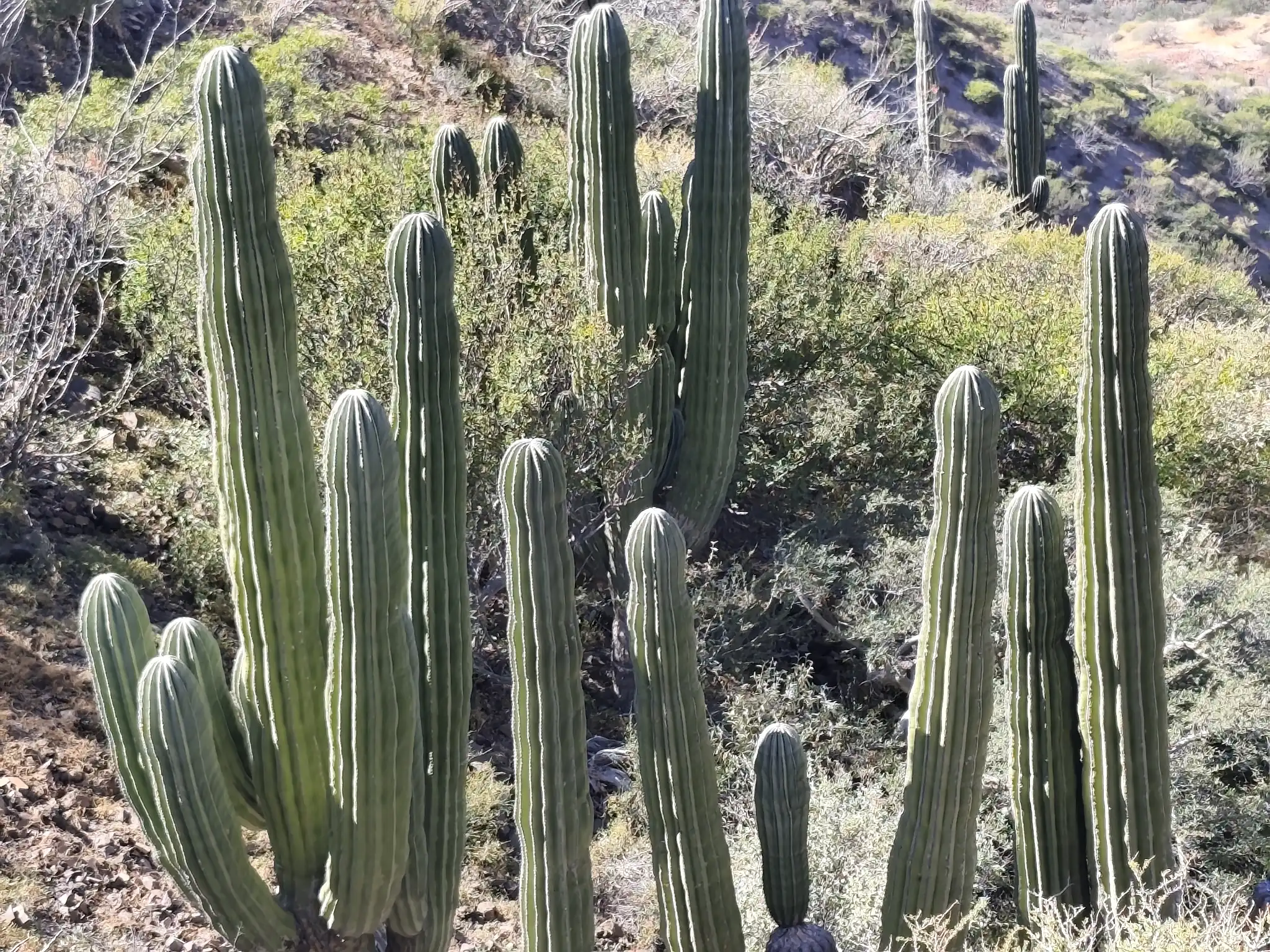
Pachycereus pringlei, the Mexican giant cardon, is a tree-like columnar succulent from northwestern Mexico with a single trunk-like base and many thick dark-green ribbed columns. It is evergreen and leafless, reaching 20 to 40 feet in gardens and to 60 feet or more in the wild with a spread of 10 to 20 feet with age.
It is often sold as saguaro but grows larger, branches more heavily with age, and grows faster when young, with spine clusters on young stems that are lost on old stems. Plants are trioecious, with separate male, female and hermaphrodite individuals bearing white to pale pink night-blooming bells at the branch tips in spring, followed by round red bristly fruit.
Uses & Benefits:
Essentials
At a Glance
Plant Type
Cactus Succulent
Height
480"
Width
180"
Light
Full Sun, Partial Sun
Zones
9, 10
Water
Low
Humidity
Low
Lifespan
80-120 years
Native To
Northwestern Mexico
Toxicity
Non-toxic, sharp spines
Bloom period
Spring – Early summer
In flower about 4 months of the year
Planting
How to Grow
- Plant in full sun in very sandy or rocky soil with excellent drainage, with 15 to 20 feet of clearance from buildings and paths.
- Set the root ball at the same depth it grew in the pot and stake tall specimens until rooted.
- Water deeply only after the soil dries completely, then withhold water for weeks in winter.
- Protect young plants from any freeze and keep mature plants dry below 25F.
- Give young plants light afternoon shade in extreme heat until established.
Pro Tip
Water only when the soil is completely dry and keep plants almost dry in winter; cold plus wet soil causes root rot.
Keep It Thriving
Care Guide
Do
- Give full sun and maximum air circulation with very fast drainage.
- Allow soil to dry fully between waterings and keep winter-dry.
- Wear thick gloves and eye protection when handling near spines.
Don't
- Do not overwater or overfeed, and give no fertilizer from fall on.
- Do not plant where frost settles or where arms will reach paths and doorways.
- Do not cut healthy columns except to remove damaged arms with clean tools.
Seasonal Care Calendar
| Task | Jan | Feb | Mar | Apr | May | Jun | Jul | Aug | Sep | Oct | Nov | Dec |
|---|---|---|---|---|---|---|---|---|---|---|---|---|
| Pest Check | ||||||||||||
| Plant | ||||||||||||
| Propagate | ||||||||||||
| Prune | ||||||||||||
| Winter Prep |
Watch Out For
Pests & Diseases
Common Pests
Common Diseases
In the Garden
Landscape Uses & Companions
Landscape Uses
Multiply
Propagation Methods
Good to Know
Common Questions
Mexican Giant Cardon questions
What zones can Mexican Giant Cardon grow in?
Mexican Giant Cardon is hardy in USDA Zones 9–10: in that range it survives winter in the ground. Colder than Zone 9, grow it in a container you can move to shelter for the winter, or as an annual.
When does Mexican Giant Cardon bloom?
Mexican Giant Cardon typically blooms from early spring to early summer. Exact timing shifts a week or two with your zone — Sow's bloom calendar maps it to your garden.
Does Mexican Giant Cardon need full sun?
Mexican Giant Cardon does best in full sun to part shade. In hot climates, afternoon shade keeps blooms fresher longer.
Is Mexican Giant Cardon drought tolerant?
Yes — once established (usually after the first full season), Mexican Giant Cardon handles dry spells with minimal watering. Water deeply its first year to build the root system that makes that possible.
More Pachycereus to compare
Keep exploring
Explore the genus
Hardy in your zone?
Grow Mexican Giant Cardon with confidence
See it in a design of your actual yard, get zone-matched care reminders, and track it season by season in your garden journal.