The Story
Plant Bio
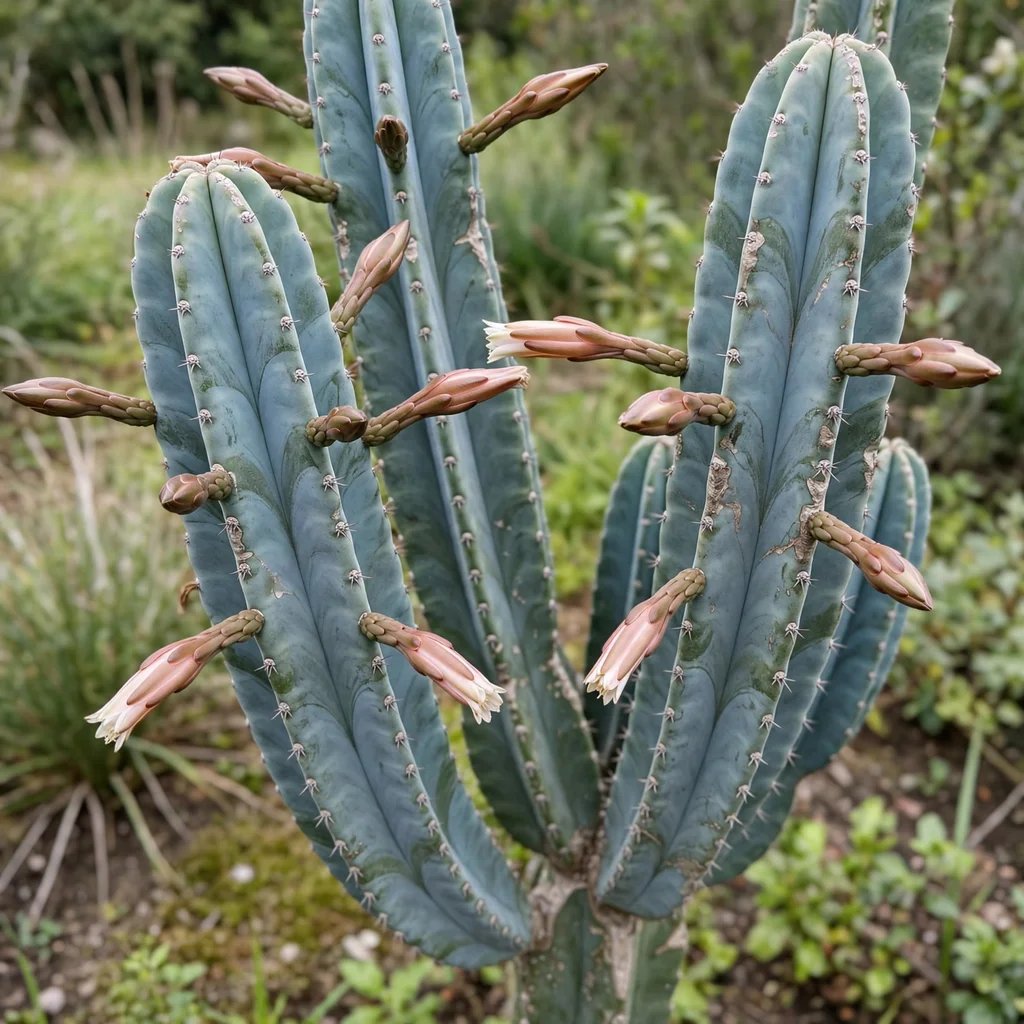
Lophocereus marginatus, still sold as Pachycereus marginatus, is a slow-growing columnar cactus from dry scrub and rocky hillsides of central to southern Mexico, forming upright ribbed columns that cluster from the base. The leafless stems are dark to blue-green with five to seven ribs edged in white, carrying felted areoles with short white to golden spines.
Garden plants reach twelve to twenty feet tall with stems to eight inches thick, spreading to about five feet wide to form a self-supporting living fence when sections are stuck directly in the ground. Pink to greenish-white tubular flowers open at night near the crown in spring to summer and are followed by spiny yellow-red fruit, but flowering is rare in cultivation and juvenile plants carry longer spines than mature columns.
Uses & Benefits:
Essentials
At a Glance
Plant Type
Cactus Succulent
Height
240"
Width
59"
Light
Full Sun, Partial Sun
Zones
9, 10
Water
Very low
Humidity
Low, dry air preferred
Lifespan
Long-lived, decades undisturbed
Native To
Central to southern Mexico
Toxicity
Non-toxic but spiny, keep from children and pets
Bloom period
Spring – Summer
In flower about 6 months of the year
Planting
How to Grow
- Plant in spring after last frost in full sun with 6 or more hours of direct sun and tolerance for reflected heat.
- Wash about half the nursery soil from the roots and set the column in very well-drained sandy or gritty mix with excellent drainage.
- Water deeply every two to three weeks in summer and less than monthly in winter if no rain falls, keeping the base dry.
- Protect tips below 25F with frost cloth and move containers under cover during hard freezes.
- Leave plants unpruned and undisturbed; sections root where stuck in the ground to extend a living fence.
Pro Tip
Wash about half the nursery soil from the roots and replant in sand and grit; residual clay that stays wet is what rots the base.
Keep It Thriving
Care Guide
Do
- Give full sun and excellent drainage in sand or grit
- Water sparingly on a summer schedule and almost not at all in winter
- Check for firm columns and clean white rib margins when buying
Don't
- Do not plant in clay or low spots that hold water
- Do not overwater or feed heavily
- Do not place where children or pets brush against spines
Seasonal Care Calendar
| Task | Jan | Feb | Mar | Apr | May | Jun | Jul | Aug | Sep | Oct | Nov | Dec |
|---|---|---|---|---|---|---|---|---|---|---|---|---|
| Pest Check | ||||||||||||
| Plant | ||||||||||||
| Propagate | ||||||||||||
| Winter Prep |
Watch Out For
Pests & Diseases
Common Pests
Common Diseases
In the Garden
Landscape Uses & Companions
Landscape Uses
Multiply
Propagation Methods
Good to Know
Common Questions
Mexican Fence Post Cactus questions
What zones can Mexican Fence Post Cactus grow in?
Mexican Fence Post Cactus is hardy in USDA Zones 9–10: in that range it survives winter in the ground. Colder than Zone 9, grow it in a container you can move to shelter for the winter, or as an annual.
When does Mexican Fence Post Cactus bloom?
Mexican Fence Post Cactus typically blooms from spring to summer. Exact timing shifts a week or two with your zone — Sow's bloom calendar maps it to your garden.
Does Mexican Fence Post Cactus need full sun?
Mexican Fence Post Cactus does best in full sun to part shade. In hot climates, afternoon shade keeps blooms fresher longer.
Is Mexican Fence Post Cactus drought tolerant?
Yes — once established (usually after the first full season), Mexican Fence Post Cactus handles dry spells with minimal watering. Water deeply its first year to build the root system that makes that possible.
More Pachycereus to compare
Keep exploring
Explore the genus
Hardy in your zone?
Grow Mexican Fence Post Cactus with confidence
See it in a design of your actual yard, get zone-matched care reminders, and track it season by season in your garden journal.