The Story
Plant Bio
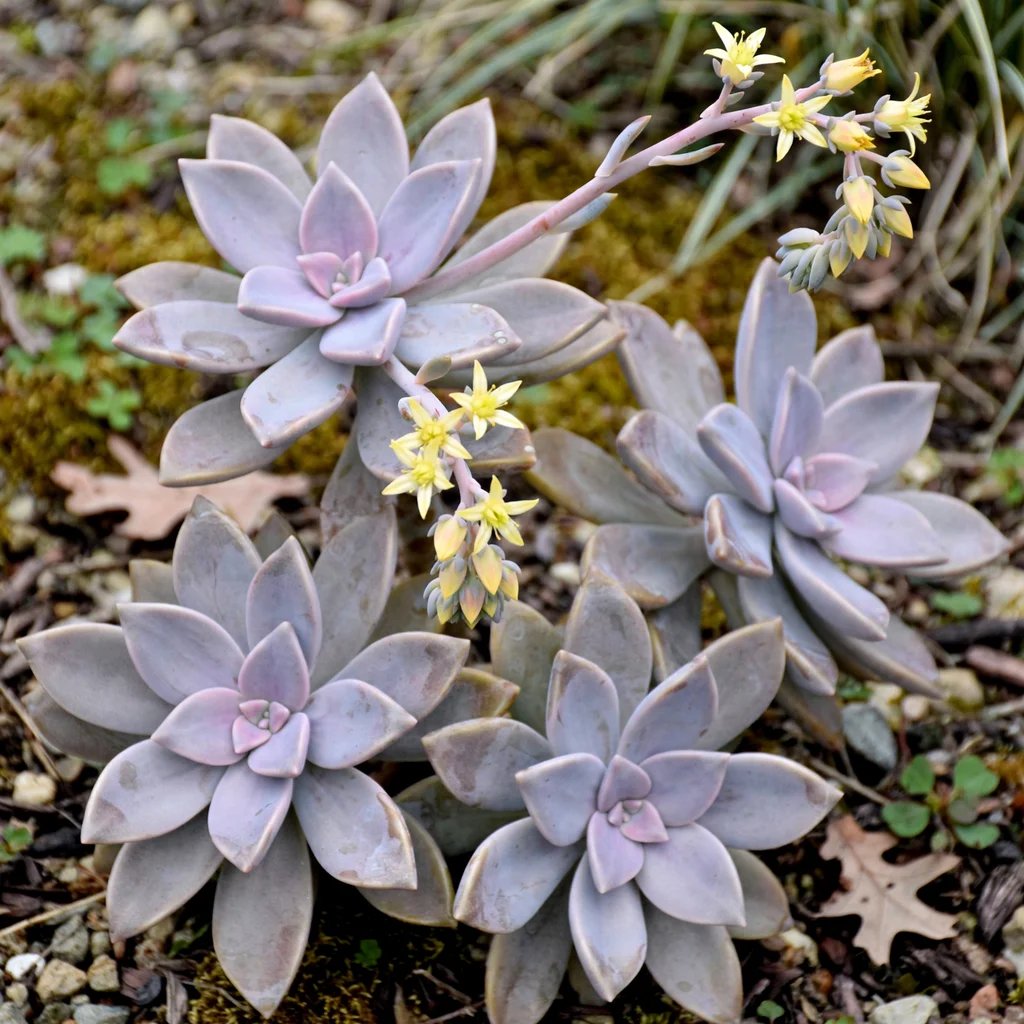
Graptopetalum superbum is a branching rosette succulent from rocky semi-arid ground near La Barca in Jalisco, Mexico, with rosettes carried at the ends of thick stems. The thick oblong leaves store water and carry a waxy bloom that reduces water loss and rubs off when handled.
This species forms flat open rosettes of pale gray-lavender leaves that flush pink-purple in bright sun and cold. In late winter to spring it raises an open 30 to 60 cm branched stem of small pale yellow flowers marked red at the petal tips with red stamens.
Uses & Benefits:
Essentials
At a Glance
Plant Type
Cactus Succulent
Height
5"
Width
12"
Light
Full Sun, Partial Sun
Zones
9, 10
Water
Low
Humidity
Low
Lifespan
Perennial
Native To
Jalisco, Mexico
Toxicity
Non-toxic
Bloom period
Late winter – Spring
In flower about 4 months of the year
Planting
How to Grow
- Plant in a pot with drainage holes using 50% cactus mix and 50% perlite or pumice, setting the rosette just above the mix surface.
- Place in full sun with light afternoon shade, about 6 hours of bright sun for compact pink color.
- Water deeply until it drains, then wait until the mix is dry through before watering again.
- Keep above 25F and move pots indoors before hard frost.
Pro Tip
Let the mix dry completely between waterings and lift leaves only by the edge to keep the powdery bloom intact.
Keep It Thriving
Care Guide
Do
- Give about 6 hours of bright sun, with shade in the hottest part of the day.
- Use a fast-draining mineral mix and a pot with drainage holes.
- Rotate potted plants to keep rosettes symmetrical.
Don't
- Do not water on a schedule or leave the pot standing in water.
- Do not rub or wash the leaves; the waxy coating does not regrow where removed.
- Do not grow in low indoor light where rosettes stretch and lose pink color.
Seasonal Care Calendar
| Task | Jan | Feb | Mar | Apr | May | Jun | Jul | Aug | Sep | Oct | Nov | Dec |
|---|---|---|---|---|---|---|---|---|---|---|---|---|
| Pest Check | ||||||||||||
| Plant | ||||||||||||
| Propagate | ||||||||||||
| Winter Prep |
Watch Out For
Pests & Diseases
Common Pests
Common Diseases
In the Garden
Landscape Uses & Companions
Landscape Uses
Multiply
Propagation Methods
Good to Know
Common Questions
Beautiful Graptopetalum questions
What zones can Beautiful Graptopetalum grow in?
Beautiful Graptopetalum is hardy in USDA Zones 9–10: in that range it survives winter in the ground. Colder than Zone 9, grow it in a container you can move to shelter for the winter, or as an annual.
When does Beautiful Graptopetalum bloom?
Beautiful Graptopetalum typically blooms from late winter to late spring. Exact timing shifts a week or two with your zone — Sow's bloom calendar maps it to your garden.
Does Beautiful Graptopetalum need full sun?
Beautiful Graptopetalum does best in full sun to part shade. In hot climates, afternoon shade keeps blooms fresher longer.
Is Beautiful Graptopetalum drought tolerant?
Yes — once established (usually after the first full season), Beautiful Graptopetalum handles dry spells with minimal watering. Water deeply its first year to build the root system that makes that possible.
More Graptopetalum to compare

Keep exploring
Explore the genus
Hardy in your zone?
Grow Beautiful Graptopetalum with confidence
See it in a design of your actual yard, get zone-matched care reminders, and track it season by season in your garden journal.