The Story
Plant Bio
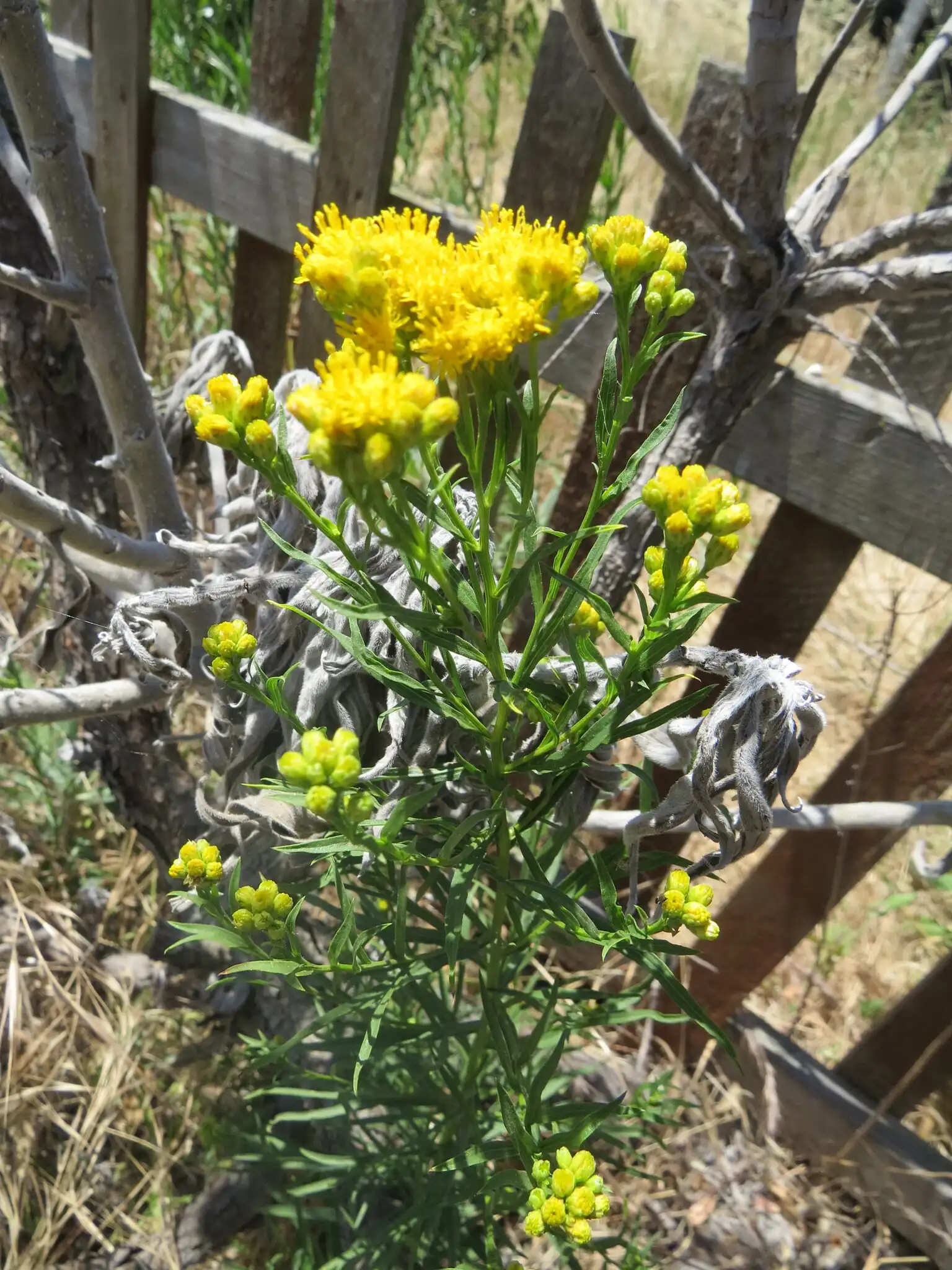
Euthamia occidentalis is a rhizomatous perennial native to western North America, forming dense colonies of stiff upright stems that reach three to seven feet tall. Narrow, three-veined linear leaves dress the stems beneath broad, flat-topped clusters of tiny golden-yellow flower heads produced from midsummer through late fall.
This species spreads rapidly through underground rhizomes, making it exceptional for binding wet soils and stream margins. Its prolific late-season bloom serves as a major nectar source for migrating monarch butterflies and acts as a larval host for specialized flower moths.
Uses & Benefits:
Essentials
At a Glance
Plant Type
Perennial
Height
83"
Width
71"
Light
Full Sun, Partial Sun
Zones
5, 6, 7, 8, 9, 10
Water
High
Humidity
High
Lifespan
Perennial
Native To
Western North America
Toxicity
Non-toxic
Bloom period
Summer – Fall
In flower about 6 months of the year
Planting
How to Grow
- Select a site in full sun to partial shade with wet, damp, or marshy soil.
- Dig a planting hole matching the depth of the root ball and twice as wide.
- Set the plant into the hole, backfill with native soil, and firm gently.
- Water thoroughly after planting and maintain consistent moisture during establishment.
Pro Tip
Site in rain gardens or damp swales where its aggressive rhizomatous spread is contained or utilized for bank stabilization.
Keep It Thriving
Care Guide
Do
- Keep soil consistently moist or wet throughout the growing season.
- Cut spent stems down to ground level in late winter before spring growth begins.
- Divide clumps every three to four years to manage colony boundaries.
Don't
- Do not plant in dry garden beds or drought-prone borders.
- Do not apply rich fertilizers, as over-fertilization causes floppy stems and excessive spreading.
- Do not shear foliage heavily mid-season unless controlling plant spread.
Seasonal Care Calendar
| Task | Jan | Feb | Mar | Apr | May | Jun | Jul | Aug | Sep | Oct | Nov | Dec |
|---|---|---|---|---|---|---|---|---|---|---|---|---|
| Divide | ||||||||||||
| Pest Check | ||||||||||||
| Plant | ||||||||||||
| Prune |
Watch Out For
Pests & Diseases
Common Pests
Common Diseases
In the Garden
Landscape Uses & Companions
Landscape Uses
Multiply
Propagation Methods
Good to Know
Common Questions
Western Goldentop questions
What zones can Western Goldentop grow in?
Western Goldentop is hardy in USDA Zones 5–10: in that range it survives winter in the ground. Colder than Zone 5, grow it in a container you can move to shelter for the winter, or as an annual.
Is Western Goldentop deer resistant?
Not reliably. Deer may browse Western Goldentop, especially tender spring growth — plan on repellents or fencing where pressure is high.
When does Western Goldentop bloom?
Western Goldentop typically blooms from summer to fall. Exact timing shifts a week or two with your zone — Sow's bloom calendar maps it to your garden.
Does Western Goldentop need full sun?
Western Goldentop does best in full sun to part shade. In hot climates, afternoon shade keeps blooms fresher longer.
More Euthamia to compare
Keep exploring
Explore the genus
Grow Western Goldentop with confidence
See it in a design of your actual yard, get zone-matched care reminders, and track it season by season in your garden journal.