The Story
Plant Bio
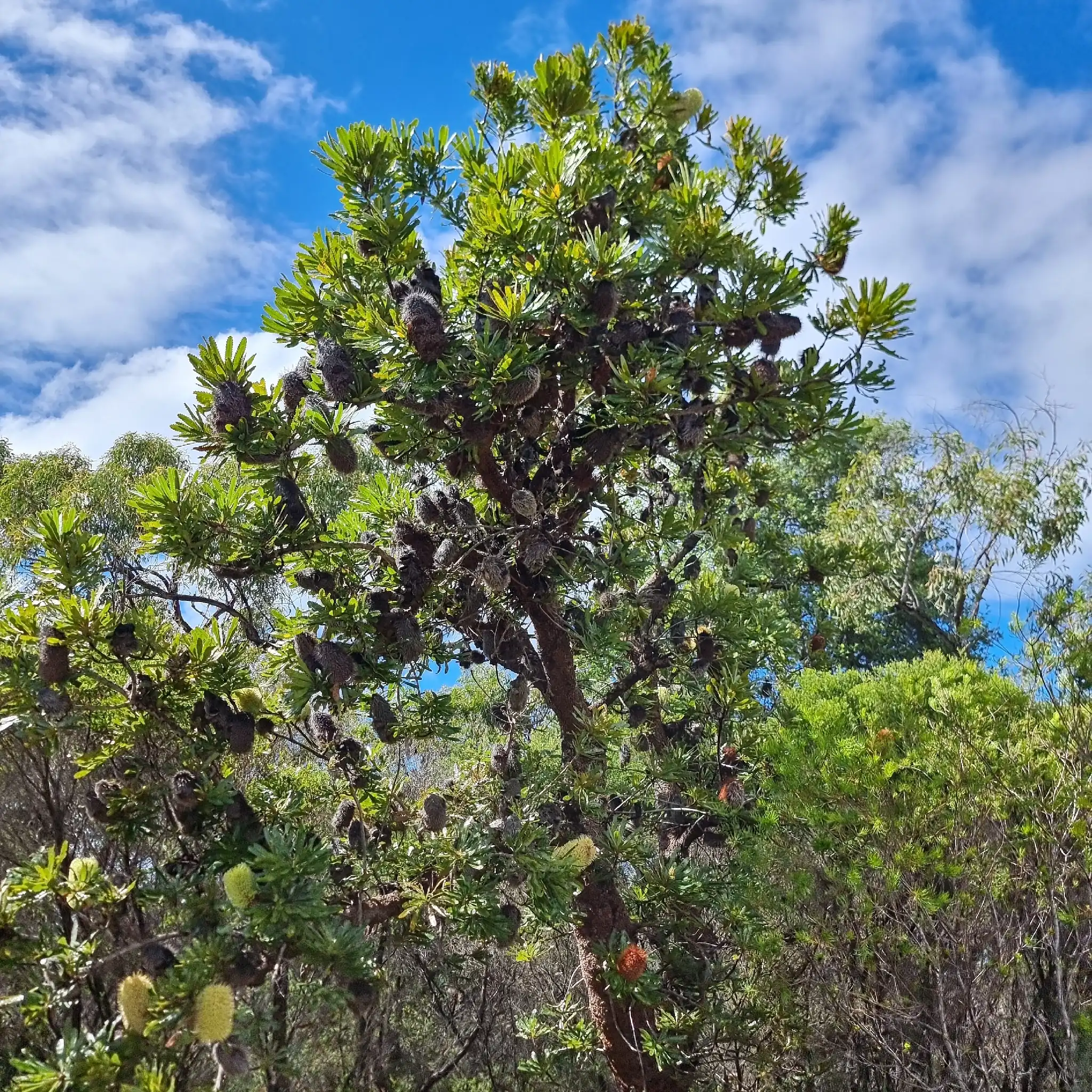
Banksia aemula, known as the wallum banksia, is a gnarled evergreen shrub or small tree native to coastal sand dunes of eastern Australia. Thick reddish-brown corky bark forms a stout trunk supporting sculptured branches clad in dark green, serrated leathery leaves.
Large cylindrical flower spikes open in pale yellow to greenish-cream before aging to greyish-brown cones set with prominent woody follicles. The young shoots emerge coated in a distinctive rusty-brown velvet indumentum before maturing into smooth foliage.
Uses & Benefits:
Essentials
At a Glance
Plant Type
Shrub
Height
197"
Width
197"
Light
Full Sun
Zones
9, 10
Water
Low
Humidity
Low to Moderate
Lifespan
Perennial
Native To
Eastern Australia
Toxicity
Non-toxic
Bloom period
Fall – Winter
In flower about 6 months of the year
Planting
How to Grow
- Select a planting location that receives full sun and has well-drained, sandy or gritty soil with an acidic to neutral pH.
- Dig a hole twice as wide as the root ball, ensuring the plant sits at the exact depth it was in its nursery container.
- Backfill gently without compacting the soil excessively, and water thoroughly to establish initial root contact.
- Apply a light layer of gravel or coarse bark mulch around the root zone, keeping it several inches away from the main trunk.
Pro Tip
Plant exclusively in coarse, fast-draining sand or gritty soil and never apply standard fertilizers, as excess phosphorus causes rapid, fatal root damage.
Keep It Thriving
Care Guide
Do
- Use low-phosphorus or native-formulated fertilizers sparingly if needed.
- Ensure sharp soil drainage at all times.
- Provide full sun exposure and open air circulation.
Don't
- Do not plant in heavy clay or waterlogged soils.
- Do not feed with standard all-purpose garden fertilizers containing phosphorus.
- Do not cut hard into old leafless wood.
Seasonal Care Calendar
| Task | Jan | Feb | Mar | Apr | May | Jun | Jul | Aug | Sep | Oct | Nov | Dec |
|---|---|---|---|---|---|---|---|---|---|---|---|---|
| Fertilize | ||||||||||||
| Mulch | ||||||||||||
| Pest Check | ||||||||||||
| Prune |
Watch Out For
Pests & Diseases
Common Pests
Common Diseases
In the Garden
Landscape Uses & Companions
Landscape Uses
Companion Plants
Multiply
Propagation Methods
Good to Know
Common Questions
Wallum Banksia questions
What zones can Wallum Banksia grow in?
Wallum Banksia is hardy in USDA Zones 9–10: in that range it survives winter in the ground. Colder than Zone 9, grow it in a container you can move to shelter for the winter.
Is Wallum Banksia deer resistant?
Not reliably. Deer may browse Wallum Banksia, especially tender spring growth — plan on repellents or fencing where pressure is high.
When does Wallum Banksia bloom?
Wallum Banksia typically blooms from fall to winter. Exact timing shifts a week or two with your zone — Sow's bloom calendar maps it to your garden.
Does Wallum Banksia need full sun?
Wallum Banksia does best in full sun (6+ hours).
Is Wallum Banksia drought tolerant?
Yes — once established (usually after the first full season), Wallum Banksia handles dry spells with minimal watering. Water deeply its first year to build the root system that makes that possible.
More Banksia to compare
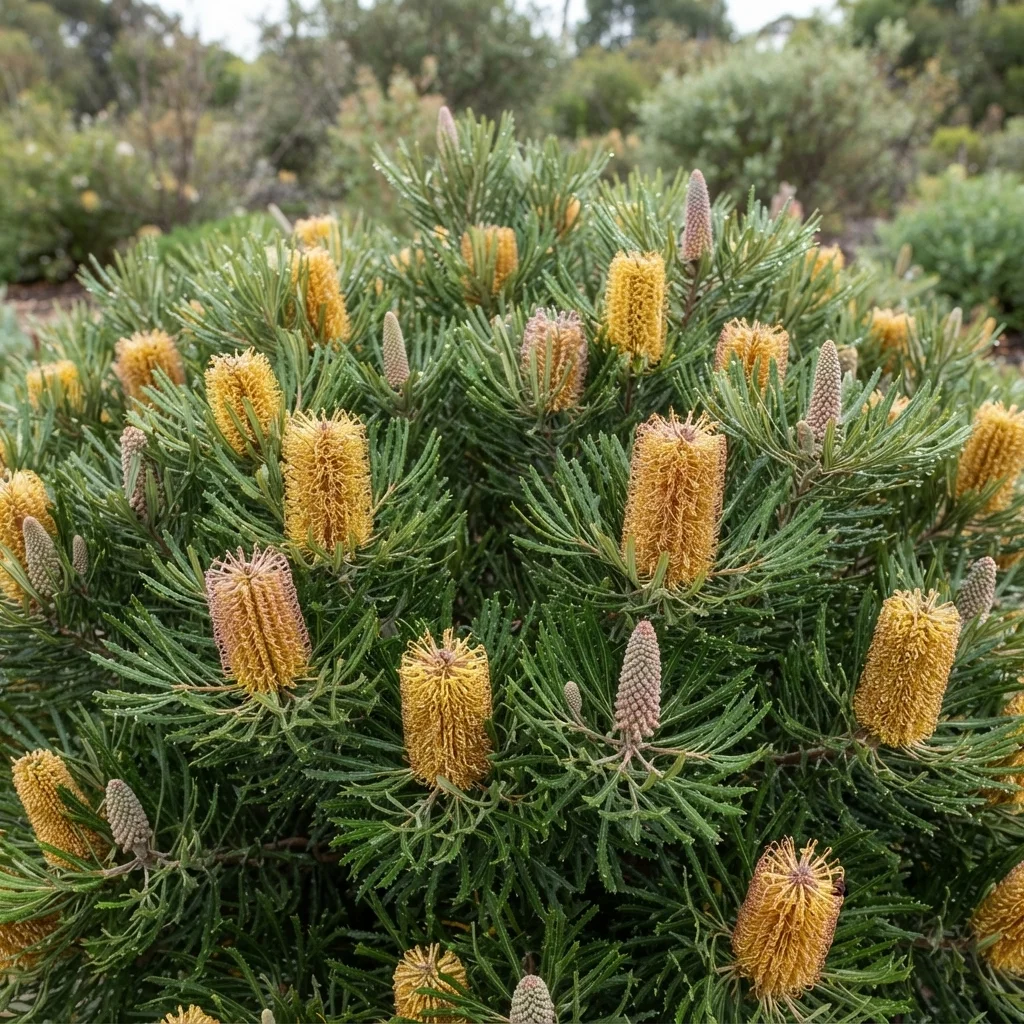
Birthday Candles Banksia
Banksia spinulosa 'Birthday Candles'
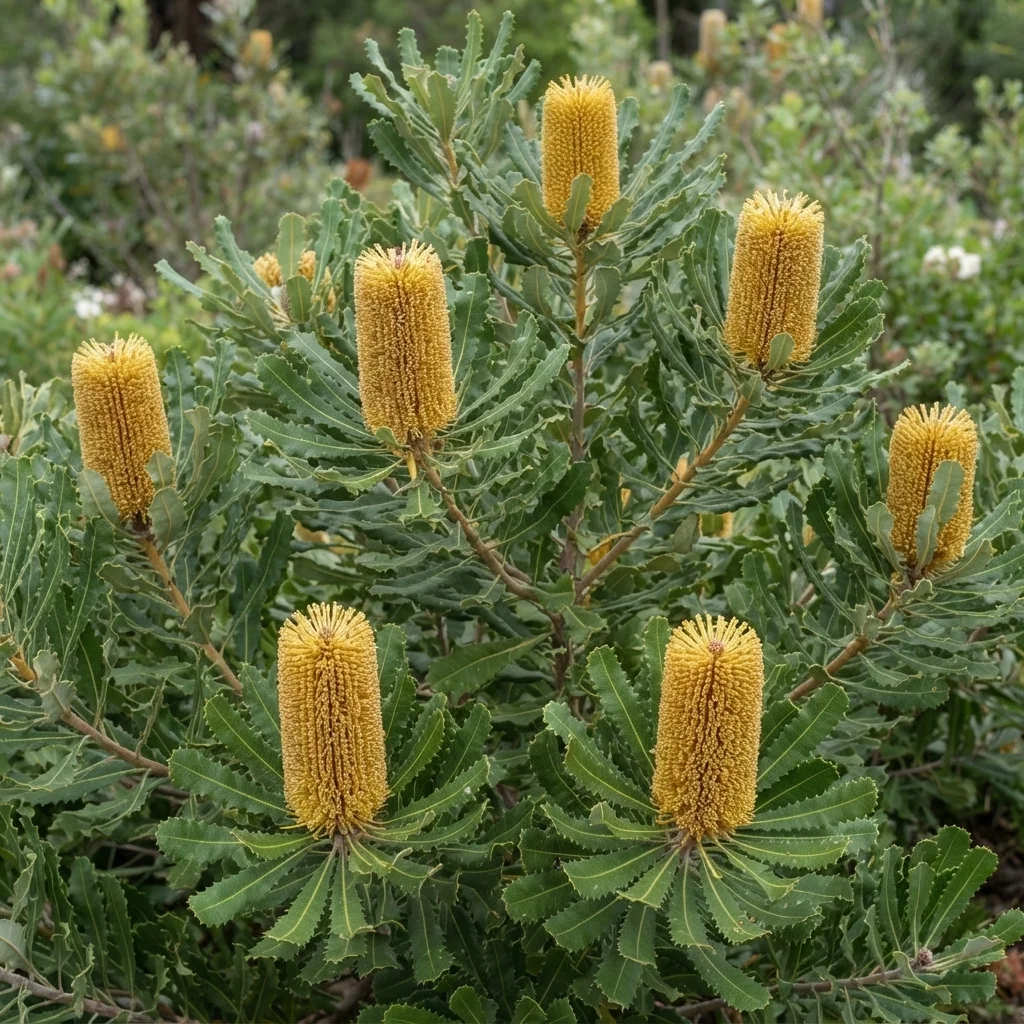
Southern Plains Banksia
Banksia media
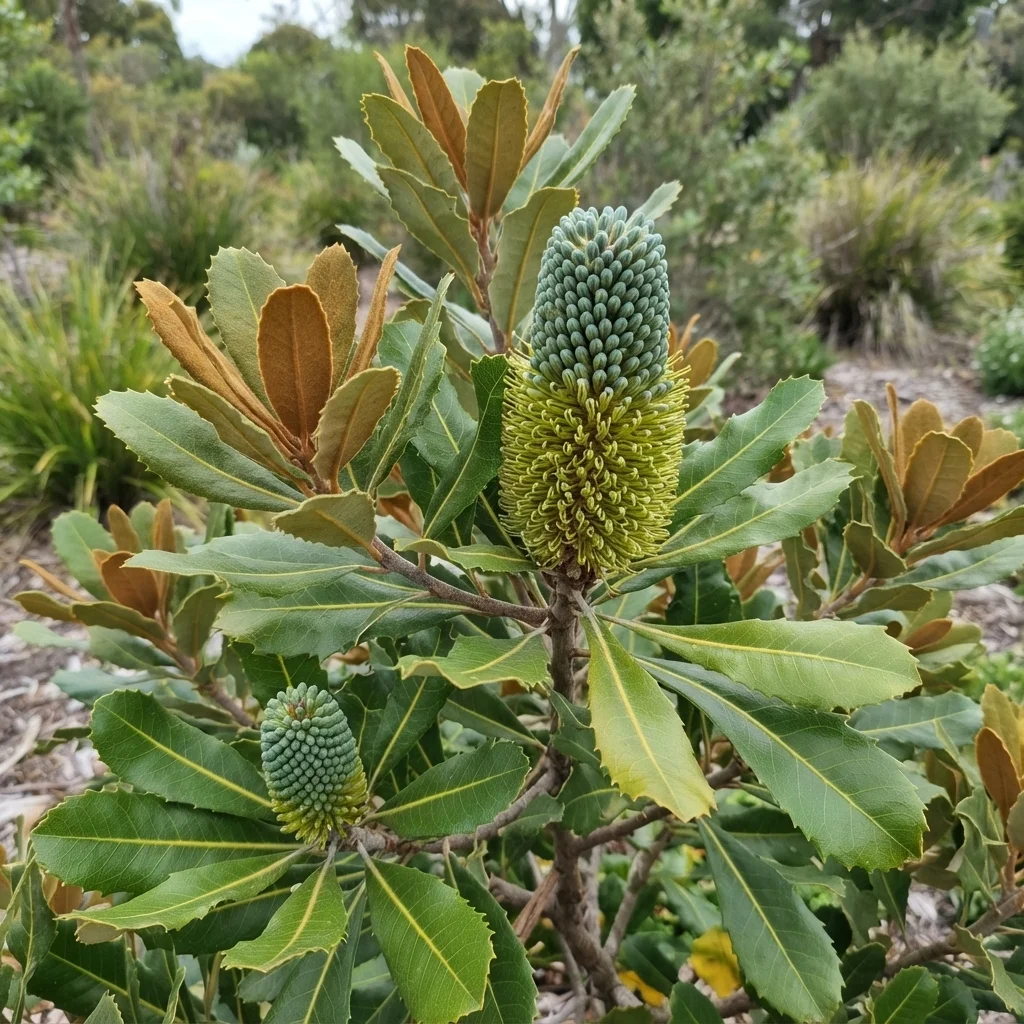
Swamp Banksia
Banksia robur
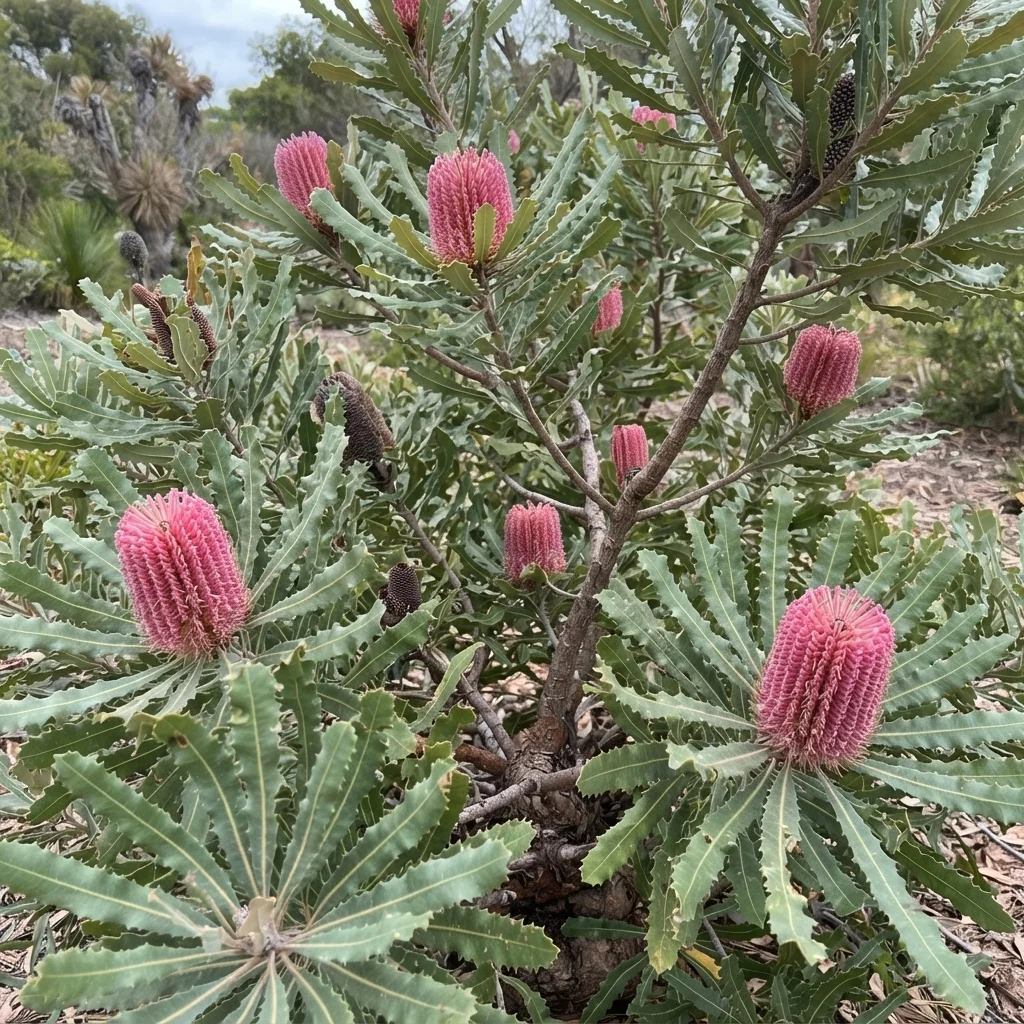
Menzies' Banksia
Banksia menziesii
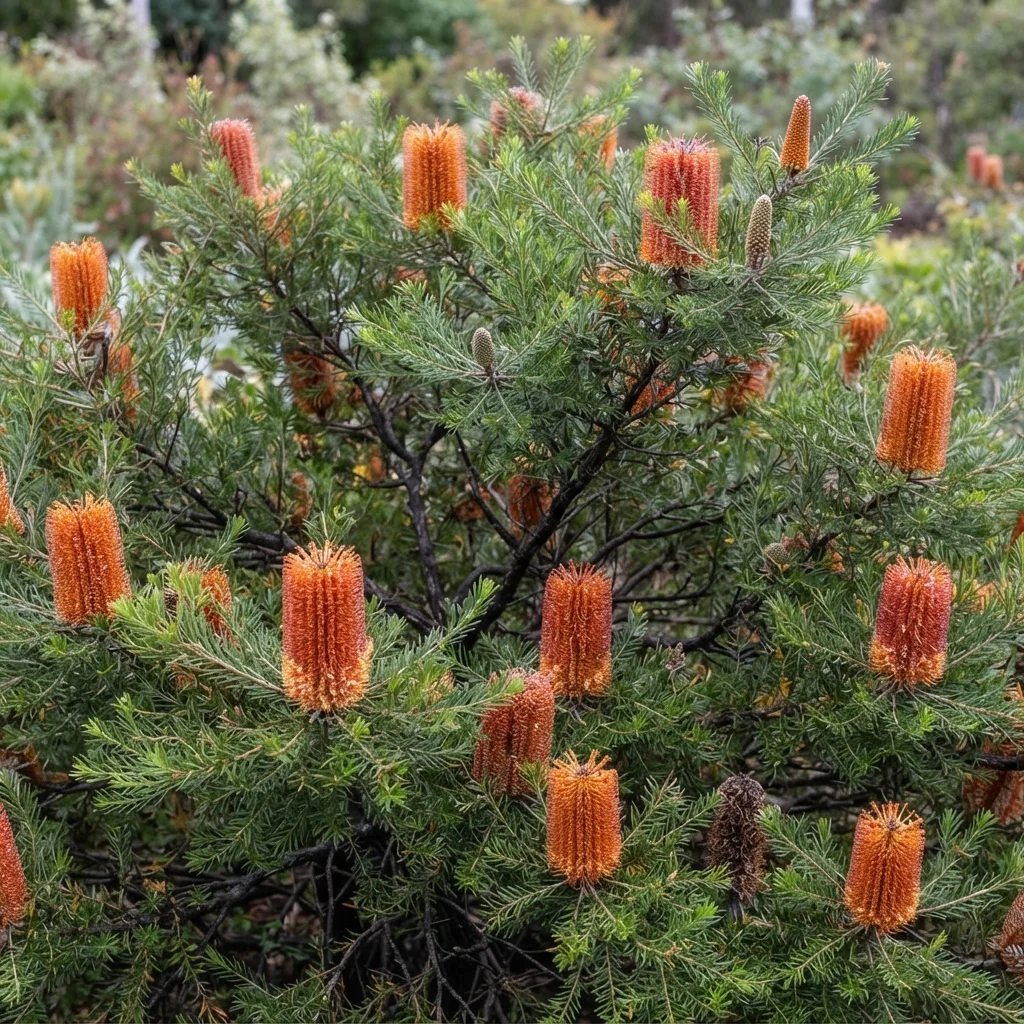
Heath Banksia
Banksia ericifolia
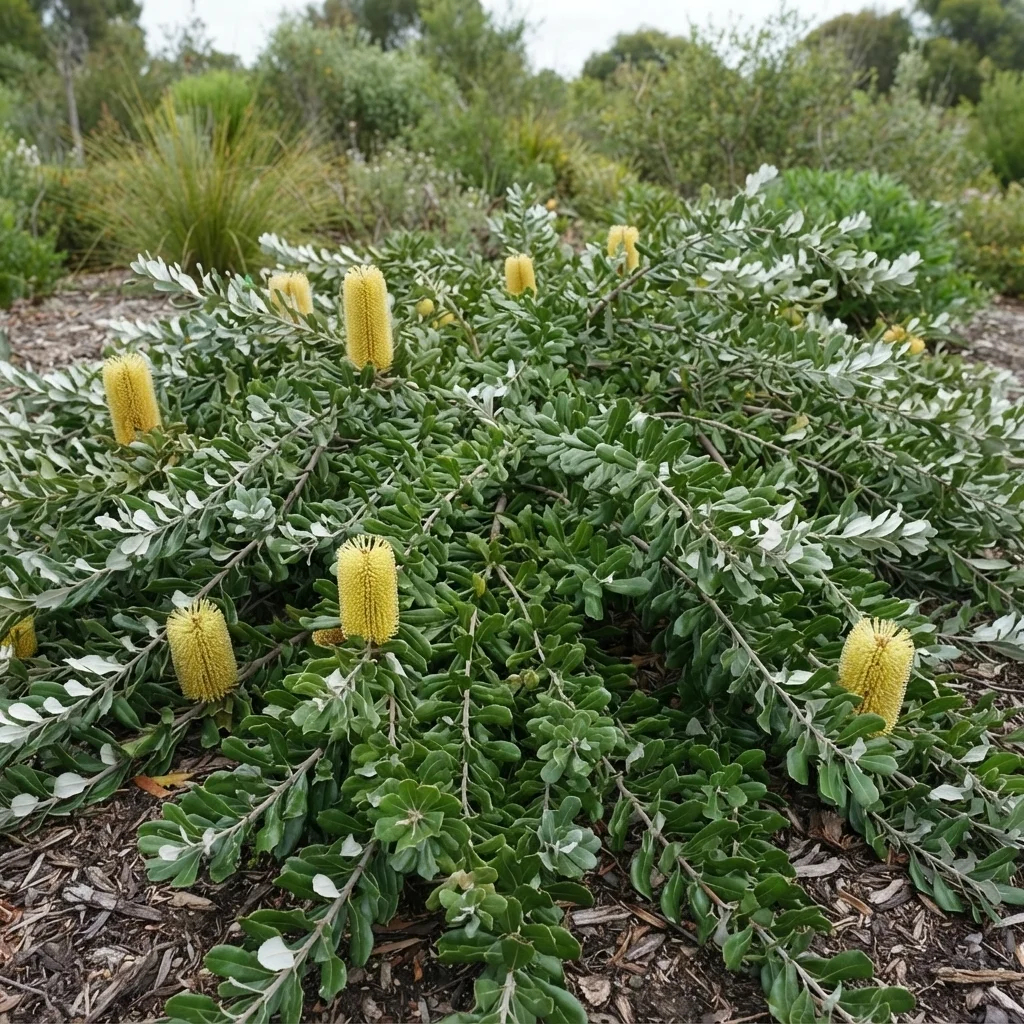
Prostrate Coast Banksia
Banksia integrifolia 'Roller Coaster'
Keep exploring
Explore the genus
Hardy in your zone?
Grow Wallum Banksia with confidence
See it in a design of your actual yard, get zone-matched care reminders, and track it season by season in your garden journal.