The Story
Plant Bio
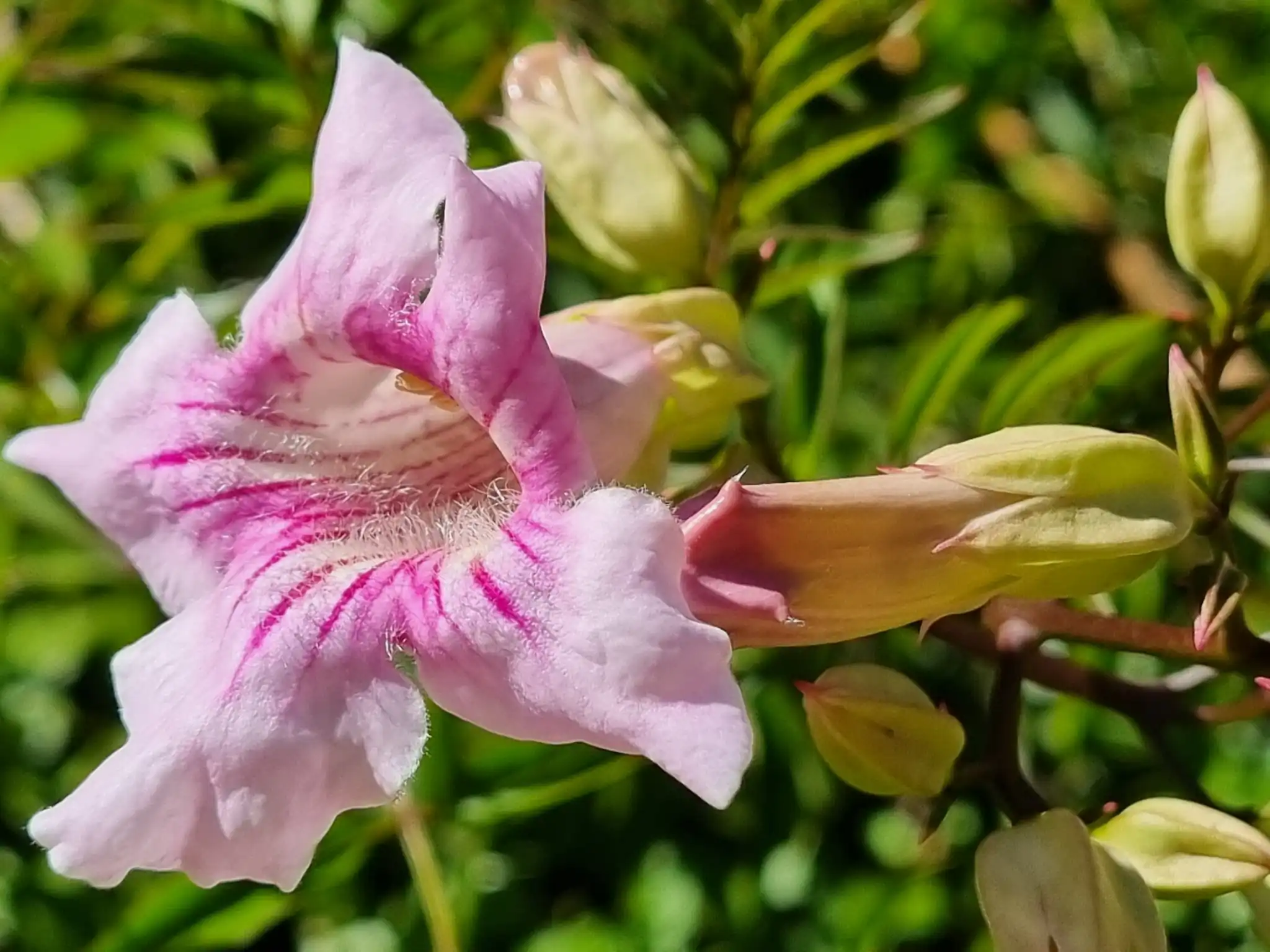
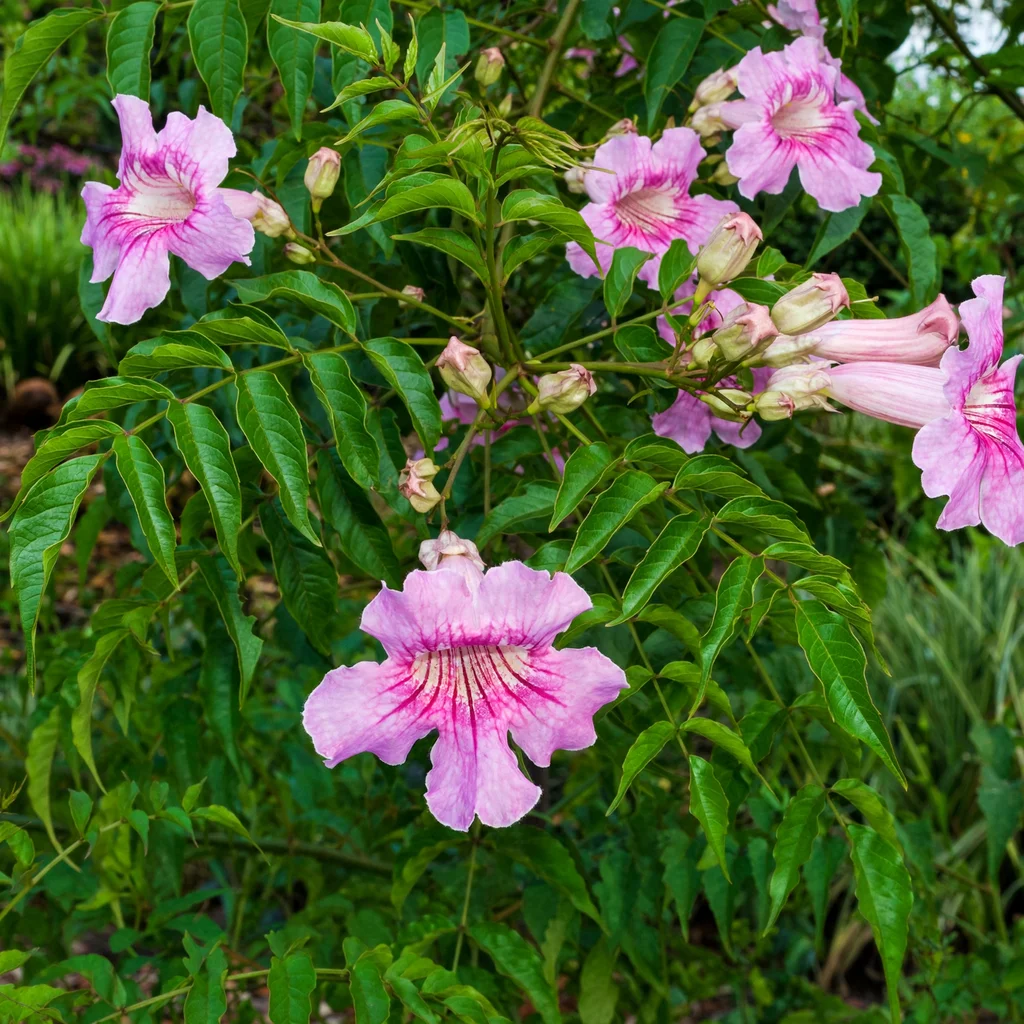
Podranea brycei is a vigorous evergreen scandent shrub from southeastern Africa that climbs by sprawling and arching rather than by tendrils, reaching 15 to 20 feet in cultivation and far more if left untied. The leaves are pinnate with four to seven pairs of glossy deep-green leaflets, and the new shoots bear terminal panicles of trumpet-shaped mauve-pink flowers with a yellow throat streaked dark magenta inside.
It is separated from Podranea ricasoliana only by smaller leaflets and fine hairs inside the flower tube, differences that disappear in garden plants and nursery stock. Plants sold under either name grow and bloom identically, so identification by label alone is unreliable.
Uses & Benefits:
Essentials
At a Glance
Plant Type
Vine
Height
216"
Width
36"
Light
Full Sun, Partial Sun
Zones
9, 10
Water
Moderate
Humidity
Unknown
Lifespan
Woody perennial vine
Native To
Malawi, Mozambique, Zimbabwe
Toxicity
Unknown
Bloom period
Summer – Fall
In flower about 6 months of the year
Planting
How to Grow
- Plant in full sun in rich, well-drained soil after last frost, spacing 6 to 8 feet from the trellis or fence.
- Set the root ball level with the soil surface, backfill with compost-enriched soil, and water deeply.
- Tie canes to the support with soft ties and mulch 2 inches deep, keeping mulch clear of stems.
- Water regularly through the first summer, then reduce once established; prune hard in late winter to hold size.
Pro Tip
Tie new canes to the support as they extend; unattached stems flop outward and root where they touch soil.
Keep It Thriving
Care Guide
Do
- Give full sun and room for 15-foot canes on a sturdy trellis
- Water deeply in summer and top-dress with compost
- Tie new growth and prune after bloom to hold shape
Don't
- Do not leave stems untied where they can root into gutters or trees
- Do not plant near natural groundcover in Florida where it escapes
- Do not leave prunings on soil, as cut stems sprout where thrown
Seasonal Care Calendar
| Task | Jan | Feb | Mar | Apr | May | Jun | Jul | Aug | Sep | Oct | Nov | Dec |
|---|---|---|---|---|---|---|---|---|---|---|---|---|
| Fertilize | ||||||||||||
| Pest Check | ||||||||||||
| Prune | ||||||||||||
| Stake | ||||||||||||
| Winter Prep |
Watch Out For
Pests & Diseases
Common Pests
Common Diseases
In the Garden
Landscape Uses & Companions
Landscape Uses
Multiply
Propagation Methods
Good to Know
Common Questions
Zimbabwe Creeper questions
What zones can Zimbabwe Creeper grow in?
Zimbabwe Creeper is hardy in USDA Zones 9–10: in that range it survives winter in the ground. Colder than Zone 9, grow it in a container you can move to shelter for the winter, or as an annual.
When does Zimbabwe Creeper bloom?
Zimbabwe Creeper typically blooms from summer to fall. Exact timing shifts a week or two with your zone — Sow's bloom calendar maps it to your garden.
Does Zimbabwe Creeper need full sun?
Zimbabwe Creeper does best in full sun to part shade. In hot climates, afternoon shade keeps blooms fresher longer.
Is Zimbabwe Creeper drought tolerant?
Yes — once established (usually after the first full season), Zimbabwe Creeper handles dry spells with minimal watering. Water deeply its first year to build the root system that makes that possible.
More Podranea to compare
Keep exploring
Explore the genus
Hardy in your zone?
Grow Zimbabwe Creeper with confidence
See it in a design of your actual yard, get zone-matched care reminders, and track it season by season in your garden journal.