1 saves
Podranea
We track 3 varieties; the ones most used by real gardeners.
The 2 most-saved Podranea varieties
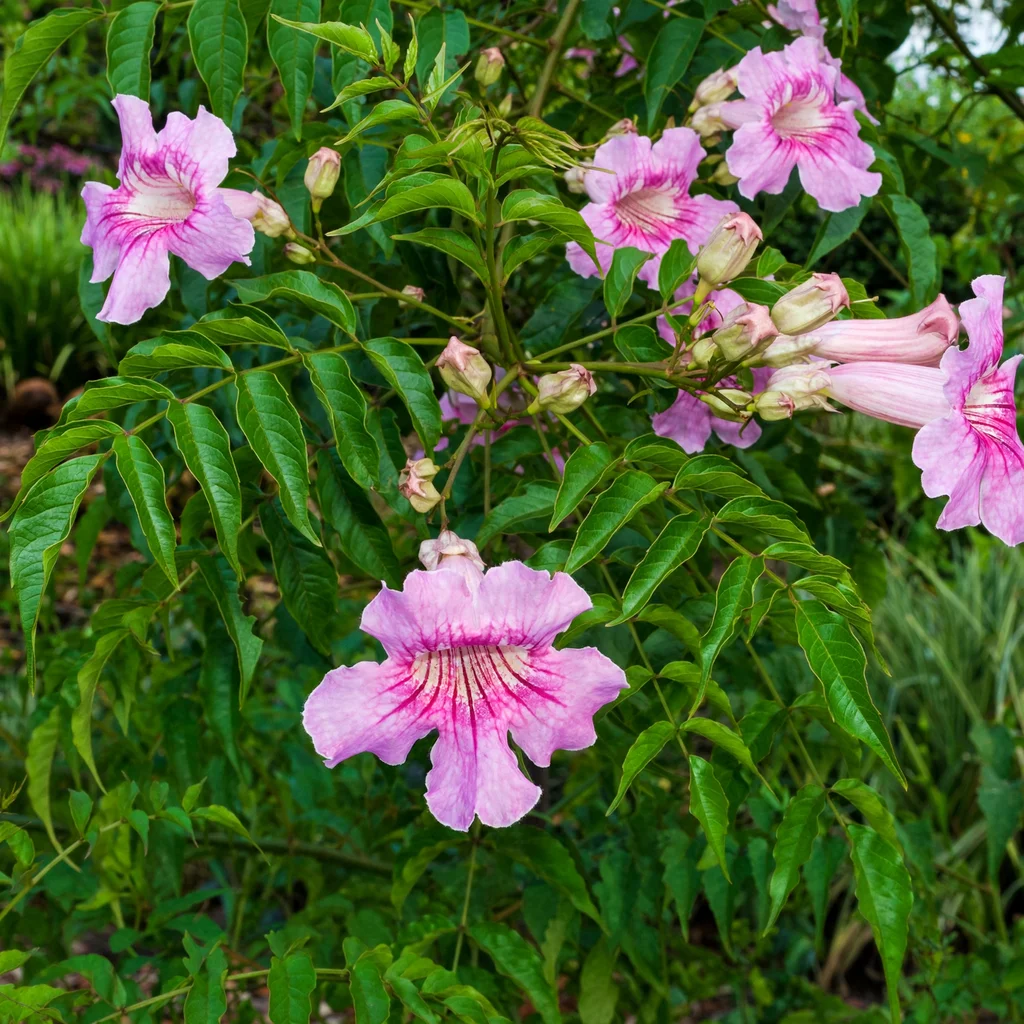
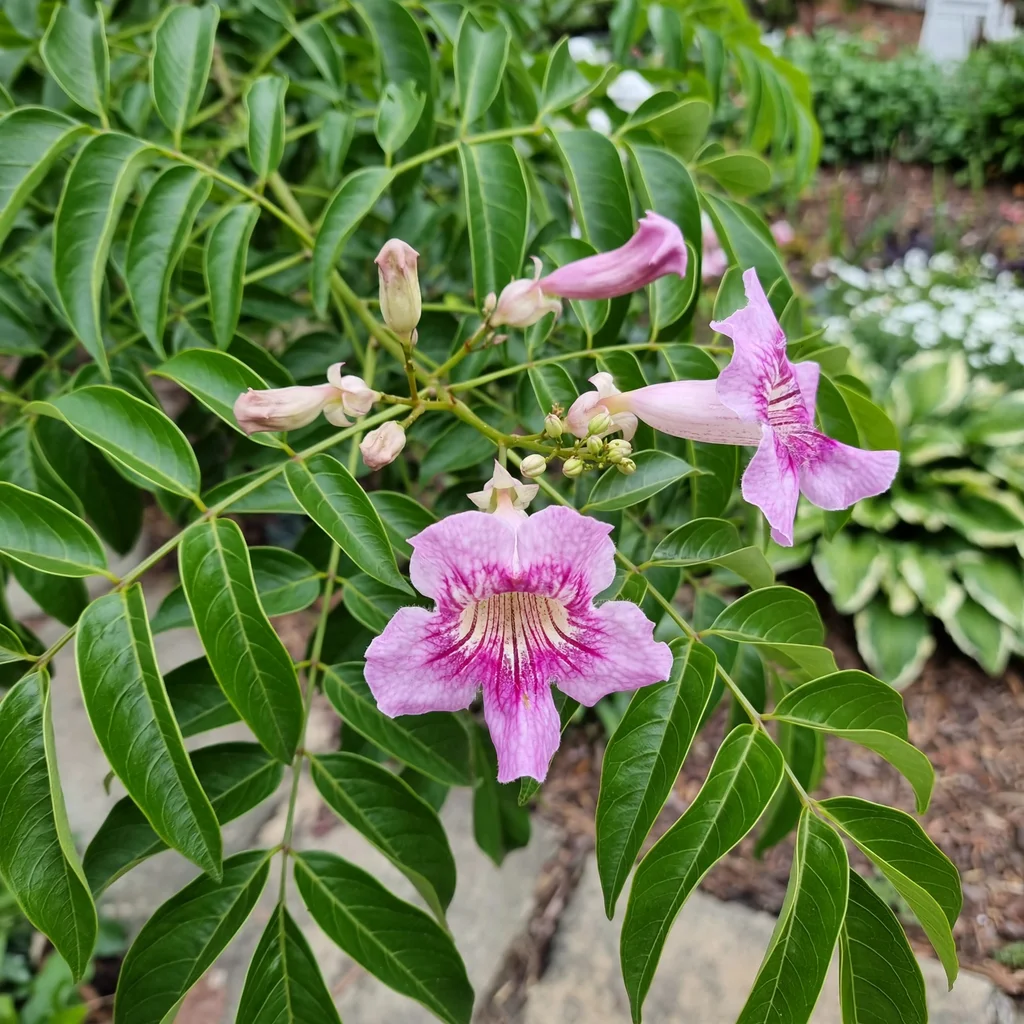
Browse all 3 Podranea varieties →
3 species of Podranea
Each one is a parent of the varieties above.
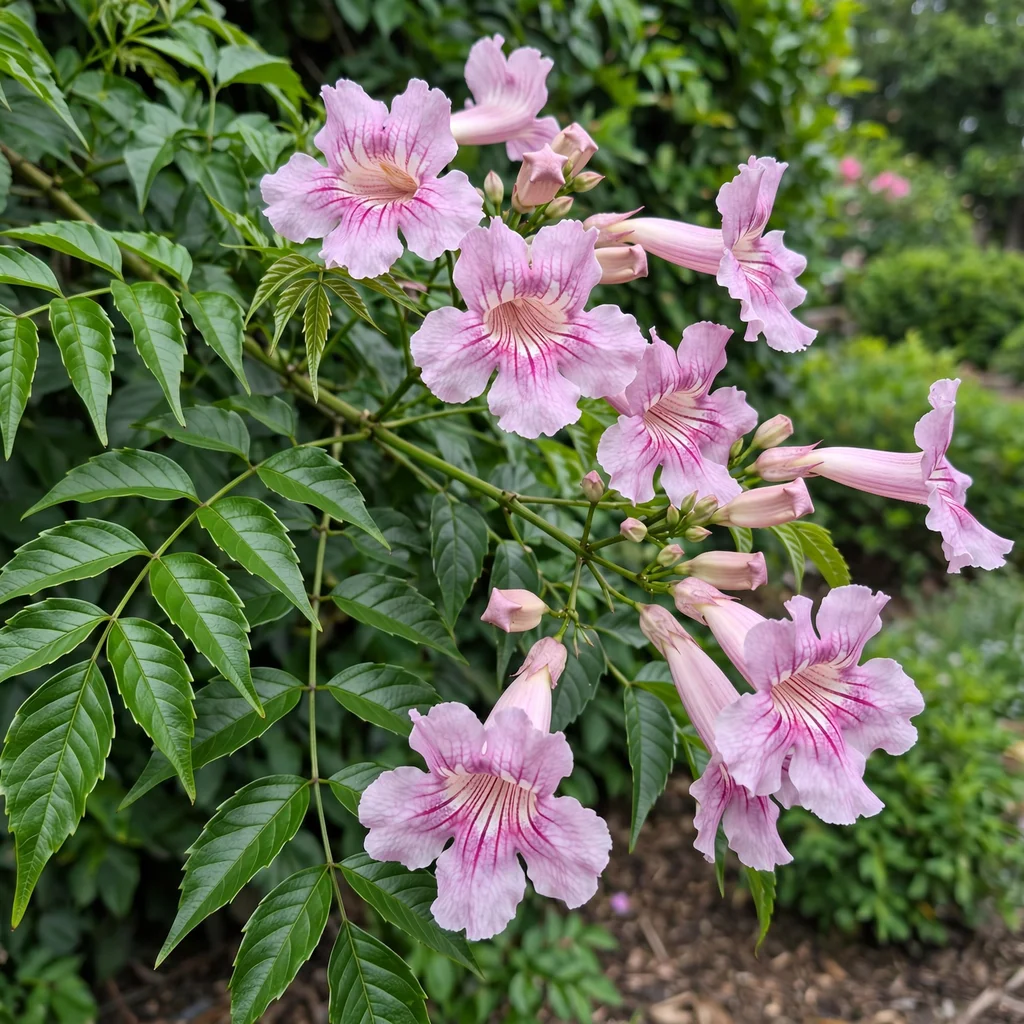
Track your Podranea in Sow
Save the Podranea you grow and get care reminders timed to your zone.
How to grow Podranea
Whats common across all Podranea varieties in our catalog — drawn from the care records of the 3 most-grown of them.
The Podranea year
- PruneFebruary and March100% of varieties
Cut back hard in late winter before new growth; shorten out-of-bounds shoots after each flush.
- Check for PestsJune and August100% of varieties
Inspect buds and shoot tips for aphids during bloom.
- StakeMay67% of varieties
Tie new arching canes to the trellis; stems have no tendrils and will not cling alone.
- FertilizeApril and June67% of varieties
Top-dress with compost and water deeply through summer growth.
- Winter PrepNovember67% of varieties
Mulch roots and cover young plants before first frost; established wood resprouts in spring.


Do
- Water deeply in summer and top-dress with compost
- Give full sun and room for 15-foot canes on a sturdy trellis
- Tie new growth and prune after bloom to hold shape
- Plant in full sun with sharp drainage and a load-bearing support.
- Prune yearly after flowering to keep size in check.
Avoid
- Do not leave stems untied where they can root into gutters or trees
- Do not plant near natural groundcover in Florida where it escapes
- Do not leave prunings on soil, as cut stems sprout where thrown
- Do not plant near natural areas or neglect pruning - stems reach 20 feet and overwhelm structures.
What goes wrong with Podranea
| Problem | What you'll see | What to do |
|---|---|---|
| Aphids | Clusters on buds and shoot tips cause curled, sticky new growth | Dislodge with a strong jet of water; apply insecticidal soap only if colonies persist |
| Spider mites | Stippled, dusty leaves in hot dry weather. | Spray leaf undersides with water and apply horticultural oil if numbers build. |
| Whitefly | Small white flies rise from foliage with yellowing and honeydew. | Use yellow sticky traps and insecticidal soap or horticultural oil. |
| Scale insects | Hard bumps on stems with yellowing leaves and sooty mold | Prune heavily infested shoots and treat with horticultural oil |
| Root rot | Wilting and yellowing despite wet soil in poorly drained pots or beds | Grow in well-drained soil, avoid standing water, and let the surface dry between waterings |
| Powdery mildew | White powdery coating on leaves. | Improve air flow, prune affected shoots and apply sulfur or potassium bicarbonate. |
Making more Podranea
Semi-ripe cuttings
- Take 6-inch semi-ripe cuttings from current-season wood in early summer.
- Strip lower leaves and insert in moist perlite and peat.
- Hold warm in bright shade and keep evenly moist until rooted in about 6 weeks.
- Wean for 6 weeks, then pot on and tie to a stake.
Seed
- Sow fresh seed in spring, barely covered, in moist seed mix.
- Hold warm in shade and keep evenly moist.
- Expect germination in 3 to 4 weeks with about half viable.
- Prick out seedlings promptly and grow on with support.
Podranea questions
How many types of Podranea are there?
The Sow catalog tracks 3 distinct Podranea varieties. The most popular — ranked by 1 real gardeners — are shown first above.
What zones does Podranea grow in?
Across its varieties, Podranea covers USDA Zones 8–10. Individual varieties differ — each plant page lists its exact range, and Sow filters the catalog to your zone automatically.
When does Podranea bloom?
Most Podranea varieties bloom from summer to fall.
Which Podranea should I choose?
Start from the most-saved varieties above — popularity across thousands of gardens is a strong signal of reliability — then filter by your zone and sun. In the Sow app you can preview any of them in a photo of your actual yard before you buy.